

In Wisconsin, an LLC member’s ability to claim the Research Expense Credit is strictly tied to their ownership interest (“pro-rata”) and their role as a “claimant.” Unlike federal rules, Wisconsin generally decouples from the amortization requirement of IRC § 174, allowing immediate deduction of research expenses. However, members must navigate strict “passive activity” loss limitations and ensure the LLC’s activities meet the “Four-Part Test” for innovation. Credits are passed through via Schedule 3K-1 or 5K-1, and a portion may be refundable depending on the tax year and remaining liability.
In the regulatory landscape of Wisconsin, a member of a Limited Liability Company (LLC) is an owner whose legal status facilitates the flow of tax attributes, specifically the research expense credit, from the entity to the individual or corporate tax return. This membership interest functions as a conduit through which qualified research expenses incurred by the LLC are apportioned to the owners based on their respective ownership percentages to offset state tax liabilities.
The Legal and Statutory Definition of LLC Membership in Wisconsin
The foundational understanding of what constitutes a “member” of a Limited Liability Company in Wisconsin is established under Chapter 183 of the Wisconsin Statutes, recently overhauled by the Wisconsin Uniform Limited Liability Company Law. Under the modern statutory framework effective as of January 1, 2023, a member is defined as a person who has been admitted to the company and has not dissociated. This definition is intentionally broad, encompassing individuals, corporations, other LLCs, and various fiduciaries, reflecting the flexible nature of the LLC as a business vehicle. The significance of membership lies not only in the governance rights afforded by the operating agreement but also in the member’s role as a tax claimant for state-level incentives.
The transition from the “Old Law” to the “New Law” via 2021 Wisconsin Act 258 significantly altered the default rights and obligations of members. One of the most notable changes is the elimination of the requirement that the form of management—whether member-managed or manager-managed—be specified in the articles of organization; instead, these details are relegated to the operating agreement. For tax purposes, however, the Department of Revenue (DOR) distinguishes between the legal right to manage the entity and the economic right to receive its tax attributes. A member may possess “non-economic” status, meaning they are admitted to the LLC with governance rights but no right to distributions or transferable interests. In the context of the Wisconsin Research Expense Credit, such non-economic members are generally ineligible to claim the credit, as the credit must be allocated based on “ownership interest,” which the DOR interprets as the member’s share of the entity’s profits and capital.
The interplay between the LLC’s internal affairs and its tax obligations is governed by the principle that tax classification does not dictate legal structure. Specifically, Wis. Stat. § 183.0104(2m) clarifies that the election of an LLC to be taxed as a partnership, an S corporation, or a C corporation under the Internal Revenue Code (IRC) does not of itself alter the governing law applicable to the internal affairs of the LLC or the liability of its members. This distinction is critical for practitioners, as it ensures that while the tax treatment of the research credit flows according to federal and state tax codes, the underlying ownership rights remain anchored in the private operating agreement of the company.
Comparative Table: LLC Classification and Tax Impact on Members
| Classification | Wisconsin Tax Return | Credit Flow-Through | Member Impact |
|---|---|---|---|
| Disregarded Entity | None (Member’s return) | Direct (100%) | Member reports all QREs on their personal or corporate return. |
| Partnership | Form 3 | Pro-rata via 3K-1 | Credit is calculated at entity level and shared among members. |
| S Corporation | Form 5S | Pro-rata via 5K-1 | Shareholders (members) claim their share on personal returns. |
| C Corporation | Form 4 or Form 6 | Entity-level only | The entity claims the credit; members generally do not receive a pass-through. |
The Nexus of Membership and the Wisconsin Research Expense Credit
The Wisconsin Research Expense Credit is an incremental tax benefit designed to reward businesses for increasing their qualified research activities within the state. For an LLC member, the credit is not a direct grant but a reduction of tax liability that is contingent upon the LLC’s performance of qualified research as defined by Section 41 of the IRC, with specific Wisconsin modifications. The eligibility of a member to claim the credit is fundamentally tied to their status as a “claimant,” which includes individuals, partners, and members of LLCs that are not taxed as C corporations.
Statutory Authority and IRC Conformity
The statutory basis for the credit is found in Wis. Stat. §§ 71.07(4k), 71.28(4), and 71.47(4). Wisconsin law selectively incorporates the IRC, currently referencing the federal code as of December 31, 2022, but notably decouples from certain provisions of the federal Tax Cuts and Jobs Act (TCJA). For LLC members, the most significant decoupling relates to IRC § 174, which at the federal level now requires the capitalization and amortization of research and experimental (R&E) expenditures over five years. Wisconsin, however, maintains the pre-2022 treatment, allowing members to continue to deduct these expenses immediately while simultaneously claiming the research credit, provided the research is conducted in Wisconsin.
This immediate deduction creates a substantial timing benefit for LLC members in Wisconsin compared to their federal counterparts. While the federal credit might be limited by the requirement to amortize the underlying expenses, the Wisconsin credit remains robust, though it is strictly geographically limited. Only expenses incurred for research conducted in the state of Wisconsin qualify for the credit. If an LLC member’s entity performs research in multiple states, the member must ensure that the QREs are accurately apportioned to Wisconsin based on the location where the activities were performed, not merely where the costs were paid.
Definitions of Qualified Research and Expenses for Members
To claim the credit, a member must ensure the LLC’s activities meet the rigorous “Four-Part Test” mandated by IRC § 41(d), as adopted by Wisconsin. These standards ensure that the credit is directed toward genuine technological innovation rather than routine product development or aesthetic improvements.
The Four-Part Test of Qualified Research
The first requirement is the “Permissible Purpose” test, which dictates that the research must be intended to develop a new or improved business component of the taxpayer. For an LLC member, the “taxpayer” is generally the entity itself for purposes of testing the activity, even if the member is the ultimate claimant. The research must relate to a new or improved function, performance, reliability, or quality.
The second requirement is the “Elimination of Uncertainty” test. The research must be undertaken to discover information that would eliminate uncertainty concerning the capability or method for developing or improving a business component, or the appropriate design of that component. This requires a demonstration that the path to success was not known at the outset of the project.
The third requirement is the “Process of Experimentation.” Substantially all of the research activities must constitute a process of experimentation, which involves the systematic evaluation of alternatives through modeling, simulation, or trial-and-error. This is often the most scrutinized element during a Department of Revenue audit.
The fourth requirement is the “Technological in Nature” test. The process of experimentation must fundamentally rely on the principles of physical or biological sciences, engineering, or computer science. Research that relies primarily on social sciences, economics, or marketing does not qualify.
Qualified Research Expenses (QREs)
The credit is calculated based on the sum of in-house research expenses and contract research expenses. For an LLC member, these categories are defined as follows:
- In-House Research Expenses: These include wages paid to employees for the performance of qualified research, as well as amounts paid for supplies used in the research process. For Wisconsin purposes, wages used to compute other credits, such as the development zones credit, may not be included in the QRE calculation.
- Contract Research Expenses: This includes 65% of the amount paid to any person other than an employee for qualified research conducted in Wisconsin. This percentage increases to 75% for payments to qualified research consortia and 100% for payments to eligible small businesses, universities, and federal laboratories.
Table: Tiered Credit Rates for Wisconsin R&D
| Research Type | Standard Rate | Startup Rate (0 QREs in prior 3 years) | Enhanced Focus |
|---|---|---|---|
| General Research | 5.75% of excess QREs | 2.875% of total QREs | Standard R&D activities. |
| Internal Combustion Engines | 11.5% of excess QREs | 5.75% of total QREs | Vehicles, generators, and component frames. |
| Energy Efficient Products | 11.5% of excess QREs | 5.75% of total QREs | Lighting, automation, and hybrid batteries. |
Allocation Mechanics: The Pro-Rata Mandate
A central issue for LLC members is the method by which the research credit is distributed among the various owners. Wisconsin law is notably rigid in this area, adhering to a strict pro-rata allocation based on ownership interest.
The Prohibition of Special Allocations
While federal law under IRC § 704(b) allows partnerships and LLCs significant flexibility to “specially allocate” credits if the allocation has “substantial economic effect,” Wisconsin does not permit this for the Research Expense Credit. Wis. Stat. §§ 71.07(4k)(i) and 71.28(4)(i) explicitly state that partners of a partnership and members of limited liability companies may claim the credit “in proportion to their ownership interests”. This means that if a member owns 25% of the capital and profits of the LLC, they are entitled to exactly 25% of the research credit, regardless of whether they contributed 100% of the funds used specifically for the R&D projects.
This pro-rata requirement is a departure from other Wisconsin credits. For example, the Low-Income Housing Credit and the Historic Rehabilitation Credit often allow for disproportionate allocations if defined in a written agreement. The absence of such language in the R&D statutes reinforces the legislative intent that this particular credit follow the underlying ownership of the business. Practitioners must be wary of “allocated tax credit” schemes that promise to shift R&D credits to specific investors, as these may be disallowed upon audit by the Wisconsin Department of Revenue.
Determining Ownership Interest
The DOR typically looks to the ownership interest as of the last day of the LLC’s taxable year to determine the appropriate proration. If a member’s interest changes during the year, the credit is generally prorated based on the weighted average of their ownership throughout the year, mirroring federal distributive share principles. For fiduciaries, such as estates and trusts that are members of an LLC, the credit must be further prorated between the entity and its beneficiaries in proportion to the income allocable to each.
Pass-Through Reporting: Schedules R, 3K-1, and 5K-1
The transmission of credit data from the LLC to its members is a multi-step administrative process that requires precision in documentation.
The Role of Schedule R at the Entity Level
Even though an LLC taxed as a partnership or S corporation does not claim the credit itself, it must still file Schedule R with its Wisconsin return. On this schedule, the LLC calculates the total QREs, determines the base amount, and computes the gross credit available. The LLC then identifies that it is a pass-through entity and reports the distribution of this credit to its owners.
Member Reporting via 3K-1 and 5K-1
The specific amount of credit allocated to each member is reported on the member’s respective pass-through schedule.
- Schedule 3K-1: Used for members of LLCs treated as partnerships.
- Schedule 5K-1: Used for members of LLCs treated as S corporations.
The credit is typically listed on Line 15 of these schedules. The LLC must also provide a supplemental statement if there are multiple credits or if the member is part of a multi-tiered structure. When the member receives this information, they must file their own Schedule R and enter the pass-through amount on Line 15, identifying the LLC by its name and FEIN. Failure to include a copy of the 3K-1 or 5K-1 with the member’s return can lead to a summary disallowance of the credit.
Refundability and the Cash Liquidity Benefit
One of the most competitive features of the Wisconsin Research Expense Credit for LLC members is the provision for partial refundability. This feature provides immediate liquidity even to members who have no state tax liability.
The Evolution of Refundability Limits
The legislature has aggressively expanded the refundable portion of the credit to attract and retain high-tech firms.
| Tax Year Start Date | Refundable Percentage | Carrying Mechanism |
|---|---|---|
| Jan 1, 2018 – Dec 31, 2020 | 10% | Carryforward unused. |
| Jan 1, 2021 – Dec 31, 2023 | 15% | Carryforward unused. |
| Jan 1, 2024 and Later | 25% | Carryforward unused. |
Calculating the Member’s Refund
The refund is computed at the member level on their own individual or corporate tax return. The member must first apply their share of the credit to offset their current year Wisconsin tax liability. If any credit remains, the refundable portion is the lesser of:
- 25% of the total current-year research credit passed through from the LLC.
- The total current-year credit remaining after offsetting the tax liability.
For example, if a member is allocated a $100,000 credit and has a $50,000 tax liability, they use $50,000 to zero out their tax. They then calculate 25% of the original $100,000, which is $25,000. Since $25,000 is less than the remaining $50,000 credit, they receive a $25,000 refund and carry forward the remaining $25,000 to future years.
It is vital to note that prior-year credit carryforwards never become refundable. The refund mechanism applies strictly to credits generated in the current taxable year. This creates a “use it or lose it” dynamic for the refund; if a member does not claim the refund in the year the credit is generated, the unused portion remains non-refundable for the duration of the 15-year carryforward period.
Loss Limitations: Basis, At-Risk, and Passive Activity Rules
The mere allocation of a research credit on a Schedule 3K-1 does not guarantee that a member can utilize it immediately. Like the underlying losses of an LLC, credits are subject to multiple layers of limitations.
Basis and At-Risk Thresholds
A member may only claim credits and losses to the extent they have “basis” in their LLC interest. Basis represents the member’s after-tax investment in the company. If the LLC is funded primarily by debt that does not increase the member’s basis (such as non-recourse debt in some contexts), or if the member has already utilized basis to deduct prior losses, the current year’s research credit may be suspended until basis is restored.
Similarly, the “at-risk” rules of IRC § 465 prevent members from claiming credits derived from activities where they are not personally liable for the debts or do not have a genuine economic risk of loss. These limitations are applied at the member level before any other limitations are considered.
Passive Activity Loss (PAL) Constraints
The passive activity rules of IRC § 469 are perhaps the most significant hurdle for non-operational LLC members. If a member does not “materially participate” in the LLC—generally defined as working more than 500 hours in the activity per year—their share of the credit is considered a “passive activity credit”.
- Active Participation: If the member materially participates, they can use the R&D credit to offset tax on any of their income (wages, investment income, etc.).
- Passive Status: If the member is a passive investor, the credit can only be used to offset tax attributable to passive income. If the member has no other passive income (such as income from other LLCs or rental properties), the credit is suspended and must be carried forward until passive income is generated or the activity is disposed of.
For non-residents, these calculations become even more complex, as they must recompute their passive activity losses using only Wisconsin-sourced income and expenses. This often results in a different allowed credit amount for Wisconsin purposes than for federal purposes, requiring the filing of Wisconsin Schedule I.
Special Considerations for Combined Groups and Unitary Businesses
In the corporate context, LLCs often serve as subsidiaries within a larger “combined group.” Wisconsin’s combined reporting rules under Wis. Stat. § 71.255 provide special mechanisms for the sharing of research credits among group members.
Credit Sharing via Form 6CS
Generally, tax credits are attributes of the separate corporation that earned them. However, Wis. Stat. § 71.255(6)(c) allows a corporation to share its non-refundable research credits with other members of the same combined group, provided they were members of the same group in the year the credit originated.
This sharing is facilitated through Form 6CS, “Wisconsin Sharing of Research Credits”. The member with the “sharable” credit must first use the credit to offset its own tax liability before it can assign any remainder to other group members. It is important to note that the refundable portion of the research credit can never be shared with other members of a combined group; it must be claimed by and refunded to the designated agent for the specific member that computed the credit.
Modified QREs for Intercompany Research
When one member of a combined group performs research funded by another member, the DOR modifies the definition of QREs. The expenses are considered QREs of the member performing the research, and the funding member cannot claim the reimbursement as a qualified expense. This rule prevents the “double counting” of research expenses within a unitary business.
The Pass-Through Entity Tax (PTET) Election
Since 2018, Wisconsin has allowed partnerships and LLCs to elect to pay tax at the entity level at a flat rate of 7.9%. This election is a strategy to circumvent the federal $10,000 cap on state and local tax (SALT) deductions.
Credit Utilization at the Entity Level
If an LLC makes the PTET election, the individual members do not report the LLC’s income on their Wisconsin personal returns. Consequently, the members cannot claim the research credit on their individual returns for that year. Instead, the LLC utilizes the research credit at the entity level to offset the 7.9% tax liability.
Members must carefully evaluate whether the PTET election is beneficial if the LLC has significant research credits. While the PTET election provides a federal deduction for the state taxes paid, it may result in a higher state tax cost if the individual members are in a lower tax bracket than the 7.9% entity rate or if the members have other credits that could have been used to offset their personal tax.
Non-Resident Members and Withholding Requirements
Wisconsin imposes strict withholding requirements on LLCs with non-resident members to ensure that the state captures tax on income sourced within its borders.
Form PW-1 and Withholding Exceptions
The LLC is generally required to withhold Wisconsin tax on the income allocable to non-resident members at the highest individual or corporate tax rate. However, the member can use their share of the research credit to reduce their ultimate tax liability when they file their non-resident return (Form 1NPR).
If a non-resident member’s share of Wisconsin income is less than $2,000 ($1,000 for years before 2024), the LLC is exempt from withholding on that member. Additionally, if the LLC makes the PTET election, it is exempt from the PW-1 withholding requirement for that year, as the tax is already being paid at the entity level.
The Composite Return Disadvantage
Non-resident members are often included in a “composite” return (Form 1CNP) filed by the LLC for convenience. However, DOR guidance explicitly states that most tax credits, including the Research Expense Credit, cannot be claimed on a composite return. To realize the benefit of the research credit, a non-resident member must opt out of the composite filing and file an individual Form 1NPR. This requirement highlights the administrative burden placed on non-resident members who wish to utilize state-level incentives.
Procedural Compliance and Audit Defense
The Wisconsin Department of Revenue maintains a specialized unit for auditing pass-through entities and their members. Given the high value of the research credit, it is a frequent target for examination.
Recordkeeping Requirements for Members
While the LLC is responsible for maintaining the project-level documentation, the member is ultimately responsible for justifying the credit on their own return. Members should ensure the LLC retains:
- Contemporaneous time records or logs for all employees included in the wage QRE calculation.
- Technical documents, such as design specifications, testing protocols, and project reports, that demonstrate the process of experimentation.
- Formal contracts for any research performed by third parties to verify the Wisconsin nexus.
Audit Determinations and Amended Returns
If the DOR audits an LLC and adjusts the research credit at the entity level, the members are typically required to file amended returns to reflect the change. Under Wis. Stat. § 71.745, a pass-through member has one year after a final audit determination at the entity level to claim any additional overpayments or credits resulting from the audit. Conversely, if the audit results in an increase in tax, the member must report the adjustment within 180 days to avoid significant penalties.
Comprehensive Practical Example: The “BioTech Innovation LLC” Case
To synthesize the various rules discussed, consider a detailed scenario involving “BioTech Innovation LLC,” a multi-member entity based in Madison, Wisconsin.
Phase 1: Entity-Level Credit Computation
BioTech Innovation LLC specializes in energy-efficient building automation systems, qualifying it for the enhanced 11.5% research credit rate. In 2024, the entity incurs the following expenses:
- Wisconsin Research Wages: $800,000.
- Research Supplies (Madison lab): $150,000.
- Contract Research (UW-Madison): $50,000.
Total Current Year QREs: $800,000 (Wages) + $150,000 (Supplies) + $50,000 \times 100\% \text{ (University Rate)} = \$1,000,000$.
Base Amount Calculation: The entity had average Wisconsin QREs of $600,000 over the prior three years. $\text{Base Amount} = 50\% \times \$600,000 = \$300,000$.
Gross Credit: $(\$1,000,000 – \$300,000) \times 11.5\% = \$80,500$.
Phase 2: Allocation to Members
BioTech has three members with the following ownership interests as of December 31, 2024:
- Founder A (51%): Wisconsin resident, material participant.
- Investor B (39%): Illinois resident, passive investor.
- Venture Capital C (10%): Delaware C Corporation.
Credit Distribution:
- Founder A: $\$80,500 \times 51\% = \$41,055$.
- Investor B: $\$80,500 \times 39\% = \$31,395$.
- VC Corp C: $\$80,500 \times 10\% = \$8,050$.
Phase 3: Member-Level Application
Founder A (Active Resident): Founder A has a total Wisconsin tax liability of $30,000 before credits.
- Credit Used to Offset Tax: $30,000.
- Remaining Credit: $11,055.
- Refundable Limit: $25\% \times \$41,055 = \$10,263.75$.
- Actual Refund: $10,263.75 (the lesser of the remaining credit or the percentage).
- Carryforward: $\$11,055 – \$10,263.75 = \$791.25$ (non-refundable carryforward for 15 years).
Investor B (Passive Non-Resident): Investor B has a Wisconsin tax liability of $5,000 from the LLC, but because they are a passive investor with no other passive income, their credit use is limited.
- Passive Limitation: The $31,395 credit can only offset the $5,000 tax because that tax is attributable to the passive activity.
- Remaining Credit: $26,395.
- Refundable Limit: $25\% \times \$31,395 = \$7,848.75$.
- Actual Refund: Investor B receives a refund of $7,848.75.
- Carryforward: $\$26,395 – \$7,848.75 = \$18,546.25$ carried forward.
- PW-1 Interaction: BioTech previously withheld $3,950 from Investor B. Investor B will get this $3,950 back in their refund because the credit zeroed out their tax liability.
VC Corp C (Corporate Member): VC Corp C is part of a larger unitary group in Wisconsin.
- Internal Offset: VC Corp C uses the $8,050 credit to offset its own franchise tax of $2,000.
- Sharing: It then shares the remaining $6,050 with other members of its combined group using Form 6CS.
- Refund: Corporations are also eligible for the 25% refund, but VC Corp C chooses to share the credit with affiliates instead to maximize group-wide tax savings.
Final Thoughts and Strategic Outlook
The meaning of “Member of an LLC” in the context of the Wisconsin Research Expense Credit is inextricably linked to the entity’s ability to act as a pass-through for high-value tax incentives. As Wisconsin continues to expand the refundability of this credit and maintains its decoupling from the federal amortization requirements of IRC § 174, LLC membership represents a strategic asset for innovation-focused enterprises. Members must navigate a complex landscape of pro-rata allocation mandates, passive activity limitations, and strict geographic sourcing rules. The role of the operating agreement in defining these interests, combined with the rigorous reporting requirements on Schedules 3K-1 and R, necessitates a high degree of coordination between LLC management and its individual or corporate owners. Ultimately, the Wisconsin Research Expense Credit serves as a powerful mechanism for converting qualified research activities into tangible cash flow, provided that the membership status and the underlying research activities are meticulously documented and reported in compliance with Department of Revenue guidance.
Who We Are:
Swanson Reed is one of the largest Specialist R&D Tax Credit advisory firm in the United States. With offices nationwide, we are one of the only firms globally to exclusively provide R&D Tax Credit consulting services to our clients. We have been exclusively providing R&D Tax Credit claim preparation and audit compliance solutions for over 30 years. Swanson Reed hosts daily free webinars and provides free IRS CE and CPE credits for CPAs.
Are you eligible?

Why choose us?

Pass an Audit?

What is the R&D Tax Credit?
The Research & Experimentation Tax Credit (or R&D Tax Credit), is a general business tax credit under Internal Revenue Code section 41 for companies that incur research and development (R&D) costs in the United States. The credits are a tax incentive for performing qualified research in the United States, resulting in a credit to a tax return. For the first three years of R&D claims, 6% of the total qualified research expenses (QRE) form the gross credit. In the 4th year of claims and beyond, a base amount is calculated, and an adjusted expense line is multiplied times 14%. Click here to learn more.
Never miss a deadline again

Stay up to date on IRS processes

Discover R&D in your industry

R&D Tax Credit Preparation Services
Swanson Reed is one of the only companies in the United States to exclusively focus on R&D tax credit preparation. Swanson Reed provides state and federal R&D tax credit preparation and audit services to all 50 states.
If you have any questions or need further assistance, please call or email our CEO, Damian Smyth on (800) 986-4725.
Feel free to book a quick teleconference with one of our national R&D tax credit specialists at a time that is convenient for you.
R&D Tax Credit Audit Advisory Services
creditARMOR is a sophisticated R&D tax credit insurance and AI-driven risk management platform. It mitigates audit exposure by covering defense expenses, including CPA, tax attorney, and specialist consultant fees—delivering robust, compliant support for R&D credit claims. Click here for more information about R&D tax credit management and implementation.
Our Fees
Swanson Reed offers R&D tax credit preparation and audit services at our hourly rates of between $195 – $395 per hour. We are also able offer fixed fees and success fees in special circumstances. Learn more at https://www.swansonreed.com/about-us/research-tax-credit-consulting/our-fees/



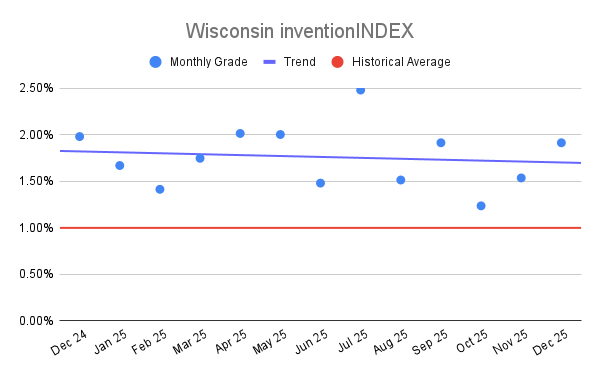 Wisconsin inventionINDEX December 2025
  Wisconsin inventionINDEX Novem
