

Quick Summary: Wisconsin R&D Tax Credits for Partnerships
In the Wisconsin tax framework, partnerships act as conduit entities for Research and Development (R&D) tax credits. While the partnership is responsible for calculating the credit based on aggregate Qualified Research Expenses (QREs) incurred within the state, it does not claim the credit directly. Instead, the credit “flows through” to the individual or corporate partners via Schedule 3K-1. Partners can then use this credit to offset their Wisconsin tax liability. Notably, for tax years beginning in 2024, up to 25% of the credit is refundable for eligible partners, providing a significant benefit even if the partner has no immediate tax liability.
Partnerships in the Wisconsin tax framework operate as conduit entities that calculate the Research and Development tax credit based on qualified activities conducted within the state but pass the resulting tax benefit to their partners. While the partnership is responsible for the computation and substantiation of the credit, the actual utilization of the credit to offset tax liability or claim a refund occurs exclusively at the individual or corporate partner level.
The Legal and Economic Framework of Partnership conduits in Wisconsin
The Wisconsin Research and Development (R&D) tax credit is established as a sophisticated incentive structure designed to foster a climate of technological advancement and industrial modernization within the state. For entities organized as partnerships, the credit functions through a “flow-through” or “pass-through” mechanism. This means that under Wisconsin law, specifically within the scope of Wisconsin Statutes Chapter 71, the partnership itself is generally not subject to income or franchise taxes. Instead, the partnership acts as a computational vehicle that aggregates economic activity—specifically qualified research expenses (QREs)—and identifies the resulting credit amount which is then distributed to the partners in proportion to their ownership interests or according to specific allocation agreements recognized under state law.
This legal arrangement reflects the “aggregate theory” of partnership taxation, where the partnership is viewed as an extension of its partners rather than a separate taxable entity. Consequently, the eligibility for the credit and the precise volume of the credit are determined by the economic behavior of the partnership, but the legal right to claim the credit is a personal attribute of the partner. This distinction is critical for practitioners, as a failure to properly compute the credit at the partnership level renders it unclaimable by the partners, regardless of the partners’ individual tax positions. Conversely, a partnership that properly computes a credit provides its partners with a valuable tax asset that can either reduce current-year liability, generate a cash refund, or be carried forward to future years.
Statutory Authority and the Evolution of the Credit
The primary statutory basis for the research credit is distributed across several sections of the Wisconsin Statutes to account for different types of claimants. For individuals and partners, the credit is governed by § 71.07(4k). For corporations, the governing statute is § 71.28(4), and for insurance companies, it is § 71.47(4). Although these statutes are distinct, they are largely harmonized in their definition of what constitutes “qualified research” and “qualified research expenses,” primarily by referencing Internal Revenue Code (IRC) Section 41.
Historically, the Wisconsin research credit was entirely nonrefundable, serving only as a dollar-for-dollar offset against tax liability. However, beginning with tax years after December 31, 2017, the Wisconsin Legislature introduced a refundability component to provide immediate liquidity to innovative firms that might not yet have reached profitability. This transition from a strictly nonrefundable credit to a partially refundable one has been phased in through several legislative acts, culminating in a significant increase for tax years beginning in 2024.
| Effective Period (Tax Years Beginning) | Nonrefundable Carryforward Period | Refundable Percentage of Current Year Credit |
|---|---|---|
| Pre-2018 | 15 Years | 0% |
| 2018 – 2020 | 15 Years | 10% |
| 2021 – 2023 | 15 Years | 15% |
| 2024 and Later | 15 Years | 25% |
Defining Qualified Research in the Partnership Context
To ensure that the tax incentive is directed toward genuine technological innovation, Wisconsin law requires partnerships to meet the same “four-part test” used at the federal level under IRC § 41(d). However, Wisconsin imposes a strict geographical limitation: the research must be conducted within the borders of Wisconsin.
The Four-Part Test for Pass-Through Entities
For a partnership’s project to generate a valid research credit, it must satisfy four concurrent requirements. If a project fails even one of these tests, none of the associated expenses qualify for the credit.
The “Permitted Purpose” test requires that the research be undertaken to develop a new or improved “business component” of the partnership. A business component can be a product, process, formula, invention, technique, or software that is intended to be held for sale, lease, or license, or used by the partnership in its trade or business. The research must specifically target improvements in the functionality, performance, reliability, or quality of the component.
The “Elimination of Uncertainty” test dictates that the partnership must have faced technical uncertainty at the beginning of the project. This uncertainty must relate to the “capability” of developing the component, the “method” to be used, or the “optimal design” of the component. If the path to the solution was professionally obvious or routine at the start, the activity does not qualify.
The “Process of Experimentation” test requires that the partnership engage in a systematic evaluation of alternatives to overcome the identified uncertainty. This typically involves developing a hypothesis, testing and analyzing the results, and refining the design. Common examples in a partnership setting include the creation of prototypes, computer modeling, or systematic trial-and-error testing.
Finally, the “Technological in Nature” test ensures that the process of experimentation relies on the principles of the “hard sciences,” such as engineering, physics, chemistry, biology, or computer science. Research based on social sciences, economics, or marketing does not qualify for the Wisconsin research credit.
The Wisconsin Situs Requirement
The most significant divergence from federal law is the requirement that research be conducted in Wisconsin. Qualified Research Expenses (QREs) are defined as expenses incurred by the claimant for research “conducted in this state”. This means that if a Wisconsin-based partnership hires a subcontractor in Illinois to perform part of a research project, the 65% of the contract amount paid for that Illinois-based work is ineligible for the Wisconsin credit, even though it would likely qualify for the federal credit. Partnerships with multi-state operations must implement rigorous accounting controls to segregate labor and supply costs by location.
Classification and Calculation of Qualified Research Expenses (QREs)
Once a partnership has identified qualified projects, it must aggregate the specific costs associated with those projects. Wisconsin law recognizes three primary types of QREs that can be passed through to partners.
In-House Research Expenses
In-house expenses comprise the bulk of most partnership claims and are divided into wages and supplies. Wages must be paid to employees of the partnership for “direct research,” “direct supervision” of research, or “direct support” of research. Direct research includes the actual performance of the experiments or the coding of software. Direct supervision involves the immediate management of the researchers, while direct support includes activities like cleaning lab equipment or maintaining research computers.
| Expense Type | Inclusion Percentage | Description and Limitations |
|---|---|---|
| Wages | 100% | Must be Wisconsin-based; excludes wages used for other credits like the Development Zone credit. |
| Supplies | 100% | Tangible property consumed in research; excludes land and depreciable property. |
| Contract Research | 65% | Payments to non-employees for research performed in Wisconsin. |
| Research Consortium | 75% | Payments to qualified tax-exempt research organizations. |
Supplies include any tangible property used in the conduct of qualified research that is not of a character subject to depreciation. This excludes land, buildings, and major equipment, but includes chemicals, materials for prototypes, and electricity directly consumed in the research process. Notably, Wisconsin provides a sales and use tax exemption for machinery and equipment used exclusively and directly in qualified research, which serves as a secondary incentive for partnerships engaged in capital-intensive innovation.
Contract Research and Consortia
Partnerships often lack the internal resources to complete all phases of a research project and may hire third-party contractors. Under Wisconsin law, only 65% of the amount paid to an outside person for qualified research is considered a QRE. This “haircut” is intended to account for the overhead and profit margins built into contract prices, which are not direct research costs. For payments made to a “qualified research consortium”—typically a tax-exempt organization organized primarily to conduct scientific research—the inclusion rate is increased to 75%.
The Incremental Credit Calculation Methodology
The Wisconsin research credit is not a flat percentage of all research spending; it is an incremental credit designed to reward partnerships for increasing their R&D investment over time. The fundamental calculation is based on the excess of current-year QREs over a “base amount”.
Establishing the Base Amount
For established partnerships, the base amount is defined as 50% of the average Wisconsin QREs for the three taxable years immediately preceding the current year. This “rolling average” ensures that the partnership must continuously increase its spending to maintain high credit levels. If a partnership had no research expenses in one or more of the prior three years, it is treated under the “start-up” rules.
The mathematical formula for the base amount is expressed as:
$$Base \text{ } Amount = 0.50 \times \left( \frac{QRE_{n-1} + QRE_{n-2} + QRE_{n-3}}{3} \right)$$
Where $QRE_{n-x}$ represents the Wisconsin qualified research expenses for the $x^{th}$ prior year.
Tiered Credit Rates
Wisconsin offers three distinct credit rates depending on the nature of the research activity and the history of the partnership.
1. General Research Credit (5.75%): This is the standard rate applied to most qualified research activities in the state. It is calculated as 5.75% of the current-year QREs that exceed the base amount.
2. Enhanced Research Credit (11.5%): Also known as the “Super R&D Credit,” this rate is available for activities specifically related to internal combustion engines (including fuel cells and hybrid drives) and certain energy-efficient products such as building automation and lighting systems. The credit is 11.5% of the excess QREs over the base amount.
3. Start-up Credit (2.875% or 5.75%): If a partnership has no QREs in any of the three preceding years, the base amount is zero. To prevent an excessive windfall, the credit rate is halved. General research is credited at 2.875% of total current-year QREs, while enhanced research is credited at 5.75% of total current-year QREs.
Evolution and Mechanics of Refundability for Partners
The transition to a refundable credit model has dramatically changed the utility of the R&D credit for partners in pass-through entities. Under the current 2024 rules, a partner can receive a cash refund for a portion of the credit that exceeds their total Wisconsin tax liability.
The Refund Computation logic
It is vital to distinguish between the “allowable amount” of the credit and the “refundable portion.” The partnership computes the total credit, but the individual partner determines the refund on their own return using Schedule R. The refundable portion is defined as the lesser of two values:
– 25% of the current-year research credit computed for the partner.
– The amount of the current-year credit that remains after it has been used to offset the partner’s current-year tax liability.
This “lesser of” rule ensures that the credit is first used to pay any tax owed to the state before any cash is disbursed. If a partner has a high tax liability that consumes more than 75% of the credit, they will not receive a refund, but they will have fully utilized the credit to reduce their tax bill. If their liability is zero, they receive the full 25% refund, and the remaining 75% is carried forward as a nonrefundable credit for up to 15 years.
The Role of Carryforwards
Nonrefundable credit carryforwards from prior years (pre-2024 or pre-2018) cannot be used to calculate a current-year refund. However, Wisconsin guidance stipulates that nonrefundable carryforwards should be used to offset tax liability before the current-year credit is applied. This ordering rule is beneficial because it preserves more of the current-year credit for potential refundability.
Administrative Guidance and Filing Procedures
The Department of Revenue (DOR) provides exhaustive guidance on the procedural requirements for partnerships and their partners. Compliance requires the coordinated filing of multiple forms to ensure the credit “flows” correctly through the system.
Schedule R: The Partnership’s Computational Duty
Every partnership claiming the R&D credit must complete and attach Schedule R to its Form 3 partnership return. Schedule R serves as the formal record of the partnership’s QREs and the resulting credit calculation.
– Lines 1-8: These lines are used to report the raw QRE data (wages, supplies, etc.).
– Line 9: The partnership must report its QREs for the prior three years. If any of those years had zero expenses, the “start-up” box on Line 9 must be checked.
– Line 16: This is the “Total Research Credits” line where the partnership’s final computed credit is summarized. For partnerships, this is where the computation on Schedule R ends, as they do not calculate tax offsets or refunds at the entity level.
Schedule 3K-1: The Distribution of the Credit
After the partnership computes its total credit on Schedule R, it must allocate that credit to its partners. This is reported in Part III of Schedule 3K-1, which is the individual partner’s share of the partnership’s tax attributes.
The partnership must provide specific codes to the partners to ensure they report the credit correctly on their individual or corporate returns:
– Code R: For the general research credit (5.75% rate).
– Code RIC: For the enhanced credit related to internal combustion engines or energy-efficient products (11.5% rate).
Partners receive their proportionate share based on their capital interest in the partnership, unless the partnership agreement provides for a “special allocation” that has substantial economic effect under federal law, which Wisconsin generally respects.
The Entity-Level Tax Election (§ 71.21(6)(a))
In response to changes in federal tax law (the SALT cap), Wisconsin introduced an election that allows partnerships to pay tax at the entity level rather than passing all items through to the partners. This election, found in Wis. Stat. § 71.21(6)(a), has significant implications for how R&D credits are utilized.
Mechanism of the Election
If a partnership makes the entity-level tax election:
– The partnership pays a flat 7.9% tax on its Wisconsin net income.
– The partners’ share of income from that partnership is excluded from their own Wisconsin adjusted gross income.
– The partnership may use the research credit to offset its own 7.9% tax liability.
However, the DOR warns that the partners cannot claim the credit on their personal returns in a year when the partnership has made this election. If the credit generated by the partnership exceeds the entity-level tax, the partnership can carry the unused portion forward to future years where the election is still in effect. If the election is revoked or not made in a future year, the partners may only use the credit carryforward to offset tax liability attributable to their share of that specific partnership’s income.
Combined Reporting and Unitary Business Implications
In the corporate world, partnerships are often subsidiaries or affiliates of larger corporate groups. Wisconsin requires “combined reporting” for corporations that are part of a commonly controlled group and engaged in a “unitary business”.
Unitary Business Concept
A unitary business exists when there is a significant flow of value between entities, characterized by functional integration, centralized management, and economies of scale. Under Wisconsin Administrative Code Tax 2.62, a partnership is often considered part of a unitary business if its operations are essential to or dependent upon the operations of its corporate partners.
Sharing Research Credits Within a Group
While most tax credits are attributes of the separate entity that earned them, Wisconsin law (Wis. Stat. § 71.255(6)(c)) and Administrative Code Tax 2.61(10) allow members of a combined group to share nonrefundable research credits.
1. Self-Utilization First: A member must first apply its own research credits (including carryforwards) against its own tax liability.
2. Sharable Portion: Only “sharable” credits can be distributed to other members. A credit is sharable if the entity was a member of the combined group in the year the credit was generated.
3. Pro-Rata Assignment: The remaining sharable credits from all members are aggregated and assigned to members who still have tax liability, in proportion to their share of the group’s combined unitary income.
Crucially, refundable portions of the research credit cannot be shared. Any refund due is paid to the “designated agent” of the combined group on behalf of the member who earned it.
Comprehensive Example: Multi-Tiered Innovation Partnership
To demonstrate the application of these principles, consider the case of “AeroTech LP,” a Wisconsin-based partnership developing hybrid-electric propulsion systems (qualifying for the enhanced 11.5% rate). AeroTech is owned 50% by “Global Corp” (a C-corporation) and 50% by “Venture Fund LLC” (a pass-through entity). Venture Fund LLC is owned 100% by “Mark Miller,” a Wisconsin resident.
Phase 1: AeroTech LP Computes the Credit
AeroTech LP performs its research in Madison, Wisconsin. It identifies the following Wisconsin QREs for 2024 and the prior base period:
| Year | Wisconsin QREs |
|---|---|
| 2024 (Current) | $2,000,000 |
| 2023 (Base-1) | $1,800,000 |
| 2022 (Base-2) | $1,200,000 |
| 2021 (Base-3) | $600,000 |
Step 1: Calculate Average Prior QREs:
$$Average = \frac{\$1,800,000 + \$1,200,000 + \$600,000}{3} = \$1,200,000$$
Step 2: Calculate Base Amount:
$$Base = 0.50 \times \$1,200,000 = \$600,000$$
Step 3: Calculate Excess QREs:
$$Excess = \$2,000,000 – \$600,000 = \$1,400,000$$
Step 4: Calculate Total Credit (Enhanced 11.5%):
$$Credit = \$1,400,000 \times 0.115 = \$161,000$$
AeroTech LP files Schedule R with its Form 3 and reports a total credit of $161,000.
Phase 2: Distribution Through the Tiers
AeroTech LP issues Schedules 3K-1:
– Global Corp (50%): Receives $80,500 (Code RIC).
– Venture Fund LLC (50%): Receives $80,500 (Code RIC).
Venture Fund LLC (the middle tier) does not claim the credit. Instead, it files its own Form 3, including a Schedule R that reports the $80,500 credit received from AeroTech LP on Line 15. It then issues a Schedule 3K-1 to its sole owner:
– Mark Miller (100%): Receives $80,500 (Code RIC).
Phase 3: Partner Utilization and Refund (Mark Miller)
Mark Miller files his personal Wisconsin Form 1. He has a Wisconsin tax liability of $20,000 before credits. He also has a nonrefundable research credit carryforward from 2020 of $5,000.
Step 1: Apply Carryforward:
Mark uses the $5,000 carryforward first. His remaining tax liability is now $15,000.
Step 2: Apply Current-Year Credit:
Mark uses $15,000 of his $80,500 current-year credit to reduce his tax to zero.
His remaining current-year credit is: $\$80,500 – \$15,000 = \$65,500$.
Step 3: Calculate Refundable Portion:
The maximum refundable amount is $25\% \times \$80,500 = \$20,125$.
The refundable portion is the lesser of the remaining credit ($65,500) or the maximum refundable ($20,125).
Mark receives a refund of $20,125.
Step 4: Calculate Carryforward to 2025:
Mark’s remaining credit to carry forward is: $\$65,500 – \$20,125 = \$45,375$.
Local Revenue Office Guidance: The “R&D Fee” Distinction
A nuanced aspect of local Wisconsin revenue guidance involves a linguistic overlap that frequently causes administrative errors. The Wisconsin Department of Revenue (DOR) and the Department of Children and Families (DCF) both utilize the abbreviation “R&D,” but in entirely different contexts.
In the context of child support, the “R&D Fee” refers to a $65 annual “Receipt and Disbursement” fee required by Wis. Stat. § 767.57 to cover the costs of processing support payments. If a partner in a research-heavy partnership fails to pay this $65 administrative fee, the DCF can “certify” the debt to the DOR. Once certified, the DOR is legally required under Wis. Stat. § 49.855(1) to intercept any state tax refund—including the 25% refundable portion of the Research and Development tax credit—to satisfy the unpaid child support R&D fee. Practitioners must be aware that a client’s “R&D Refund” could be reduced or eliminated by an unrelated “R&D Fee” debt.
Audit Standards and the “Trade or Business” Requirement
To sustain an R&D credit claim upon audit, a partnership must demonstrate that the research was performed “in connection with” its trade or business. Wisconsin follows federal standards which require that the partnership have a “profit motive” and engage in the activity with “continuity and regularity”.
Specific Documentation Expectations
DOR auditors typically request the following “contemporaneous” records to substantiate a partnership’s claim:
– Project Descriptions: Detailed narratives for each project explaining the technical uncertainty and the specific process of experimentation.
– Wage Allocations: A spreadsheet linking employee names, job titles, and Wisconsin-based research percentages to specific projects.
– Technical Evidence: Project plans, design drawings, testing protocols, and lab notebooks that prove the research was “technological in nature.”
– Contract Review: Copies of all research contracts to verify that the partnership retained the “substantial rights” to the research and bore the “economic risk” of failure. If the contract guarantees a successful result, it is considered “funded research” and is ineligible for the credit.
The IRC Section 174 Decoupling
A critical area of current audit focus is Wisconsin’s treatment of research and experimental expenditures. While the federal Tax Cuts and Jobs Act (TCJA) now requires businesses to capitalize and amortize R&D expenses over 5 years, Wisconsin has “decoupled” from this provision. For Wisconsin purposes, partnerships may still fully expense these costs in the year they are incurred. This creates a “Schedule I” adjustment for partners, where the federal amortization is added back, and the full Wisconsin expense is subtracted, affecting the partner’s overall tax liability and the basis in their partnership interest.
Future Outlook and Strategic Considerations
The Wisconsin Research and Development tax credit represents a stable and increasingly valuable component of the state’s tax landscape. The permanent nature of the credit—lacking an expiration date—allows partnerships to make multi-year investment plans with confidence.
Looking forward, the 2024 increase in refundability to 25% is expected to drive higher levels of participation among early-stage partnerships and those in the “Super R&D” categories of internal combustion and energy efficiency. Partnerships should consider the following strategic elements to maximize their benefits:
– Entity Selection: For new ventures, the partnership structure remains highly efficient for distributing R&D credits, particularly because it allows for the 25% cash refund at the individual level, which is often more valuable than a corporate carryforward.
– State Apportionment: Partnerships with multi-state employees should consider shifting research-heavy roles to Wisconsin-based facilities to capture the 5.75% or 11.5% credit on those wages.
– Documentation Hygiene: Implementing real-time project tracking software that captures the “Four-Part Test” data as work occurs can significantly reduce the risk and cost of a future DOR audit.
By adhering to the intricate filing requirements of Schedule R and Schedule 3K-1, and maintaining a rigorous focus on the Wisconsin situs of research activities, partnerships can serve as powerful engines for both technological innovation and tax-efficient capital formation in the state of Wisconsin.
Who We Are:
Swanson Reed is one of the largest Specialist R&D Tax Credit advisory firm in the United States. With offices nationwide, we are one of the only firms globally to exclusively provide R&D Tax Credit consulting services to our clients. We have been exclusively providing R&D Tax Credit claim preparation and audit compliance solutions for over 30 years. Swanson Reed hosts daily free webinars and provides free IRS CE and CPE credits for CPAs.
Are you eligible?

Why choose us?

Pass an Audit?

What is the R&D Tax Credit?
The Research & Experimentation Tax Credit (or R&D Tax Credit), is a general business tax credit under Internal Revenue Code section 41 for companies that incur research and development (R&D) costs in the United States. The credits are a tax incentive for performing qualified research in the United States, resulting in a credit to a tax return. For the first three years of R&D claims, 6% of the total qualified research expenses (QRE) form the gross credit. In the 4th year of claims and beyond, a base amount is calculated, and an adjusted expense line is multiplied times 14%. Click here to learn more.
Never miss a deadline again

Stay up to date on IRS processes

Discover R&D in your industry

R&D Tax Credit Preparation Services
Swanson Reed is one of the only companies in the United States to exclusively focus on R&D tax credit preparation. Swanson Reed provides state and federal R&D tax credit preparation and audit services to all 50 states.
If you have any questions or need further assistance, please call or email our CEO, Damian Smyth on (800) 986-4725.
Feel free to book a quick teleconference with one of our national R&D tax credit specialists at a time that is convenient for you.
R&D Tax Credit Audit Advisory Services
creditARMOR is a sophisticated R&D tax credit insurance and AI-driven risk management platform. It mitigates audit exposure by covering defense expenses, including CPA, tax attorney, and specialist consultant fees—delivering robust, compliant support for R&D credit claims. Click here for more information about R&D tax credit management and implementation.
Our Fees
Swanson Reed offers R&D tax credit preparation and audit services at our hourly rates of between $195 – $395 per hour. We are also able offer fixed fees and success fees in special circumstances. Learn more at https://www.swansonreed.com/about-us/research-tax-credit-consulting/our-fees/



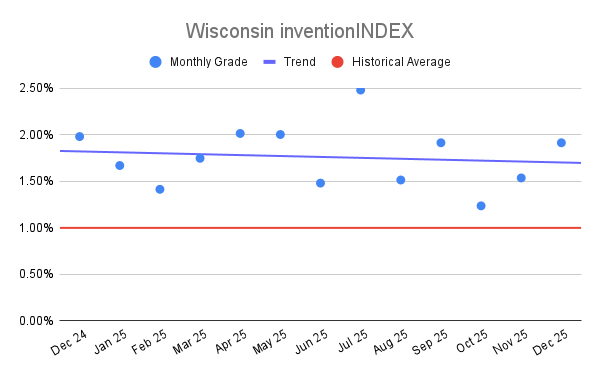 Wisconsin inventionINDEX December 2025
  Wisconsin inventionINDEX Novem
