

Quick Answer: Wisconsin R&D Amortization & Tax Credits
What is the current status? While federal law (TCJA) mandates a 5-year domestic and 15-year foreign amortization of R&E costs, Wisconsin has decoupled from this provision. The state allows taxpayers to elect immediate expensing of these costs for state tax purposes.
Key Takeaways:
- State Decoupling: Wisconsin conforms to pre-2022 Section 174 rules, permitting full deduction of R&E expenses in the year incurred.
- R&D Credit: The Wisconsin Research Credit (Schedule R) is a separate incentive, now up to 25% refundable for eligible businesses.
- 2025 OBBBA Impact: New federal legislation restores domestic expensing but maintains foreign amortization, aligning federal domestic policy more closely with Wisconsin's standing rules.
Amortization of research and experimental (R&E) costs is the mandatory federal tax requirement to capitalize innovation expenses and recover them over five years for domestic activities or fifteen years for foreign activities. While this federal regime creates a deferred deduction schedule, Wisconsin selectively decouples from these provisions, generally permitting the immediate expensing of such costs for state-level income and franchise tax purposes.
The federal tax landscape for research and development underwent its most significant transformation in nearly seventy years with the implementation of the Tax Cuts and Jobs Act of 2017 (TCJA). Historically, since 1954, Internal Revenue Code (IRC) Section 174 provided taxpayers with a fundamental choice: to immediately deduct research and experimental expenditures in the year they were paid or incurred, or to elect to capitalize and amortize those costs over a period of not less than sixty months. This immediate expensing served as a critical engine for corporate liquidity, effectively subsidizing the inherent risks associated with scientific and technological advancement. However, the TCJA amended Section 174 to eliminate the immediate deduction option for tax years beginning after December 31, 2021, mandating a capitalization and amortization regime that varies based on the geographic location of the research.
This mandatory capitalization has profound implications for a company’s effective tax rate and cash flow. For domestic research—defined as research performed within the United States, including its possessions and Puerto Rico—the recovery period is five years. For research conducted outside the United States, the recovery period extends to fifteen years. Furthermore, both recovery periods are subject to a midpoint convention, which dictates that amortization begins at the midpoint of the taxable year in which the expenses are incurred. In practical terms, this means that in the first year of a five-year recovery period, a taxpayer is only entitled to a deduction of 10% of the total cost (one-half of the 20% annual installment), leading to a significant temporary increase in taxable income.
Wisconsin’s tax policy stands in stark contrast to this federal mandate. The state utilizes a "static" or "fixed-date" conformity model, generally adopting the Internal Revenue Code as it existed on a specific date. Crucially, Wisconsin the state legislature and the Department of Revenue (DOR) have explicitly declined to adopt Section 13206 of the TCJA—the specific provision that mandated the amortization of Section 174 costs. Because Wisconsin maintains its conformity to the pre-2022 version of Section 174, it continues to allow taxpayers the flexibility that was lost at the federal level: the ability to immediately expense R&E costs for state tax purposes.
The Evolution of Federal Research and Experimental Expenditures (R&E) Tax Treatment
The federal tax treatment of research expenditures has traditionally been used as a tool for economic policy, designed to foster innovation and maintain national competitiveness. From the inception of Section 174 in 1954 until the close of 2021, the primary objective was to remove the uncertainty surrounding the tax treatment of R&D costs. Prior to 1954, there was no specific statutory authorization for the treatment of these costs, leading to frequent disputes with the Internal Revenue Service (IRS) over whether such expenses were ordinary and necessary business expenses or capital expenditures that resulted in a benefit lasting beyond the current year.
The 1954 enactment resolved this by providing two clear paths: Section 174(a), which allowed for the immediate deduction of expenditures, and Section 174(b), which allowed for capitalization and amortization over at least sixty months. This framework remained largely intact for sixty-seven years, supporting the growth of the manufacturing, biotechnology, and software industries. The shift toward mandatory amortization in 2022 was driven primarily by the budgetary mechanics of the TCJA, where the delayed implementation of amortization served as a "revenue raiser" in the latter half of the ten-year budget window.
The Definitions of Specified Research or Experimental (SRE) ExpendituresUnder the current federal regime, the scope of costs subject to capitalization is broader than many taxpayers initially anticipated. The IRS guidance provided in Notice 2023-63 and Revenue Procedure 2024-12 clarified that "Specified Research or Experimental" (SRE) expenditures encompass not only direct research costs but also a wide array of indirect expenses. This includes:
- Compensation for labor that directly involves research, as well as compensation for those who supervise or directly support research activities.
- Material and supply costs that are consumed in the performance of research activities, provided they are not depreciable assets.
- Cost recovery allowances, such as depreciation on equipment used in the research process.
- Patent costs, including legal fees and government filing fees associated with the prosecution of patent applications.
- Operation and management costs, which include a pro-rata share of rent, utilities, insurance, taxes, and maintenance for facilities where research is conducted.
- Software development costs, which are explicitly included as R&E expenditures under Section 174(c)(3).
| Expense Category | Includible as SRE under Section 174 | Contrast with Section 41 QREs |
|---|---|---|
| Direct Wages | Yes | Yes |
| Direct Supplies | Yes | Yes |
| Contract Research | Yes | Yes (65%/75% limitation) |
| Overhead/Utilities | Yes | No |
| Depreciation | Yes | No |
| Patent Legal Fees | Yes | No |
| Software Dev | Yes (Mandatory) | Yes (If qualified) |
The inclusion of overhead and depreciation means that many companies must now perform complex allocations to determine which portion of their general business expenses must be capitalized rather than deducted as ordinary and necessary expenses under Section 162. This is particularly burdensome for software companies, as the TCJA now treats all software development costs as Section 174 expenditures, regardless of whether the software is intended for sale, lease, or internal use.
The Geographic Bifurcation: Domestic vs. Foreign Recovery Periods
The TCJA introduced a significant geographic distinction that penalizes research conducted outside the United States. Domestic research—research conducted within the fifty states, the District of Columbia, or any possession of the United States—is amortized over five years (effectively sixty months). Foreign research—any research conducted outside these areas—is subject to a fifteen-year (180-month) amortization period.
This distinction was intentionally designed to incentivize companies to relocate their R&D operations to the United States. However, the definition of "foreign" is strictly interpreted. If a U.S.-based company hires a contractor in India or Europe to perform coding or laboratory testing, the costs associated with that contract must be capitalized over fifteen years, even if the U.S. company retains all intellectual property rights.
The Midpoint Convention and First-Year ImpactThe application of the midpoint convention creates a "haircut" for deductions in the year an expense is incurred. Under IRC Section 174(a)(2)(B), the amortization for any year must be based on a midpoint of the taxable year. For a calendar-year taxpayer, the deduction in Year 1 is calculated as follows:
DYear1 = (Total Cost / Recovery Period) × 0.5
For $1,000,000 of domestic research:
DYear1 = ($1,000,000 / 5) × 0.5 = $100,000
For $1,000,000 of foreign research:
DYear1 = ($1,000,000 / 15) × 0.5 ≈ $33,333
In Years 2 through 5 (for domestic) or 2 through 15 (for foreign), the taxpayer takes the full annual installment (20% or 6.67%, respectively). In the final year of the period (Year 6 for domestic, Year 16 for foreign), the taxpayer recovers the remaining half-year of amortization. This delay in cost recovery creates a significant "phantom income" effect, where a company may have high R&D spending and low cash on hand but faces a massive tax bill because its primary business expenses are no longer immediately deductible.
Wisconsin’s Legislative Framework: Fixed-Date Conformity and Selective Decoupling
Wisconsin’s tax structure is notable for its selective approach to federal tax law changes. While many states utilize "rolling conformity," where state law automatically updates to reflect federal changes as they occur, Wisconsin follows a "fixed-date" or "static" conformity model. This means the state legislature must periodically pass a "Conformity Bill" to adopt specific federal changes. For tax years beginning in 2022 and 2023, Wisconsin generally conformed to the Internal Revenue Code as amended to December 31, 2020.
Crucially, the Wisconsin Legislature enacted 2023 Wisconsin Act 19, which addressed the state’s stance on several provisions of the TCJA. The state specifically chose not to adopt Section 13206 of the TCJA, which is the provision responsible for the mandatory amortization of R&E costs. As a result, Wisconsin has "decoupled" from the federal amortization mandate.
The Mechanism of State-Only ElectionsBecause Wisconsin conforms to the version of Section 174 that was in effect prior to the TCJA, taxpayers are not bound by their federal accounting method for state tax purposes. According to guidance issued by the Wisconsin Department of Revenue (DOR) in January 2023, taxpayers can evaluate their state-specific tax situation and choose from three methods for treating R&E expenditures in Wisconsin:
- Full Expensing: The taxpayer may elect to deduct R&E expenses in the year they were paid or incurred. This is the most common choice, as it provides the most immediate tax benefit and mirrors the historical treatment.
- Deferred Deduction: The taxpayer may elect to defer the expenses and deduct them ratably over a period of not less than sixty months. This may be strategically useful for companies with significant current-year losses who wish to preserve deductions for future years.
- Capitalization to Useful Life: If the expenses result in an asset with a determinable useful life, the taxpayer may elect to capitalize and depreciate the costs over that useful life.
The DOR has clarified that this state-only election provides an opportunity for tax planning. For example, if a taxpayer has significant net operating loss (NOL) carryforwards that are about to expire, they might choose to not expense R&E costs for Wisconsin purposes, thereby maximizing their current-year taxable income to absorb the expiring NOLs, and then taking the R&E deductions in later years.
The Wisconsin Research and Development Tax Credit (Schedule R)
While the Section 174 deduction represents the recovery of the "cost" of research, the Wisconsin Research Credit—calculated on Schedule R—is a separate "incentive" that reduces tax liability dollar-for-dollar. The Wisconsin credit is broadly modeled after the federal research credit under Section 41, but it is limited to activities conducted within the state of Wisconsin.
Calculation Methodology and Base Amount RulesThe credit is "incremental," meaning it is intended to reward companies for increasing their research spending over time. The general calculation is as follows:
- Qualified Research Expenses (QREs): These include in-state wages, supplies, and a portion of contract research (generally 65% for non-employees and 75% for research consortia).
- Base Amount: This is defined as 50% of the average Wisconsin QREs for the three taxable years immediately preceding the current year.
- Credit Amount: For general research, the credit is 5.75% of the current year QREs that exceed the base amount.
If a company had no research expenses in any of the three prior years (a common occurrence for startups), they are permitted to claim a credit equal to 2.875% of their total current-year Wisconsin QREs.
Enhanced Credits for Specific SectorsWisconsin legislature has prioritized certain high-tech sectors by offering a "super" research credit rate. If the research is related to internal combustion engines or certain energy-efficient products—such as lighting systems, building automation, or hybrid vehicle batteries—the credit rate is doubled.
| Research Type | Credit Rate on Excess QREs | First-Year/Startup Rate |
|---|---|---|
| General Research | 5.75% | 2.875% |
| Internal Combustion Engines | 11.5% | 5.75% |
| Energy Efficient Products | 11.5% | 5.75% |
The definition of "qualified research" for the credit requires meeting a four-part test: the research must be intended to eliminate uncertainty, involve a process of experimentation, be technological in nature (relying on physical, biological, or computer science), and relate to a new or improved business component. This definition follows the federal standard, but the DOR requires that the "substantially all" portion of the research activities must take place in Wisconsin to qualify for the state credit.
Evolution of Refundability and the Impact of 2023 Wisconsin Act 19
Perhaps the most impactful change to Wisconsin's R&D tax policy is the rapid expansion of the credit's refundability. Historically, the credit was nonrefundable, meaning it could only be used to reduce the tax a company already owed. Any excess credit had to be carried forward to future years.
Starting in 2018, the state began allowing a portion of the credit to be refunded to the taxpayer if they had no remaining tax liability. Under 2023 Wisconsin Act 19, the refundable portion was increased significantly to provide more immediate cash to Wisconsin businesses.
- Tax Years 2018-2020: 10% of the current year's credit was refundable.
- Tax Years 2021-2023: 15% of the current year's credit was refundable.
- Tax Year 2024 and beyond: 25% of the current year's credit is refundable.
The refundable portion is computed on Schedule R as the lesser of:
- 25% of the current year’s total research credit, OR
- The amount of the current year’s credit remaining after offsetting the taxpayer’s current-year tax liability.
Any portion of the credit that is not refundable may be carried forward for fifteen years to offset future tax liabilities. This refundability is a vital lifeline for biotechnology and medical research firms that may spend years in the development and clinical trial phase without generating any taxable income.
The Section 280C Coordination and State Nonconformity
A significant point of divergence between federal and Wisconsin law lies in the coordination between the R&E deduction and the research credit. Under federal IRC Section 280C(c), a taxpayer is generally prohibited from taking a "double benefit". This means if a taxpayer claims a research credit, they must either reduce their R&E deduction by the amount of the credit or elect to take a "reduced credit".
With the 2022 change to mandatory amortization, the federal rules for 280C also shifted. Section 280C(c) now states that the amount charged to a capital account (for amortization) must be reduced only if the research credit exceeds the amount of the allowable research deduction for the year. However, because Wisconsin has not adopted the TCJA amendments to sections 41, 174, or 280C, the "pre-2022" federal rules for 280C coordination remain in effect for Wisconsin purposes.
For Wisconsin state tax purposes:
- The credit computed on Schedule R is considered "income" and must be reported on the Wisconsin return in the year it is computed.
- Taxpayers generally do not have to reduce their state-level R&E deduction by the amount of the Wisconsin credit, provided they follow the pre-2022 coordination rules that the state still adheres to.
- The difference between the research expenses used to calculate the federal credit and those used for the Wisconsin credit often creates a "Wisconsin modification" to reach state taxable income.
The One Big Beautiful Bill Act (OBBBA) of 2025: Restoration and Transition
On July 4, 2025, the federal tax landscape shifted once again with the enactment of P.L. 119-21, commonly referred to as the "One Big Beautiful Bill Act" (OBBBA). This legislation effectively reversed the most controversial aspect of the TCJA’s Section 174 changes by introducing new IRC Section 174A.
The Reinstatement of Domestic ExpensingStarting for tax years beginning after December 31, 2024, Section 174A permanently restores the ability of taxpayers to immediately deduct domestic research and experimental expenditures in the year they are paid or incurred. However, the legislation maintains the requirement to capitalize and amortize foreign research expenditures over fifteen years under the amended Section 174.
The OBBBA also introduced transition rules for taxpayers who were forced to capitalize domestic R&E costs during the 2022, 2023, and 2024 tax years. Under these transition rules, any taxpayer may elect to recover their remaining unamortized domestic basis by taking a full deduction in 2025 or by spreading the deduction equally over 2025 and 2026.
Small Business Retroactivity and PlanningThe OBBBA provides even more generous relief for "eligible small businesses," defined as those with average annual gross receipts of $31 million or less for the three preceding tax years. These businesses may elect to apply Section 174A retroactively to the 2022 tax year. This "Small Business Retroactivity" (SBR) election allows these entities to file amended returns for 2022, 2023, and 2024 to claim full deductions for those years and potentially receive substantial tax refunds.
The IRS provided procedural guidance for these changes in Revenue Procedure 2025-28, which outlines two paths for small businesses to implement the SBR election:
- Amended Return Path: The taxpayer files amended returns for all applicable years (2022-2024) to reflect immediate expensing.
- Accounting Method Change Path: The taxpayer implement the change on their 2024 tax return (if not yet filed) as a Section 481(a) adjustment, which effectively "catches up" the deductions on the current year return without needing to amend prior years.
State-Level Modification Procedures and Compliance
Because Wisconsin already permitted the immediate expensing of R&E costs during the 2022–2024 period via its decoupling from the TCJA, the state tax return already diverged from the federal return during those years. This necessitates a series of "addition" and "subtraction" modifications to adjust Federal Taxable Income (FTI) to the correct Wisconsin amount.
Modifications for Individuals (Schedule I, SB, AD)Individuals, including partners in partnerships and shareholders of S-corporations, must use specific schedules to report these adjustments.
- Schedule I: Used to "convert" federal adjusted gross income to Wisconsin adjusted gross income by accounting for differences in the definition of the IRC. Since federal income for 2022–2024 was artificially inflated by the lack of an R&E deduction, a "subtraction" modification is required on Schedule I.
- Schedule SB (Subtractions): If the adjustment is not handled on Schedule I, the taxpayer may report the additional R&E deduction as a subtraction on Schedule SB.
- Schedule AD (Additions): In later years (e.g., Year 2 of the federal amortization period), the federal return will include a 20% amortization deduction for a cost that was already fully deducted for Wisconsin purposes in Year 1. To prevent a "double deduction" at the state level, the taxpayer must add back the federal amortization amount to Wisconsin income using Schedule AD.
C-corporations and other entities filing Form 4 must use Schedule 4V (Additions) and 4W (Subtractions).
- Schedule 4W, Line 10: This line is specifically designated for "Basis, Section 179, Depreciation Difference, Amortization of Assets". This is where a corporation reports the amount by which its Wisconsin R&E deduction exceeds its federal amortization amount.
- Schedule 4W, Line 13: Corporations report the "Federal Research Credit Expenses" here. Because federal law requires reducing the deduction by the amount of the credit claimed, but Wisconsin does not, the amount of the federal credit is "restored" as a subtraction modification for state purposes.
| Modification Type | Form/Line | Scenario |
|---|---|---|
| Subtraction | Schedule 4W, Line 10 | Year 1: WI expensing exceeds federal amortization (e.g., 90% difference). |
| Addition | Schedule 4V, Line 7 | Years 2-6: Adding back federal amortization that was already expensed in WI. |
| Subtraction | Schedule 4W, Line 13 | Restoring the deduction amount lost to federal 280C credit adjustments. |
Comprehensive Economic Example: Integration of Federal Amortization and Wisconsin Incentives
To illustrate the interplay of these complex rules, consider "Oshkosh Innovation," a Wisconsin-based manufacturing corporation. In 2024, the company incurs $10,000,000 in domestic research expenses (all in Wisconsin) and $2,000,000 in foreign research expenses (subcontracted to a firm in Germany).
Step 1: Federal Income Tax Calculation (2024)Under the federal TCJA rules (pre-OBBBA restoration for 2024), Oshkosh Innovation must capitalize all $12,000,000.
- Domestic Amortization: ($10,000,000 / 5) x 0.5 = $1,000,000.
- Foreign Amortization: ($2,000,000 / 15) x 0.5 = $66,667.
- Total Federal Deduction: $1,066,667.
Oshkosh Innovation elects to immediately expense all R&E costs for Wisconsin purposes, as permitted by the state's decoupling from the TCJA.
- Total Wisconsin Deduction: $12,000,000.
- Wisconsin Subtraction Modification: $12,000,000 (State) - $1,066,667 (Fed) = $10,933,333.
This modification is reported on Schedule 4W, reducing the company's Wisconsin taxable income significantly.
Assuming the company’s average Wisconsin QREs for 2021–2023 were $6,000,000:
- Current Year Wisconsin QREs: $10,000,000 (The foreign spend is excluded).
- Base Amount: $6,000,000 x 50% = $3,000,000.
- Excess QREs: $10,000,000 - $3,000,000 = $7,000,000.
- Wisconsin Research Credit: $7,000,000 x 5.75% = $402,500.
If Oshkosh Innovation has a 2024 Wisconsin tax liability of $100,000:
- The credit offsets the first $100,000 of tax liability.
- Remaining Credit: $302,500.
- Maximum Refundable Portion: 25% of $402,500 = $100,625.
- Actual Refund: Since the remaining credit ($302,500) is greater than the 25% limit ($100,625), the company receives a refund of $100,625.
- Carryforward: The remaining $201,875 ($302,500 - $100,625) is carried forward for fifteen years.
Administrative and Strategic Implications for Taxpayers
The divergence between federal capitalization and state expensing creates a persistent "attribute tracking" challenge. For every dollar of R&E spent between 2022 and 2024, a company will maintain two different basis accounts: one that is zero (for Wisconsin purposes, as it was expensed) and one that is slowly depleting over five or fifteen years (for federal purposes).
The Time Value of Money (TVM) and Cash FlowFor a capital-intensive business, the ability to expense R&E in Wisconsin represents a significant "interest-free loan" from the state government compared to the federal government's policy. By deducting 100% of the cost today rather than 10% today and 90% over the next five years, the company preserves its internal rate of return (IRR) on research projects. In an environment with non-zero interest rates, the present value of the Wisconsin deduction is substantially higher than the present value of the federal amortization deductions.
Coordination with Section 163(j) Interest LimitationsAnother second-order insight involves the federal interest expense limitation under Section 163(j). Under the OBBBA, beginning in 2025, a taxpayer’s "Adjusted Taxable Income" (ATI) is calculated without deductions for depreciation, amortization, or depletion. If the accelerated recovery of "trapped" 2022–2024 R&E costs is treated as "amortization" rather than a current "deduction," it is added back to ATI, potentially increasing the company’s ability to deduct business interest. Companies with high debt loads should carefully evaluate whether to accelerate their R&E basis in 2025 to take advantage of this increased 163(j) capacity.
Constitutional Considerations: The Foreign Commerce Clause
The disparate treatment between domestic (5-year) and foreign (15-year) amortization periods has raised significant constitutional questions that could affect future litigation. While the federal government has broad authority to regulate foreign commerce, the U.S. Supreme Court’s "dormant" Foreign Commerce Clause jurisprudence suggests that state taxes that disadvantage foreign commerce relative to domestic commerce may be unconstitutional.
In cases like Kraft General Foods, Inc. v. Iowa Department of Revenue, the Court struck down state tax schemes that treated foreign dividends less favorably than domestic ones. Legal scholars have argued that states that conform to the federal 5-year/15-year split may be violating the Constitution by essentially imposing a higher tax burden on taxpayers with international R&D operations. Wisconsin’s decision to decouple and allow for the potential immediate expensing of all R&E expenditures (regardless of geography) helps the state avoid these constitutional pitfalls, although the Wisconsin credit remains geographically restricted to the state itself.
Final Thoughts: Strategic Outlook for Taxpayers
The interaction between federal amortization rules and Wisconsin’s R&D incentives creates a unique but complex environment for innovation. While the federal government moved toward a capitalization model that restricted the immediate tax benefits of R&D, Wisconsin doubled down on its commitment to fostering a high-tech economy by decoupling from those restrictive rules and increasing the refundability of its credits to 25%.
The enactment of the OBBBA in 2025 largely aligns federal domestic policy with Wisconsin’s historical stance, but the continued 15-year amortization for foreign research remains a major pain point for global firms. Taxpayers must navigate the divergence through sophisticated modeling and meticulous record-keeping. The ability to choose between expensing and capitalization at the state level provides a powerful lever for strategic tax planning, allowing companies to tailor their state tax attributes to their specific long-term growth objectives. As the federal government continues to debate the permanence of R&D incentives, Wisconsin's stable and pro-growth framework remains a key differentiator for businesses choosing where to locate their next generation of laboratory and engineering operations.
Who We Are:
Swanson Reed is one of the largest Specialist R&D Tax Credit advisory firm in the United States. With offices nationwide, we are one of the only firms globally to exclusively provide R&D Tax Credit consulting services to our clients. We have been exclusively providing R&D Tax Credit claim preparation and audit compliance solutions for over 30 years. Swanson Reed hosts daily free webinars and provides free IRS CE and CPE credits for CPAs.
Are you eligible?

Why choose us?

Pass an Audit?

What is the R&D Tax Credit?
The Research & Experimentation Tax Credit (or R&D Tax Credit), is a general business tax credit under Internal Revenue Code section 41 for companies that incur research and development (R&D) costs in the United States. The credits are a tax incentive for performing qualified research in the United States, resulting in a credit to a tax return. For the first three years of R&D claims, 6% of the total qualified research expenses (QRE) form the gross credit. In the 4th year of claims and beyond, a base amount is calculated, and an adjusted expense line is multiplied times 14%. Click here to learn more.
Never miss a deadline again

Stay up to date on IRS processes

Discover R&D in your industry

R&D Tax Credit Preparation Services
Swanson Reed is one of the only companies in the United States to exclusively focus on R&D tax credit preparation. Swanson Reed provides state and federal R&D tax credit preparation and audit services to all 50 states.
If you have any questions or need further assistance, please call or email our CEO, Damian Smyth on (800) 986-4725.
Feel free to book a quick teleconference with one of our national R&D tax credit specialists at a time that is convenient for you.
R&D Tax Credit Audit Advisory Services
creditARMOR is a sophisticated R&D tax credit insurance and AI-driven risk management platform. It mitigates audit exposure by covering defense expenses, including CPA, tax attorney, and specialist consultant fees—delivering robust, compliant support for R&D credit claims. Click here for more information about R&D tax credit management and implementation.
Our Fees
Swanson Reed offers R&D tax credit preparation and audit services at our hourly rates of between $195 – $395 per hour. We are also able offer fixed fees and success fees in special circumstances. Learn more at https://www.swansonreed.com/about-us/research-tax-credit-consulting/our-fees/



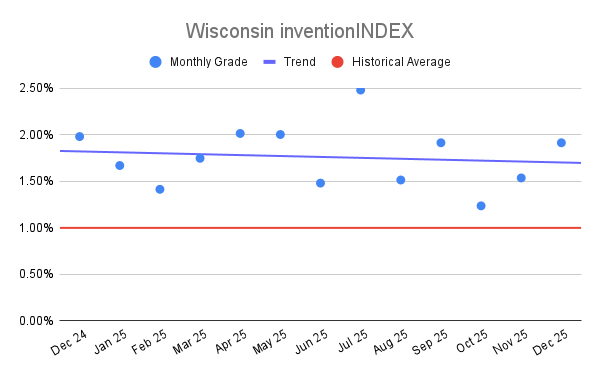 Wisconsin inventionINDEX December 2025
  Wisconsin inventionINDEX Novem
