

The Wisconsin R&D Credit Carryforward is a tax mechanism that allows taxpayers to apply unused research and development tax credits from a current taxable year against future tax liabilities. Under current Wisconsin statutes, this carryforward period is 15 years, ensuring that businesses can realize the value of their innovation investments even during years of low tax liability. The credit is applied on a “First-In, First-Out” (FIFO) basis and must be tracked using Schedule CF.
Unused Research Credit Carryforward refers to the remaining balance of a taxpayer’s Wisconsin research and development tax credit that exceeds their current-year tax liability and any applicable refundable portion, allowing it to be applied against future tax obligations for a designated statutory period. This mechanism provides a critical financial bridge for innovative enterprises, ensuring that long-term investments in research and development can eventually be realized as tax savings even during periods of limited profitability or high initial capital expenditure.
The Jurisprudential Basis and Statutory Framework of the Wisconsin Research Credit
The Wisconsin research credit is a sophisticated tax incentive program codified primarily within Chapters 71.07, 71.28, and 71.47 of the Wisconsin Statutes. It is designed to reward businesses that increase their research activities within the geographic boundaries of the state. To understand the carryforward mechanism, one must first delineate the three distinct varieties of research credits available under Wisconsin law, each of which contributes to a taxpayer’s cumulative carryforward balance if not fully utilized in the year of origin.
The first and most broadly applicable is the Research Credit for Increasing Research, often referred to as the “General” research credit. This credit is calculated as 5.75% of the amount by which a claimant’s qualified research expenses (QREs) for the taxable year exceed 50% of their average QREs for the three preceding taxable years. For nascent enterprises or those with no research history in Wisconsin during the previous three years, the law provides a “startup” rate of 2.875% of the total current-year QREs.
The second and third varieties are specialized “enhanced” credits aimed at specific industrial sectors: internal combustion engines and certain energy-efficient products. These credits feature a doubled rate of 11.5% of the excess over the base amount, or 5.75% for entities without a three-year history. These enhanced credits are a cornerstone of Wisconsin’s strategy to remain a leader in manufacturing and green technology.
Statutory Authority and the 15-Year Carryforward
Under the prevailing version of the Wisconsin Statutes, specifically sections 71.28(4)(b) for corporations and 71.07(4k)(e)2.b. for individuals, the period for carrying forward an unused research credit is 15 years. The law stipulates that a corporation receiving a credit may carry forward to the next succeeding 15 taxable years the amount of the credit not offset against taxes for the year of origin, provided it is used to the extent not offset by taxes due in all intervening years.
This 15-year limitation has historically served as the standard “useful life” of a tax credit asset in Wisconsin. However, as business cycles have lengthened and the time between laboratory discovery and commercial revenue has expanded—particularly in fields like biotechnology and aerospace—the 15-year window has come under scrutiny as insufficient for modern industrial needs.
| Feature | Research Credit for Increasing Research | Credit for Internal Combustion Engines | Credit for Energy Efficient Products |
|---|---|---|---|
| Statutory Reference | Wis. Stat. § 71.28(4)(ad) 8 | Wis. Stat. § 71.28(4)(ad) 8 | Wis. Stat. § 71.28(4)(ad) 8 |
| Standard Credit Rate | 5.75% | 11.5% | 11.5% |
| Startup/No-History Rate | 2.875% | 5.75% | 5.75% |
| Base Calculation | 50% of 3-year average | 50% of 3-year average | 50% of 3-year average |
| Current Carryforward | 15 Years | 15 Years | 15 Years |
The Definition of Qualified Research and Expenses
The Wisconsin Department of Revenue (DOR) maintains strict guidance on what constitutes “Qualified Research” for the purpose of generating credits that eventually become carryforwards. Wisconsin law explicitly leverages the federal definition found in Section 41 of the Internal Revenue Code (IRC), though with critical local modifications. To be eligible, an activity must satisfy the “Four-Part Test” established under IRC § 41(d)(1):
- The Section 174 Test: The expenditures must be eligible for treatment as research and experimental expenditures under IRC Section 174. This requires the expenses to be incurred in connection with the taxpayer’s trade or business and represent research and development costs in the experimental or laboratory sense.
- The Technological Information Test: The research must be undertaken for the purpose of discovering information that is technological in nature. This means the process must rely on principles of physical or biological sciences, engineering, or computer science.
- The Business Component Test: The taxpayer must intend to use the information discovered to develop a new or improved “business component,” which can be a product, process, computer software, technique, formula, or invention.
- The Process of Experimentation Test: Substantially all of the activities must constitute elements of a process of experimentation relating to a new or improved function, performance, reliability, or quality. This involves the identification of uncertainty, the evaluation of alternatives, and the testing of hypotheses.
While the qualitative definition follows the IRC, the geographic scope is strictly limited. Only expenses incurred for research conducted within the state of Wisconsin qualify for the Wisconsin credit. If research is conducted partly inside and partly outside the state and the specific Wisconsin amount cannot be accurately determined, the law permits a reasonable allocation of expenses to the state.
Administrative Guidance on the Interplay of Refundability and Carryforward
The concept of a carryforward does not exist in a vacuum; it is the final residual of a multi-step tax calculation process. Since the 2018 tax year, Wisconsin has introduced a refundable component to the research credit, which complicates the determination of the carryforward amount. The DOR provides exhaustive guidance on this interaction through Schedule R and periodic Tax Bulletins.
The Evolution of Refundability Rates
The portion of the current-year research credit that can be paid out as a refund—rather than being forced into a carryforward—has increased significantly over the last several legislative cycles. This policy change reflects an effort to provide immediate liquidity to R&D-heavy firms that may not yet have the profits to utilize traditional nonrefundable credits.
| Tax Year Start Date | Refundable Percentage | Statutory Basis |
|---|---|---|
| Jan 1, 2018 – Dec 31, 2020 | 10% | Wis. Stat. § 71.28(4)(k) 3 |
| Jan 1, 2021 – Dec 31, 2023 | 15% | Wis. Stat. § 71.28(4)(k) 3 |
| Jan 1, 2024 and after | 25% | Wis. Stat. § 71.28(4)(k) 3 |
The “Lesser Of” Refundable Calculation
The DOR instructs taxpayers to use Schedule R to compute the refundable portion. The refundable amount is determined as the lesser of two specific figures:
- The statutory percentage (currently 25%) of the total current-year research credit.
- The remaining current-year credit after offsetting the taxpayer’s actual tax liability for the year.
Any current-year credit that is neither used to offset tax nor refunded becomes the “unused” portion that is carried forward to the next year. A fundamental rule in DOR guidance is that carryforwards from prior years never qualify for a refund. Only the credit generated in the current taxable year is eligible for the 25% refund mechanism. If a taxpayer has $1,000,000 in carryforwards from 2020 but generates zero new credits in 2024, they cannot receive any refund regardless of their tax liability.
Ordering Rules and the FIFO Principle
The Wisconsin DOR mandates a specific sequence for the application of credits, which has profound implications for the preservation of carryforward balances. Taxpayers must apply credits in the order specified in Wis. Stat. § 71.30(3) and Tax Bulletin 196.
Within the research credit category itself, the DOR applies a “First-In, First-Out” (FIFO) approach to carryforwards. Prior year credit carryforwards must be used to offset current-year tax liability before the current-year credit is applied and before the refundable portion is calculated. This priority protects the taxpayer from credit expiration by ensuring the oldest credits (those closest to their 15-year limit) are exhausted first.
Consider a taxpayer with:
- A 2024 tax liability of $50,000.
- A carryforward from 2012 of $30,000.
- A current-year 2024 credit of $100,000.
The DOR guidance requires the 2012 carryforward to be used first, reducing the tax liability to $20,000. Then, $20,000 of the 2024 credit is used to zero out the remaining tax. Finally, the remaining $80,000 of the 2024 credit is evaluated for the 25% refund ($20,000), leaving a new 2024 carryforward of $60,000 to be tracked on Schedule CF.
Administrative Compliance: Schedules R, CF, and CR
Navigating the unused research credit carryforward requires meticulous adherence to filing requirements. The DOR utilizes three primary schedules to track the lifecycle of these credits.
Schedule R: The Calculation Engine
Schedule R is where the credit originates and where the split between “used,” “refunded,” and “carried forward” is first calculated.
- Line 16: The total computed research credit for the year.
- Line 17: 25% of the current-year credit (the maximum potential refund).
- Line 18: The amount of the current-year credit used to offset tax.
- Line 19: The “Remaining Credit” (Line 16 minus Line 18).
- Line 20: The “Refundable Portion” (the lesser of Line 17 or Line 19).
- Line 22: The entry point for “Carryover of prior year’s unused research credit”.
Schedule CF: The Historical Ledger
The most critical document for managing unused credits is Schedule CF (Carryforward). Taxpayers must file Schedule CF if they have any unused nonrefundable credit to be carried forward to future years. The schedule requires a “vintage” approach, where the credit from each year is listed on a separate line to track its specific 15-year expiration window.
The DOR emphasizes that the 15-year period for a credit computed in, for example, 2010 has expired and cannot be carried forward to 2026. Therefore, Schedule CF acts as the official record of the credit’s remaining life. If a taxpayer fails to include Schedule CF, the carryforward may be disallowed upon audit.
Schedule CR: The Summary Page
Schedule CR acts as the gateway where the final nonrefundable portion of the research credit is totaled and applied against the tax reported on the main return (Form 1, 4, 5S, or 6). The nonrefundable portion includes the current-year credit used to offset tax, any shared credits in a combined group, and the valid carryforwards from prior years.
Legislative Transformation: The Shift to a 50-Year Carryforward
As of late 2025 and early 2026, the Wisconsin tax landscape is undergoing a profound transformation regarding research credit carryforwards. Companion bills Senate Bill 482 (SB 482) and Assembly Bill 494 (AB 494) have been introduced to drastically extend the carryover period.
Rationale and Legislative History
The primary impetus for this change is the recognition that the 15-year window often expires before companies can fully utilize their credits, leading to financial losses and disincentivizing long-term R&D. The Association of Equipment Manufacturers (AEM) provided key testimony in November 2025, highlighting that when credits expire unused, companies must write down the value of these deferred tax assets on their financial statements, which signals a loss to shareholders.
The bills propose to increase the carryover period from 15 to 50 years. This extension is intended to provide businesses with the certainty needed for generational investments in technology.
| Legislative Action | Date | Status |
|---|---|---|
| SB 482 Introduced | Oct 2, 2025 | Referred to Committee on Agriculture and Revenue |
| Public Hearing (Senate) | Nov 4, 2025 | Testimony in favor by AEM and industry leaders |
| Senate Vote | Nov 18, 2025 | Passed unanimously (33-0) |
| AB 494 Executive Session | Jan 8, 2026 | Held by Assembly Ways and Means Committee |
Retroactivity and Statutory Implementation
One of the most impactful provisions of SB 482 is its retroactive application. The bill specifies that the 50-year carryover period applies to all existing credits that have not yet been used, expired, or refunded. This means a credit originally generated in 2012, which was set to expire in 2027, would receive an immediate extension through 2062 if the law is enacted.
The implementation of this change involves technical amendments to dozens of statutory subsections to ensure the 50-year period applies consistently to all research-related credits, including those for development zones and technology zones that cross-reference the research credit carryover rules. Specifically, the bill replaces multiple references to the “following 15 taxable years” with “following 50 taxable years”.
Special Considerations for Unitary Combined Groups
For multi-state and multi-entity corporations, the management of research credit carryforwards is governed by the principles of combined reporting. Wisconsin adopted mandatory combined reporting in 2009, and the DOR has issued extensive guidance on how research credits are shared among members of a unitary group.
The Attribute of the Individual Entity
A fundamental tenet of Wisconsin combined reporting law is that credits are attributes of the separate corporation that generated them, not the group as a whole. Therefore, a corporation must first apply its own research credit carryforwards against its own portion of the combined group’s tax liability before any amount can be shared.
The Sharing of Nonrefundable Credits
Under Wis. Stat. § 71.255(6)(c), a corporation may elect to share its nonrefundable research credit carryforwards with other members of the same combined group, provided certain conditions are met. The most critical condition is that the credit must be a “sharable” credit. Generally, a credit is sharable only if the corporation was a member of the same combined group in the year the credit originated.
For credits originating before the adoption of combined reporting (pre-2009), the rules allow sharing if the corporation would have been a member of that same combined group had Wisconsin law required combined reporting at the time.
Non-Sharability of Refundable Portions
It is a strict point of DOR guidance that refundable credits cannot be shared. The refundable portion of the research credit calculated on Schedule R must be claimed by the specific member that performed the research. The refund is processed through the group’s designated agent but is legally attributed to the earning member. This prevents the group from “refunding” a credit that could have been used to offset another member’s tax liability, ensuring that the refund mechanism remains a last-resort liquidity tool for the researching entity.
Pass-Through Entities and Individual Claimants
The DOR provides separate but parallel guidance for pass-through entities (PTEs) such as S-corporations, partnerships, and LLCs. These entities do not pay income tax directly and therefore cannot “use” a carryforward.
The Flow-Through Mechanism
Eligibility for the research credit is determined at the entity level based on the PTE’s Wisconsin research activities. The credit is then prorated among the shareholders, partners, or members based on their ownership interest. These individuals then claim the credit on their own Wisconsin income tax returns (Form 1 or 1NPR).
If the individual claimant cannot use the full amount of the credit passed through to them, the 15-year (potentially 50-year) carryforward applies at the individual level. The individual must maintain their own Schedule CF to track the credits flowing through from various business investments.
Partner/Shareholder Limitations
For partners in a partnership and shareholders in a tax-option (S) corporation, the research credit carryforward is subject to a “basis” limitation in some contexts. Additionally, the credit may only be offset against the tax attributable to the partner’s or shareholder’s share of income from the specific entity that generated the credit. This prevents a taxpayer from using credits from a loss-making “research startup” to offset tax on unrelated income, such as wages or investment gains, unless the credits are specifically non-restricted under sections like 71.07(4k).
IRC Decoupling and the Section 174 Complication
A critical aspect of Wisconsin DOR guidance involves the state’s decoupling from federal tax changes introduced by the Tax Cuts and Jobs Act (TCJA) of 2017. This has a direct impact on the calculation of the QREs that form the basis of the carryforward.
The 2021 Frozen IRC
Wisconsin statutes currently reference the Internal Revenue Code as it existed on December 31, 2021. This is particularly relevant for the treatment of research and experimental expenditures. At the federal level, starting in 2022, companies are required to amortize research expenses over five years (fifteen years for international research) under Section 174.
However, because Wisconsin has not adopted these federal changes, pre-2022 federal provisions apply for Wisconsin purposes. This means that for Wisconsin tax returns, research expenses can often be fully deducted in the year incurred rather than amortized. This discrepancy often leads to a difference between federal and state QREs, requiring a separate Wisconsin-only calculation of the research credit on Schedule R. Taxpayers must be careful not to simply pull federal numbers onto their state return, as this could lead to a significant overstatement or understatement of the state carryforward.
Section 280C and the “Gross-Up” Requirement
Under federal law, if a taxpayer claims the research credit, they must reduce their deduction for research expenses by the amount of the credit under IRC Section 280C. Alternatively, they can elect a reduced credit. Wisconsin does not follow the Section 280C reduction for state purposes. Instead, the DOR requires that the research credit itself be added back to Wisconsin income. This “gross-up” ensures that the credit is treated as taxable income to the state, effectively reducing the net benefit of the credit but ensuring that the taxpayer doesn’t get a “double benefit” of both a deduction and a credit for the same dollar of expense.
Audit Risks and Substantiation Requirements
The longevity of the carryforward—whether 15 years or 50 years—presents a unique challenge for record-keeping. The DOR maintains a rigorous audit standard for research credits, and the burden of substantiating the original expenditure remains with the taxpayer for as long as the carryforward is being utilized.
The Standard of Proof
The DOR requires contemporaneous records prepared at the time the research was performed. This is a high bar, especially for credits that may have been generated decades ago. Documentation must include:
- Project Lists: A comprehensive listing of every business component for which a credit is claimed.
- Time Records: Specifically, logs that identify the amount of time each employee spent on qualified research activities versus non-qualified activities.
- Contract Agreements: Complete copies of contracts with third-party researchers, including a breakdown of which portions of the contract related to qualified research performed in Wisconsin.
- Technical Evidence: Lab notebooks, patent applications, project proposals, and testing results that prove a “process of experimentation” actually occurred.
The Statute of Limitations Dilemma
A common misconception is that the statute of limitations for auditing a credit expires four years after the year the credit was generated. In reality, the DOR has the authority to examine the validity of a credit in any year it is used to offset tax.
If a company uses a 2024 carryforward on its 2038 return, the DOR can audit the 2024 project records in 2038 to verify the credit was legally earned. For this reason, tax professionals recommend maintaining R&D credit documentation for a minimum of the carryover period plus the standard statute of limitations (typically 4-7 years after the final use of the credit). In a 50-year carryforward environment, this necessitates a permanent archival strategy for R&D records.
Comprehensive Case Study: Wisconsin R&D Tax Lifecycle
To synthesize these rules, we will examine the lifecycle of a research credit for a fictional Wisconsin entity, “Advanced Combustion Labs, Inc.” (ACL), as it navigates the 2024 tax year and beyond.
Scenario Background
ACL is a C-corporation that designs hydrogen-based internal combustion engines in Waukesha, Wisconsin. They have been in operation since 2020.
- 2024 Wisconsin QREs: $5,000,000 (Wages: $3M, Supplies: $1M, Contract Research: $1M)
- 2021 QREs: $2,000,000
- 2022 QREs: $2,500,000
- 2023 QREs: $3,500,000
- 2024 Tax Liability (Gross): $250,000
- Carryforward from 2020: $100,000
Phase 1: Calculating the 2024 Credit
First, ACL must calculate its base amount and its 2024 credit using the enhanced rate for internal combustion engines.
- Average QREs (Prior 3 Years): $\frac{\$2,000,000 + \$2,500,000 + \$3,500,000}{3} = \$2,666,667$.
- Base Amount: $50\% \times \$2,666,667 = \$1,333,334$.
- Eligible Excess QREs: $\$5,000,000 – \$1,333,334 = \$3,666,666$.
- Credit Calculation (Enhanced 11.5%): $\$3,666,666 \times 0.115 = \$421,667$.
Phase 2: Applying Credits to Tax Liability (FIFO)
Following the ordering rules, ACL applies its credits against its $250,000 liability.
- Apply 2020 Carryforward First: $\$250,000 – \$100,000 = \$150,000$ (Remaining Tax Liability).
- Apply 2024 Current-Year Credit: $\$150,000 – \$150,000 = \$0$ (Remaining Tax Liability).
- Current-Year Credit Used to Offset Tax: $150,000.
Phase 3: The Refundable Calculation
ACL has $271,667 of its 2024 credit remaining ($421,667 – 150,000). It now computes the 25% refund.
- Max Refundable Amount (25% of $421,667): $\$105,417$.
- Remaining Unused 2024 Credit: $\$271,667$.
- Refundable Portion (Lesser of $105,417$ or $271,667$): $105,417$.
ACL will receive a refund check for $105,417.
Phase 4: Establishing the New Carryforward
Finally, ACL determines the amount to be recorded on its 2024 Schedule CF for future years.
- Total 2024 Credit Earned: $\$421,667$
- Minus Used to Offset Tax: $(\$150,000)$
- Minus Refunded: $(\$105,417)$
- New 2024 Carryforward: $166,250$.
This $166,250 is nonrefundable. Under current law, it expires in 2039. If SB 482 is enacted, it will remain available until 2074.
Final Thoughts
The unused research credit carryforward is a cornerstone of Wisconsin’s fiscal policy toward industrial innovation. By allowing companies to capture and store the value of their R&D investments, the state effectively lowers the long-term cost of capital for high-tech ventures. The shift toward a 50-year window represents a strategic bet that the next fifty years of economic growth in Wisconsin will be driven by the very technologies being researched in the laboratories of today.
For the practitioner, the complexities of IRC decoupling, combined group sharing elections, and the rigorous documentation standards required by the DOR necessitate a proactive and integrated approach to tax compliance. As the refundable percentages increase and carryover periods extend, the research credit carryforward remains not just a tax incentive, but a permanent pillar of corporate financial planning in the Badger State.
Who We Are:
Swanson Reed is one of the largest Specialist R&D Tax Credit advisory firm in the United States. With offices nationwide, we are one of the only firms globally to exclusively provide R&D Tax Credit consulting services to our clients. We have been exclusively providing R&D Tax Credit claim preparation and audit compliance solutions for over 30 years. Swanson Reed hosts daily free webinars and provides free IRS CE and CPE credits for CPAs.
Are you eligible?

Why choose us?

Pass an Audit?

What is the R&D Tax Credit?
The Research & Experimentation Tax Credit (or R&D Tax Credit), is a general business tax credit under Internal Revenue Code section 41 for companies that incur research and development (R&D) costs in the United States. The credits are a tax incentive for performing qualified research in the United States, resulting in a credit to a tax return. For the first three years of R&D claims, 6% of the total qualified research expenses (QRE) form the gross credit. In the 4th year of claims and beyond, a base amount is calculated, and an adjusted expense line is multiplied times 14%. Click here to learn more.
Never miss a deadline again

Stay up to date on IRS processes

Discover R&D in your industry

R&D Tax Credit Preparation Services
Swanson Reed is one of the only companies in the United States to exclusively focus on R&D tax credit preparation. Swanson Reed provides state and federal R&D tax credit preparation and audit services to all 50 states.
If you have any questions or need further assistance, please call or email our CEO, Damian Smyth on (800) 986-4725.
Feel free to book a quick teleconference with one of our national R&D tax credit specialists at a time that is convenient for you.
R&D Tax Credit Audit Advisory Services
creditARMOR is a sophisticated R&D tax credit insurance and AI-driven risk management platform. It mitigates audit exposure by covering defense expenses, including CPA, tax attorney, and specialist consultant fees—delivering robust, compliant support for R&D credit claims. Click here for more information about R&D tax credit management and implementation.
Our Fees
Swanson Reed offers R&D tax credit preparation and audit services at our hourly rates of between $195 – $395 per hour. We are also able offer fixed fees and success fees in special circumstances. Learn more at https://www.swansonreed.com/about-us/research-tax-credit-consulting/our-fees/



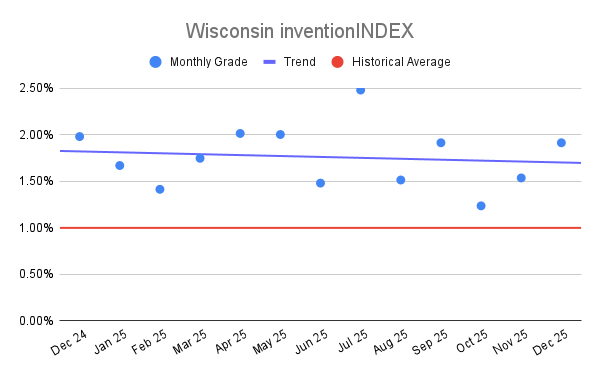 Wisconsin inventionINDEX December 2025
  Wisconsin inventionINDEX Novem
