

The Wisconsin Research Expense Credit allows businesses to carry forward unused, nonrefundable tax credits for up to 15 years. This mechanism ensures that research investments can offset future franchise or income tax liabilities. Credits are applied on a first-in, first-out (FIFO) basis, meaning the oldest credits are used first to prevent expiration. Recent legislative proposals (Senate Bill 482) aim to extend this period to 50 years to further incentivize long-term innovation.
The Wisconsin Research Expense Credit carryforward allows businesses to preserve unused, nonrefundable tax credits for up to fifteen years to offset future income or franchise tax liabilities. This mechanism ensures that substantial investments in research and development yield long-term financial value, particularly for firms whose immediate tax liability is insufficient to exhaust the credit in the year it is generated.
Foundational Statutes and the Legal Framework of Wisconsin Research Credits
The Wisconsin Research Expense Credit, often referred to as the Credit for Increasing Research Expenses, is a cornerstone of the state’s economic development strategy. It is codified across several sections of the Wisconsin Statutes, depending on the entity type: Section 71.07(4k) for individuals and fiduciaries, Section 71.28(4) for corporations, and Section 71.47(4) for insurance companies. The core purpose of the credit is to incentivize technological innovation within the state’s borders by providing a direct reduction in tax liability for qualified research expenses incurred in Wisconsin. The legal definition of qualified research and qualified research expenses in Wisconsin largely mirrors the federal standards set forth in Section 41 of the Internal Revenue Code. This includes the four-part test, which requires that the research be technological in nature, intended to discover information that eliminates uncertainty, involve a process of experimentation, and relate to a new or improved business component. However, a critical state-specific limitation is that the expenses must be incurred for research conducted specifically within Wisconsin.
For tax years beginning on or after January 1, 2024, the primary credit rate is generally 5.75% of the amount by which Wisconsin qualified research expenses exceed a base amount. The base amount is typically calculated as 50% of the average Wisconsin qualified research expenses for the three preceding taxable years. If a taxpayer had no qualified research expenses in any of the three prior years, the credit is calculated at a reduced rate of 2.875% of the current year’s qualified research expenses. These rates are designed to reward incremental growth in research activities, ensuring that the tax benefit scales with the company’s commitment to innovation. The statutory construction emphasizes that the credit is not merely a subsidy for existing operations but a targeted incentive for expansion and new discovery.
The 15-year carryforward is essentially the secondary life of the credit. When a taxpayer generates a research credit that exceeds their total tax liability for the year, the unused balance becomes a valuable tax attribute. Under current Wisconsin law, specifically Section 71.28(4)(f), any portion of the credit not offset against taxes otherwise due may be carried forward for up to fifteen succeeding taxable years. This fifteen-year window acts as a use-it-or-lose-it period. If the credit remains unused at the conclusion of the fifteenth year following its generation, the attribute expires and must be written off for financial accounting purposes. This duration is intended to span multiple economic cycles, allowing cyclical industries like manufacturing and biotechnology, which often have long lead times before reaching profitability, to eventually realize the benefit of their early-stage research and development investments.
The Mechanics of the 15-Year Carryforward Period
The statutory language regarding the carryover period is precise. It states that the unused balance may be carried forward and credited against Wisconsin income or franchise taxes otherwise due for the following fifteen taxable years to the extent not offset by these taxes otherwise due in all intervening years between the year in which the expense was incurred and the year in which the carryforward credit is claimed. This necessitates a rigorous tracking of credit “vintages.” Each year that a credit is generated, a new fifteen-year clock begins. For a credit generated in the 2024 tax year, the first year of carryforward is 2025, and the final year it can be used to offset tax is 2039.
Administrative guidance provided by the Wisconsin Department of Revenue and the structure of Schedule CF effectively enforce a first-in, first-out application of credit carryforwards. Taxpayers are generally expected to use the oldest available credits first to minimize the risk of expiration. Schedule CF requires taxpayers to list the year the credit was computed, the amount used in subsequent years, and the remaining balance available for the current year. This documentation is critical because the expiration process is a significant concern for established firms with large carryforward balances. For example, as noted in the 2024 instructions for Schedule CF, the fifteen-year carryforward period for a credit computed in the 2009 tax year expired at the end of the 2024 tax year. Any 2009 credit remaining after the 2024 filing cannot be carried forward to 2025.
Credit Expiration and Aging Table
The following table illustrates the typical progression and expiration of credits under the fifteen-year rule.
| Credit Origin Year | First Carryforward Year | Final Utilization Year (Expiration) | Total Life Span (Years) |
|---|---|---|---|
| 2009 | 2010 | 2024 | 16 |
| 2010 | 2011 | 2025 | 16 |
| 2011 | 2012 | 2026 | 16 |
| 2015 | 2016 | 2030 | 16 |
| 2020 | 2021 | 2035 | 16 |
| 2024 | 2025 | 2039 | 16 |
Table 1: Illustrative Expiration Timeline for the 15-Year Carryforward Period.
The “16-year” total lifespan reflects the year of generation plus the fifteen succeeding years of carryforward. This long-range planning is essential for tax departments to ensure that deferred tax assets do not vanish due to poor sequence of use.
Interplay Between Carryforwards and Refundability Evolution
One of the most complex aspects of the Wisconsin research credit is the interaction between nonrefundable carryforwards and the newly expanded refundable portion of the credit. Historically, the Wisconsin research credit was entirely nonrefundable, meaning it could only offset tax liability. Starting in 2018, the legislature introduced a refundable component, which has increased over time. This shift was intended to provide more immediate cash flow to startups and capital-intensive firms that might not have tax liability for many years.
Legislative Shifts in Refundability Percentages
The refundable portion of the research credit has transitioned through several tiers based on the tax year:
| Tax Year Period | Refundable Percentage of Current Credit | Statutory Authority |
|---|---|---|
| Pre-2018 | 0% (Strictly Nonrefundable) | Wis. Stats. Ch. 71 |
| 2018 – 2020 | 10% | |
| 2021 – 2023 | 15% | |
| 2024 and Later | 25% |
Table 2: Historical Increase in Research Credit Refundability.
The Department of Revenue provides specific guidance on the order in which credits must be used. Crucially, a prior year research credit carryforward is considered a nonrefundable credit and must be used to offset current year tax liability before the current year’s refundable credit is computed. This priority of application is vital for maximizing the total benefit. If a company has a significant carryforward, that carryforward will “soak up” the current year’s tax liability first. This leaves more of the current year’s newly generated credit unused, which in turn makes a larger portion of it eligible for the 25% refund.
Priority of Credit Application in Practice
The computation logic follows a specific sequence as mandated by the Department of Revenue:
- Calculate Current Year Gross Tax Liability: This is the tax before any credits are applied.
- Apply Nonrefundable Credit Carryforwards: Prior year credits are applied from the oldest vintage to the newest to reduce the tax liability.
- Apply Nonrefundable Portion of Current Year Credit: If any tax liability remains after using carryforwards, the nonrefundable portion of the current year research credit is used next.
- Calculate the Refundable Portion: If the current year research credit exceeds the remaining tax liability, the refundable portion is computed as the lesser of 25% of the total current year credit or the remaining unused current year credit.
A critical rule in Wisconsin law is that unused nonrefundable portions of the research credit carried forward from prior years never become refundable. The 25% refundability applies only to the credit generated in the current taxable year. Under Sections 71.07(4k)(e)2., 71.28(4)(k), and 71.47(4)(k), if the current year credit exceeds the tax due, up to 25% of that current year credit may be refunded. Prior year carryovers have no effect on this calculation. This creates a permanent distinction between “new money” (current year credits) and “old money” (carryforwards).
Administrative Requirements and State Revenue Office Guidance
The Wisconsin Department of Revenue provides exhaustive instructions for the management of these credits through several key forms and publications. These documents are the primary source of truth for compliance and audit defense.
Schedule R: The Engine of Credit Computation
Schedule R is the primary form used to calculate both the nonrefundable and refundable portions of the research credit for the current year. It requires a detailed breakdown of qualified research expenses, including wages for employees performing research, supplies used in research, and 65% of contract research expenses (or 75% for payments to qualified research consortia). In specific cases where payments are made to eligible small businesses, universities, or federal laboratories, the contract research percentage can be as high as 100%.
Specific lines on Schedule R manage the transition to carryforwards. Line 17 computes the maximum refundable portion, which is 25% of the current credit. Line 19 determines the remaining credit available after offsetting current tax liability. Line 20 dictates that the actual refundable portion is the lesser of Line 17 or Line 19. Any amount remaining after these calculations that is not refunded and not used to offset current tax becomes the carryforward balance for the next fifteen years.
Schedule CF: The Official Credit Ledger
Schedule CF is mandatory for any taxpayer carrying forward an unused credit. It serves as the official ledger for the Department of Revenue to monitor the aging of credits. Taxpayers must submit a new Schedule CF every year until the carryforward is exhausted or the fifteen-year period expires. This requirement ensures that both the taxpayer and the state have a consistent record of the credit’s utilization.
The schedule uses several columns to ensure precision:
- Column (a): Taxable year the credit was computed.
- Column (b): Original credit amount computed for the origin year.
- Column (c): Total credit used from the origin year through the end of the previous tax year.
- Column (d): Credit available for the current year (Column b minus Column c).
- Column (e): Credit used in the current year return.
- Column (f): Credit available for the following year (Column d minus Column e).
If a credit is no longer available to be newly computed but a carryforward remains, it must be claimed on the appropriate line of Schedule CR (Other Credits).
Documentation and Retention Guidelines
The Department of Revenue advises that taxpayers must maintain detailed documentation to support the credit for the entire duration of the carryforward period plus the statute of limitations for the year in which the carryforward is actually used. This means if a credit is generated in Year 1 and used in Year 15, the documentation for Year 1 research and development activities must potentially be retained for twenty years or more. Documentation should include innovation logs, records of changes and bug fixes, testing protocols, labor timesheets, and tax invoices for supplies. This rigorous requirement is often a surprise to taxpayers who assume the standard three-to-four-year retention period applies. Because the carryforward “drags” the audit potential of the origin year into the future, the origin year’s records must remain accessible.
Pass-Through Entities and Credit Proration Mechanics
In Wisconsin, pass-through entities such as Partnerships, Limited Liability Companies treated as partnerships, and Tax-Option (S) Corporations do not claim the research credit directly to offset entity-level tax liability. Instead, the credit is computed at the entity level based on the entity’s qualified research activities and then “flows through” to the partners, members, or shareholders.
Allocation to Individual and Corporate Owners
The credit is allocated to owners based on their proportionate ownership interest in the entity. These amounts are reported to shareholders on Schedule 5K-1 and to partners or members on Schedule 3K-1. Once the credit reaches the individual or corporate owner’s return, the fifteen-year carryforward rules apply to that owner specifically. If an individual owner cannot use their portion of the credit, it is that individual who tracks the fifteen-year carryforward on their personal Wisconsin tax return using Schedule CF. This can lead to a fragmentation of the credit, where different owners have different utilization rates and expiration dates based on their own personal tax situations.
For taxable years beginning after December 31, 2020, Wisconsin law allows certain pass-through entities to elect to be taxed at the entity level. In such cases, the entity itself may use the research credit to offset its entity-level tax liability. However, even under this election, the eligibility and computation of the credit remain tied to the research activities conducted by the entity in Wisconsin. The computation of the credit amount remains constant, but the “claimant” changes from the individual owners to the entity itself.
Corporate Structuring: Credit Sharing in Combined Groups
Wisconsin’s combined reporting rules add another layer of complexity to the fifteen-year carryforward. In general, tax credits are considered attributes of the separate corporation that generated them rather than attributes of the entire combined group. However, Section 71.255(6)(c) of the Wisconsin Statutes allows for the limited sharing of nonrefundable research credits among members of a combined group.
Sharable vs. Non-Sharable Credit Distinctions
A corporation may generally only share its research credits with other members of the combined group if it was a member of that same combined group during the year the credit originated. This is known as a “sharable” credit. If the credit originated before the corporation joined the group or during years the group did not exist as a unitary business, it is “non-sharable” and can only be used by the corporation that earned it.
| Credit Type | Origin Condition | Sharing Capability |
|---|---|---|
| Sharable Credit | Member of group in origin year | Can be used by any group member |
| Non-Sharable Credit | Not a group member in origin year | Limited to original claimant |
Table 3: Sharing Status of Research Credits within Combined Groups.
Under Wisconsin Administrative Code Tax 2.61(10), the sharing of credits follows a strict sequence to ensure that the original claimant uses its own attributes first. Each member must first apply its total available credits, including carryforwards, against its own gross tax liability. Only after this self-offset may a member elect to share any remaining sharable credit with other members who have remaining tax liability attributable to the combined unitary business. This sharing does not extend the fifteen-year life of the credit. The credit retains its original birth date for carryforward purposes, regardless of which group member eventually utilizes it.
Enhanced Credit Tiers and Their Carryforward Treatment
Wisconsin provides enhanced credit rates for specific types of research that are deemed strategically important to the state’s industrial base. While these credits offer higher rates, they are subject to the same fifteen-year carryforward limitation and 25% refundability cap as the general research credit.
Internal Combustion Engines and Alternative Drives
Research related to the design of internal combustion engines and vehicles powered by such engines qualifies for an 11.5% credit rate (or 5.75% for startups). The statutory definition of an internal combustion engine is broad and forward-looking, including substitute products such as fuel cell, electric, and hybrid drives. It also covers a wide range of vehicles, from motorcycles and snowmobiles to aircraft and generators. This tier is particularly relevant to Wisconsin’s robust small-engine and heavy-manufacturing sectors.
Energy Efficient Products and Green Technology
A similar 11.5% enhanced rate is available for research related to the design and manufacturing of energy-efficient products, such as lighting systems, building automation and control systems, and automotive batteries for hybrid vehicles. Taxpayers claiming multiple types of research credits must complete a separate Schedule R for each category. The carryforward of these distinct credits is then tracked separately on Schedule CF, although they all share the common fifteen-year expiration rule. The complexity for these taxpayers lies in maintaining clear expense segregation between general research and specialized research to justify the 11.5% rate upon audit.
Practical Multi-Year Example: The Lifecycle of a Credit
To understand the interaction of these rules, consider a hypothetical Wisconsin corporation, Innovations Group, which conducts hybrid drive research.
Scenario: Tax Year 2024 (Credit Generation Year)
Innovations Group incurs $2,000,000 in Wisconsin qualified research expenses. Their average qualified research expenses for the three prior years was $1,000,000.
- Determine Excess QREs: The base amount is 50% of the three-year average, which is $500,000. The excess QRE is $1,500,000 ($2,000,000 – $500,000).
- Calculate Total Credit: Using the 11.5% enhanced rate for hybrid drives, the total credit is $172,500.
- Apply to Tax: The corporation has a 2024 Wisconsin tax liability of $50,000.
- Determine Refundable Portion:
- Maximum Refundable Amount: 25% of $172,500 = $43,125.
- Remaining Credit after Tax: $172,500 – $50,000 = $122,500.
- Actual Refund: The lesser of $43,125 or $122,500 = $43,125.
- Establish Carryforward: The remaining unused, nonrefundable credit is $122,500 – $43,125 = $79,375. This $79,375 is now a 2024-vintage carryforward with an expiration date of 2039.
Scenario: Tax Year 2025 (Utilization Year)
In 2025, the corporation has a tax liability of $100,000 and generates a new research credit of $60,000.
- Apply Oldest Credit First: The $79,375 carryforward from 2024 is applied to the $100,000 tax. Remaining tax liability: $20,625.
- Apply Current Year Credit: The 2025 credit of $60,000 is applied to the remaining $20,625 tax. Remaining tax: $0.
- Determine 2025 Refund:
- Remaining 2025 Credit: $60,000 – $20,625 = $39,375.
- Maximum Refundable Amount: 25% of $60,000 = $15,000.
- Actual Refund: The lesser of $15,000 or $39,375 = $15,000.
- New Carryforward: The remaining 2025 credit of $24,375 ($39,375 – $15,000) becomes a new carryforward expiring in 2040.
This example highlights how the FIFO application of the 2024 carryforward preserved more of the 2025 credit, thereby maximizing the 2025 refund. Had the company used the 2025 credit first, they might have reduced their tax to zero using “refundable-eligible” funds, while the “nonrefundable-only” 2024 funds sat idle.
The Legislative Horizon: The Proposal for a 50-Year Carryforward
As of late 2025 and early 2026, the Wisconsin Legislature has been actively considering a significant extension of the research credit carryforward period. Senate Bill 482 and its companion Assembly Bill 494 propose to increase the carryover period from fifteen years to fifty years.
Rationale for the Fifty-Year Extension
The push for a fifty-year carryforward is driven by several economic and accounting factors identified by industry advocates and legislative analysts. Many high-innovation companies, particularly in capital-intensive sectors like heavy machinery and aerospace, generate credits at a rate far exceeding their ability to exhaust them within fifteen years. Under Generally Accepted Accounting Principles, carryforwards are recorded as deferred tax assets. When credits approach their fifteen-year expiration date unused, companies must write down these assets, resulting in a reported loss on financial statements even if the underlying business is healthy. A fifty-year window would essentially eliminate this accounting volatility for the vast majority of firms.
Furthermore, proponents argue that extending the carryforward period signals a long-term commitment to research and development, making Wisconsin more attractive for large-scale, multi-year projects. It provides companies with greater flexibility and certainty when making investment decisions that may not pay off for decades.
Current Legislative Status and Fiscal Impact
The bill has seen significant bipartisan support, passing the Senate in November 2025 with a unanimous 33-0 vote. It is currently working through the Assembly. If enacted, the fifty-year carryforward would apply retroactively to existing credits that have not yet expired or been used.
A fiscal estimate provided by the Wisconsin Department of Revenue suggested that the bill would have no immediate fiscal effect on state tax collections. Because the bill only extends the carryforward period and does not increase the amount of credits earned, it does not result in more credits being claimed in the current budget cycle. The “cost” to the state is deferred several decades into the future, when these credits would otherwise have expired.
Strategic Tax Planning within the Fifteen-Year Window
Given the current fifteen-year limit, businesses must approach research and development tax planning with a high degree of mathematical rigor. Managing the “expiration cliff” is a priority for mature companies.
Tactical Utilization of Carryforwards
Taxpayers with credits approaching the fifteen-year mark should evaluate strategies to accelerate their Wisconsin tax liability if possible. Because carryforwards offset tax before current-year credits are used, any increase in taxable income can help save credits that are near expiration. In a combined group setting, this involves revisiting the election to share credits to ensure that members with high tax liability are utilizing the oldest credits in the group.
Companies should also monitor federal research and development tax changes. For example, the federal requirement to capitalize research expenses under Section 174 rather than immediately expensing them can increase federal taxable income, which often flows through to Wisconsin. While this capitalization rule is generally viewed as a negative tax development, for companies with expiring Wisconsin research credits, it provides a larger tax base against which those credits can be applied, effectively preventing the credits from being lost forever.
The Role of Audit Readiness
Regardless of whether the carryforward is fifteen years or fifty years, the quality of documentation remains the primary defense during an audit. The Department of Revenue has the right to verify the original computation of a credit being used as a carryforward, even if the year the credit was generated is technically closed for the assessment of new tax. This necessitates a robust digital archiving strategy for research and development records.
Summary of Core Principles and Requirements
The Wisconsin Research Expense Credit’s fifteen-year carryforward is a powerful but strictly regulated tax attribute. Its effectiveness depends on the taxpayer’s ability to navigate complex priority rules and maintain long-term compliance records.
- Calculation: The credit is primarily 5.75% of excess Wisconsin qualified research expenses over a base amount.
- Refundability: Up to 25% of the current year credit is refundable for years beginning in 2024.
- Carryforward: Unused nonrefundable portions carry forward for fifteen years.
- Priority: Carryforwards must be used before the refundable portion of current year credits can be calculated.
- Tracking: Schedule CF is the mandatory form for documenting the aging and use of these credits.
- Combined Groups: Credits can be shared within a unitary group if the origin conditions are met.
- Documentation: Evidence of research activities must be retained for the entire carryforward period plus the statute of limitations of the utilization year.
As the state considers extending this window to fifty years, the fundamental mechanics of tracking and priority will remain, but the strategic importance of these credits as a long-term corporate asset will only increase. Taxpayers must remain vigilant in their record-keeping and sequence of credit application to ensure no part of this valuable incentive is left on the table.
Who We Are:
Swanson Reed is one of the largest Specialist R&D Tax Credit advisory firm in the United States. With offices nationwide, we are one of the only firms globally to exclusively provide R&D Tax Credit consulting services to our clients. We have been exclusively providing R&D Tax Credit claim preparation and audit compliance solutions for over 30 years. Swanson Reed hosts daily free webinars and provides free IRS CE and CPE credits for CPAs.
Are you eligible?

Why choose us?

Pass an Audit?

What is the R&D Tax Credit?
The Research & Experimentation Tax Credit (or R&D Tax Credit), is a general business tax credit under Internal Revenue Code section 41 for companies that incur research and development (R&D) costs in the United States. The credits are a tax incentive for performing qualified research in the United States, resulting in a credit to a tax return. For the first three years of R&D claims, 6% of the total qualified research expenses (QRE) form the gross credit. In the 4th year of claims and beyond, a base amount is calculated, and an adjusted expense line is multiplied times 14%. Click here to learn more.
Never miss a deadline again

Stay up to date on IRS processes

Discover R&D in your industry

R&D Tax Credit Preparation Services
Swanson Reed is one of the only companies in the United States to exclusively focus on R&D tax credit preparation. Swanson Reed provides state and federal R&D tax credit preparation and audit services to all 50 states.
If you have any questions or need further assistance, please call or email our CEO, Damian Smyth on (800) 986-4725.
Feel free to book a quick teleconference with one of our national R&D tax credit specialists at a time that is convenient for you.
R&D Tax Credit Audit Advisory Services
creditARMOR is a sophisticated R&D tax credit insurance and AI-driven risk management platform. It mitigates audit exposure by covering defense expenses, including CPA, tax attorney, and specialist consultant fees—delivering robust, compliant support for R&D credit claims. Click here for more information about R&D tax credit management and implementation.
Our Fees
Swanson Reed offers R&D tax credit preparation and audit services at our hourly rates of between $195 – $395 per hour. We are also able offer fixed fees and success fees in special circumstances. Learn more at https://www.swansonreed.com/about-us/research-tax-credit-consulting/our-fees/



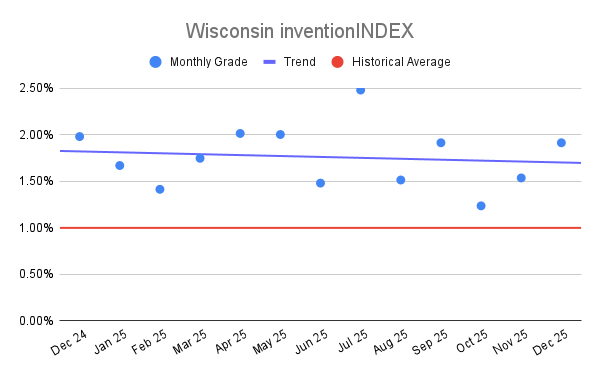 Wisconsin inventionINDEX December 2025
  Wisconsin inventionINDEX Novem
