

Quick Answer: Wisconsin R&D Compensation Exclusion
The compensation exclusion in Wisconsin tax law prevents "double-dipping" of state incentives. Wages that are used to calculate the Development Zones credit (Schedule DC) must be subtracted from the Qualified Research Expenses (QRE) base when calculating the Research & Development Tax Credit (Schedule R). This ensures that the state does not subsidize the same dollar of payroll twice through different economic development programs.
The compensation exclusion in the Wisconsin research credit mandates that any wage expenses utilized to compute a development zones credit must be subtracted from the qualified research expense base. This statutory requirement prevents taxpayers from claiming multiple state-level tax incentives on the same dollar of payroll, effectively prohibiting the practice of double-dipping across distinct economic development programs.
Legislative Foundations of the Wisconsin Research Credit and the Exclusion Mandate
The Wisconsin Research and Development (R&D) tax credit is established as an incentive for corporations and individuals to engage in innovation within the state's borders. Structurally, the credit is governed by Wisconsin Statutes Sections 71.07(4k) for individuals, 71.28(4) for corporations, and 71.47(4) for insurance companies. These statutes do not create a standalone definition of research but instead leverage the definitions provided in Section 41 of the Internal Revenue Code (IRC), while incorporating specific modifications that align the incentive with Wisconsin’s fiscal policy. One of the most critical modifications is the explicit exclusion of compensation used in computing the development zones credit, a provision designed to ensure that the state does not subsidize the same wage expense through both the R&D credit and the highly targeted Development Zones credits.
The development zones programs are geographic-based incentives administered by the Wisconsin Economic Development Corporation (WEDC). These programs provide tax benefits to businesses that invest and create jobs in areas characterized by high unemployment, low income levels, or other forms of economic distress. Because research-intensive industries often provide high-paying jobs, a firm located in a development zone might employ engineers or scientists whose activities qualify for both the R&D credit and the Development Zones jobs credit. The "compensation exclusion" refers to the mandatory subtraction of these overlapping wages from the R&D credit calculation on Schedule R.
Comparison of Federal and Wisconsin Research Credit ParametersTo contextualize the exclusion, it is necessary to examine how Wisconsin deviates from the federal Section 41 model. While the state adopts the federal definition of "qualified research" and "qualified research expenses," it imposes geographic and anti-concurrency constraints that are not present in the federal code.
| Feature | Federal IRC Section 41 | Wisconsin Statutory Modification |
|---|---|---|
| Core definition of Research | Four-Part Test (IRC §41(d)) | Adopted without change |
| Geographic Scope | 50 States and U.S. Territories | Limited to Wisconsin only |
| Wage Definition | Wages for Qualified Services (IRC §3401(a)) | W-2 wages, minus Development Zone credits |
| Standard Credit Rate | 20% (Traditional) or 14% (ASC) | 5.75% of excess over base |
| Enhanced Rate (Engines) | N/A | 11.5% for specific engine research |
| Start-up/New R&D Rate | Specialized federal formulas | 2.875% of current QREs if no prior 3 years |
| Refundability | Limited (Small Business Payroll Offset) | Up to 25% refundable for tax years after 2023 |
This divergence creates a compliance burden for taxpayers who must maintain separate accounting for federal and state R&D expenses. The Wisconsin modification regarding development zone compensation represents a "negative adjustment" to the state wage pool, meaning that the Wisconsin qualified research expenses (QREs) will almost always be lower than federal QREs for a company operating in a designated zone and receiving job credits.
The Mechanical Operation of the Compensation Exclusion on Schedule R
The Wisconsin Department of Revenue (DOR) facilitates this exclusion through Line 7 of Schedule R, the form used to compute research credits. The line-by-line instructions provided by the DOR serve as the primary administrative guidance for taxpayers attempting to reconcile these credits.
Identifying the Wage PoolThe calculation begins on Line 1 of Schedule R, where the taxpayer enters "wages paid to employees for actually doing research work, or for directly supervising or directly supporting research work, in Wisconsin". These wages generally align with the amounts reported on federal Form W-2. Unlike federal law, which allows for the inclusion of certain bonuses and stock-based compensation if they are considered "wages" for income tax withholding purposes, Wisconsin requires that these wages be specifically tied to activities performed within the state.
The Line 7 SubtractionAfter aggregating total Wisconsin research expenses—which include supplies, computer rental costs, and contract research—the taxpayer reaches a subtotal on Line 6. Line 7 then mandates: "Enter the amount of any wages included on line 6 that qualify for the Wisconsin development zones jobs credit". This instruction is vital because it does not merely ask for the credit amount, but the compensation used to generate that credit.
If a taxpayer claims a $50,000 credit on Schedule DC for jobs created in a development zone, and that credit was calculated based on $400,000 in qualifying wages paid to researchers, the full $400,000 must be entered on Line 7 and subtracted from the total research expenses on Line 8. This results in the "Total Wisconsin Research Expenses" being net of any development zone subsidies.
Definition of "Qualify for" vs. "Used for"A nuanced reading of the Schedule R instructions and state revenue office guidance reveals a potential trap for taxpayers. The instructions state that wages that "qualify for" the development zones credit must be excluded. In practice, the DOR and WEDC interpret this to mean wages that are actually utilized in the computation of the credit on Schedule DC. If a taxpayer is certified for a development zone credit but chooses not to claim it for a particular year, or if certain employees do not meet the "full-time job" or "targeted group" requirements of the development zone program, those wages are not "used" and therefore do not trigger the exclusion on Schedule R.
The Development Zones Program: Scope and Interaction
To understand what compensation must be excluded, it is necessary to examine the components of the Development Zones credit itself. This program is not a single credit but a collection of incentives reported on Schedule DC.
The Jobs Credit ComponentThe primary component of the Development Zones credit that interacts with the research credit is the "Jobs Credit". This credit is determined by the WEDC based on job creation or retention milestones. The credit amount is generally a fixed dollar amount per employee, though it is based on the wages paid to those employees.
| Job Category | Credit Amount (per employee) | Target Population |
|---|---|---|
| Created Full-Time Job | Up to $8,000 | Targeted group member |
| Created Full-Time Job | Up to $6,000 | Non-targeted group member |
| Retained Full-Time Job | Up to $8,000 | Enterprise Development Zone |
| Retained Full-Time Job | Up to $6,000 | Standard Development Zone |
A "full-time job" for these purposes is defined as a regular, nonseasonal position requiring at least 2,080 hours of work per year, including paid leave, with pay equal to at least 150% of the federal minimum wage and benefits not required by law. When an employee’s wages are used to substantiate these claims on Schedule DC, those same wages are considered "compensation used in computing the development zones credit" and must be excluded from Schedule R.
The "Targeted Group" DefinitionThe exclusion is often triggered by research employees who happen to fall into "targeted groups" as defined by the WEDC and state law. These groups may include economically disadvantaged individuals, veterans, or residents of specific distressed areas. If a biotech firm hires a lab technician who qualifies as a member of a targeted group and uses that hire to claim an $8,000 development zones credit, the technician’s R&D wages must be removed from the R&D credit base.
Administrative Guidance from the Wisconsin Department of Revenue
The Wisconsin DOR provides guidance through several channels, including Publication 131, tax forms instructions, and formal Tax Bulletins. This guidance emphasizes the "all-or-nothing" nature of the exclusion for the specific wages used.
Publication 131 InsightsPublication 131, "Tax Incentives for Conducting Qualified Research in Wisconsin," is the cornerstone of DOR guidance on this topic. While the publication focuses extensively on the definition of qualified research and the calculation of the credit, it explicitly notes that the definition of "qualified research expenses" for Wisconsin purposes "does not include compensation used in computing the development zones credit".
The publication further clarifies that the research credit is available for increasing research activities, meaning it is an incremental credit based on spending above a historical base amount. The base amount itself is calculated using the average QREs from the three prior taxable years. Importantly, the DOR requires that the three-year base also reflect the compensation exclusion. If a taxpayer claimed a development zones credit in a prior year, the QREs for that prior year must be net of the excluded compensation to ensure a consistent year-over-year comparison.
Schedule R Instructions: Line-by-Line GuidanceThe instructions for Schedule R (specifically Line 7) provide the most granular local guidance. They clarify that the exclusion is not optional; if the wages were used for the Schedule DC credit, they must be subtracted from the Schedule R wage total. The DOR justifies this by noting that "these wages may not be used in determining the Wisconsin research credit" because the legislative intent was to provide distinct, non-overlapping pools of support for innovation and geographic revitalization.
Enhanced Credit Tiers and Their Interaction with the Exclusion
Wisconsin’s research credit is unique in that it offers tiered rates for specific industries that the state legislature has deemed high-priority: internal combustion engines and energy-efficient products. These enhanced credits create a higher "cost of error" regarding the compensation exclusion.
Internal Combustion Engines and VehiclesResearch related to "designing internal combustion engines for vehicles" or "improving production processes for such engines" qualifies for a credit equal to 11.5% of the excess QREs over the base amount. The definition of "vehicle" is expansive, covering everything from motorcycles and trucks to generators and aircraft.
Because the 11.5% rate is double the general rate of 5.75%, the impact of the compensation exclusion is doubled as well. If an engine manufacturer in a development zone fails to exclude $1,000,000 in development zone wages from its Schedule R, it has overstated its credit by $115,000, whereas a general manufacturer would have overstated its credit by $57,500.
Energy Efficient ProductsThe 11.5% enhanced rate also applies to research related to the design and manufacturing of "energy efficient lighting systems, building automation and control systems, or automotive batteries for hybrid vehicles". Like the engine credit, this incentive is targeted at high-tech manufacturing, which is often a candidate for Development Zone certification. The DOR requires that these enhanced credits be computed on separate Schedules R if a taxpayer is claiming more than one type of research credit. In such cases, the compensation exclusion must be applied to the specific Schedule R where the wages were initially included.
The Evolution of Refundability and Its Strategic Implications
One of the most profound shifts in Wisconsin tax policy over the last decade has been the transformation of the research credit from a purely nonrefundable carryforward into a partially refundable cash benefit.
Historical Context of RefundabilityPrior to 2018, the credit was 100% nonrefundable. If a company’s research credit exceeded its tax liability, the excess was carried forward for 15 years. This created a "frozen" asset for many startups and pre-revenue biotech firms. Pursuant to 2017 Wisconsin Act 59, the state introduced a refundable component, which has been incrementally increased by subsequent legislation.
| Tax Year Start Date | Refundable Portion of Computed Credit | Statute/Act |
|---|---|---|
| Jan 1, 2018 - Dec 31, 2020 | 10% | 2017 Act 59 |
| Jan 1, 2021 - Dec 31, 2023 | 15% | 2021 Act 58 |
| Jan 1, 2024 and later | 25% | 2023 Act 19 |
The refundable portion is calculated as the lesser of (a) the specified percentage of the current-year credit or (b) the credit remaining after offsetting current tax liability.
Strategic Impact of the Compensation ExclusionThe rise in refundability has altered the financial calculus for businesses choosing between the R&D credit and the Development Zones credit. The Development Zones credit remains nonrefundable. Consequently, a taxpayer with no current tax liability might find that a dollar of R&D credit is more valuable than a dollar of Development Zones credit, because the R&D credit can result in an immediate 25% cash refund, whereas the Development Zones credit simply adds to a 15-year carryforward.
However, the taxpayer does not always have a choice. If they are under contract with the WEDC to maintain certain job levels in exchange for Development Zone certification, they must report those jobs. Once those jobs are used to claim the nonrefundable Schedule DC credit, the compensation exclusion on Schedule R becomes mandatory, potentially reducing the base for the refundable R&D credit.
Compliance and Audit Risks: The "Double-Dipping" Prohibition
The Wisconsin DOR is highly attentive to the intersection of different tax credits. Because both the research credit and the development zones credit are subject to rigorous substantiation requirements, auditors frequently cross-reference Schedules R and DC.
Contemporary Record-Keeping StandardsTaxpayers must maintain contemporaneous records to support both the research activities and the development zone job claims. For the research credit, this includes project lists, time tracking for researchers, and technical documents illustrating the "process of experimentation". For the development zones credit, it involves WEDC certification letters and payroll reports verifying that employees meet the full-time and targeted group requirements.
The "compensation used" figure on Line 7 of Schedule R must be reconcileable to the employee-by-employee data on the Schedule DC worksheet. If an auditor finds that an engineer’s $100,000 salary was included in the R&D wage pool on Line 1 but was also used to claim an $8,000 job credit on Schedule DC, and that $100,000 was not subtracted on Line 7, the research credit will be disallowed to the extent of the overlap.
Penalties and InterestWisconsin law imposes strict penalties for the underpayment of taxes resulting from invalid credit claims. If the DOR determines that a taxpayer negligently failed to exclude development zone compensation, the resulting tax deficiency will be subject to interest and potentially a negligence penalty. Furthermore, if the WEDC revokes a taxpayer's development zone certification, the taxpayer may lose not only the development zone credits but also any ability to carry forward those credits to future years. However, in a scenario where certification is revoked, the wages might theoretically become eligible for the R&D credit in an amended return, provided the statute of limitations has not expired.
Pass-Through Entities and the Flow-Through Mechanism
A significant portion of Wisconsin’s R&D activities is conducted by partnerships, LLCs, and S-corporations. For these entities, the compensation exclusion applies at the entity level, but the credits themselves are claimed by the owners.
Entity-Level ComputationWhile partnerships and S-corps cannot use credits to offset their own tax liability (as they are generally non-taxable entities), they are responsible for the "computation of, and eligibility for, the research credits". This includes performing the Schedule R Line 7 exclusion calculation. The entity must aggregate all QREs, subtract the development zone compensation, and arrive at a net credit amount.
Owner-Level ClaimingThe net credit is then prorated among the partners, members, or shareholders based on their ownership interest and reported on their respective Schedules 3K-1 or 5K-1. The individuals or corporations that own the pass-through entity then take that credit onto their own returns. If the entity fails to perform the exclusion correctly, every owner’s return is technically incorrect, creating a cascading audit risk for all participants.
Detailed Practical Scenario: The Software Developer in an Enterprise Zone
To demonstrate the application of the law and DOR guidance, consider the case of "Madison Cloud Dynamics LLC," a software firm specializing in building automation systems (energy-efficient products).
Scenario Parameters for the 2024 Tax Year- Corporate Structure: LLC treated as a partnership.
- Location: Designated Enterprise Development Zone in Madison, WI.
- Certification: Certified by WEDC for a Jobs Creation Credit.
- Qualified Research Activity: Developing a new AI-driven building control system to reduce energy consumption.
| Expense Category | Amount | Detail |
|---|---|---|
| Total R&D Payroll | $3,000,000 | 25 software engineers |
| R&D Supplies | $100,000 | Server hardware for testing |
| Development Zone Hires | $500,000 | 5 engineers qualify as "Targeted Group" |
| DZ Job Credit Claimed | $40,000 | 5 engineers × $8,000 credit |
Madison Cloud Dynamics completes Part I of Schedule DC. They calculate a total job credit of $40,000. The "compensation used" for this calculation is the $500,000 paid to the five targeted-group engineers.
Step 2: Research Credit Calculation (Schedule R)The firm completes Schedule R for "qualified research activities related to certain energy efficient products" (Line 12c), qualifying for the 11.5% rate.
- Line 1 (Wages): $3,000,000.
- Line 2 (Supplies): $100,000.
- Line 6 (Subtotal): $3,100,000.
- Line 7 (The Exclusion): $500,000 (This matches the compensation used on Schedule DC).
- Line 8 (Total Wisconsin Research Expenses): $3,100,000 - $500,000 = $2,600,000.
Assuming the average Wisconsin QREs for the three prior years (2021-2023) was $4,000,000, the base amount is 50% of that average.
- Base Amount (Line 10): $4,000,000 × 0.50 = $2,000,000.
- Eligible QREs (Line 11): $2,600,000 - $2,000,000 = $600,000.
- Credit Amount (Line 14): $600,000 × 0.115 = $69,000.
The $69,000 credit is reported on the LLC's return and passed through to the members. If a member has no tax liability, they can claim a refund for 25% of their share of the $69,000.
The "Base Amount" Calculation and Historical Exclusion Consistency
A critical aspect of the research credit is its incremental nature. The credit is not paid on total research spending, but on the increase in spending over a historical base. The base is defined as 50% of the average QREs for the three taxable years immediately preceding the current tax year.
Consistency RequirementTaxpayers must apply the compensation exclusion consistently across all years used in the calculation. If a taxpayer began claiming a development zones credit in 2023, their QREs for 2023 (used in the base for 2024, 2025, and 2026) must be net of the development zone compensation.
| Tax Year | Total R&D Wages | DZ Compensation Used | Net QREs for Base |
|---|---|---|---|
| 2021 | $1,000,000 | $0 | $1,000,000 |
| 2022 | $1,200,000 | $0 | $1,200,000 |
| 2023 | $1,500,000 | $300,000 | $1,200,000 |
| 3-Year Avg | $1,133,333 | ||
| 50% Base | $566,667 |
Failure to subtract the $300,000 in 2023 would artificially inflate the base amount, which would actually decrease the credit in subsequent years. This creates an inherent incentive for taxpayers to be diligent about the exclusion, as an overstatement of historical QREs punishes the taxpayer in the current year.
Interaction with Combined Reporting and Multistate Operations
For multistate corporations, the Wisconsin research credit calculation involves an additional layer of complexity: apportionment.
The Wisconsin Sales FactorIf a corporation conducts research in multiple states, it must first identify its total QREs. However, for Wisconsin purposes, it only considers expenses "incurred for research conducted in this state". Once the Wisconsin-specific expenses are identified, they are further modified by the company's Wisconsin sales factor if they are part of a multistate operation.
The compensation exclusion applies specifically to the Wisconsin wage pool. Because the Development Zones credit is only available for Wisconsin-based employees, the wages excluded on Line 7 of Schedule R are, by definition, 100% Wisconsin wages.
Combined Group SharingWisconsin requires "combined reporting" for unitary groups of corporations. Within these groups, a nonrefundable research credit generated by one member can generally be "shared" to offset the tax liability of another member.
The compensation exclusion must be calculated by the specific member that incurred the expense. If Subsidiary A is the entity certified for the Development Zones credit, Subsidiary A must perform the subtraction on its own Schedule R calculation. The resulting "sharable" credit is then made available to Parent Co or Subsidiary B. Guidance in the Schedule R instructions emphasizes that only "sharable credits" (those net of statutory exclusions) can be distributed within the combined group.
Theoretical Tax Policy: Why the Exclusion Exists
The compensation exclusion is a manifestation of the "Anti-Stacking" principle in tax policy. Policymakers use tax credits to steer behavior—specifically, to encourage firms to invest in R&D and to hire from disadvantaged populations.
Avoiding Excessive SubsidizationIf a firm pays a researcher $100,000, and the government provides a 5.75% R&D credit ($5,750), a 10% federal credit ($10,000), and an $8,000 development zones credit, the total subsidy is $23,750, or 23.75% of the wage. If the state allowed the $100,000 to be used for both state credits, the state-specific subsidy would be $13,750 (13.75%).
The Wisconsin legislature determined that a state-level subsidy of 5.75% (or 11.5% for engines) is the appropriate "price" for incentivizing research, while $6,000-$8,000 is the appropriate price for geographic hiring. Allowing both on the same dollar would represent a fiscal over-allocation. The compensation exclusion acts as a pressure valve, ensuring that the "marginal incentive" to perform R&D is not further inflated by geographic location credits.
Promoting Economic EquityDevelopment zones are designed to bring jobs to people who need them. By excluding DZ wages from the R&D credit, the law subtly encourages firms to hire additional researchers or staff who are not necessarily part of a targeted group to maximize their R&D credit, while using targeted group members to fulfill their Development Zone obligations. This broadens the employment impact of the company's presence in the zone.
Audit Preparedness: Navigating the DOR Review
A "Schedule R Audit" is a common experience for large Wisconsin claimants. When an auditor arrives, they typically follow a standard protocol to verify the compensation exclusion.
The Auditor’s Checklist for Line 7- Reconciliation of Schedule DC: The auditor will first review the Schedule DC to see which employees were used to claim the jobs credit.
- Wage Verification: They will pull the W-2 or payroll records for those specific employees.
- Cross-Check with Schedule R: The auditor will then look at the "Wage Pool" on Schedule R, Line 1. If any of the employees from the DC list are included in the R&D list, they must see a corresponding subtraction on Line 7.
- Activity Review: For the employees who were not excluded (because they didn't qualify for the DZ credit), the auditor will verify they actually performed "qualified services" as defined by IRC Section 41.
The most frequent error is "The Partial Year Oversight." This occurs when an employee is hired halfway through the year. The taxpayer might claim a full $8,000 development zones credit (if they meet the 2,080-hour annualized requirement) but only include half their salary in the R&D wage pool. The taxpayer must still exclude the compensation used for that employee from the R&D base, even if the timing of the two credits seems staggered.
A valid defense against a Line 7 adjustment is "The Activity Split." If an employee spends 50% of their time on qualified research and 50% on general manufacturing, the firm might only include 50% of their wages on Schedule R. If the Development Zones credit only requires that the person be a full-time employee (regardless of activity), the firm must be careful to only exclude the portion of the compensation that was actually included in the R&D pool. However, the DOR generally takes the position that if the person is used for the DZ credit, all their R&D-related compensation must be excluded.
Impact of Federal Changes: IRC 174 Amortization vs. Wisconsin Expensing
While not directly part of the compensation exclusion, the treatment of research expenses under IRC Section 174 has a significant impact on how taxpayers track their R&D costs in Wisconsin.
Federal CapitalizationFor tax years beginning after December 31, 2021, the federal Tax Cuts and Jobs Act (TCJA) requires taxpayers to capitalize and amortize R&D expenses over 5 years (15 years for foreign research) instead of expensing them immediately.
Wisconsin DecouplingWisconsin has "decoupled" from this provision. For Wisconsin purposes, taxpayers can still fully expense IRC Section 174 research and experimentation costs in the year they are incurred. This creates a "Wisconsin modification" on the tax return.
This decoupling makes the compensation exclusion even more important. Because Wisconsin allows the full deduction of wages and a credit, the state is more protective of its "double-dipping" rules. Taxpayers must maintain a "Wisconsin Basis" for their R&D activities that is separate from their federal basis. The Line 7 exclusion is a part of this Wisconsin-specific accounting.
Summary of Local State Revenue Office Resources
Taxpayers and practitioners should consult the following local resources to ensure compliance with the compensation exclusion:
- Schedule R Instructions: The most direct guidance on Line 7 subtractions.
- Publication 131: Provides the broad policy context and definitions of QREs.
- Schedule DC Instructions: Essential for understanding what constitutes "compensation used" for the development zones credit.
- Wisconsin Tax Bulletins: Periodically updated with case studies and audit findings (e.g., Bulletins 67-4, 104-17).
- DOR Common Questions (FAQ): Offers clarifications on refundability and credit sharing within combined groups.
By integrating these resources, a taxpayer can navigate the complex intersection of innovation incentives and geographic investment credits, ensuring that they maximize their state tax benefits while remaining in strict compliance with the statutory prohibition against redundant compensation claims. The 25% refundability of the R&D credit starting in 2024 makes this compliance more valuable than ever, as it translates directly into cash flow for the state's most innovative firms.
Final Thoughts
Ultimately, the compensation exclusion is a mechanism of tax equity and fiscal responsibility. It ensures that Wisconsin's economic development dollars are spread effectively, preventing the stacking of multiple credits on a single employee. For taxpayers, compliance requires diligence, detailed payroll tracking, and a clear understanding of the interaction between Schedule R and Schedule DC. As refundability increases the cash value of the R&D credit, the importance of accurate calculation—and the risk of audit scrutiny—will only continue to grow.
Who We Are:
Swanson Reed is one of the largest Specialist R&D Tax Credit advisory firm in the United States. With offices nationwide, we are one of the only firms globally to exclusively provide R&D Tax Credit consulting services to our clients. We have been exclusively providing R&D Tax Credit claim preparation and audit compliance solutions for over 30 years. Swanson Reed hosts daily free webinars and provides free IRS CE and CPE credits for CPAs.
Are you eligible?

Why choose us?

Pass an Audit?

What is the R&D Tax Credit?
The Research & Experimentation Tax Credit (or R&D Tax Credit), is a general business tax credit under Internal Revenue Code section 41 for companies that incur research and development (R&D) costs in the United States. The credits are a tax incentive for performing qualified research in the United States, resulting in a credit to a tax return. For the first three years of R&D claims, 6% of the total qualified research expenses (QRE) form the gross credit. In the 4th year of claims and beyond, a base amount is calculated, and an adjusted expense line is multiplied times 14%. Click here to learn more.
Never miss a deadline again

Stay up to date on IRS processes

Discover R&D in your industry

R&D Tax Credit Preparation Services
Swanson Reed is one of the only companies in the United States to exclusively focus on R&D tax credit preparation. Swanson Reed provides state and federal R&D tax credit preparation and audit services to all 50 states.
If you have any questions or need further assistance, please call or email our CEO, Damian Smyth on (800) 986-4725.
Feel free to book a quick teleconference with one of our national R&D tax credit specialists at a time that is convenient for you.
R&D Tax Credit Audit Advisory Services
creditARMOR is a sophisticated R&D tax credit insurance and AI-driven risk management platform. It mitigates audit exposure by covering defense expenses, including CPA, tax attorney, and specialist consultant fees—delivering robust, compliant support for R&D credit claims. Click here for more information about R&D tax credit management and implementation.
Our Fees
Swanson Reed offers R&D tax credit preparation and audit services at our hourly rates of between $195 – $395 per hour. We are also able offer fixed fees and success fees in special circumstances. Learn more at https://www.swansonreed.com/about-us/research-tax-credit-consulting/our-fees/



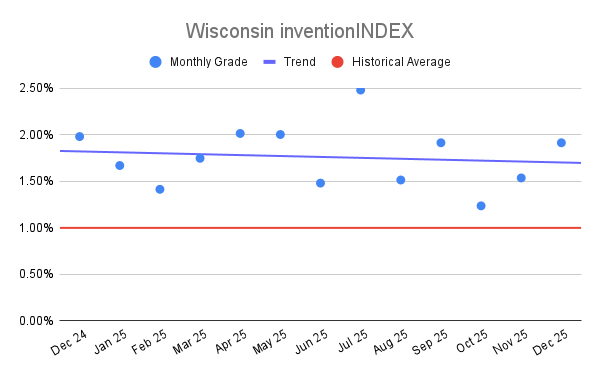 Wisconsin inventionINDEX December 2025
  Wisconsin inventionINDEX Novem
