

Quick Summary: Intercorporate Funding in Wisconsin
The Wisconsin research and development (R&D) tax credit allows members of a combined group to disregard intercorporate funding transactions. Instead of treating research paid for by one member and performed by another as “contract research” (subject to limitations), the state treats the expenses as if they were incurred directly by the performing member. This mechanism ensures that 100% of qualified research expenses (QREs)—such as wages and supplies—are captured for the credit, maximizing the tax benefit for the unitary business group.
The intercorporate funding rule for Wisconsin research credits mandates that when one combined group member funds research performed by another, the expenses are attributed solely to the performing member while the funding transaction is disregarded. This regulatory mechanism ensures the credit reflects actual primary research costs—such as wages and supplies—rather than internal contract prices or markups within a unitary business.
Conceptual Foundation and Statutory Framework
The Wisconsin research credit, codified primarily under Wis. Stat. § 71.28(4), serves as a cornerstone of the state’s economic development strategy, incentivizing the concentration of high-technology labor and experimental activity within its borders. While the state utilizes the federal definition of “qualified research” provided in Section 41 of the Internal Revenue Code (IRC), it applies a distinct layer of state-specific modifications, particularly concerning geographical nexus and the treatment of multi-corporate enterprises. The transition to combined reporting in 2009 introduced the “Combined Group Rule,” which fundamentally altered the landscape for intercorporate funding of research and development (R&D) activities.
Under the current regime, corporations engaged in a unitary business must file a combined return, effectively treating the various legal entities as a single economic taxpayer for certain apportionment and income-determination purposes. However, for the purposes of tax credits, Wisconsin maintains a “separate entity” attribute system, modified by specific sharing provisions. The intercorporate funding of research—where one member of a combined group pays another member to conduct experimental activities—is governed by Wisconsin Administrative Code Tax 2.61(10)(d), which seeks to prevent the artificial inflation of research expenses through internal transactions.
The Core Statutory Credit Mechanism
The Wisconsin research credit is predominantly incremental, rewarding taxpayers for increasing their research footprint over a historical baseline. The primary credit calculation involves taking the current year’s qualified research expenses (QREs) and comparing them to 50% of the average QREs from the preceding three taxable years. This structure creates a significant incentive for consistent growth in R&D investment. For corporations that do not have a three-year history of research activity, the state provides a modified calculation to support emerging innovators.
| Credit Category | General Rate (on Excess) | Non-Incremental Rate (New Research) | Refundable Limit (2024+) |
|---|---|---|---|
| General Qualified Research | 5.75% | 2.875% | 25% |
| Internal Combustion Engines | 11.5% | 5.75% | 25% |
| Energy Efficient Lighting | 11.5% | 5.75% | 25% |
| Building Automation Systems | 11.5% | 5.75% | 25% |
The rates listed above demonstrate Wisconsin’s targeted support for specific industrial sectors, such as traditional manufacturing and clean energy technology. The 11.5% “enhanced” rate applies to research related to internal combustion engines and certain energy-efficient products, reflecting the state’s historical leadership in power systems and advanced manufacturing.
The Meaning of Intercorporate Funding in Combined Groups
In the context of a combined group, intercorporate funding occurs when a “funding member” provides financial resources to a “performing member” to carry out research activities that meet the criteria of IRC § 41(d). In a standard separate-entity environment, such a transaction would be viewed as “contract research,” where the funding entity could potentially claim 65% of the payment as a QRE, while the performing entity would be barred from claiming the credit because its research is “funded” by another party.
However, Wisconsin Administrative Code Tax 2.61(10)(d) overrides this standard treatment for members of the same combined group. The “Combined Group Rule” stipulates that the funding arrangement must be ignored. The reimbursement or payment between the members is disregarded, and the expenses incurred by the performing member are treated as its own QREs, as if the research were not funded by another party. This ensures that 100% of the actual underlying costs—such as scientist wages and lab supplies—are captured for credit purposes, rather than being limited by the 65% contract research haircut or inflated by an internal profit markup.
Philosophical Alignment with Combined Reporting
The rationale behind disregarding intercorporate funding transactions is rooted in the “Unitary Business” doctrine. When corporations operate as part of an integrated, interdependent enterprise, internal transfers of funds are viewed as the movement of capital within a single economic organism rather than a market exchange. By ignoring these transactions, the Wisconsin Department of Revenue (DOR) ensures that the research credit is granted for the actual consumption of resources (labor and materials) within the state, rather than for the administrative act of intercompany billing.
Local State Revenue Office Guidance and Legal Application
The Wisconsin DOR provides extensive guidance on the application of the intercorporate funding rule through Publication 131 and the instructions for Schedule R and Form 6CS. The guidance emphasizes that the separate entity calculation of the credit remains the starting point, even though the definitions of QREs are modified by the combined group rules.
The Business Component Test for Funder and Performer
A nuanced requirement of the intercorporate funding rule involves the “Business Component Test”. Under IRC § 41(d), research must be intended to develop or improve a “business component” of the taxpayer. In a combined group scenario where Member A funds Member B’s research, a potential ambiguity arises: whose business component must the research improve?
The DOR guidance clarifies that the statutory requirements for qualified research must be applied to each business component of the person actually funding the research. This means that for Member B (the performer) to claim QREs, the research must relate to a product, process, or software that is intended for use in Member A’s trade or business or intended for sale by Member A. This prevents a group from claiming credits for research that has no nexus to the functional business activities of the funding entity, thereby maintaining the integrity of the credit’s intent to support commercial innovation.
Geographical Nexus and Performance Requirements
A critical distinction between the Wisconsin research credit and its federal counterpart is the strict requirement for in-state performance. Regardless of where the funding member is located, the research activities must be performed within the state of Wisconsin to qualify for the credit. This creates a specific outcome for combined groups:
- If a Wisconsin-based member funds research performed by a member in another state, the expenses are disqualified because the research was not conducted in Wisconsin.
- If a member located outside Wisconsin funds research performed by a member located within Wisconsin, the Wisconsin member may claim the credit for its Wisconsin-based expenses, provided the intercompany payment is disregarded.
This “performance-based” nexus ensures that the credit serves its purpose of bolstering the Wisconsin labor market and technological infrastructure, irrespective of the corporate treasury’s location.
The Unitary Business Doctrine as a Prerequisite
The application of the intercorporate funding rule is not available to any two related companies; it is strictly limited to members of a “Combined Group” engaged in a “Unitary Business”. Under Tax 2.62, a unitary business is characterized by functional integration, centralization of management, and economies of scale.
Functional Integration in R&D
The DOR looks for specific indicators that research activities are part of a unitary enterprise. These indicators include:
- Centralized Research and Development: When a parent or a specialized subsidiary manages all R&D efforts for the entire group, it demonstrates the functional integration necessary for unitary status.
- Intercorporate Use of Proprietary Materials: The shared use of patents, trademarks, and trade secrets—often the output of research—indicates a significant flow of value within the group.
- Technical Assistance and Strategic Advice: The provision of technical guidance or operational strategy from one member to another, derived from research efforts, further supports the unitary definition.
If companies are commonly controlled (over 50% voting power) but do not meet these unitary tests, they are not “combined group members” for the purpose of the research credit rule. In such cases, the funding must be treated as a standard third-party contract, subject to the 65% limitation and the “funded research” exclusion for the performer.
| Unitary Indicator | R&D Relevance | Impact on Combined Group Rule |
|---|---|---|
| Functional Integration | Centralized lab servicing all units | Supports disregarding intercompany billing |
| Centralized Management | Group-wide CTO setting research goals | Validates the unitary nature of the R&D |
| Economies of Scope | Shared patent pool across divisions | Confirms flow of value within the group |
| Intercompany Transfers | Funding of R&D without market-rate markup | Demonstrates internal capital movement |
Computational Mechanics and Expense Identification
Once it is established that the intercorporate funding rule applies, the performing member must identify its “Qualified Research Expenses” (QREs) as defined by IRC § 41(b) and modified by Wisconsin law. Because the intercompany payment is ignored, the performing member looks “through” the contract to its own primary costs.
Eligible Research Costs
- Qualified Wages: These include amounts reported on the employee’s federal Form W-2 for services performed in Wisconsin. Qualified services include the actual conduct of research, as well as the direct supervision or direct support of such research. If an employee spends at least 80% of their time on qualified activities, 100% of their wages may be included.
- Qualified Supplies: These comprise any tangible property (other than land or depreciable property) used directly in the conduct of research in Wisconsin.
- Computer Leasing and Cloud Expenses: Expenses for the use of computers in the conduct of research are eligible. Modern guidance frequently interprets this to include cloud-based computing infrastructure used for simulations or experimentation.
Exclusions and Wisconsin-Specific Variations
Wisconsin maintains several key differences from federal law that impact the computation of QREs:
- Section 174 Amortization: While the federal government now requires the amortization of R&D expenses over 5 or 15 years, Wisconsin continues to follow the pre-2022 federal rules, allowing for the immediate expensing of these costs for state tax purposes.
- Contract Research Haircut: For research contracted to parties outside the combined group, only 65% of the payment is eligible (75% for qualified consortia). However, under the intercorporate funding rule, the “performer” within the group claims 100% of its internal costs, effectively bypassing this haircut for internal group efforts.
Sharing of Research Credits: Rules and Limitations
After each member of the combined group computes its separate research credit (using the intercorporate funding rule where applicable), the group must navigate the rules for sharing those credits on a combined return. Wisconsin Statute § 71.255(6)(c) and Administrative Code Tax 2.61(10) govern this process.
The Order of Application
Credits are considered attributes of the separate corporation that generated them. Therefore, they must first be used to offset that specific corporation’s own tax liability before they can be shared.
- Member’s Own Liability: A member first applies its available research credits (including carryforwards) against its own gross tax liability, including liability from “separate entity items”.
- Determining the Sharable Amount: Any unused nonrefundable research credit remains. The member must then separate this into “sharable” and “non-sharable” portions.
- Aggregate Sharable Amount: The sharable portions from all members are combined into an “aggregate sharable amount”.
- Pro-Rata Assignment: This aggregate amount is assigned to other members of the group in proportion to their tax liability from combined unitary income.
Continuity of Membership Requirement
To prevent “credit trafficking” or the acquisition of companies solely for their tax attributes, Wisconsin imposes a strict membership rule. A corporation may only share its nonrefundable research credits with the combined group if it was a member of that same combined group in the year the credit originated. For credits originating before 2009 (pre-combined reporting), the corporation may share the credit if it would have been in that same combined group had the law required it at the time.
| Credit Status | Sharability Condition |
|---|---|
| Current Year Credit | Sharable if generated while in the current group. |
| Post-2009 Carryforward | Sharable only if the entity was a member in the origin year. |
| Pre-2009 Carryforward | Sharable if “would have been” unitary/combined. |
| Refundable Portion | Never sharable; attributed only to the generator. |
Refundability and Cash Flow for Combined Groups
One of the most significant changes in Wisconsin tax law is the increase in the refundable portion of the research credit. Starting in tax year 2024, the refundable portion is 25% of the current year’s research credit.
Calculating the Refundable Portion
The refundable portion is the lesser of:
- 25% of the current year’s research credit; or
- The current year’s research credit remaining after subtracting the amount of current year credit used to offset the member’s tax liability.
It is important to emphasize that prior-year carryforwards do not factor into the refundability calculation; they are always nonrefundable and must be used or shared before the current year’s refundable portion is determined.
Claiming the Refund in a Combined Return
According to Administrative Code Tax 2.61(10)(b), refundable credits are claimed on the combined return and refunded to the “designated agent”. While the nonrefundable portion of the credit is shared through a complex pro-rata allocation on Form 6CS, the refundable portion effectively acts as a direct cash injection for the group. However, the 25% refundable amount itself cannot be shared between members to offset tax; it must be claimed by the generator and either used against its own tax or refunded.
Detailed Example: Intercorporate Research Funding
To clarify the practical application of these rules, consider the following exhaustive example involving a manufacturing group in Wisconsin.
The Parties and Their Unitary Relationship
Alpha Corp and Beta Lab are wholly-owned subsidiaries of Omega Holdings. They file a Wisconsin combined return and are engaged in a unitary business related to the design and production of industrial generators.
- Alpha Corp manufactures generators in Milwaukee.
- Beta Lab is a dedicated research facility in Madison that conducts all experimental design for Alpha Corp.
- Alpha Corp pays Beta Lab $2,000,000 in the current tax year for research services.
- Beta Lab incurs $1,600,000 in actual costs: $1,400,000 in W-2 wages for engineers and $200,000 for experimental supplies.
- The $400,000 difference is Beta Lab’s internal markup.
- Beta Lab has a 3-year average QRE baseline of $1,000,000.
Application of the Combined Group Rule
Under Wisconsin Administrative Code Tax 2.61(10)(d):
- The $2,000,000 payment from Alpha Corp to Beta Lab is disregarded.
- Alpha Corp may not compute any contract research credit on this payment.
- The research is treated as if Beta Lab performed it without outside funding.
- Beta Lab’s QREs are its actual costs: $1,400,000 (wages) + $200,000 (supplies) = $1,600,000.
Credit Calculation for Beta Lab
Using the Wisconsin incremental method for a corporation with prior QREs:
- Current QREs: $1,600,000.
- Base Amount (50% of 3-year average): $50% \times $1,000,000 = $500,000$.
- Excess QREs: $$1,600,000 – $500,000 = $1,100,000$.
- Gross Research Credit (5.75% rate): $5.75% \times $1,100,000 = $63,250$.
Determining Refundability and Sharability
Assume Beta Lab has a Wisconsin tax liability of $10,000.
- Direct Offset: Beta Lab uses $10,000 of its $63,250 credit to zero out its tax.
- Remaining Credit: $53,250.
- Maximum Refundable Amount (25% of current credit): $25% \times $63,250 = $15,812.50$.
- Actual Refund: Since the unused credit ($53,250) is greater than the maximum refundable amount ($15,812.50), Beta Lab claims a refund of $15,812.50.
- Sharable Amount: The remaining nonrefundable portion is $$53,250 – $15,812.50 = $37,437.50$. This amount is entered on Form 6CS and may be shared with Alpha Corp or other group members to offset their tax liability.
Comparison with Standard Rules (No Combined Group)
If Alpha Corp and Beta Lab were not in a combined group:
- Alpha Corp would claim 65% of its $2,000,000 payment: $1,300,000 QRE.
- Beta Lab would claim $0 QRE because the research is “funded”.
- The total group QRE would be $1,300,000, resulting in a significantly lower credit than the $1,600,000 QRE achieved under the Combined Group Rule.
Industry-Specific Nuances: Engines, Energy, and Software
The intercorporate funding rule applies uniformly across industries, but the rate and scope of the credit can vary significantly depending on the “business component” being developed.
Internal Combustion Engines and Energy Efficiency
For groups involved in the design of internal combustion engines or certain energy-efficient products (like lighting or building automation), the credit rate doubles to 11.5%. In these scenarios, the intercorporate funding rule is particularly valuable because the higher rate amplifies the benefit of capturing 100% of internal costs rather than being limited to 65% of a contract price.
Wisconsin law provides specific definitions for these categories:
- Vehicle: Includes trucks, tractors, motorcycles, snowmobiles, boats, and generators.
- Internal Combustion Engine: Includes substitute products such as fuel cells, electric drives, and hybrid systems.
- Energy Efficient Products: Specifically targets lighting systems and building automation that reduce electricity or natural gas demand.
Internal Use Software (IUS) in Combined Groups
When a combined group develops software for its own use, it must navigate the “Internal Use Software” (IUS) rules. IUS is generally excluded from the research credit unless it satisfies a “high threshold of innovation” (HTI) test. This test requires the software to be innovative, involve significant economic risk, and not be commercially available.
In a combined group, software is considered IUS if it is developed for the internal administrative or general business functions of any member of the group. For example, if Member A develops a new HR management system for use by all members of the group, Member A must meet the HTI test to claim the research credit, even though it is providing the software to “third parties” (other legal entities).
Corporate Restructuring: Mergers and Acquisitions
The stability of a combined group’s research credit depends on the continuity of its members. When companies merge or are acquired, Wisconsin law provides specific rules for adjusting the three-year average calculation to ensure the credit remains “incremental”.
Adjusting for Acquisitions
If a corporation acquires a “major portion” of a trade or business from another person, it must increase its QREs for the three taxable years preceding the acquisition by the amount of QREs attributable to the acquired business. This prevents an acquirer from claiming a massive research credit in the year of purchase simply by absorbing the target’s existing R&D team.
Adjusting for Dispositions
Conversely, the seller may decrease its base-period QREs by the amount of expenses attributable to the sold business. However, this adjustment is only allowed if the seller provides the acquirer with the information necessary to make the corresponding upward adjustment.
Short Taxable Year Annualization
Corporate restructurings often result in short taxable years. Wisconsin requires that QREs for any short year be annualized. This is typically done by multiplying the short-period expenses by 365 and dividing by the number of days in the short year, ensuring the comparison to the three-year average remains mathematically consistent.
Sales and Use Tax Exemption Interactions
While the primary focus of the intercorporate funding rule is the income tax credit, the DOR guidance in Publication 131 notes a related benefit: the sales and use tax exemption for research machinery and equipment.
A combined group member may claim the sales tax exemption for equipment used in research even if it is performing that research for another member of the group. To qualify, the member for whom the research is being performed must be:
- A manufacturer in Wisconsin on real property assessed under sec. 70.995, Wis. Stats.
- A person engaged primarily in biotechnology in Wisconsin.
This ensures that the “Combined Group Rule” logic—treating the group as a single enterprise—extends to purchasing incentives, further reducing the cost of innovation within the state.
Comparative Analysis: Wisconsin vs. Federal Standards
Combined groups must be vigilant in distinguishing between federal research credit rules (which they use for Form 6765) and Wisconsin rules (Schedule R).
| Feature | Federal Standard (IRC § 41) | Wisconsin Standard (Wis. Stat. § 71.28) |
|---|---|---|
| Geographical Scope | United States & Puerto Rico | Wisconsin Only |
| Section 174 Costs | Must be amortized (5/15 years) | Immediately deductible (Pre-2022) |
| Intercompany Research | Consolidated group rules apply | Combined group rule (Tax 2.61) |
| Credit Calculation | Regular or ASC (Alternative Simplified) | Regular Incremental only (No ASC) |
| Refundability | Limited to small business payroll tax | Up to 25% for all corporations |
One of the most critical differences is the lack of an “Alternative Simplified Credit” (ASC) in Wisconsin. At the federal level, many taxpayers elect the ASC (14% of QREs over 50% of the prior 3 years) because it is easier to calculate. Wisconsin’s credit is calculated using a similar formula—5.75% of QREs over 50% of the prior 3 years—but it is essentially the state’s only available method. This simplifies the choice for Wisconsin taxpayers but requires they maintain 100% of the documentation required for the incremental test.
Compliance and Reporting Checklist for Combined Groups
To successfully claim and share research credits under the intercorporate funding rule, the designated agent of a combined group should ensure the following documentation is maintained:
1. The Unitary Nexus File
Evidence that the members meet the “Unity of Operation” and “Unity of Use” tests, particularly concerning centralized R&D, shared intellectual property, and technical synergy.
2. The In-State Performance Log
Time-tracking records or project logs demonstrating that 100% of the claimed labor and supplies were physically located in Wisconsin at the time of the research.
3. The Intercompany Elimination Reconciliation
A clear ledger showing the intercompany research billing, the removal of the markup, and the reconciliation to the performer’s actual W-2 wages and supply costs.
4. The Business Component Tie-In
Documentation connecting the performing member’s research activities to the specific business components (products or processes) of the funding member.
5. Membership Continuity Verification
A historical membership chart showing that each member sharing a credit was part of the same unitary group during the year the credit originated.
Final Thoughts: Strategic Implications for Unitary Enterprises
The Wisconsin Intercorporate Funding of Research rule is a sophisticated provision that recognizes the economic reality of modern, multi-corporate innovation. By disregarding internal billing and focusing on the underlying costs of labor and materials, the rule provides a significant advantage to unitary groups that centralize their R&D efforts within the state. The ability to capture 100% of internal research costs—free from the 65% contract research limitation—makes the combined group structure a powerful vehicle for maximizing tax benefits.
However, the complexity of the separate-entity calculation, the membership continuity requirements for sharing, and the strict geographical nexus for in-state performance require meticulous tax planning. As the state moves toward a 25% refundability model, the research credit has transitioned from a mere tax offset to a critical source of non-dilutive capital. Corporations that master the interplay between the Unitary Business doctrine and the specific mechanics of Administrative Code Tax 2.61(10)(d) will be best positioned to optimize their cash flow and continue driving technological advancement in the Wisconsin economy.
Who We Are:
Swanson Reed is one of the largest Specialist R&D Tax Credit advisory firm in the United States. With offices nationwide, we are one of the only firms globally to exclusively provide R&D Tax Credit consulting services to our clients. We have been exclusively providing R&D Tax Credit claim preparation and audit compliance solutions for over 30 years. Swanson Reed hosts daily free webinars and provides free IRS CE and CPE credits for CPAs.
Are you eligible?

Why choose us?

Pass an Audit?

What is the R&D Tax Credit?
The Research & Experimentation Tax Credit (or R&D Tax Credit), is a general business tax credit under Internal Revenue Code section 41 for companies that incur research and development (R&D) costs in the United States. The credits are a tax incentive for performing qualified research in the United States, resulting in a credit to a tax return. For the first three years of R&D claims, 6% of the total qualified research expenses (QRE) form the gross credit. In the 4th year of claims and beyond, a base amount is calculated, and an adjusted expense line is multiplied times 14%. Click here to learn more.
Never miss a deadline again

Stay up to date on IRS processes

Discover R&D in your industry

R&D Tax Credit Preparation Services
Swanson Reed is one of the only companies in the United States to exclusively focus on R&D tax credit preparation. Swanson Reed provides state and federal R&D tax credit preparation and audit services to all 50 states.
If you have any questions or need further assistance, please call or email our CEO, Damian Smyth on (800) 986-4725.
Feel free to book a quick teleconference with one of our national R&D tax credit specialists at a time that is convenient for you.
R&D Tax Credit Audit Advisory Services
creditARMOR is a sophisticated R&D tax credit insurance and AI-driven risk management platform. It mitigates audit exposure by covering defense expenses, including CPA, tax attorney, and specialist consultant fees—delivering robust, compliant support for R&D credit claims. Click here for more information about R&D tax credit management and implementation.
Our Fees
Swanson Reed offers R&D tax credit preparation and audit services at our hourly rates of between $195 – $395 per hour. We are also able offer fixed fees and success fees in special circumstances. Learn more at https://www.swansonreed.com/about-us/research-tax-credit-consulting/our-fees/



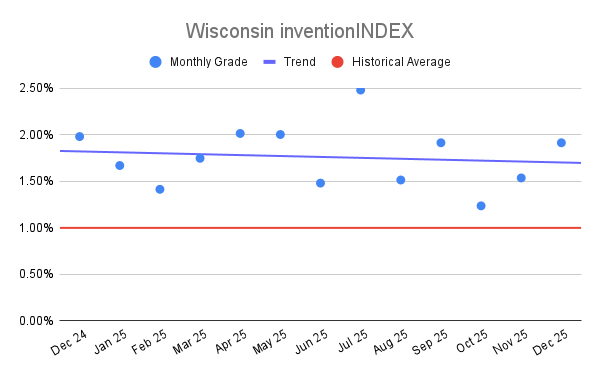 Wisconsin inventionINDEX December 2025
  Wisconsin inventionINDEX Novem
