

Quick Summary: Wisconsin Non-Sharable R&D Credits
What they are: Research credits generated by a corporation during a period when it was not part of its current combined group (e.g., pre-acquisition or pre-2009).
Key Restriction: These credits cannot be shared with other group members to offset their tax liabilities. They remain "locked" to the specific entity that generated them.
Strategic Impact: Companies must carefully track these attributes during mergers and acquisitions. The "pro-rata usage" rule requires that when a member offsets its own tax, it must use a proportional amount of its non-sharable credits, potentially preserving less sharable credit for the group.
Non-sharable credits in the Wisconsin combined reporting system are tax attributes belonging exclusively to a specific corporate member that cannot be used to offset the tax liabilities of other group members. Under Wisconsin law, research credits are classified as non-sharable if they originated in a tax year when the corporation was not a member of the same combined group or unitary business.
The introduction of combined reporting in Wisconsin, effective for taxable years beginning on or after January 1, 2009, represented a paradigm shift in the state’s approach to corporate taxation. Prior to this legislative change, Wisconsin utilized a separate filing system where each corporation was treated as a distinct taxpayer, regardless of its affiliation with other entities. The transition to combined reporting aimed to more accurately reflect the economic reality of modern business structures by treating a unitary business—a group of corporations that are sufficiently integrated and interdependent—as a single enterprise for the purpose of determining Wisconsin income. However, while income and apportionment factors are combined to determine the group’s collective tax base, the statutes and administrative codes preserve a separate entity philosophy for tax credits. This creates a complex regulatory environment where some credits can be shared among group members to offset the group’s total tax liability, while others—labeled as non-sharable—remain locked within the specific corporation that generated them. Understanding this distinction is critical for multinational corporations operating in Wisconsin, as it dictates the effective utilization of the Research and Development (R&D) tax credit, one of the state's most potent incentives for innovation and economic growth.
Statutory Foundations of Combined Reporting and Credit Attribution
The legal mandate for combined reporting is codified in Section 71.255 of the Wisconsin Statutes. This section defines the combined group as the collection of persons whose income and apportionment factors are required to be taken into account when filing a combined report. The determination of whether a corporation must be included in a combined report is based on a rigorous three-test framework established by the Wisconsin Department of Revenue (DOR).
The Three-Test Framework for Group InclusionFor a corporation to be included in a combined group, it must satisfy the common control test, the unitary business test, and the water’s edge test.
The common control test is primarily objective, based on a 50 percent ownership threshold. Corporations are considered part of a commonly controlled group if a parent corporation or a common owner (corporate or non-corporate) directly or indirectly owns stock representing more than 50 percent of the voting power of each corporation in the group. This definition extends to stapled entities under Section 269B of the Internal Revenue Code (IRC), where interests in two or more corporations cannot be separately transferred.
The unitary business test is more qualitative and functional. A unitary business is defined as a single economic enterprise composed of related entities that are integrated in their activities, providing a synergy and mutual benefit that produces a sharing or exchange of value. The DOR presumes a unitary business exists if there is unity of ownership, operation, and use, as indicated by centralized management, interlocking directorates, centralized purchasing, or intercorporate services such as legal and financial management.
Finally, the water’s edge test determines which members of a commonly controlled group are excluded based on their foreign activities. Generally, corporations are excluded if 80 percent or more of their worldwide income is active foreign business income, as defined in the IRC.
| Inclusion Test | Statutory Basis | Key Criteria |
|---|---|---|
| Common Control | s. 71.255(1)(c), Stats. | >50% voting power ownership (direct or indirect). |
| Unitary Business | s. 71.255(1)(n), Stats. | Functional integration, centralized management, and economies of scale. |
| Water's Edge | s. 71.255(2), Stats. | Exclusion of foreign corporations and 80/20 companies. |
Despite the consolidation of income, Wisconsin Administrative Code Tax 2.61(10) clarifies that a tax credit is an attribute of the separate corporation rather than the combined group. Each corporation must compute its credits separately based on its own activities and expenses. Section 71.255(6)(c) of the Wisconsin Statutes serves as the enabling provision that allows for the sharing of certain research credits, but this is a specific exception to the general rule that credits are non-transferable between members.
This separate entity principle is the foundation for non-sharable credits. If a credit does not meet the strict statutory requirements for sharing, it remains a separate entity item that can only be used to offset the tax liability of the member that earned it.
The Legal Definition and Context of Non-sharable Research Credits
In the context of the Wisconsin R&D credit, non-sharable refers to any portion of a research credit—whether generated in the current year or carried forward from a prior year—that does not qualify for distribution to other members of the combined group under s. 71.255(6)(c), Stats.
Criteria for Categorization as Non-sharableA research credit is classified as non-sharable under four primary conditions:
- Non-membership in the Unitary Group at Origination: This is the most common reason for a credit being non-sharable. A corporation can generally only share its research credits if it was a member of the same combined group (or would have been, in pre-2009 years) during the year the credit originated. If Corporation A earned a credit in 2020 while it was an independent entity and was subsequently acquired by a combined group in 2024, that 2020 credit is non-sharable with the other members of the new group.
- Credits Attributable to Separate Entity Items: If a member of a combined group engages in a distinct business activity that is not part of the group’s unitary business, any income or loss from that activity is treated as a separate entity item. Consequently, any research credit generated by that non-unitary activity is non-sharable.
- Changes in Group Composition: If a corporation leaves a combined group, any unused research credits it carries with it become non-sharable with the members of the former group. These credits remain with the departing corporation for its own future use.
- Refundable Portions of the Credit: Significant guidance from the DOR specifies that the refundable portion of the research credit (currently up to 25% of the current year credit) is never sharable. The refundable amount must be claimed by the member that earned it and is paid to the designated agent as a refund, rather than being used to offset another member’s tax liability.
Because combined reporting began in 2009, many corporations still carry research credit carryforwards that originated before this date. To determine if these pre-2009 credits are sharable, the DOR applies a retrospective test: the credit is sharable if the corporation would have been a member of that same combined group had the current combined reporting laws been in effect in the year the credit originated. This requires the taxpayer to demonstrate that a unitary relationship existed between the entities at the time the research was performed, even though they were filing separate returns.
Mechanics of Credit Application and the Member First Rule
The Wisconsin Department of Revenue provides explicit guidance on the sequence in which research credits must be applied within a combined return. This hierarchy is designed to ensure that a member’s own attributes are used to their fullest extent before group-level sharing occurs.
Step-by-Step Credit Application HierarchyUnder Wisconsin Administrative Code Tax 2.61(10)(c), the application of research credits follows a mandatory four-step process.
- Offset Against Member’s Own Tax Liability: Every member of the combined group must first apply all of its available credits (both sharable and non-sharable) against its own gross tax liability. This gross liability includes tax generated by both the member's share of the combined unitary income and any tax from its separate entity items.
- Separate Remaining Credits into Sharable and Non-sharable Amounts: After the member's own tax is reduced (potentially to zero), any remaining research credits are categorized. Non-sharable credits are set aside as carryforwards for that specific corporation. Sharable credits are identified for potential aggregation.
- Aggregate and Assign Sharable Credits: Members who choose to share their sharable credits contribute them to an aggregate pool. The designated agent then assigns these credits to other group members who still have remaining tax liability attributable to their share of the combined unitary income.
- Proportionate Distribution of Unused Sharable Credits: If the aggregate sharable pool is not fully exhausted, the remaining credits are distributed back to the contributing members on a proportionate basis. These returned credits maintain their sharable character for future years.
A critical nuance in the guidance is the priority of the tax being offset. A member's available credits are considered used against tax liability from separate entity items before being used against tax liability from its share of combined unitary income. This is strategically beneficial for the group, as it maximizes the amount of unitary tax liability that remains available to be offset by shared credits from other members.
The Research Credit Calculation and Wisconsin Modifications
The sharable or non-sharable status of a credit is only relevant after the credit itself has been accurately calculated. Wisconsin's R&D credit is governed by Section 71.28(4) of the Statutes, which adopts the federal definition of qualified research under IRC Section 41, but with several significant modifications.
Tiered Credit RatesWisconsin incentivizes specific types of research through a tiered rate structure. The credit is generally calculated as a percentage of the amount by which Wisconsin qualified research expenses (QREs) exceed 50 percent of the average Wisconsin QREs for the three prior taxable years.
| Research Activity Category | Credit Rate on Excess QREs | Startup Rate (No prior QREs) |
|---|---|---|
| General Research | $5.75\%$ | $2.875\%$ |
| Internal Combustion Engines | $11.5\%$ | $5.75\%$ |
| Energy Efficient Products | $11.5\%$ | $5.75\%$ |
The Enhanced Rate of 11.5 percent applies to research related to the design and manufacturing of internal combustion engines for vehicles and certain energy-efficient products, such as building automation systems and automotive batteries for hybrid vehicles.
Wisconsin-Specific QRE RulesTo be eligible for the Wisconsin credit, research expenses must meet two additional criteria beyond the federal standards:
- In-State Performance: The research must be conducted entirely within the state of Wisconsin.
- Claimant Incurrence: The expenses must be incurred by the claimant for the taxable year.
A vital provision for combined groups is the treatment of intercompany research funding. Under Wisconsin Administrative Code Tax 2.61(10)(c), if one member of a combined group (Member A) pays another member (Member B) to perform research, the funding arrangement is ignored. The expenses are treated as QREs of Member B (the performer), and Member A cannot claim any credit based on the payment.
Administrative Guidance: Form 6CS and the Pro-Rata Rule
The Wisconsin Department of Revenue uses Form 6CS, "Sharing of Research Credits," to facilitate and track the movement of credits between group members. The instructions for this form provide some of the most detailed guidance on the treatment of non-sharable credits.
The Pro-Rata Usage MandateOne of the most complex and frequently overlooked rules in Wisconsin combined reporting is the pro-rata usage requirement. This rule applies when a corporation has both sharable and non-sharable research credits and uses a portion of those credits against its own tax liability.
According to the instructions for Form 6CS, a member cannot choose to use its non-sharable credits first to preserve its sharable credits for the group. Instead, the credits used to offset the member's own tax must be taken on a pro-rata basis from both the sharable and non-sharable pools.
For example, if a member has $10,000 in sharable credits and $30,000 in non-sharable credits (a 1:3 ratio) and uses $4,000 to offset its own tax, the DOR deems that $1,000 of the sharable credit and $3,000 of the non-sharable credit have been used. The designated agent must then reduce the amount of sharable credit entered on Line 1 of Form 6CS by the $1,000 that was consumed internally.
Calculating the Aggregate Sharable AmountForm 6CS guides the designated agent through a mathematical process to determine the Percentage of Aggregate Sharable Amount.
- Line 1: Enter the total sharable research credits available from each member, net of the amounts used against their own tax (adjusted for the pro-rata rule).
- Line 2f: Determine the group's total remaining tax liability from combined unitary income.
- Line 3: If the total credits available (Line 1) exceed the total tax liability (Line 2f), the agent must calculate a percentage: $\frac{Line\ 2f}{Line\ 1}$.
- Line 4: Multiply each member's shared amount on Line 1 by this percentage to find the final credits shared with the group.
This ensures that the benefit of the shared credits is spread equitably across the group and that unused sharable credits are returned to the correct entities in the correct proportions.
Refundability: The 25 Percent Cash-Out Provision
Starting with tax years beginning on or after January 1, 2024, Wisconsin increased the refundable portion of the R&D credit to 25 percent. This provision is designed to provide immediate liquidity to companies with significant R&D investments but low current tax liability.
Eligibility and Calculation of RefundsThe refundable portion is calculated based only on the current year’s research credit; carryforwards from prior years have no effect on this calculation. The refund is equal to the lesser of:
- 25 percent of the research credit computed for the current taxable year.
- The amount of the current year's research credit that remains after offsetting the current year’s tax liability.
| Refundability Era | Refundable Percentage | Statutory Source |
|---|---|---|
| Pre-2018 | 0% (100% Non-refundable) | s. 71.28(4), Stats. |
| 2018 - 2020 | 10% Refundable | s. 71.28(4k), Stats. |
| 2021 - 2023 | 15% Refundable | s. 71.28(4k), Stats. |
| 2024 - Present | 25% Refundable | s. 71.28(4k), Stats. |
The most significant guidance regarding refundability for combined groups is that the refundable portion cannot be shared. This creates a specific priority of use for current-year research credits:
- Offset the earning member’s own tax liability.
- Claim the refundable portion (up to 25% of the total current year credit).
- Any remaining amount is classified as a sharable credit and can be placed in the pool for other members.
Because the refund is prioritized after the member's own tax but before sharing, the act of claiming a refund reduces the amount of credit that can be shared with other affiliates. This reinforces the principle that the state's direct cash incentives are reserved for the specific entity performing the R&D.
Detailed Compliance Example: Multi-Entity Credit Sharing
To illustrate the application of these rules, consider Wisconsin Tech Group, a combined group consisting of Parent Corp (P), Sub A, and Sub B. The group operates on a calendar year basis. For the 2024 tax year, the following data is available:
Step 1: Data Gathering and Member-Level Computation- Parent Corp (P):
- Gross Tax Liability: $200,000 (all from combined unitary income).
- Credits: $50,000 in current year R&D credits (sharable).
- Sub A:
- Gross Tax Liability: $50,000 (all from combined unitary income).
- Credits: $100,000 in R&D carryforwards. $80,000 are non-sharable (pre-acquisition) and $20,000 are sharable (post-acquisition).
- Sub B:
- Gross Tax Liability: $100,000 (all from combined unitary income).
- Credits: None.
- Parent Corp (P): Uses $50,000 of its current credits to offset its own tax.
- Remaining Tax for P: $150,000.
- Remaining Credits for P: $0.
- Sub A: Uses $50,000 of its carryforwards to offset its own tax. Because Sub A has both sharable and non-sharable credits, it must use the pro-rata rule.
- Total Credits: $100,000 ($80k NS, $20k S). Ratio is 4:1.
- Pro-rata Usage: $40,000 of non-sharable and $10,000 of sharable credits are deemed used.
- Remaining Credits for Sub A: $40,000 non-sharable (retained as carryforward) and $10,000 sharable (available to share).
The designated agent now aggregates the sharable credits available for the group.
- Aggregate Sharable Pool (Line 1): $10,000 (all from Sub A).
- Remaining Group Tax Liability (Line 2f):
- P: $150,000.
- Sub B: $100,000.
- Total Liability: $250,000.
Since the group’s tax liability ($250,000) is greater than the available credits ($10,000), the Percentage of Aggregate Sharable Amount (Line 3) is 100.0000%.
- Credits assigned to P: $\frac{\$150,000}{\$250,000} \times \$10,000 = \$6,000$.
- Credits assigned to Sub B: $\frac{\$100,000}{\$250,000} \times \$10,000 = \$4,000$.
| Member | Initial Tax | Own Credit Used | Shared Credit Used | Final Tax Due | Remaining Non-sharable Carryforward |
|---|---|---|---|---|---|
| Parent Corp (P) | $200,000 | $50,000 | $6,000 | $144,000 | $0 |
| Sub A | $50,000 | $50,000 | $0 | $0 | $40,000 |
| Sub B | $100,000 | $0 | $4,000 | $96,000 | $0 |
| Total Group | $350,000 | $100,000 | $10,000 | $240,000 | $40,000 |
This example demonstrates how the pro-rata rule can unintentionally waste sharable credits for a member like Sub A, who could have used only non-sharable credits to cover its tax if the law permitted it. This emphasizes the importance of strategic acquisition planning regarding tax attributes.
Net Business Losses: The Conceptual Sibling of Credit Sharing
The rules for non-sharable research credits are frequently compared to the rules for Wisconsin net business loss (NBL) carryforwards. Both are treated as attributes of the separate corporation rather than the group.
Loss Sharing RestrictionsUnder s. 71.255(6)(b), Stats., a corporation may only share its NBL carryforwards if the loss was incurred while the corporation was a member of the same combined group and the loss resulted from the unitary business. Pre-2009 losses are generally non-sharable, with a limited exception that allows for 5 percent of the pre-2009 loss to be shared annually starting in 2012.
Divergence in Sharing RulesWhile the mechanisms for sharing are similar, the sharability criteria for pre-2009 attributes differ significantly between losses and research credits.
- NBLs: Are generally non-sharable if incurred before 2009, regardless of the unitary relationship.
- Research Credits: Are sharable if incurred before 2009, provided the same common unitary business test is met.
This distinction makes pre-2009 R&D credits significantly more valuable in a combined group setting than pre-2009 net business losses.
The Role of the Designated Agent in Attribute Management
The designated agent of a combined group—usually the parent corporation—serves as the centralized administrator for all tax matters, including the management of non-sharable and sharable credits.
Legal Authority and LiabilityUnder s. 71.255(7), Stats., only the designated agent can act on behalf of the group for filing returns, claiming refunds, and responding to audits. If the DOR asserts that a member should have been part of the group, or that credits were improperly shared, the designated agent is the party responsible for the resolution.
Management of Non-sharable AttributesThe designated agent must maintain a tracking schedule for each member’s research credits. This schedule must distinguish between:
- Non-sharable carryforwards (pre-acquisition).
- Sharable carryforwards (post-acquisition or unitary pre-2009).
- Current year sharable credits.
- Refundable amounts.
Failure to accurately track these buckets of credits can lead to significant audit risk. For instance, if the designated agent inadvertently allows a member to use a non-sharable credit against the group’s unitary tax liability, the DOR will disallow the credit and assess interest and potentially penalties.
Corporate Restructuring and the Continuity of Attributes
When a corporation undergoes a reorganization, merger, or acquisition, the character of its research credits as sharable or non-sharable can be fundamentally altered.
Acquisitions and DispositionsIf a corporation is acquired and becomes a member of a new combined group, its existing credit carryforwards are typically treated as non-sharable with the new group members. However, if the corporation was already part of a combined group and that entire group is acquired as a unit, the credits may maintain their sharable character within the original subgroup.
Specifically, Wisconsin Administrative Code Tax 2.61(10)(c) provides that if a corporation leaves a combined group and joins another, its unused credits remain attributes of that corporation. If the corporation joins a new combined group, it cannot share its pre-existing credits with the members of the new group unless those members were also part of its previous unitary business.
The IRC Section 383 LimitationWisconsin law expressly incorporates the limitations provided by Section 383 of the Internal Revenue Code. Section 383 limits the use of certain tax attributes, including research credits, following an ownership change (generally a change of more than 50 percentage points in ownership over a three-year period). In the context of a Wisconsin combined return, even if a credit is technically sharable under the unitary business rules, its total usage may still be restricted by these federal-style limitation rules if a major corporate restructuring has occurred.
Future Outlook: Legislative Proposals and the 50-Year Carryforward
The Wisconsin legislature is currently considering significant changes to the duration of research credit carryforwards. Senate Bill 482 (and Assembly Bill 525) proposes extending the carryforward period from the current 15 years to 50 years.
Implications of the 50-Year CarryforwardThe extension to 50 years would represent one of the longest carryforward periods in the United States. This proposal is aimed at deep-tech and long-cycle industries, such as pharmaceutical development and aerospace manufacturing, where the timeline from initial R&D investment to profitability (and thus tax liability) can span decades.
For combined groups, a 50-year carryforward would exponentially increase the importance of the non-sharable designation. Credits generated in the 2020s by a separate entity could theoretically remain on the books until the 2070s. As companies are bought, sold, and merged over that half-century, the administrative burden of tracking the origin and sharability of these credits will become a permanent fixture of corporate tax departments.
Retroactivity and Strategic PlanningThe proposed bill specifies that the extended carryover period would apply retroactively to existing credits that have not yet expired or been used. This would provide an immediate windfall to corporations with large non-sharable carryforwards that were nearing their 15-year expiration date. Tax professionals must monitor this legislation closely, as it may necessitate a recalculation of deferred tax assets and a re-evaluation of the group’s long-term credit utilization strategy.
Final Thoughts
The concept of non-sharable credits is a vital regulator in the Wisconsin combined reporting system, ensuring that the benefits of the R&D tax credit are allocated according to the economic contribution of each corporate entity. The Wisconsin Department of Revenue’s guidance on this subject is exhaustive, covering everything from the retrospective unitary test for pre-2009 credits to the rigorous pro-rata rule for credit usage.
Key Takeaways for Taxpayers- Credits follow the Entity: Always remember that credits are separate entity attributes. Sharing is a statutory privilege, not an inherent right of the combined group.
- The 2009 Boundary: Research credits earned prior to 2009 require proof of a unitary relationship at the time of origination to be sharable.
- The Pro-Rata Trap: Corporations with both sharable and non-sharable credits must use them proportionately against their own tax. This cannot be bypassed through selective allocation.
- Refunds are Private: The 25 percent refundable portion of the R&D credit belongs solely to the member performing the research and cannot be shared.
- Documentation is Paramount: Given the current 15-year (and potential 50-year) carryforward periods, maintaining contemporaneous records of R&D activities and corporate affiliations is the only defense against a DOR audit.
By navigating these rules with precision, a combined group can ensure it maximizes its R&D tax incentives while maintaining full compliance with Wisconsin's complex corporate tax code. The strategic management of non-sharable credits remains not just a compliance task, but a vital component of long-term corporate financial planning in the state of Wisconsin.
Who We Are:
Swanson Reed is one of the largest Specialist R&D Tax Credit advisory firm in the United States. With offices nationwide, we are one of the only firms globally to exclusively provide R&D Tax Credit consulting services to our clients. We have been exclusively providing R&D Tax Credit claim preparation and audit compliance solutions for over 30 years. Swanson Reed hosts daily free webinars and provides free IRS CE and CPE credits for CPAs.
Are you eligible?

Why choose us?

Pass an Audit?

What is the R&D Tax Credit?
The Research & Experimentation Tax Credit (or R&D Tax Credit), is a general business tax credit under Internal Revenue Code section 41 for companies that incur research and development (R&D) costs in the United States. The credits are a tax incentive for performing qualified research in the United States, resulting in a credit to a tax return. For the first three years of R&D claims, 6% of the total qualified research expenses (QRE) form the gross credit. In the 4th year of claims and beyond, a base amount is calculated, and an adjusted expense line is multiplied times 14%. Click here to learn more.
Never miss a deadline again

Stay up to date on IRS processes

Discover R&D in your industry

R&D Tax Credit Preparation Services
Swanson Reed is one of the only companies in the United States to exclusively focus on R&D tax credit preparation. Swanson Reed provides state and federal R&D tax credit preparation and audit services to all 50 states.
If you have any questions or need further assistance, please call or email our CEO, Damian Smyth on (800) 986-4725.
Feel free to book a quick teleconference with one of our national R&D tax credit specialists at a time that is convenient for you.
R&D Tax Credit Audit Advisory Services
creditARMOR is a sophisticated R&D tax credit insurance and AI-driven risk management platform. It mitigates audit exposure by covering defense expenses, including CPA, tax attorney, and specialist consultant fees—delivering robust, compliant support for R&D credit claims. Click here for more information about R&D tax credit management and implementation.
Our Fees
Swanson Reed offers R&D tax credit preparation and audit services at our hourly rates of between $195 – $395 per hour. We are also able offer fixed fees and success fees in special circumstances. Learn more at https://www.swansonreed.com/about-us/research-tax-credit-consulting/our-fees/



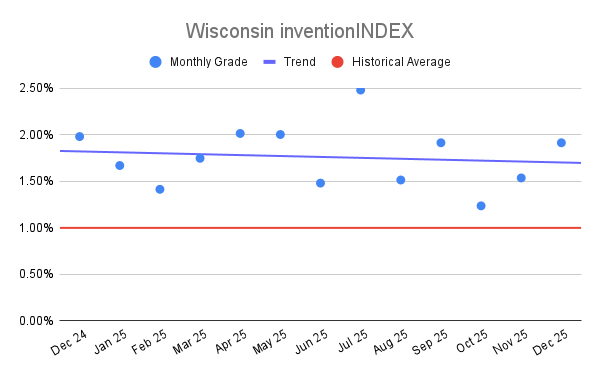 Wisconsin inventionINDEX December 2025
  Wisconsin inventionINDEX Novem
