

The 15% refundable percentage represents the statutory cap on the portion of the current year’s Wisconsin research credit that may be issued as a direct cash refund to a taxpayer whose credit exceeds their state income tax liability. Applicable to tax years 2021–2023, this mechanism enables businesses to monetize a segment of their earned incentives immediately, providing essential liquidity regardless of current profitability.
The 15% refundable percentage represents the statutory cap on the portion of the current year’s Wisconsin research credit that may be issued as a direct cash refund to a taxpayer whose credit exceeds their state income tax liability. This mechanism enables businesses to monetize a segment of their earned incentives immediately, providing essential liquidity regardless of current profitability.
Legislative Context and the Evolution of Refundability in Wisconsin
The Wisconsin Research Credit has undergone significant structural transformations over the past decade, moving from a strictly nonrefundable benefit to a partially refundable incentive. To understand the 15% refundable percentage applicable to the 2021–2023 tax years, one must examine the fiscal and legislative environment that necessitated its implementation. Historically, Wisconsin’s research tax credit, codified in Chapter 71 of the Wisconsin Statutes, was designed to offset income or franchise tax liabilities. However, the nonrefundable nature of the credit meant that companies in a loss position—particularly startups, high-growth technology firms, and businesses in cyclical downturns—could only carry the credits forward for up to 15 years. This often resulted in a trapped tax asset that did little to incentivize immediate research spending when capital was most needed.
The shift toward refundability began with 2017 Wisconsin Act 59, which introduced a 10% refundable component for taxable years beginning after December 31, 2017. The policy objective was to increase the utilization rate of the credit. According to the Wisconsin Legislative Fiscal Bureau, significant amounts of credits were being claimed but not used; for instance, in tax year 2020, C-corporations claimed hundreds of millions in credits but only utilized a small fraction to offset actual tax due. By introducing a refundable element, the legislature sought to make the credit a more meaningful incentive for firms without immediate tax liability, such as those in the early stages of product development.
The specific 15% refundable percentage for the 2021–2023 period was established through subsequent legislative action, notably 2021 Wisconsin Act 58. This increase from 10% to 15% represented a 50% escalation in the refundable capacity of the credit, reflecting a bipartisan effort to bolster Wisconsin’s competitive position against other states and national firms. This period serves as a bridge between the initial 10% refundable era and the more aggressive 25% refundable period that commenced in 2024.
Historical Trajectory of Wisconsin Research Credit Refundability| Period (Tax Years Beginning) | Refundable Percentage | Legislative Authority |
| Before January 1, 2018 | 0% (Nonrefundable Only) | Pre-2017 Statutes |
| January 1, 2018 – December 31, 2020 | 10% | 2017 Wisconsin Act 59 |
| January 1, 2021 – December 31, 2023 | 15% | 2021 Wisconsin Act 58 |
| On or after January 1, 2024 | 25% | 2023 Wisconsin Act 19 |
Statutory Interpretation and Regulatory Definitions
The 15% refundable percentage is not a standalone figure but is deeply integrated into the broader definitions of qualified research and qualified research expenses (QREs) as defined by both state law and the Internal Revenue Code (IRC). Wisconsin generally adopts the federal definitions found in IRC Section 41, but with several critical state-specific modifications that influence the final credit calculation and, consequently, the 15% refundable portion.
The Four-Part Test in a Wisconsin ContextTo be eligible for the credit—and the subsequent 15% refund—the activities must meet the federal four-part test as of December 31, 2021. First, the research must be for a permitted purpose, meaning it relates to a new or improved function, performance, reliability, or quality of a business component. Second, the activity must involve the elimination of uncertainty, where the information available to the taxpayer does not establish the capability or method for developing the component or the appropriate design. Third, the research must involve a process of experimentation, typically characterized by evaluating alternatives or testing hypotheses. Finally, the research must be technological in nature, relying on principles of the physical or biological sciences, engineering, or computer science.
Wisconsin Department of Revenue (DOR) guidance, particularly Publication 131, emphasizes that these activities must occur within Wisconsin. Unlike the federal credit, which allows for research across the United States, the Wisconsin credit is strictly territorial. If research is conducted partly within and partly outside the state, the expenses must be accurately determined or reasonably allocated to Wisconsin based on where the personnel and activities are located.
Categorization of Research ExpensesThe 15% refundable percentage applies to the total research credit computed for the current year across three distinct tiers of activity. Each tier has its own base rate, but they all share the same refundability rules during the 2021–2023 window.
General Research Activity: This is the most common category, covering a wide array of technological developments in manufacturing, software, and biotechnology. The standard rate is 5.75% of the excess QREs over a base amount.
Internal Combustion Engines: Wisconsin provides a doubled incentive (11.5%) for research related to internal combustion engines and certain vehicles, including hybrid drives and fuel cells. This reflects the state's historical strength in engine manufacturing.
Energy Efficient Products: Research related to the design and manufacturing of energy-efficient lighting, building automation, and certain automotive batteries also qualifies for the 11.5% rate.
Wisconsin QRE Rates and Refundability Parameters (2021–2023)| Credit Type | Normal Rate (on Excess) | Startup Rate (No Prior QREs) | Refundable Percentage |
| General Qualified Research | 5.75% | 2.875% | 15% |
| Internal Combustion Engines | 11.50% | 5.75% | 15% |
| Energy Efficient Products | 11.50% | 5.75% | 15% |
Detailed Analysis of the Refundable Calculation Mechanism
The meaning of the 15% refundable percentage is best understood through its computational application. The Wisconsin DOR provides specific guidance on how this limit interacts with a taxpayer's actual tax liability. The 15% is a cap on the current year credit, and the actual refund is determined by a lesser of calculation.
The Lesser Of FormulaAccording to Publication 131 and Schedule R instructions, the refundable portion is the lesser of two specific amounts:
- Calculation 1: 15% of the total research credit computed for the current taxable year.
- Calculation 2: The current year research credit remaining after it has been used to offset the tax liability shown on the return.
This distinction is crucial. If a taxpayer has a high tax liability and uses more than 85% of their current year credit to offset that tax, the refundable portion will be less than the 15% maximum, or even zero. The primary intent of the law is to ensure that the credit first reduces the tax owed to the state before any cash payment is issued.
Order of Credit ApplicationThe Department of Revenue’s Common Questions guidance clarifies a pivotal administrative rule regarding the ordering of credits. Taxpayers are required to use nonrefundable credit carryforwards from prior years before applying the current year's research credit. Because carryforwards are 100% nonrefundable, using them first is highly advantageous for the taxpayer. By exhausting the nonrefundable carryforwards to cover the current year's tax liability, the taxpayer preserves the maximum possible amount of the current year's credit, which is the only portion eligible for the 15% refund.
Interaction with IRC Section 174 AmortizationA significant complication arose for tax years 2022 and 2023 due to federal changes in the Tax Cuts and Jobs Act of 2017. Under federal law, for taxable years beginning after December 31, 2021, businesses are required to capitalize and amortize R&D expenses over five years (or fifteen years for foreign research) instead of expensing them immediately. However, the Wisconsin Department of Revenue explicitly stated in the 2022 and 2024 Schedule R instructions that Wisconsin has not adopted this change (Section 13206 of P.L. 115-97). For Wisconsin purposes, the pre-2022 federal provisions apply. This means that for the 15% refundable period, Wisconsin taxpayers can still fully expense their R&D costs in the year incurred for state credit purposes, even while they are amortizing those same costs for federal purposes. This decoupling often results in a larger state credit relative to the federal credit in the short term, thereby increasing the 15% refundable basis.
Revenue Office Guidance: Schedule R and Filing Procedures
The Wisconsin Department of Revenue (DOR) manages the administration of the research credit through Schedule R, which is used by individuals, corporations, and pass-through entities. The 2022 Schedule R and its instructions provide the most definitive local state revenue office guidance on how the 15% percentage is applied to the law.
Step-by-Step Reporting on Schedule RFor the 2021–2023 period, the Schedule R form contains specific lines that dictate the refundable computation. The guidance requires the following sequence:
Computation of Total Credit (Lines 1–16): The taxpayer calculates their QREs and applies the three-year average base period to determine the current year's credit. For startups or those without research in the three prior years, the credit is a flat percentage of current QREs (2.875% or 5.75% depending on the tier).
The 15% Limit (Line 17): The taxpayer is instructed to Multiply line 16 (line 16b for fiduciary) by .15 (15%). This establishes the maximum potential refund.
Tax Offset (Line 18): The taxpayer enters the amount of the current year credit used to offset tax on their return.
Remaining Credit (Line 19): This line determines the surplus credit (Total Credit - Tax Offset).
Refundable Portion (Line 20): The taxpayer must Enter the lesser of line 17 or line 19. This is the final refundable amount that is then carried to the main tax return (e.g., Form 1, Form 4, or Form 6).
Guidance for Pass-Through EntitiesA common area of confusion involves how partnerships and S-corporations handle the refundable portion. DOR guidance is clear: partnerships, LLCs treated as partnerships, and tax-option (S) corporations cannot claim the credit or the refund at the entity level. Instead, they must compute the credit and the potentially refundable amount and then prorate these values among their partners, members, or shareholders based on their ownership interest. These owners then claim the credit on their own individual or corporate returns. The entity must report these amounts on Schedule 3K-1 or 5K-1 for each owner.
Documentation and Substantiation StandardsThe DOR’s Publication 131 provides exhaustive guidance on the record-keeping necessary to support a research credit claim, including the 15% refundable portion. Because the state is issuing a cash payment, the level of scrutiny during audits is often higher than for nonrefundable credits. Claimants are required to maintain contemporaneous records that substantiates the QREs. This includes:
- Payroll records and W-2 statements for employees directly performing or supporting research.
- Detailed descriptions of the research projects and the uncertainties they aimed to resolve.
- Invoices for supplies and contracts, ensuring they are Wisconsin-based.
- Time-tracking data that clearly differentiates research time from standard production or administrative time.
Failure to maintain these records can result in the DOR reclaiming the 15% refund plus interest and penalties, as the burden of proof rests entirely on the taxpayer.
Comprehensive Examples of the 15% Refund Calculation
To illustrate the nuanced application of the lesser of rule and the interaction with tax liability, consider the following examples based on 2022 tax year parameters.
Example 1: High Research Spending with No Tax LiabilityAlpha Software Corp, a Wisconsin-based startup, is developing a new AI-driven logistics platform. In 2022, they incur $1,000,000 in Wisconsin QREs. Since they are a new company, they have no research history in the prior three years.
- Current Year QREs: $1,000,000
- Startup Credit Rate: 2.875%
- Total Research Credit Computed (Line 16): $28,750
- Tax Liability for 2022: $0
- Credit Used to Offset Tax (Line 18): $0
- Remaining Credit (Line 19): $28,750
- Maximum Refundable Amount (Line 17: $28,750 x 15%): $4,312.50
- Refundable Portion (Line 20: Lesser of $4,312.50 or $28,750): $4,312.50
- Nonrefundable Carryforward: $24,437.50
In this scenario, Alpha Software receives a check from the state for $4,312.50. The remaining $24,437.50 is carried forward for 15 years. This provides immediate cash to a company that otherwise would have seen no benefit from the credit in its current loss position.
Example 2: Moderate Tax Liability Offsetting the CreditBeta Engines LLC conducts research on high-efficiency fuel cell drives. In 2022, they generate an 11.5% research credit of $100,000. Their Wisconsin tax liability before the credit is $90,000.
- Total Research Credit Computed (Line 16): $100,000
- Tax Liability for 2022: $90,000
- Credit Used to Offset Tax (Line 18): $90,000
- Remaining Credit (Line 19): $10,000
- Maximum Refundable Amount (Line 17: $100,000 x 15%): $15,000
- Refundable Portion (Line 20: Lesser of $15,000 or $10,000): $10,000
- Nonrefundable Carryforward: $0
In this case, the refundable portion is limited by the amount of credit remaining after offsetting the tax, not the 15% cap. The taxpayer eliminates their $90,000 tax bill and receives a $10,000 refund check.
Example 3: High Tax Liability with Minimal RefundGamma Manufacturing earns a 5.75% research credit of $200,000. Their tax liability for the year is $500,000.
- Total Research Credit Computed (Line 16): $200,000
- Tax Liability for 2022: $500,000
- Credit Used to Offset Tax (Line 18): $200,000
- Remaining Credit (Line 19): $0
- Maximum Refundable Amount (Line 17: $200,000 x 15%): $30,000
- Refundable Portion (Line 20: Lesser of $30,000 or $0): $0
Here, Gamma Manufacturing uses the entire credit to reduce their tax bill to $300,000. Since no credit remains after the offset, the 15% refundable provision does not apply. This demonstrates that the 15% refundable percentage is specifically designed for companies whose credits exceed their tax obligations.
Economic Rationale and Policy Implications
The decision by the Wisconsin Legislature to increase the refundable percentage to 15% for the 2021–2023 tax years was rooted in specific economic theories regarding innovation and capital liquidity.
The Spillover Effect and Market CorrectionThe primary economic justification for any R&D tax credit is the spillover effect. When a firm invests in research, it creates knowledge that often benefits the broader economy more than the firm itself. Other companies may learn from the innovator’s successes or failures, leading to overall industrial advancement. Because the innovating firm cannot capture 100% of the financial benefit of its research (due to these spillovers), it will naturally underinvest in R&D relative to what is socially beneficial. The 15% refund acts as a direct subsidy to bridge this gap, lowering the after-tax cost of research and encouraging firms to pursue projects with high social value but uncertain private returns.
Counter-Cyclical Support and Business ResilienceRefundability provides a counter-cyclical buffer for Wisconsin businesses. During economic downturns or periods of high inflation (such as the 2021–2023 period), companies may experience net operating losses (NOLs). In a strictly nonrefundable regime, these companies would lose the immediate benefit of their R&D incentives just when their cash reserves are most strained. The 15% refundable provision ensures that the state’s support for innovation does not vanish during hard times, helping companies maintain their research staff and progress toward new product launches even when profitability is temporarily absent.
Comparative State CompetitivenessWisconsin’s move to 15% refundability was also a reaction to the tax environments in neighboring and competitive states. For example, Indiana provides R&D incentives that target large businesses, but Wisconsin’s tiered approach and increasing refundability aim to attract a mix of established manufacturers and high-growth startups. By offering a cash-back component, Wisconsin makes itself more attractive to biotechnology and software firms that may be pre-revenue but are deciding where to locate their primary labs and engineering hubs.
Guidance for Combined Reporting Groups
For large corporate enterprises operating as part of a combined reporting group, the 15% refundable percentage follows specific sharing rules dictated by Wis. Stat. § 71.255(6)(c) and DOR guidance.
Shareable vs. Non-Shareable PortionsIn a combined group, a member that generates a research credit can share its nonrefundable portion with other members of the group to offset the total group tax liability. However, the refundable portion of the credit—the 15%—cannot be shared. The refund must be claimed by the specific member that generated the credit (or the designated agent acting on their behalf) based on that specific member’s own tax attributes and unused credit amount.
Procedural Requirements for GroupsMembers of a combined group use Schedule 6CS to report the sharing of research credits. The guidance requires that a member first use its credit to offset its own share of the group’s tax liability before sharing the remaining nonrefundable portion. This ordering ensures that the 15% refundable portion is calculated only after the generating member has satisfied its own tax obligations to the state. This prevents a group from artificially creating a refund for one member while another member has unpaid tax liability that could have been offset by the same credit.
Future Outlook and Transitions
While the 15% refundable percentage was the standard for tax years 2021, 2022, and 2023, the landscape has now shifted to the 25% regime.
The 2024 TransitionFor tax years beginning on or after January 1, 2024, the refundable portion increased to 25% under 2023 Wisconsin Act 19. This represents a significant escalation in the state's commitment to monetizing R&D credits. However, the administrative framework developed during the 15% period—including the Schedule R line structure and the lesser of logic—remains the blueprint for the 25% period.
Carryforward PersistenceIt is important to note that the increase in the refundable percentage to 25% in 2024 does not apply retroactively to credits carried forward from the 2021–2023 period. Any credit that was not refunded under the 15% rule and was instead carried forward remains a nonrefundable credit carryforward. It can only be used to offset tax in future years and cannot be liquidated at the higher 25% rate. This lock-in of the nonrefundable status ensures that the state's fiscal exposure to refunds is limited to the current year's research activities.
Summary of Strategic ConsiderationsFor professional tax practitioners and corporate controllers, the meaning of the 15% refundable percentage for the 2021–2023 period is defined by its ability to provide immediate liquidity. To maximize this benefit, firms must:
- Accurately segregate Wisconsin QREs from federal QREs to ensure the base for the 15% calculation is as large as possible.
- Properly apply the ordering rules, using nonrefundable carryforwards first to protect the refundable current year credit.
- Maintain rigorous documentation to withstand the heightened audit scrutiny that naturally follows a request for a cash refund from the state.
- Understand the implications of decoupling from federal Section 174 to ensure that Wisconsin research credits are not prematurely reduced by amortization requirements that the state does not recognize.
By adhering to the exhaustive guidance provided by the Wisconsin Department of Revenue and the specific statutory mandates of Act 58, businesses can ensure they fully leverage this critical incentive to drive innovation and maintain financial health during their most research-intensive years.
Who We Are:
Swanson Reed is one of the largest Specialist R&D Tax Credit advisory firm in the United States. With offices nationwide, we are one of the only firms globally to exclusively provide R&D Tax Credit consulting services to our clients. We have been exclusively providing R&D Tax Credit claim preparation and audit compliance solutions for over 30 years. Swanson Reed hosts daily free webinars and provides free IRS CE and CPE credits for CPAs.
Are you eligible?

Why choose us?

Pass an Audit?

What is the R&D Tax Credit?
The Research & Experimentation Tax Credit (or R&D Tax Credit), is a general business tax credit under Internal Revenue Code section 41 for companies that incur research and development (R&D) costs in the United States. The credits are a tax incentive for performing qualified research in the United States, resulting in a credit to a tax return. For the first three years of R&D claims, 6% of the total qualified research expenses (QRE) form the gross credit. In the 4th year of claims and beyond, a base amount is calculated, and an adjusted expense line is multiplied times 14%. Click here to learn more.
Never miss a deadline again

Stay up to date on IRS processes

Discover R&D in your industry

R&D Tax Credit Preparation Services
Swanson Reed is one of the only companies in the United States to exclusively focus on R&D tax credit preparation. Swanson Reed provides state and federal R&D tax credit preparation and audit services to all 50 states.
If you have any questions or need further assistance, please call or email our CEO, Damian Smyth on (800) 986-4725.
Feel free to book a quick teleconference with one of our national R&D tax credit specialists at a time that is convenient for you.
R&D Tax Credit Audit Advisory Services
creditARMOR is a sophisticated R&D tax credit insurance and AI-driven risk management platform. It mitigates audit exposure by covering defense expenses, including CPA, tax attorney, and specialist consultant fees—delivering robust, compliant support for R&D credit claims. Click here for more information about R&D tax credit management and implementation.
Our Fees
Swanson Reed offers R&D tax credit preparation and audit services at our hourly rates of between $195 – $395 per hour. We are also able offer fixed fees and success fees in special circumstances. Learn more at https://www.swansonreed.com/about-us/research-tax-credit-consulting/our-fees/



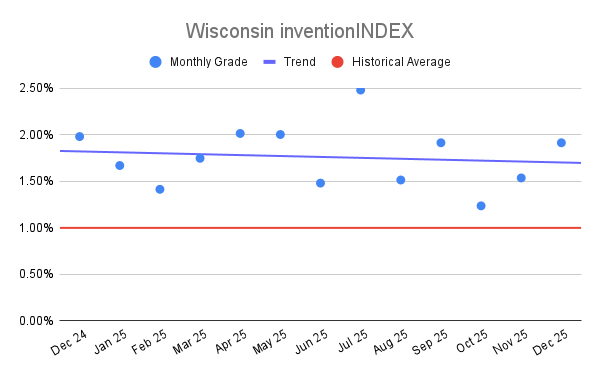 Wisconsin inventionINDEX December 2025
  Wisconsin inventionINDEX Novem
