

Quick Answer: What is Wisconsin R&D Credit Sharing?
Wisconsin’s sharable R&D credit provision allows corporations within a combined group to transfer unused nonrefundable research credits to other members that have a tax liability. Governed by Wis. Stat. § 71.255(6)(c), this mechanism prevents tax incentives from being wasted in loss-making entities. To utilize this, members must be part of a unitary business. The process follows a strict hierarchy: a member must first apply credits to its own liability before pooling the excess. The aggregate sharable amount is then assigned proportionately to other members based on their share of the group’s unitary income. Note that the new 25% refundable portion (effective 2024) follows different administrative rules and is not shared in the same manner.
Sharable credits within a Wisconsin combined group represent a statutory mechanism allowing members of a unitary business to apply excess nonrefundable research and development credits against the tax liabilities of other members. This provision ensures that credits generated by a research-intensive entity are not wasted if that entity lacks sufficient individual tax liability to utilize the incentive.
The conceptual foundation of Wisconsin’s combined reporting regime, established for taxable years beginning on or after January 1, 2009, is rooted in the principle that a unitary business should be taxed as a single economic enterprise regardless of its internal corporate structure. Within this framework, tax credits are generally viewed as attributes of the specific legal entity that performed the qualifying activity. However, Wisconsin Statutes section 71.255(6)(c) creates a critical exception for research credits, allowing for the “sharing” of these benefits across the group. This provision is specifically designed to incentivize research and development (R&D) activities within the state by ensuring that companies do not lose the immediate utility of their credits simply because their R&D-heavy subsidiaries are not the primary profit-generating arms of the organization. To understand the application of sharable credits, one must dissect the interplay between the statutory requirements of section 71.255, the administrative interpretations provided in Wisconsin Administrative Code section Tax 2.61(10), and the practical guidance issued by the Wisconsin Department of Revenue (DOR) through specialized forms and publications.
The Statutory Evolution of Combined Reporting and Credit Sharing
The transition to combined reporting in 2009 represented the most significant overhaul of Wisconsin’s corporate tax code in decades. Prior to this shift, Wisconsin utilized a separate entity filing system where each corporation was taxed in isolation, regardless of its affiliation with a parent or sister company. This system often led to “trapped” tax attributes, where a subsidiary engaged in high-risk research might generate millions in credits but have no income against which to apply them, while its profitable manufacturing affiliate paid full taxes. The introduction of section 71.255 was intended to resolve this disparity by treating the unitary group as a single taxpayer for apportionment and attribute utilization purposes.
Under the current law, corporations that are commonly controlled and engaged in a unitary business must file a combined report. A “combined group” is defined as the group of all persons whose income and apportionment factors are required to be taken into account under the unitary business principle. This unitary business definition involves a single economic enterprise consisting of separate parts of a single entity or multiple related business entities where there is a synergy, mutual benefit, and a sharing or exchange of value. Wisconsin Statute section 71.255(6)(c)1 specifically addresses the sharing of credits, stating that for each taxable year that a corporation in a combined group has an unused credit or credit carry-forward for research expenses, the corporation may use that credit to offset the tax liability of all other members of the group.
Defining the Unitary Business: The Anchor for Credit Sharing
The eligibility to share research credits is fundamentally tied to the existence of a unitary business. Wisconsin Administrative Code section Tax 2.62(2)(c) explains that participants in a commonly controlled economic enterprise are considered a unitary business if their activities generate a synergy and mutual benefit that produces a sharing or exchange of value among them. This “sharing or exchange of value” is the legal justification for allowing the sharing of credits; if the entities are functionally integrated, their tax incentives should be as well.
To determine if a unitary business exists, the Department of Revenue looks for several indicators of centralized management and operational integration. These include centralized purchasing, advertising, or accounting; intercorporate sales or leases; and intercorporate services. Furthermore, the participants must contribute in a nontrivial way to each other’s profitability, or be dependent upon one another for achieving business objectives. The “flow of value” can be evidenced by assisting in the acquisition of assets, lending funds, or providing technical and operational guidance. If a corporation is part of such a unitary enterprise and meets the ownership requirements—generally more than 50% of the voting power—it is considered a combined group member, and its research activities become potentially sharable with the rest of the group.
Mechanics of the Wisconsin Research Credit
The Wisconsin research credit is modeled after the federal credit under Internal Revenue Code (IRC) Section 41, but with several Wisconsin-specific modifications. The credit is primarily available for “qualified research” performed within the state of Wisconsin.
Qualified Research Expenses and Tiers
Qualified research expenses (QREs) include wages for employees performing research, supplies used in the research process, and a portion of contract research expenses. Wisconsin utilizes a tiered rate system that provides higher incentives for specific industries deemed critical to the state’s economic future.
| Credit Category | General Rate (Excess over Base) | Start-up Rate (Current Year QREs) |
|---|---|---|
| General Research | 5.75% | 2.875% |
| Internal Combustion Engines | 11.5% | 5.75% |
| Energy Efficient Products | 11.5% | 5.75% |
The “base amount” for most claimants is calculated as 50% of the average Wisconsin QREs for the prior three taxable years. If a claimant has no research history in the state, the lower “start-up” rates are applied directly to the current year’s qualified expenditures.
The Nonrefundable and Refundable Distinction
Historically, the Wisconsin research credit was entirely nonrefundable, meaning it could only be used to reduce tax liability to zero, with any excess carried forward for 15 years. However, starting in 2018, the legislature introduced a refundable component. For tax years beginning on or after January 1, 2024, up to 25% of the total research credit is refundable. This shift has significant implications for combined groups, as the refundable portion and the sharable nonrefundable portion follow different administrative paths.
Deep Dive into the Sharable Credit Provision
The “sharable” designation applies to the nonrefundable portion of the current year’s research credit and any unused research credit carryforwards. Administrative Code Tax 2.61(10)(c) provides the granular rules for how these attributes are distributed.
Eligibility and the Membership Rule
A corporation may generally only share its research credits with the combined group if it was a member of that same combined group in the year the credit originated. This “Membership Rule” is a safeguard against “credit shopping,” where a profitable group might acquire a distressed company solely to utilize its massive R&D carryforwards. If a corporation leaves the group, any unused sharable credits it brought to the group or generated while in the group remain attributes of that corporation and are no longer available to the remaining group members.
There is a vital exception for credits originating before the 2009 adoption of combined reporting. If a credit was generated prior to January 1, 2009, it may be shared if the corporation would have met the unitary business and common control tests had combined reporting been in effect at that time. This requires a historical analysis of the intercorporate relationships dating back to the year of the credit’s inception.
The Exclusion of the Super Research Credit
It is important to note that not all research-related credits are sharable. The “super research and development credit,” which was designed to provide an even higher incentive for massive R&D increases, is explicitly excluded from the sharing provisions. The DOR has maintained that this specific credit remains an attribute solely of the entity that generated it, emphasizing that “sharable” status is a privilege granted by statute to specific credit types, primarily the standard research expense credit and facilities credit carryforwards.
Administrative Guidance: Form 6CS and the Local Revenue Office
The Wisconsin Department of Revenue (DOR) provides detailed instructions on how to manifest the sharing of credits through Form 6CS, “Wisconsin Sharing of Research Credits”. This form is completed by the designated agent for the entire group and is filed along with the combined return (Form 6).
Reporting Requirements and Pro-Rata Usage
A corporation with sharable research credits is not required to share them; the election is entirely optional. A company might choose to retain its credits if it anticipates a significant spike in its own separate entity income or if it plans to leave the combined group in the near future.
If a member has both sharable and non-sharable research credits (for instance, carryforwards from before it joined the group and credits generated while in the group), and it uses a portion of those credits against its own tax, the DOR requires that the credits be used on a pro-rata basis from both the sharable and non-sharable amounts. This prevents a company from “cherry-picking” its non-sharable credits for its own use while saving all its sharable credits for its affiliates.
Line-by-Line Application on Form 6CS
The form guides the taxpayer through a mathematical exercise to determine how much credit can be absorbed by the group. The core of the calculation involves identifying the “remaining tax liability” of each member after that member has applied its own individual credits.
| Form 6CS Element | Description |
|---|---|
| Line 1 | The total amount of sharable research credits each corporation elects to share. |
| Line 2a | The member’s share of combined unitary income. |
| Line 2b | Tax attributable to unitary income (Income x 7.9%). |
| Line 2d | Member’s own credits already used against its tax. |
| Line 2f | Remaining tax liability available for shared credits. |
| Line 3 | The percentage of the aggregate sharable amount assigned to the member. |
The Hierarchy of Credit Application
The application of credits in a combined group follows a strict hierarchical order. This order is designed to ensure that credits with the most restrictive use cases (like non-sharable or non-carryforward credits) are used first, thereby maximizing the overall tax benefit for the group.
Step 1: Individual Application to Separate Entity Items
A combined group member must first apply its total available credits, including research credits, against its own gross tax liability. This includes tax liability attributable to “separate entity items”—income that is not part of the combined unitary income, such as non-apportionable non-business income. Crucially, credits are considered used against tax from separate entity items before they are applied to the member’s share of unitary income. This is a taxpayer-friendly rule, as it preserves the member’s capacity to absorb “shared” credits from other group members, which can only be applied against unitary tax.
Step 2: Aggregation of the Sharable Pool
Once each member has satisfied its own individual liability, any remaining credits are categorized as sharable or non-sharable. The sharable amounts from all electing members are then pooled into the “aggregate sharable amount”. This pool represents the total “currency” available to offset the remaining unitary tax of the group members.
Step 3: Proportionate Assignment to Members
The aggregate sharable amount is assigned to each member in proportion to its remaining tax liability from its share of combined unitary income. If Member A has $20,000 in remaining tax and Member B has $10,000, and there is $15,000 in the shared pool, Member A will receive twice as much of the shared credit as Member B. A member whose unitary tax liability has already been fully offset by its own credits cannot be assigned any portion of the shared credits.
Step 4: Retention of Unused Attributes
If the aggregate sharable amount exceeds the total remaining tax liability of all group members, the excess remains an attribute of the corporations that originally generated the credits. This unused portion is returned to the generating members proportionately based on their original contribution to the pool. These credits then become carryforwards for those specific members in subsequent years.
Intercompany Dynamics: Funded Research and Intra-Group Pricing
A complex aspect of the sharable research credit provision involves research performed by one member of the combined group on behalf of another member. Under federal rules (IRC Section 41), research is generally not “qualified” for the performing entity if it is “funded” by another person. However, for Wisconsin combined groups, special rules apply to ensure the credit is captured correctly within the unitary business.
The Performer-Centric Approach
In a Wisconsin combined group, if a member incurs expenses for research that is funded by another member, the expenses are considered qualified research expenses of the member performing the research. The reimbursement or payment from the funding member is excluded from the performer’s credit calculation to avoid inflating the credit with intercompany profit or markups. Conversely, the funding member may not claim any research credit for the payments made to the performing member.
For example, if Subsidiary A pays Subsidiary B $220,000 for research services, and Subsidiary B’s actual cost for performing that research was $200,000 (representing a $20,000 markup), Subsidiary B includes $200,000 in its computation of the research credit on Schedule R. Subsidiary A computes no credit. This rule ensures that the credit is based on the actual, underlying economic cost of the research to the unitary group as a whole.
Impact on the Base Amount Calculation
When computing the “base amount” (the three-year average of QREs), combined group members must use their own respective qualified research expenses as if they had filed on a separate entity basis. This means that the historical data used to determine the credit threshold remains tied to the legal entity, even though the resulting credit can be shared across the group in the current year.
Refundability and the 2024 Legislative Shift
The increase of the refundable portion of the research credit to 25% for tax years beginning on or after January 1, 2024, has introduced a new layer of complexity to the combined group provision.
The Interaction of Shared and Refundable Credits
According to the Department of Revenue, the refundable portion of the research credit cannot be shared with other members of the same combined group in the same manner as the nonrefundable portion. Administrative rule Tax 2.61(10)(b) states that refundable credits computed by a combined group member must be claimed on the combined return and are eventually refunded to the “designated agent” to the extent they are not used to offset the total tax liability reported on the combined return.
In practice, this means a member first uses its nonrefundable research credit (including carryforwards and shared credits) to reduce its tax to the lowest possible point. Then, and only then, is the 25% refundable portion of the current year’s credit calculated. The refundable portion is defined as the lesser of 25% of the current year’s credit or the amount of that current year’s credit that remains after offsetting the tax liability.
Strategic Application of Carryforwards
A significant point of guidance from the DOR is that a prior year research credit carryforward (which is nonrefundable) may be used to offset current year tax liability prior to claiming the 25% refundable portion of the current year’s credit. This allows corporations to “clear out” their expiring nonrefundable carryforwards while still preserving the full 25% cash refund for their newest research activities. This ordering is vital for cash-flow management within large corporate groups.
Detailed Example: Practical Application of Sharable Credits
To illustrate the interplay of these rules, consider a hypothetical combined group, “Innovation Group,” consisting of three Wisconsin-based corporations: Parent Co (P), Tech Corp (TC), and Mfg Corp (MC). They are engaged in a unitary business designing and manufacturing industrial lighting systems.
Scenario Assumptions
1. Parent Co (P): Acts as the holding company with some separate entity investment income. It generated $100,000 in research credits in 2024 (all sharable).
2. Tech Corp (TC): The primary R&D arm. It has $200,000 in research credit carryforwards from 2022 (sharable) and $50,000 from 2007 (sharable because they were unitary then). TC has no income in 2024.
3. Mfg Corp (MC): The profitable manufacturing arm. It has no research credits but has a 2024 Wisconsin unitary tax liability of $150,000.
Step 1: Parent Co (P) Individual Application
Parent Co (P) has $10,000 in tax from separate entity items. It first applies its current year credit against this tax.
- Credit Used: $10,000.
- Remaining Credit: $90,000.
- P has no share of unitary income, so the entire $90,000 becomes part of the “aggregate sharable amount”.
Step 2: Tech Corp (TC) Individual Application
TC has no income and no tax liability. All of its $250,000 in credits ($200k from 2022 + $50k from 2007) are eligible for sharing. TC elects to share all of them.
- Aggregate Sharable Amount: $90,000 (from P) + $250,000 (from TC) = $340,000.
Step 3: Mfg Corp (MC) Absorption
Mfg Corp (MC) has a tax liability of $150,000 from its share of combined unitary income. It has no credits of its own.
- The group assigns $150,000 from the aggregate sharable pool to MC.
- MC’s tax liability is reduced to $0.
Step 4: Refundability Calculation (Parent Co)
Parent Co (P) generated a $100,000 credit in the current year. It used $10,000 for its own tax, and $x portion of its credit was used by MC.
- The group must determine the refundable portion of P’s current year credit. If P’s current year credit was part of the shared pool, the 25% refund is calculated based on what remains of that specific credit after all applications.
- Because TC’s credits were older carryforwards, the group would likely apply TC’s $250,000 against MC’s tax first (following the rule that carryforwards are used before current year credits).
- This would leave TC with $100,000 in carryforwards ($250k – $150k) and P with its full $100,000 in current year credits.
- P can then claim a refund of $22,500 (25% of its remaining $90,000 credit).
Step 5: Final Attribute Carryforward
- Tech Corp (TC): Retains $100,000 in sharable carryforwards.
- Parent Co (P): Retains $67,500 in nonrefundable carryforwards ($90,000 – $22,500 refund).
Future Outlook and Legislative Trends
The landscape of Wisconsin research credits continues to evolve, with several potential changes on the horizon that would further enhance the value of sharable credits.
The 50-Year Carryforward Proposal
One of the most significant potential shifts is Senate Bill 482, which proposes extending the carryover period for unused research credits from 15 years to 50 years. If enacted, this would essentially eliminate the “expiration risk” for credits generated by innovation-heavy firms that remain in a loss position for decades, such as those in the biotechnology or aerospace sectors. Within a combined group, a 50-year sharable credit becomes a permanent tax asset that can be strategically deployed as the group’s various business lines mature and become profitable.
The Impact of Federal Section 174 Amortization
At the federal level, the requirement to amortize R&D expenses over five years (rather than immediate expensing) has increased the taxable income of many research-intensive firms. While Wisconsin follows the pre-2022 federal provisions (allowing immediate expensing for state purposes), the federal shift has made the state research credit even more valuable as a tool for reducing the overall effective tax rate of the consolidated group.
Audit and Compliance Focus
As the refundable portion of the credit increases to 25%, the Department of Revenue has intensified its scrutiny of “qualified research” claims. For combined groups, this audit risk is amplified. Auditors frequently examine the “unitary” relationship to ensure that credits being shared are truly originating from a member of the single economic enterprise. Documentation of the “four-part test” for research—including the elimination of technological uncertainty and the process of experimentation—must be maintained for every member contributing to the shared pool.
Strategic Considerations for Tax Professionals
Navigating the sharable credit provisions requires more than just mathematical accuracy; it requires strategic foresight regarding corporate structure and intra-group transactions.
Maximizing the 7.9% Offset
The “proportionate assignment” of credits is based on the tax liability from the share of combined unitary income. Since the Wisconsin corporate tax rate is 7.9%, every dollar of unitary income assigned to a member via the apportionment formula creates $0.079 of “absorption capacity” for shared credits. Groups should analyze their apportionment factors—specifically the sales factor—to see if shifting sales or property between members can optimize where the income is realized, thereby ensuring that the group’s aggregate sharable credits are fully utilized before they expire.
The Role of the Designated Agent
The designated agent (typically the parent corporation) carries the legal burden of acting on behalf of the entire group for all matters relating to the combined report, including the filing of Form 6CS. The agent is responsible for remitting all taxes and receiving all refunds, including the 25% refundable research credit. Clear internal agreements are necessary to dictate how the cash value of these shared credits and refunds is allocated among the subsidiaries that generated them.
S-Corporations and Entity-Level Elections
A critical trap for the unwary involves S-corporations or partnerships within the group that elect to pay tax at the entity level. Once such an election is made, the research credits generated by that entity are used to offset its own entity-level tax and cannot flow through to the owners or be “shared” with other members of the corporate combined group. Tax departments must carefully weigh the benefits of entity-level taxation (often used to circumvent the federal SALT cap) against the loss of flexibility in sharing R&D incentives across the unitary business.
Summary Table of Administrative Guidance
The following table summarizes the primary resources provided by the Wisconsin Department of Revenue for managing sharable credits.
| Document / Resource | Key Insight Provided |
|---|---|
| Wis. Admin. Code Tax 2.61(10) | Establishes the hierarchy of individual vs. shared credit application. |
| Form 6CS Instructions | Defines the pro-rata usage rule for sharable and non-sharable carryforwards. |
| Schedule R | Outlines the “funded research” exception for intercompany R&D services. |
| DOR Common Questions | Clarifies that refundable portions (25%) cannot be shared like nonrefundable credits. |
| Wis. Stat. § 71.255(6)(c) | Provides the statutory right to share credits on a proportionate basis. |
| DOR Publication 131 | Details the tiered rates (5.75% vs 11.5%) for different types of research. |
Final Analysis of the Provision’s Economic Impact
The sharable credits provision is a cornerstone of Wisconsin’s pro-innovation tax policy. By acknowledging the economic reality of the unitary business, the law ensures that the “Combined Group Provision” acts as a bridge, connecting the R&D engines of a corporation with its profit-generating manufacturing or service arms. The 2024 shift toward a 25% refundable credit further emphasizes the state’s desire to provide immediate liquidity to innovators, while the potential for 50-year carryforwards signals a long-term commitment to industries with protracted development cycles. For the taxpayer, success lies in the meticulous documentation of research activities, the careful tracking of credit “origin” years to satisfy membership rules, and the strategic filing of Form 6CS to ensure every dollar of qualifying expenditure is leveraged to its maximum potential within the group.
Who We Are:
Swanson Reed is one of the largest Specialist R&D Tax Credit advisory firm in the United States. With offices nationwide, we are one of the only firms globally to exclusively provide R&D Tax Credit consulting services to our clients. We have been exclusively providing R&D Tax Credit claim preparation and audit compliance solutions for over 30 years. Swanson Reed hosts daily free webinars and provides free IRS CE and CPE credits for CPAs.
Are you eligible?

Why choose us?

Pass an Audit?

What is the R&D Tax Credit?
The Research & Experimentation Tax Credit (or R&D Tax Credit), is a general business tax credit under Internal Revenue Code section 41 for companies that incur research and development (R&D) costs in the United States. The credits are a tax incentive for performing qualified research in the United States, resulting in a credit to a tax return. For the first three years of R&D claims, 6% of the total qualified research expenses (QRE) form the gross credit. In the 4th year of claims and beyond, a base amount is calculated, and an adjusted expense line is multiplied times 14%. Click here to learn more.
Never miss a deadline again

Stay up to date on IRS processes

Discover R&D in your industry

R&D Tax Credit Preparation Services
Swanson Reed is one of the only companies in the United States to exclusively focus on R&D tax credit preparation. Swanson Reed provides state and federal R&D tax credit preparation and audit services to all 50 states.
If you have any questions or need further assistance, please call or email our CEO, Damian Smyth on (800) 986-4725.
Feel free to book a quick teleconference with one of our national R&D tax credit specialists at a time that is convenient for you.
R&D Tax Credit Audit Advisory Services
creditARMOR is a sophisticated R&D tax credit insurance and AI-driven risk management platform. It mitigates audit exposure by covering defense expenses, including CPA, tax attorney, and specialist consultant fees—delivering robust, compliant support for R&D credit claims. Click here for more information about R&D tax credit management and implementation.
Our Fees
Swanson Reed offers R&D tax credit preparation and audit services at our hourly rates of between $195 – $395 per hour. We are also able offer fixed fees and success fees in special circumstances. Learn more at https://www.swansonreed.com/about-us/research-tax-credit-consulting/our-fees/



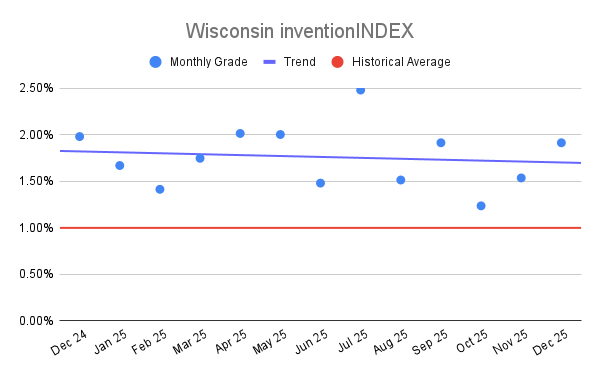 Wisconsin inventionINDEX December 2025
  Wisconsin inventionINDEX Novem
