

What is the Wisconsin R&D Tax Credit?
The Wisconsin Research and Development Tax Credit is a state-level incentive that incorporates Internal Revenue Code Section 41 to reward businesses for increasing qualified research activities within Wisconsin. The credit typically equals 5.75% of the amount by which current-year Wisconsin qualified research expenses (QREs) exceed 50% of the average QREs for the three preceding years. While primarily non-refundable with a 15-year carryforward, recent legislation has introduced a refundable component, reaching up to 25% for eligible tax years.
Internal Revenue Code Section 41 provides a federal tax credit for increasing qualified research activities, serving as the foundational definition for the Wisconsin research credit which incentivizes in-state innovation. For Wisconsin purposes, the credit applies a percentage rate to the excess of current-year in-state research expenses over a calculated base amount, offering both nonrefundable offsets and a growing refundable component for eligible businesses.
The Statutory Architecture of Internal Revenue Code Section 41
Internal Revenue Code (IRC) Section 41, technically titled the “Credit for Increasing Research Activities,” represents a pivotal instrument of federal fiscal policy designed to encourage private sector investment in innovation. At its core, the provision offers a general business credit to taxpayers who increase their spending on qualified research compared to a historical or moving base period. The federal government utilizes this mechanism to address the market failure inherent in research and development (R&D), where the social returns to innovation often exceed the private returns due to knowledge spillover effects that benefit competitors and the broader economy.
The design of Section 41 is intentionally incremental. Unlike a simple deduction, which rewards the total amount spent, the incremental credit is specifically structured to reward growth in R&D investment. The logic suggests that firms already have a baseline incentive to maintain existing R&D levels for competitive reasons; therefore, a tax credit is most efficiently deployed when it targets the marginal dollar of investment that might not otherwise have been spent. Under the traditional federal method, the credit is generally equal to 20% of the excess of the taxpayer’s qualified research expenses (QREs) for the taxable year over a base amount. This base amount is calculated using a complex formula involving a fixed-base percentage and the average annual gross receipts of the taxpayer for the four preceding years.
The Foundational Four-Part Test for Qualified Research Activities
To be eligible for the credit, a taxpayer must engage in activities that meet a rigorous four-part test defined in Section 41(d). This federal framework serves as the definitive reference for the Wisconsin research credit, although the state modifies certain parameters to ensure the economic benefit remains localized within the state’s borders.
The Section 174 Test and Permitted Purpose
The first requirement is that the activity must represent research and development in the experimental or laboratory sense, as defined by IRC Section 174. This means the expenditures must be incurred in connection with the taxpayer’s trade or business and must relate to a business component. A business component is defined as any product, process, computer software, technique, formula, or invention that is to be held for sale, lease, or license or used in the taxpayer’s trade or business.
The research must be intended to discover information that would eliminate uncertainty concerning the development or improvement of the business component. Uncertainty exists if the information available to the taxpayer does not establish either the capability of developing the component, the method for doing so, or the appropriate design of the component. Importantly, the test focuses on the nature of the activity, not the nature of the product. The focus is on the functional aspects—functionality, performance, reliability, or quality—rather than cosmetic or aesthetic factors.
The Technological in Nature Requirement
The technological in nature test requires that the process of experimentation used to discover the information fundamentally rely on the principles of the hard sciences. These include physical sciences, biological sciences, engineering, and computer science. Research that relies on social sciences, arts, humanities, economics, or business management principles is strictly excluded. The Wisconsin Department of Revenue (DOR) and the Internal Revenue Service (IRS) do not require the taxpayer to seek knowledge that exceeds or refines the common knowledge of skilled professionals in the field, but the methodology must be scientifically grounded.
The Elimination of Uncertainty Test
Taxpayers must demonstrate that at the outset of the project, they were uncertain about the final outcome or the path to reach it. This uncertainty is the technical problem that the research is designed to solve. The elimination of uncertainty must be the objective of the research. If a taxpayer already knows how to achieve the result using standard protocols that do not require an evaluative process of alternatives, the activity is considered routine engineering or production and does not qualify for the credit.
The Process of Experimentation Test
The final and often most difficult test to substantiate is the process of experimentation. This requires that substantially all of the activities (quantified as 80% or more) constitute elements of a process designed to evaluate one or more alternatives to achieve a result. A process of experimentation involves identifying the technological uncertainty, developing a hypothesis or identifying alternatives to eliminate that uncertainty, and conducting an evaluative process—such as modeling, simulation, or a systematic trial-and-error approach—to test those alternatives. The substantially all requirement is applied on a business-component-by-business-component basis. If less than 80% of a project’s activities involve experimentation, the entire project may be disqualified from the credit, although the shrink-back rule allows taxpayers to apply the tests to a smaller subset of the project to capture qualifying elements.
Defining Qualified Research Expenses under the Internal Revenue Code
Once an activity is identified as qualifying research, the costs associated with it must be aggregated. Section 41(b) identifies three main categories of in-house expenses and one category of contract research expenses.
In-House Research Expenses: Wages and Supplies
In-house expenses are costs incurred directly by the taxpayer within their own facilities and using their own personnel. Qualified wages include the portion of an employee’s salary or hourly pay attributable to performing, directly supervising, or directly supporting qualified research. Direct support includes activities like a lab technician cleaning equipment used in an experiment or a machinist milling a prototype part. Direct supervision refers to the immediate, first-line management of the research project, whereas higher-level executives who are not involved in the day-to-day technical direction are generally excluded. Wisconsin requires that these wages be reported on federal Form W-2. If an individual performs substantially all (80% or more) of their services in qualified research, 100% of their wages can be included in the calculation.
Supplies are defined as any tangible property, other than land or improvements to land and property subject to the allowance for depreciation. Typical qualifying supplies include chemicals, gases, electronic components, and raw materials consumed or transformed during the experimentation process. Prototype components that are destroyed or lose their value through testing are also generally includable.
Computer Rental and Cloud Hosting Costs
Taxpayers may include amounts paid to another person for the right to use computers in the conduct of qualified research. In the modern era, the Wisconsin DOR and the IRS have clarified that this includes cloud hosting fees specifically dedicated to software development or computationally intensive simulations.
Contract Research Expenses
Contract research refers to qualified research performed on behalf of the taxpayer by a third party. To qualify, the taxpayer must bear the economic risk of the research and must retain substantial rights to the results. Generally, only 65% of the amount paid for contract research is includable in the QRE calculation. However, the percentage increases to 75% for payments made to a qualified research consortium. Wisconsin law provides an exception under Section 41(b)(3)(D)(i), allowing 100% of contract research expenses to be included if the payments are made to eligible small businesses, universities, or federal laboratories.
The Wisconsin Statutory Overlay: Sections 71.28, 71.07, and 71.47
Wisconsin’s research credit is not a separate body of law independent of the federal code; rather, it is a piggyback credit that incorporates IRC Section 41 by reference while imposing state-specific constraints. The governing statutes are organized by taxpayer type, ensuring that the incentive is available across all business structures.
Statutory Organization and Taxpayer Categories
| Wisconsin Statute | Target Taxpayer Category | Application |
|---|---|---|
| § 71.28(4) | C-Corporations | Applied against corporate income or franchise tax. |
| § 71.07(4k) | Individuals, Partners, S-Corp Shareholders, LLC Members | Applied against personal income tax via pass-through entities. |
| § 71.47(4) | Insurance Companies | Applied against corporate income or franchise tax. |
These sections collectively establish that qualified research expenses for Wisconsin purposes are defined as QREs under Section 41 of the Internal Revenue Code, subject to the critical proviso that the research must be conducted in this state. This geographic limitation is the primary mechanism by which the state ensures that the tax expenditure supports local jobs and technological advancement.
Statutory Conformity and the Conformity Date
Wisconsin is a static conformity state, meaning its legislature must periodically vote to adopt changes made to the federal Internal Revenue Code. For the purposes of the research credit in tax year 2025, Wisconsin generally follows the IRC as amended to December 31, 2022. This creates a complex compliance environment where certain federal updates—such as those found in the American Rescue Plan Act (ARPA) or the Inflation Reduction Act (IRA)—may or may not apply depending on whether the Wisconsin legislature specifically adopted them.
Specifically regarding research incentives, Wisconsin has explicitly declined to adopt Section 13206 of Public Law 115-97 (the Tax Cuts and Jobs Act or TCJA), which introduced the mandatory capitalization of research expenditures under Section 174. Consequently, for Wisconsin purposes, the pre-2022 rules remain in effect, permitting taxpayers to treat research costs as current expenses. This decoupling ensures that Wisconsin remains a competitive jurisdiction for R&D-heavy firms, as the state level tax benefit provides a more favorable immediate cash-flow benefit than the current federal regime.
Eligibility and Taxpayer Classifications
The Wisconsin research credit is available to a wide array of business entities, but the method of claiming the credit depends on the entity’s tax classification. C-Corporations claim the credit directly on their franchise or income tax returns using Schedule R. Pass-through entities, such as partnerships, LLCs treated as partnerships, and tax-option (S) corporations, do not claim the credit at the entity level to offset their own tax liability. Instead, they compute the amount of the credit based on their Wisconsin activities and pass that information through to their partners, members, or shareholders, who then claim the credit on their individual Wisconsin income tax returns.
Eligibility is determined by economic activity, not the identity of the owners. A partnership performs the research, identifies the QREs, and fills out Schedule R to calculate the total credit. This credit is then allocated to the partners via Schedule 3K-1 in proportion to their ownership interests. This pass-through mechanism ensures that the incentive is effective even for smaller, innovative firms that may not be organized as C-corporations.
The Wisconsin Sourcing Rule and Multistate Allocation
The most critical compliance hurdle for multistate taxpayers is the sourcing of expenses. Wisconsin Statute § 71.28(4)(ad)4.b. stipulates that QREs include only expenses incurred by the claimant, incurred for research conducted in this state. This means that even if a project meets the federal four-part test, costs incurred for labs in California or wages paid to engineers working remotely in Illinois cannot be included in the Wisconsin credit calculation.
Allocation Methodologies for Multistate Taxpayers
If a portion of QREs is incurred partly within and partly outside Wisconsin and the exact amount cannot be determined, the law allows for a reasonable allocation. Often, taxpayers utilize the Wisconsin sales factor or a headcount-based ratio, provided the method is consistently applied and justifiable under audit. Expenses incurred entirely outside Wisconsin cannot be allocated to the state even if they were incurred for the benefit of research taking place in Wisconsin.
Adjustments for Short Taxable Years
For any short taxable year, qualified research expenses or expenditures must be annualized. These rules follow the principles established in Section 41(f)(3) of the IRC to prevent the artificial inflation or deflation of the credit due to corporate restructuring.
Calculation Methodologies: Tiered Rates and the Base Amount
Wisconsin utilizes a single, incremental calculation method modeled after the federal logic but with significant variations in percentages and base calculations. The credit is fundamentally structured to reward investment that exceeds 50% of a historic average.
The General Incremental Calculation
For most businesses, the research credit equals 5.75% of the amount by which current-year Wisconsin QREs exceed 50% of the average Wisconsin QREs for the three preceding taxable years.
The credit formula can be mathematically represented as:
Credit = 0.0575 × (QRE_current – (0.50 × QRE_prior3))
If a taxpayer had no qualified research expenses in any of the three preceding tax years, the credit is calculated as 2.875% of the current year’s total Wisconsin QREs.
Enhanced Rates for Targeted Industries
Wisconsin provides “super” research credits at an enhanced rate of 11.5% for research activities deemed critical to the state’s industrial base. These higher rates apply to research activities related to internal combustion engines and energy efficient products. For these targeted activities, the incremental formula uses 11.5% instead of 5.75%, and the startup or new-filer rate is 5.75% instead of 2.875%.
| Research Activity Category | Incremental Rate (Excess over 50% of average) | Base Rate (No prior QREs) |
|---|---|---|
| General Qualified Research | 5.75% | 2.875% |
| Internal Combustion Engines | 11.5% | 5.75% |
| Energy Efficient Products | 11.5% | 5.75% |
Deep Dive into Enhanced Tiers: Engines and Energy Efficiency
Wisconsin’s decision to offer a doubled credit rate for internal combustion and energy efficiency projects reflects a strategic legislative attempt to preserve and evolve the state’s traditional manufacturing strengths.
Definitions of Internal Combustion Engine and Vehicle
The statutory definitions in § 71.28(4)(ab) are broader than they might appear at first glance. An internal combustion engine includes not only traditional spark-ignition and compression-ignition engines but also substitute products such as fuel cell, electric, and hybrid drives. This ensures that the credit remains relevant as the automotive and power generation industries transition away from fossil fuels.
The term “vehicle” is also defined expansively to include any frame or chassis upon which an engine is mounted for use in mobile or stationary applications. This encompasses trucks, tractors, motorcycles (including all parts except tires), snowmobiles, ATVs, personal watercraft, boats, construction and lawn maintenance equipment, and generators. For generators, the definition includes control modules, fuel trains, fuel scrubbing processes, fuel mixers, heat exchangers, and exhaust trains.
Criteria for Energy Efficient Products
The 11.5% enhanced rate for energy efficient products targets systems designed to reduce the demand for natural gas or electricity or improve the efficiency of its use. The DOR specifically highlights three categories:
- Energy Efficient Lighting Systems: These are systems that include light-emitting diode (LED) lighting, organic light-emitting diode (OLED) lighting, or other similar technologies.
- Building Automation and Control Systems: These systems include products that are used to monitor and control the heating, ventilating, and air conditioning (HVAC) systems in a building, as well as the lighting, power, and security systems within the building.
- Automotive Batteries for Hybrid Vehicles: This includes batteries that are used to provide power to the electric motor of a hybrid-electric vehicle, as well as the components that are used to monitor and control those batteries.
Administrative Procedures: Monetization, Carryforwards, and Refunds
The administrative side of the Wisconsin research credit has undergone significant transformation in recent years, particularly regarding how taxpayers can monetize unused credits.
The Evolution of Refundability
One of the most notable legislative changes is the shift from a strictly nonrefundable credit to one with a significant cash refund component. This transition was designed to support startups and cyclical businesses that engage in high levels of R&D but have not yet achieved enough taxable income to utilize a nonrefundable credit.
The credit changed from 100% nonrefundable to 10% refundable for tax years beginning after December 31, 2017. This was subsequently increased to 15% for tax years beginning on or after January 1, 2021. For tax years beginning after December 31, 2023, the refundable portion has increased to 25%.
The actual refundable amount is calculated as the lesser of:
- 25% of the total current-year research credit.
- The unused portion of the current-year credit, calculated as the total credit minus the amount used to offset current-year tax.
Importantly, prior-year carryforwards do not influence the computation of the current-year refundable portion. A carryforward is treated as a nonrefundable credit and is applied to the tax liability before the current-year credit is used. This maximizes the unused current-year credit and increases the likelihood of reaching the full 25% refund threshold.
Carryforward Periods and Statute of Limitations
Any portion of the research credit that is not used to offset current-year tax and is not issued as a refund can be carried forward to future years to offset future tax liabilities for up to 15 years. If there is a reorganization of a corporation claiming a research credit, the limitations provided by Section 383 of the IRC may apply to the carryover of any unused Wisconsin research credit.
Taxpayers should retain detailed project, wage, and cost documentation for the statute of limitations period for each year the credit or carryforward is used, which is generally 4 to 7 years or longer. A claimant who has filed a timely claim may file an amended claim with the Department of Revenue within four years of the last day prescribed by law for filing the original claim.
Local State Revenue Office Guidance: Publication 131 and Schedule R
The Wisconsin Department of Revenue provides comprehensive guidance through Publication 131 and the detailed instructions for Schedule R. These documents unravel the nuances of the tax incentives and provide the mechanical requirements for filing.
Schedule R: The Compliance Engine
Schedule R is used to compute the credit amount, including the refundable and nonrefundable portions. Estates, trusts, partnerships, and S-corporations use Schedule R to report the distribution of the credit to their owners, while individuals and C-corporations use it to claim the credit against their own liability.
| Schedule R Line | Purpose | Instructions |
|---|---|---|
| Line 1 | Wages | Include wages for employees performing, supervising, or supporting research in WI. |
| Line 2 | Supplies | Cost of tangible property (non-depreciable) used in research. |
| Line 3 | Computer Rental | Payments for leasing computers or cloud hosting, reduced by any sharing receipts. |
| Line 4 | Contract Research | 65% of contract research, 75% for consortiums, 100% for specific lab/small biz types. |
| Line 7 | Wage Adjustment | Subtract wages used to claim the Wisconsin Development Zones Credit. |
| Line 9 | Prior Year Avg | Enter Wisconsin QREs for the three preceding taxable years. |
| Line 17 | Max Refund | Multiply the total current year credit by 25%. |
| Line 20 | Actual Refund | Enter the lesser of Line 17 (max) or Line 19 (unused credit). |
Handling Years with Zero Expenses
A specific rule applies to the averaging calculation on Line 9. If a claimant had no qualified research expenses in any one of the three prior years, they must check the box on Line 9 and skip the average computation on Lines 9a through 9e. In this scenario, the claimant enters 0 on Line 10 and skips Line 12 entirely, instead using the lower credit percentages indicated on Line 13a (2.875%), 13b (5.75%), or 13c (5.75%).
Coordination with Combined Group Members
Unitary businesses filing a combined return (Form 6) must follow special rules for sharing credits. While credits are generally attributes of the separate corporation, § 71.255(6)(c) allows for the sharing of nonrefundable research credits. Important features include:
- Combined group members compute their respective credits based on their own Wisconsin QREs.
- Research funded by one combined group member and performed by another is considered a QRE of the member performing the research, with the reimbursement from the funding member excluded to prevent double counting.
- Sharing is only permitted if the corporation was a member of the same combined group in the year the credit originated.
Regulatory Compliance: Documentation and Audit Defense
Because the credit is incremental and activity-based, simple accounting ledger entries are usually insufficient to survive an audit. The Department of Revenue focuses on the relationship between accounting records and the actual research activity.
The Substantiation Challenge: Nexus and Project Allocation
A taxpayer must establish a nexus between the QREs and the specific qualifying activities. The lack of a clear relationship is the most common reason for credit disallowance during an audit. Auditors frequently challenge claims where the taxpayer has failed to shrink-back a large project to its qualifying components. If an entire manufacturing line is claimed as R&D, but the core experimentation only related to a single sensor, the auditor may disqualify the entire claim if the taxpayer cannot segregate the costs.
Recommended contemporaneous Records
To defend a credit claim, businesses should maintain a contemporaneous record of the research process. Essential documentation includes:
- Innovation Logs: Project plans, descriptions of technical goals, and lists of uncertainties being addressed.
- Laboratory Records: Lab notebooks, bug tracking logs for software, test protocols, and records of analysis from testing trial runs.
- Personnel Records: Labor time sheets or time studies that link specific employee hours to qualified projects.
- Visual Evidence: Photographs and videos of testing or prototypes.
- Financial Records: Tax invoices, receipts, and W-2 statements.
Excluded Activities and Common Disallowances
Section 41(d)(4) provides a list of activities for which the credit is not allowed, even if they appear experimental. These include research conducted after the beginning of commercial production, adaptation of existing business components to a customer’s specific need, duplication of an existing component from physical examination, efficiency surveys, management studies, market research, routine data collection, and routine quality control testing.
Research conducted outside the United States, Puerto Rico, or U.S. possessions is also excluded federally. For Wisconsin purposes, this restriction is even tighter, limited strictly to research conducted within the state boundaries. Funded research—where a third party or government entity pays for the research via grant or contract—is also typically disqualified for the party performing the work unless they retain substantial rights and bear the economic risk.
Illustrative Case Study: Multi-Year Numerical Application
Consider “Lake Winnebago Industrial Systems,” a C-corporation based in Oshkosh, Wisconsin. In 2024, the company engages in research to develop a new building automation control system (qualifying for the energy efficient products tier) and a new general manufacturing technique for milling precision parts.
Step 1: Aggregate Wisconsin QREs for 2024
| Expenditure Type | General Research Activity | Energy Efficient Product Activity | Total 2024 WI QRE |
|---|---|---|---|
| WI Wages (W-2) | $400,000 | $600,000 | $1,000,000 |
| Research Supplies | $50,000 | $150,000 | $200,000 |
| Contract Research | $100,000 (at 65%) | $0 | $65,000 |
| Cloud Hosting | $20,000 | $50,000 | $70,000 |
| Total Activity QRE | $535,000 | $800,000 | $1,335,000 |
Step 2: Calculate the Base Amount
The company provided the following total Wisconsin QRE data for the prior three years:
- 2023: $1,100,000
- 2022: $1,000,000
- 2021: $900,000
3-Year Average = ($1.1M + $1.0M + $0.9M) / 3 = $1,000,000
Base Amount Threshold = 50% × $1,000,000 = $500,000
Step 3: Compute the Incremental Credit for Each Schedule R
Because the company is claiming both the general research credit and the energy efficient products credit, it must complete two separate Schedule R forms.
Schedule R-1 (General Research)
Base Allocation = ($535,000 / $1,335,000) × $500,000 ≈ $200,375
Eligible Excess = $535,000 – $200,375 = $334,625
Credit = 5.75% × $334,625 ≈ $19,241
Schedule R-2 (Energy Efficient Products)
Base Allocation = ($800,000 / $1,335,000) × $500,000 ≈ $299,625
Eligible Excess = $800,000 – $299,625 = $500,375
Credit = 11.5% × $500,375 ≈ $57,543
Total Research Credit for 2024: $19,241 + $57,543 = $76,784.
Step 4: Application and Refundability
Assume the company has a 2024 Wisconsin tax liability of $50,000.
- Tax Offset: The first $50,000 of the credit eliminates the entire tax liability.
- Unused Credit: $76,784 – $50,000 = $26,784.
- Maximum Refund limit: 25% × $76,784 = $19,196.
- Actual Refund Amount: The company receives a check for $19,196, which is the lesser of the unused credit ($26,784) or the maximum limit ($19,196).
- Carryforward: The remaining nonrefundable portion of $7,588 ($26,784 – $19,196) is carried forward for up to 15 years.
Strategic Trends and Policy Implications
The interplay between IRC Section 41 and the Wisconsin research credit reveals several deep strategic trends in the state’s economic governance. The increasing emphasis on refundability—growing from 10% to 25% over a six-year period—demonstrates a prioritization of the startup lifecycle and liquidity for innovative firms. By providing immediate cash back to pre-profit companies, Wisconsin is effectively acting as a state-level venture capitalist, mitigating the risk of high-cost technology development in exchange for long-term growth and a high-skilled local workforce.
Furthermore, the decision to decouple from the federal Section 174 capitalization requirements represents a significant taxpayer-friendly divergence. While the federal government has tightened R&D rules to shore up revenue following the TCJA, Wisconsin has maintained immediate deductibility. This creates a powerful competitive advantage, as the state-level tax benefit can help neutralize the negative cash-flow impact of federal capitalization for firms performing their research in Wisconsin.
The tiered rate structure (5.75% versus 11.5%) highlights a purposeful industrial policy. By targeting internal combustion engines and energy efficiency, the state is not merely rewarding research in the abstract, but is actively steering capital toward the evolution of its core manufacturing sectors. This targeted approach ensures that the research credit acts as a catalyst for industrial transformation, enabling traditional mechanical engineering firms to pivot toward modern, sustainable technologies while remaining anchored in Wisconsin’s historical industrial clusters.
Summary of Compliance and Comparative Benchmarks
Successfully managing the Wisconsin research credit requires careful attention to both the federal definitions and state-specific geographic and rate-based overrides.
Comparative Framework: Federal vs. Wisconsin
| Provision | Federal Standard (IRC 41/174) | Wisconsin Standard (71.28/71.07/71.47) |
|---|---|---|
| Activity Validation | Four-Part Test (Section 41(d)) | Direct Adoption of Four-Part Test |
| Geographic Restriction | United States and Territories | Wisconsin Sourcing ONLY |
| Calculation Method | Regular or ASC | Single Incremental Method |
| In-House Wage Rule | W-2 Box 1 (Qualified Services) | Same as Federal (W-2 Wages) |
| Contract Research | Generally 65% / 75% | 65% / 75% / 100% (Specific types) |
| Expense Treatment | Capitalize over 5 or 15 years | Immediate Expensing (TCJA Decoupling) |
| Refundability Cap | Payroll Offset for Small Biz | 25% of current year credit (2024+) |
| Carryforward Period | 20 Taxable Years | 15 Years (Legislation pending for 50) |
Final Compliance Checklist for Claims
- Project Qualification: Confirm that each business component meets all four tests: permitted purpose, technological nature, elimination of uncertainty, and process of experimentation.
- State-Level Sourcing: Verify that all claimed wages correspond to employees physically working in Wisconsin and that all supplies were consumed in state facilities.
- Correct Rate Application: Identify whether projects qualify for the standard 5.75% rate or the enhanced 11.5% rate for engines and energy systems.
- Prior Year Benchmarking: Ensure that Wisconsin QRE data for the three preceding taxable years is available and accurate for the 50% base average calculation.
- Pass-Through Coordination: For partnerships and S-corps, ensure credits are properly allocated to owners via Schedules 3K-1 or 5K-1 and reported on their individual returns.
- Refundability Verification: For the current 2024 tax year, ensure the refundable portion is correctly calculated as the lesser of 25% of the credit or the unused credit amount.
- Contemporaneous Documentation: Maintain a comprehensive file containing innovation logs, personnel time studies, lab notebooks, and cost verification to withstand potential field audits.
Through the diligent application of these standards, Wisconsin businesses can maximize their utilization of the state’s robust innovation incentives, driving technological progress while maintaining compliance with both the federal Internal Revenue Code and the specific mandates of the Wisconsin Department of Revenue. The ongoing evolution toward greater refundability and longer carryforwards underscores a long-term commitment by the state to remain a primary destination for high-value research and experimental development.
Who We Are:
Swanson Reed is one of the largest Specialist R&D Tax Credit advisory firm in the United States. With offices nationwide, we are one of the only firms globally to exclusively provide R&D Tax Credit consulting services to our clients. We have been exclusively providing R&D Tax Credit claim preparation and audit compliance solutions for over 30 years. Swanson Reed hosts daily free webinars and provides free IRS CE and CPE credits for CPAs.
Are you eligible?

Why choose us?

Pass an Audit?

What is the R&D Tax Credit?
The Research & Experimentation Tax Credit (or R&D Tax Credit), is a general business tax credit under Internal Revenue Code section 41 for companies that incur research and development (R&D) costs in the United States. The credits are a tax incentive for performing qualified research in the United States, resulting in a credit to a tax return. For the first three years of R&D claims, 6% of the total qualified research expenses (QRE) form the gross credit. In the 4th year of claims and beyond, a base amount is calculated, and an adjusted expense line is multiplied times 14%. Click here to learn more.
Never miss a deadline again

Stay up to date on IRS processes

Discover R&D in your industry

R&D Tax Credit Preparation Services
Swanson Reed is one of the only companies in the United States to exclusively focus on R&D tax credit preparation. Swanson Reed provides state and federal R&D tax credit preparation and audit services to all 50 states.
If you have any questions or need further assistance, please call or email our CEO, Damian Smyth on (800) 986-4725.
Feel free to book a quick teleconference with one of our national R&D tax credit specialists at a time that is convenient for you.
R&D Tax Credit Audit Advisory Services
creditARMOR is a sophisticated R&D tax credit insurance and AI-driven risk management platform. It mitigates audit exposure by covering defense expenses, including CPA, tax attorney, and specialist consultant fees—delivering robust, compliant support for R&D credit claims. Click here for more information about R&D tax credit management and implementation.
Our Fees
Swanson Reed offers R&D tax credit preparation and audit services at our hourly rates of between $195 – $395 per hour. We are also able offer fixed fees and success fees in special circumstances. Learn more at https://www.swansonreed.com/about-us/research-tax-credit-consulting/our-fees/



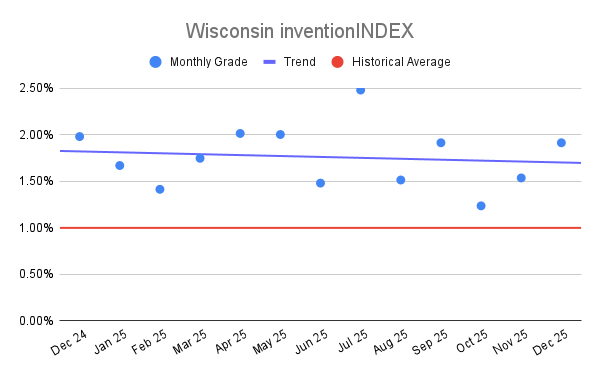 Wisconsin inventionINDEX December 2025
  Wisconsin inventionINDEX Novem
