

A “claimant” under Wisconsin law is the specific legal person or entity that incurs qualified research expenses within the state and files a formal tax claim. Crucially, for pass-through entities like S-Corporations and Partnerships, the “claimant” is typically the individual shareholder or partner who files the income tax return, rather than the business entity itself. This definition establishes the economic and geographic nexus required to receive the credit.
A claimant is defined under Wisconsin law as any legal person or entity that incurs qualified research expenses within the state and subsequently files a formal claim for tax benefits. This designation identifies the specific taxpayer responsible for the economic burden of research activities and grants them the legal standing to mitigate their tax liability through state-authorized credits.
The concept of the claimant serves as the foundational pillar for the administration of the Wisconsin Research Expense Credit. While federal law under Internal Revenue Code Section 41 focuses heavily on the nature of the research activity itself, Wisconsin’s statutory framework places equal emphasis on the identity and location of the person who files a claim. This distinction is critical because the Wisconsin Department of Revenue (DOR) utilizes the claimant definition to establish a strict economic and geographic nexus, ensuring that the tax expenditures of the state directly support innovation occurring within its own borders. The following analysis provides an exhaustive examination of the claimant’s role, the administrative guidance governing their activities, and the intersection of state law with federal standards.
The Statutory Architecture of the Claimant Identity
The legal definition of a claimant is not consolidated into a single paragraph of the Wisconsin Statutes but is instead distributed across various chapters to account for the diverse legal forms that a business or individual may take. For individuals, fiduciaries, and partners, the authority is primarily found in Section 71.07(4k). For corporations, the governing language is situated in Section 71.28(4), and for insurance companies, it resides in Section 71.47(4). Across these sections, a “claimant” is consistently described as a person who files a claim under the respective subsection.
This definition carries significant weight in the context of eligibility. To be a valid claimant, an entity must not only perform the research but must also be the party that “incurs” the expenses. Wisconsin Statutes 71.28(4)(ad) and 71.47(4)(ad) specify that qualified research expenses include only those expenses incurred by the claimant for research conducted in the state of Wisconsin for the taxable year. This “incurred by” requirement creates a direct link between the legal person filing the tax return and the actual economic outflow associated with the research project. If a third party funds the research, the party receiving the funding cannot be the claimant for those specific expenses, as they did not incur the net economic cost.
The statutes also differentiate the claimant based on their domicile. For individual claimants, Wisconsin Statute 71.52(1) emphasizes that the person must have been domiciled in the state during the entire calendar year to which the claim relates. This ensures that the personal income tax benefits of the R&D credit are reserved for Wisconsin residents or those with a permanent legal connection to the state. In the corporate context, the claimant must be “engaged in business” in Wisconsin or otherwise subject to the state’s franchise or income tax to utilize the credit against their liability.
| Entity Type | Statutory Reference | Principal Requirement |
|---|---|---|
| Individuals and Fiduciaries | Wis. Stat. § 71.07(4k) | Domiciled in Wisconsin; files a claim. |
| Corporations | Wis. Stat. § 71.28(4) | Incurs QREs in Wisconsin; files a claim. |
| Insurance Companies | Wis. Stat. § 71.47(4) | Incurs QREs in Wisconsin; subject to § 71.43. |
| Combined Group Members | Wis. Stat. § 71.255(6) | Separate corporation within a group; specific sharing rules apply. |
The identification of the claimant is further complicated in the case of households. When two individuals of a single household are both qualified to be a claimant, the law permits them to determine between themselves who shall file the claim. If an agreement cannot be reached, the Secretary of Revenue is granted the final authority to decide which individual constitutes the legal claimant. While this is more common in homestead credits, the underlying principle of a single, identifiable claimant for a specific set of expenses remains a core tenet of Wisconsin tax administration.
Administrative Guidance: The Wisconsin Department of Revenue’s Interpretation
The Wisconsin Department of Revenue provides extensive guidance through Publication 131, “Tax Incentives for Conducting Qualified Research in Wisconsin,” and the instructions for Schedule R. These documents translate the broad statutory definitions into actionable requirements for taxpayers. The DOR interprets the claimant’s role as being the primary gatekeeper of documentation and compliance.
According to DOR guidance, the claimant’s identity is inextricably linked to the “carrying on of a trade or business” requirement. A claimant must be actively engaged in a business activity to which the research relates. This prevents mere “investors” or passive entities from claiming the credit for research performed by others where no business nexus exists. The DOR follows the federal standard established in IRC Section 41, which stipulates that research expenses are qualified only if they are paid or incurred by the taxpayer in carrying on a trade or business.
The DOR also clarifies the “incurred in Wisconsin” requirement. For a claimant to include expenses in their Wisconsin credit calculation, the research activity must physically take place within the state. If a claimant has employees working in a laboratory in Madison, their wages are eligible. If the same claimant has employees in a lab in Illinois, those wages are excluded from the Wisconsin credit, even if the research benefits a Wisconsin-based product line. This geographic limitation is a strict deviation from the federal credit, which allows for research conducted anywhere in the United States.
The Claimant and Contract Research
One of the most nuanced areas of DOR guidance pertains to contract research. A claimant may include 65% of the amounts paid to a third party for research performed on the claimant’s behalf. However, the DOR requires the claimant to verify that the contractor performed the work within Wisconsin. The administrative burden falls on the claimant to obtain such verification from their contractors. If the contractor’s location cannot be verified as being within the state, the claimant is prohibited from including those costs in the Schedule R calculation.
Pass-Through Entity Dynamics: Who is the “True” Claimant?
In the case of partnerships, limited liability companies (LLCs) treated as partnerships, and tax-option (S) corporations, a unique legal friction exists between the entity that conducts the research and the party that constitutes the “claimant” under the law. Wisconsin law is explicit: these pass-through entities cannot claim the research credit to offset their own tax liability because they generally do not pay entity-level income or franchise taxes.
Instead, the eligibility for the credit is determined at the entity level based on the activities of the partnership or S-corporation, but the “claimant” status is conferred upon the partners, members, or shareholders. The entity is required to:
- Compute the total amount of the credit based on its own Wisconsin-qualified research expenses.
- Allocate that credit among its owners in proportion to their ownership interests.
- Report these amounts to the owners via Schedule 3K-1 or 5K-1.
The individual owner then becomes the claimant when they file their own Wisconsin tax return and include the credit. The implications of this are profound; a partner may be a claimant for a credit generated by a business in which they have no daily involvement, provided the business itself meets the research requirements. The “incurred by the claimant” rule is satisfied in this context because the law views the owners as the ultimate bearers of the entity’s economic costs.
| Role in the Credit Process | Responsible Party | Legal Status |
|---|---|---|
| Performance of Research | Partnership/S-Corp/LLC | Conducting Entity |
| Calculation of Credit | Partnership/S-Corp/LLC | Computing Entity |
| Payment of Economic Cost | Partners/Shareholders | Economic Bearer |
| Filing the Tax Claim | Partners/Shareholders | Claimant |
The WEDC Entity-Level Election
A significant exception to this pass-through rule was introduced for certain entities certified by the Wisconsin Economic Development Corporation (WEDC). For taxable years beginning after December 31, 2020, partnerships, LLCs, and S-corporations may elect to claim the credit at the entity level if the credit originates from a contract entered into with the WEDC before December 22, 2017. In this specific scenario, the entity itself becomes the claimant, and the partners or shareholders are legally barred from claiming the credit on their individual returns. This election is irrevocable and must be made on the entity’s original return for each taxable year.
The Claimant in Combined Reporting Groups
For corporate claimants that are members of a combined group, the determination of claimant status is governed by Section 71.255. Generally, Wisconsin treats credits as attributes of the separate corporation that incurred the expenses. This means that “Corporation A” is the claimant for the research it performs, and “Corporation B” (a subsidiary or affiliate) cannot claim those credits simply by virtue of being in the same group.
However, Wisconsin law allows for the sharing of nonrefundable research credits within a combined group under specific conditions. A claimant is not required to share its credits, but if it elects to do so, the following rules apply:
- The claimant must first use its own credits to offset its own tax liability.
- Any remaining nonrefundable credit can be shared with other members of the group, provided the claimant was a member of that same combined group in the year the credit originated.
- If a member of a combined group performs research funded by another member, the member performing the research is considered the claimant. The reimbursement from the funding member is treated as a reimbursement of expenses and is not considered a QRE for the funding member.
This “performing-member-as-claimant” rule is a vital distinction in corporate tax planning. It ensures that the credit remains tied to the specific entity that employs the researchers and maintains the laboratory facilities in Wisconsin.
Evolution and Mechanics of Refundability for the Claimant
Historically, the Wisconsin research credit was a nonrefundable “incentive” that could only be used to reduce an existing tax bill. This created a disadvantage for start-ups and R&D-heavy firms that were not yet profitable. To address this, the Wisconsin legislature introduced a refundable portion of the credit, which has progressively increased.
The transition of the claimant’s experience regarding refundability is summarized in the following data:
| Tax Year Period | Maximum Refundable Percentage | Statutory Mechanism |
|---|---|---|
| Pre-2018 | 0% | Nonrefundable Carryforward only |
| 2018 – 2020 | 10% | Refundable portion of current year credit |
| 2021 – 2023 | 15% | Refundable portion of current year credit |
| 2024 and After | 25% | Refundable portion of current year credit |
For the modern claimant, the computation of the refundable portion is a two-step process. First, the claimant must use the credit to offset their current-year tax liability. Second, if there is a remaining credit balance, the claimant may receive a refund for the lesser of:
- 25% of the total research credit computed for the current year.
- The actual amount of the credit remaining after the tax offset.
The claimant must realize that only current-year credits are eligible for the refundable election. Credits carried forward from prior years retain their nonrefundable status and can only be used to offset future tax liabilities. This creates a “use it or carry it” dynamic for the claimant, where the decision to claim a refund must be made in the year the credit is first generated.
The Four-Part Test: The Claimant’s Burden of Proof
To be recognized as a valid claimant, a person must prove that the activities for which they are claiming the credit meet the “Four-Part Test” defined by IRC Section 41(d) and adopted by Wisconsin. The claimant must apply these tests to each “business component”—any product, process, software, technique, formula, or invention to be held for sale, lease, or license, or used by the claimant in a trade or business.
1. The Section 174 Test (Permitted Purpose)
The research must qualify as a business expense under IRC Section 174. This means the activities must be intended to discover information that would eliminate uncertainty concerning the development or improvement of a product or process. The claimant must show that the research was intended to improve functionality, performance, reliability, or quality.
2. The Technological in Nature Test
The research must fundamentally rely on the principles of physical science, biological science, engineering, or computer science. A claimant who is merely conducting market research or social science studies does not qualify as an R&D claimant under Wisconsin law.
3. The Elimination of Uncertainty Test
The claimant must establish that, at the outset of the project, the information available did not allow for the determination of the capability or method of developing the component, or the appropriate design of the component.
4. The Process of Experimentation Test
The claimant must demonstrate that substantially all of the activities involved a process of experimentation. This involves identifying the uncertainty, formulating a hypothesis to eliminate that uncertainty, testing the hypothesis through modeling, simulation, or systematic trial and error, and evaluating the results.
The Department of Revenue emphasizes that the claimant must maintain documentation for each part of this test. Failure to provide contemporaneous records during an audit will result in the disallowance of the claimant’s status and the recovery of any credits issued.
Tiered Credit Rates and Targeted Research
The Wisconsin framework incentivizes specific types of technological development by offering different credit rates. The claimant must identify which tier their research falls into when filing Schedule R.
The standard credit rate is 5.75% of the qualified research expenses that exceed the base amount. The “base amount” is calculated as:
Base Amount = 50% * ((QRE n-1 + QRE n-2 + QRE n-3) / 3)
If the claimant had no expenses in the prior three years, the credit is equal to 2.875% of the current year’s QREs.
However, “enhanced” rates are available for claimants in specific high-priority sectors:
| Research Category | Standard Rate | Startup Rate (No prior QREs) |
|---|---|---|
| General Qualified Research | 5.75% | 2.875% |
| Internal Combustion Engines | 11.5% | 5.75% |
| Energy Efficient Products | 11.5% | 5.75% |
The definition of “Internal Combustion Engines” for a claimant is broad, including research on engines for trucks, tractors, boats, personal watercraft, generators, and even aircraft. Similarly, the “Energy Efficient Products” category covers the design and manufacture of lighting systems and building automation systems that reduce electricity or natural gas consumption.
Procedural Requirements for Filing a Claim
Being a claimant requires adherence to strict procedural timelines. A claimant must file Schedule R with their Wisconsin income or franchise tax return. If the claimant is a member of a combined group, they must also provide additional information regarding credit sharing on Form 6.
The statute of limitations for a claimant to file an amended claim is generally four years from the last day prescribed by law for filing the original return. This window is vital for claimants who perform retrospective R&D studies. However, the DOR warns that filing an amended return for a research credit often triggers a closer examination of the entire tax year, so claimants must ensure their documentation is “audit-ready” before submitting an amended claim.
The Impact of Federal Decoupling (Post-2022)
A major administrative hurdle for modern Wisconsin claimants is the state’s decision to remain coupled to the Internal Revenue Code as it existed on December 31, 2021, regarding R&D amortization. Under current federal law (TCJA), R&D costs must be amortized over five years. For Wisconsin, the claimant is still permitted to expense these costs in the year they are incurred.
This requires the claimant to perform a “re-calculation” of their federal adjusted gross income for state purposes, adding back the federal amortization and subtracting the full R&D expense. The claimant is essentially maintaining two sets of books for R&D purposes: one for the IRS and one for the Wisconsin DOR. This complexity further emphasizes the “person who files a claim” definition, as the claimant is the party responsible for managing these divergent accounting standards.
Risks and Penalties: The Fraudulent Claimant
The status of a claimant carries legal liability. The Wisconsin DOR and state statutes provide for significant penalties if a claim is found to be false or excessive.
- Incorrect Claims: If an audit indicates an incorrect claim, the DOR will determine the correct amount and notify the claimant. If the credit was already paid or used, the DOR will assess the difference as a tax deficiency.
- Fraudulent Claims: If a claim is filed with fraudulent intent, the claim is disallowed in full. The claimant is subject to a penalty equal to 100% of the difference between the amount claimed and the amount that should have been claimed.
- Criminal Penalties: A claimant who willfully makes a claim that they do not believe to be true and correct as to every material matter may be guilty of a Class H felony.
The law also holds any person who assists in the preparation of a fraudulent claim—such as a tax consultant or an officer of a corporation—equally liable for these penalties.
Comparative Analysis: The “Claimant” in Other Wisconsin Credits
To fully understand the R&D claimant, it is helpful to compare the term’s usage in other Wisconsin tax contexts.
| Credit Type | “Claimant” Definition Specifics | Primary Goal |
|---|---|---|
| Research Expense Credit | Person incurring QREs in Wisconsin. | Incentivize innovation and high-tech jobs. |
| Homestead Credit | Domiciled individual; specific household rules. | Provide property tax relief to low-income residents. |
| Development Zone Credit | Person certified by WEDC; location-based. | Economic revitalization of specific zones. |
| Business Development Credit | Person certified to receive benefits under § 238.308. | Job creation and capital investment. |
| Transportation Services | Blind individuals filing a claim for transit costs. | Support accessibility for the visually impaired. |
In the Homestead and Transportation contexts, the claimant is always an individual. In the R&D and Development Zone contexts, the claimant is more frequently a corporate entity or a business owner. The “Person Who Files a Claim” for R&D is distinguished by the technological burden of proof that is absent in the more socially-oriented credits.
Comprehensive Case Study: The Multi-Stage Claimant
To synthesize these concepts, consider the case of “Aero-Lite Propulsion Inc.,” a C-corporation headquartered in Green Bay, Wisconsin. Aero-Lite is developing a new type of hybrid-electric aircraft engine.
Phase 1: Incurring Expenses
In 2024, Aero-Lite employs 20 engineers in Wisconsin. Total wages for research are $2,000,000. They also pay a specialized testing facility in Milwaukee $500,000 to conduct stress tests on engine components.
- In-house QREs: $2,000,000
- Contract QREs: $500,000 * 65% = $325,000
- Total QREs: $2,325,000
Because the research relates to aircraft engines, Aero-Lite is an “Enhanced” claimant (11.5% rate).
Phase 2: Calculating the Base
Aero-Lite’s QREs for the three prior years were $1,000,000, $1,500,000, and $2,000,000.
- Average QRE: $1,500,000
- Base Amount: $750,000
Phase 3: The Claim
- Eligible Amount: $2,325,000 – $750,000 = $1,575,000
- Credit: $1,575,000 * 0.115 = $181,125
Phase 4: Tax Application and Refund
Aero-Lite has a Wisconsin tax liability of $50,000.
- Offset: The claimant uses $50,000 of the credit to eliminate its tax.
- Unused Credit: $131,125 remains.
- Refund Calculation: 25% of the total credit ($181,125 * 0.25) is $45,281.25.
- Final Refund: Aero-Lite receives a check for $45,281.25.
- Carryforward: The remaining $85,843.75 is carried forward for 15 years.
Phase 5: Documentation and Audit
Two years later, the DOR audits Aero-Lite. As the claimant, Aero-Lite must produce the W-2s for the 20 engineers, the contract with the Milwaukee facility proving the work was done in-state, and the engineering logs showing the process of experimentation used to solve the hybrid-electric design uncertainties. If Aero-Lite had outsourced the testing to a facility in Michigan, the $325,000 in contract QREs would be disallowed, and Aero-Lite would have to repay the portion of the credit and refund associated with those costs, potentially with interest and penalties.
Final Thoughts: The Claimant as the Architect of Innovation
The term “claimant” in the Wisconsin Research and Development Tax Credit is far more than a clerical label; it is a vital legal identity that defines the relationship between a taxpayer and the State of Wisconsin. By anchoring the credit to the “person who files a claim” and requiring that this person be the one who “incurs” the expenses for work “conducted in this state,” the legislature has created a targeted mechanism for domestic growth.
The complexities of pass-through entities, combined reporting groups, and the evolving rules of refundability demand that claimants maintain a high level of administrative diligence. As federal and state tax laws continue to diverge—particularly regarding the amortization of research costs—the claimant’s role in navigating these two systems will only become more central to corporate strategy. For the business that can master these requirements, the Wisconsin Research Expense Credit remains one of the most significant tools available for fueling technological advancement and economic prosperity within the state.
Who We Are:
Swanson Reed is one of the largest Specialist R&D Tax Credit advisory firm in the United States. With offices nationwide, we are one of the only firms globally to exclusively provide R&D Tax Credit consulting services to our clients. We have been exclusively providing R&D Tax Credit claim preparation and audit compliance solutions for over 30 years. Swanson Reed hosts daily free webinars and provides free IRS CE and CPE credits for CPAs.
Are you eligible?

Why choose us?

Pass an Audit?

What is the R&D Tax Credit?
The Research & Experimentation Tax Credit (or R&D Tax Credit), is a general business tax credit under Internal Revenue Code section 41 for companies that incur research and development (R&D) costs in the United States. The credits are a tax incentive for performing qualified research in the United States, resulting in a credit to a tax return. For the first three years of R&D claims, 6% of the total qualified research expenses (QRE) form the gross credit. In the 4th year of claims and beyond, a base amount is calculated, and an adjusted expense line is multiplied times 14%. Click here to learn more.
Never miss a deadline again

Stay up to date on IRS processes

Discover R&D in your industry

R&D Tax Credit Preparation Services
Swanson Reed is one of the only companies in the United States to exclusively focus on R&D tax credit preparation. Swanson Reed provides state and federal R&D tax credit preparation and audit services to all 50 states.
If you have any questions or need further assistance, please call or email our CEO, Damian Smyth on (800) 986-4725.
Feel free to book a quick teleconference with one of our national R&D tax credit specialists at a time that is convenient for you.
R&D Tax Credit Audit Advisory Services
creditARMOR is a sophisticated R&D tax credit insurance and AI-driven risk management platform. It mitigates audit exposure by covering defense expenses, including CPA, tax attorney, and specialist consultant fees—delivering robust, compliant support for R&D credit claims. Click here for more information about R&D tax credit management and implementation.
Our Fees
Swanson Reed offers R&D tax credit preparation and audit services at our hourly rates of between $195 – $395 per hour. We are also able offer fixed fees and success fees in special circumstances. Learn more at https://www.swansonreed.com/about-us/research-tax-credit-consulting/our-fees/



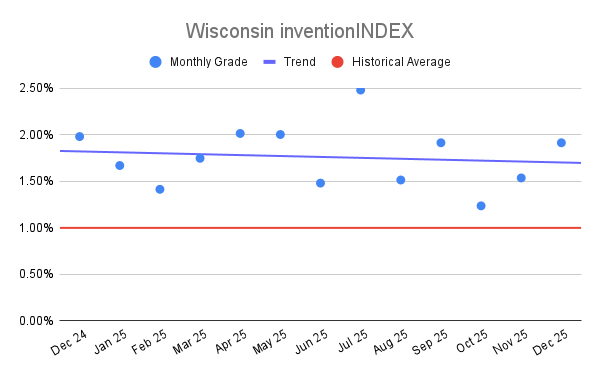 Wisconsin inventionINDEX December 2025
  Wisconsin inventionINDEX Novem
