

Contract research expenses in Wisconsin represent 65% of payments made to third parties (non-employees) for qualified research conducted on a taxpayer’s behalf. To qualify, the research must be performed within Wisconsin, the taxpayer must retain substantial rights to the results, and the taxpayer must bear the economic risk of the research failure (typically requiring time-and-materials contracts rather than fixed-price). This 65% limitation is a statutory reduction designed to exclude profit and overhead components found in third-party fees.
Contract research expenses represent sixty-five percent of the payments made to third parties for qualified research conducted on a taxpayer’s behalf in Wisconsin, excluding profit and overhead components. This statutory limitation ensures the tax credit incentivizes direct scientific advancement while maintaining a geographic nexus to the state’s economic development goals.
Statutory Basis and the Decoupling of Wisconsin Research Credits
The Wisconsin research credit is established as a method of incentivizing businesses to conduct innovation-driven activities within the state borders, thereby fostering a robust technological and manufacturing ecosystem. The primary mechanism for this incentive is codified under Wisconsin Statutes Sections 71.07(4k), 71.28(4), and 71.47(4), which provide for credits against individual income, corporate franchise, and insurance company taxes, respectively. A critical aspect of the Wisconsin credit is its relationship with the Internal Revenue Code (IRC). While Wisconsin historically sought to align its tax incentives with federal standards to reduce compliance complexity, the state has explicitly decoupled from certain federal provisions to maintain a stable and predictable environment for research-heavy industries.
For taxable years beginning on or after January 1, 2024, Wisconsin defines “qualified research expenses” by referencing Section 41 of the IRC as it was in effect on December 31, 2021. This specific “frozen” date for conformity is one of the most significant features of the Wisconsin R&D credit landscape. It means that Wisconsin does not follow the changes enacted by the federal Tax Cuts and Jobs Act (TCJA) of 2017, specifically Section 13206 of P.L. 115-97, which mandated the capitalization and amortization of research and experimental (R&E) expenditures under IRC Section 174 for tax years beginning after 2021. While federal law now requires taxpayers to capitalize these costs and amortize them over five years for domestic research and fifteen years for foreign research, Wisconsin continues to apply the pre-2022 federal rules for the purposes of calculating the research credit.
This non-conformity results in a divergence between the research expenses used for the federal credit and those used for the Wisconsin credit, often necessitating a Wisconsin modification on the tax return. For many taxpayers, this is a beneficial distinction, as it allows for the immediate recognition of research costs for credit purposes without the burdensome amortization schedules now required at the federal level. The state’s insistence on using the 2021 version of the IRC reinforces the policy goal of providing immediate liquidity and tax relief to entities engaging in long-term, high-risk development cycles.
The Tri-Tiered Structure of Wisconsin Research Credits
Wisconsin does not offer a single, monolithic research credit but rather a tiered system that targets specific industrial sectors deemed vital to the state’s economy. Each tier utilizes the same underlying definition of “qualified research expenses” but applies different rates and calculations based on the nature of the research activity.
| Credit Type | Statutory Application | Percentage of Excess QREs | Startup Percentage (No Prior QREs) |
|---|---|---|---|
| General Research Credit | General innovation and product development | 5.75% | 2.875% |
| Internal Combustion Engines | Designing engines and related vehicles | 11.5% | 5.75% |
| Energy Efficient Products | Lighting, building controls, and batteries | 11.5% | 5.75% |
The “General Research Credit” is available to any corporation or individual engaged in qualified research activities in Wisconsin. The “Internal Combustion Engine” credit specifically targets the design of engines, vehicles powered by such engines, and the improvement of production processes for these components. The “Energy Efficient Products” credit is aimed at the design and manufacturing of lighting systems, building automation and control systems, or automotive batteries used in hybrid-electric vehicles to reduce natural gas or electricity demand.
For research activities involving both general and specialized tiers, the Wisconsin Department of Revenue (DOR) requires the completion of separate Schedule R forms for each credit type. This granular reporting ensures that the higher credit rates are only applied to the activities that strictly meet the statutory definitions of the specialized tiers.
Comprehensive Definition of Contract Research Expenses
Contract research expenses constitute one of the two primary categories of qualified research expenses, the other being in-house research expenses. Under IRC Section 41(b)(3), which Wisconsin adopts through its conformity to the December 31, 2021, code, contract research expenses are defined as the “applicable percentage” of any amount paid or incurred by the taxpayer to any person—other than an employee of the taxpayer—for qualified research.
The standard “applicable percentage” is sixty-five percent. This limitation is not an arbitrary reduction but a deliberate policy tool. In a typical third-party contract, the price paid by the taxpayer includes the contractor’s direct labor, materials, overhead, and a profit margin. By allowing only 65% of the total payment to be included in the credit calculation, the state essentially “backs out” the contractor’s profit and administrative markup, attempting to equalize the credit benefit between companies that perform research in-house and those that outsource it.
Specific Inclusion Thresholds for External Research
While the 65% rate is the default, there are specific instances where the law allows for a higher inclusion percentage depending on the recipient of the payment and the nature of the research.
| Recipient Type | Inclusion Percentage | Requirement/Condition |
|---|---|---|
| Standard Contractors | 65% | General third-party services |
| Qualified Research Consortia | 75% | Non-profit, collaborative research |
| Eligible Small Businesses | 100% | Targeted energy research expenditures |
| Institutions of Higher Education | 100% | Targeted energy research expenditures |
| Federal Laboratories | 100% | Targeted energy research expenditures |
The 75% rate for payments to a “qualified research consortium” is intended to encourage cross-industry collaboration. A consortium must be a tax-exempt organization under Sections 501(c)(3) or 501(c)(6), organized primarily to conduct scientific research, and must perform the research on behalf of the taxpayer and at least one other unrelated entity.
The 100% inclusion rate is a highly specialized incentive found in IRC Section 41(b)(3)(D). Wisconsin adopts this provision, which allows for the full inclusion of expenses if the payments are made to eligible small businesses (defined as those with fewer than 500 employees), universities, or federal laboratories, specifically for “energy research”. This 100% rate is a powerful tool for Wisconsin companies partnering with the University of Wisconsin System or local startups to solve complex energy challenges.
The Three-Pronged Test for Qualifying Research Contracts
Not all payments to a contractor for technical work qualify for the 65% inclusion. To be eligible, the expenditure must satisfy three fundamental criteria derived from Treasury Regulation Section 1.41-2(e) and adopted through the state’s conformity to the IRC.
Prior Written Agreement
The contract or agreement must be entered into prior to the performance of the research activities. This contemporaneous requirement prevents taxpayers from performing “after-the-fact” reclassifications of routine professional service fees as research expenses. The agreement must clearly articulate the research goals and the scope of work to be performed.
Performance on Behalf of the Taxpayer
The research must be performed on behalf of the taxpayer, meaning the taxpayer must retain a right to the results of the research. While the contractor may also retain rights to the intellectual property, the taxpayer must, at a minimum, have a non-exclusive right to use the results in its business without paying a royalty to the contractor. Contracts where the taxpayer is merely purchasing a finished product or a “turnkey” solution without gaining access to the underlying research methodology or results generally do not qualify.
Economic Risk and the Basis of Payment
This is often the most contentious point in Wisconsin DOR audits. The taxpayer must bear the economic risk of the research. This means the taxpayer must be obligated to pay for the research even if it is unsuccessful. If a contract specifies that the taxpayer only pays upon the successful achievement of a certain technical milestone or the delivery of a working prototype, the risk is deemed to remain with the contractor.
However, Wisconsin Department of Revenue guidance in Publication 131 clarifies that even in fixed-price contracts, the 65% limitation applies to the portion of the payment attributable to research performed in Wisconsin, provided the taxpayer bears the risk of the project’s failure. The key is whether the taxpayer is funding a process of experimentation or merely buying a guaranteed result.
The Wisconsin Geographic Nexus: “Conducted in This State”
A profound distinction between the federal R&D credit and the Wisconsin R&D credit is the geographic limitation. While the federal credit permits expenses for research performed anywhere within the United States, the Wisconsin credit is strictly limited to expenses for research conducted within the state of Wisconsin.
This requirement is applied at the level of the activity, not the location of the payer. If a Wisconsin-based corporation hires a consulting firm in California to perform research, that expense is generally ineligible for the Wisconsin credit, regardless of the fact that the Wisconsin company paid for it and will benefit from it. Conversely, if a Delaware corporation hires a Wisconsin-based laboratory to conduct research at a facility in Milwaukee, that expense would potentially qualify for the Wisconsin credit (assuming the Delaware corporation is a Wisconsin taxpayer).
Allocation of Multi-State Research Contracts
For companies that utilize contractors operating across state lines, the Wisconsin DOR provides specific guidance on allocation. If qualified research expenses are incurred both inside and outside Wisconsin and the exact amount incurred in the state cannot be accurately determined, a portion of the expenses may be reasonably allocated to Wisconsin.
Acceptable allocation methods identified by the DOR include:
- Direct Personnel Allocation: Allocating costs based on the percentage of contractor hours performed by staff located in Wisconsin compared to total contract hours.
- Facility Usage: Allocating costs based on the time spent in Wisconsin labs or testing centers.
- Sales Factor or Other Justified Methods: For complex multi-state taxpayers where direct tracing is impossible, the DOR allows for a reasonable allocation tied to the Wisconsin sales factor or another method that can be justified as accurate under audit.
Taxpayers must be cautious; the DOR explicitly states that expenses incurred “entirely outside Wisconsin” cannot be allocated to the state, even if they were incurred for the benefit of research conducted within Wisconsin.
Funded Research and Intercompany Transactions
The “funded research” exclusion is a cornerstone of both federal and Wisconsin R&D tax law. Under IRC Section 41(d)(4)(H), research is not “qualified research” to the extent it is funded by any grant, contract, or otherwise by another person or governmental entity. This creates a “one-payer” rule where the entity that bears the economic risk and owns the rights is the only one entitled to the credit.
The Role of Combined Groups
For Wisconsin taxpayers filing as part of a combined group under Section 71.255, the state provides a significant modification to the funded research rule. If research is funded by one member of the combined group but performed by another member of the same combined group, the expenses are considered qualified research expenses of the member performing the research. The reimbursement paid by the funding member to the performing member is disregarded in the credit calculation.
This nuance allows a unitary group to aggregate the actual costs of research conducted in Wisconsin (such as the performing member’s wages and supplies) rather than being limited to the 65% contract rate that would normally apply to third-party transactions. The performing member claims the credit based on its in-house costs, effectively treating the intra-group contract as an extension of its own R&D department.
The Incremental Calculation and the “Base Amount”
Wisconsin utilizes a single “regular incremental method” to determine the credit amount. Unlike the federal system, which offers an “Alternative Simplified Credit” (ASC) method, Wisconsin requires all taxpayers to use the incremental calculation based on a three-year historical average.
The credit is calculated as follows:
Credit = Rate × (Current Year QRE – Base Amount)
The “Base Amount” is defined as 50% of the average qualified research expenses for the three taxable years immediately preceding the credit year.
The Minimum Base Amount for Multi-Year Claims
In no event can the base amount be less than 50% of the current year’s qualified research expenses. This floor ensures that the credit only applies to increases in research activity, preventing businesses from claiming large credits for static levels of R&D spend.
The Special Rule for Startups and New Claimants
For entities that did not have qualified research expenses in one or more of the three prior years, Wisconsin provides a simplified “startup” calculation. In these cases, the claimant is allowed to take a flat credit on their total current year QREs.
| Credit Tier | Standard Rate (on excess) | Startup Rate (on total QRE) |
|---|---|---|
| General Research | 5.75% | 2.875% |
| specialized Tiers (Engine/Energy) | 11.5% | 5.75% |
The Transformation of Refundability (2024 and Beyond)
A major evolution in Wisconsin’s tax policy is the aggressive expansion of credit refundability. For many years, the Wisconsin research credit was entirely non-refundable, meaning it could only be used to reduce a taxpayer’s liability to zero, with any excess carried forward for up to 15 years.
Starting in 2018, the state introduced a refundable component, which has grown significantly:
- Tax Years 2018–2020: Up to 10% of the research credit was refundable.
- Tax Years 2021–2023: Up to 15% of the research credit was refundable.
- Tax Years 2024 and Later: Up to 25% of the research credit is refundable.
Calculating the Refundable Portion
The refundable portion is determined after the current year’s credit has been used to offset the taxpayer’s current tax liability. It is the lesser of:
- Twenty-five percent of the total research credit computed for the current year.
- The current year research credit remaining after subtracting the amount used to offset the tax.
It is essential to understand that prior-year credit carryforwards do not factor into the refund calculation. Only the credit generated by the current year’s activities (including the 65% of contract research expenses) can be used to compute a refund. This change provides immediate liquidity to early-stage biotech, software, and manufacturing firms that may be investing heavily in Wisconsin-based R&D but have not yet achieved profitability.
Procedural Requirements for Pass-Through Entities
While the research activity and expense calculation occur at the business level, the mechanism for claiming the credit depends on the entity’s organizational structure.
Partnerships and S-Corporations
Partnerships, LLCs treated as partnerships, and tax-option (S) corporations are not eligible to “claim” the research credit to offset their own tax liability, as they are flow-through entities. Instead, these entities compute the credit on Schedule R and then prorate the amount among their partners, members, or shareholders based on their respective ownership interests.
The entity reports each owner’s share of the credit on Wisconsin Schedule 3K-1 (for partnerships) or Schedule 5K-1 (for S-corporations). The individual owners then file Schedule R with their personal Wisconsin income tax returns to claim the credit and any applicable refund.
Combined Group Sharing
Within a combined group of corporations, research credits are generally treated as attributes of the specific member that incurred the expense. However, Wisconsin allows “sharable” non-refundable credits to be used by other members of the group to offset their tax liability, provided the member that generated the credit was a part of the combined group in the year of the expense. The refundable portion of the credit, however, cannot be shared and remains with the originating member.
Substantiation Standards and Revenue Office Guidance
The Wisconsin DOR maintains a high threshold for the documentation required to support research credit claims, particularly for contract research. Under audit, the department expects a “nexus” to be established between the project activities and the specific costs claimed.
Contemporary Documentation Requirements
Wisconsin Administrative Code Tax 11.20 and various Schedule R instructions outline the types of documents that should be maintained:
- Project Documentation: Brochures, press releases, board submissions, and technical project reports that explain the nature of the research.
- Contractual Evidence: Complete copies of all third-party contracts, letter agreements, and work orders specifying the terms of the research.
- Financial Records: Invoices, purchase orders, and proof of payment, specifically those that detail the location where the work was performed.
- Time Tracking: While not strictly required for contractors in the same way as internal employees, documentation showing the contractor’s labor hours and activities is highly persuasive in establishing the 65% inclusion basis.
Lessons from Audit Experience
Case law and DOR guidance highlight common pitfalls. In Little Sandy Coal Co., the court emphasized that oral testimony alone is insufficient to substantiate research activities; specific, contemporaneous project records are required. In Moore, the court distinguished between “new product development” and “qualified research,” noting that the former is a broad business category while the latter requires a specific process of experimentation to eliminate technical uncertainty. For contract research, this means the taxpayer must ensure their contractors are keeping the types of technical logs that would withstand an inquiry into the scientific method applied during the project.
Comprehensive Example: Multi-Faceted R&D Engagement
To illustrate the application of these rules, consider “Wisconsin Robotics Group” (WRG), a C-corporation based in Waukesha, WI. In 2024, WRG is developing a new autonomous assembly line for internal combustion engines.
1. Activity and Expense Profile
| Expense Category | Total Amount | Wisconsin Portion | Qualifying Rate | QRE Amount |
|---|---|---|---|---|
| Internal Engineering Wages | $1,000,000 | $1,000,000 | 100% | $1,000,000 |
| R&D Lab Supplies | $200,000 | $200,000 | 100% | $200,000 |
| Contract: Private Lab (WI) | $500,000 | $500,000 | 65% | $325,000 |
| Contract: Software (MN) | $300,000 | $0 | 0% | $0 |
| Contract: UW Madison (Energy) | $100,000 | $100,000 | 100% | $100,000 |
| Total Current Year QRE | $1,625,000 |
2. Calculation Logic
- Wages and Supplies: WRG includes 100% of these as they are in-house and performed in Waukesha.
- Private Lab: The payment of $500,000 to the Wisconsin-based lab is subject to the 65% rule, resulting in $325,000 of QRE.
- Minnesota Software: Even though WRG paid for this, the work was conducted in Minnesota. Under Wisconsin’s geographic nexus rule, it is excluded entirely from the state credit.
- UW Madison: Because this contract is for energy-efficient battery research and is performed by a university, it qualifies for the 100% inclusion rate.
3. Applying the Credit Rate
Because the research is related to internal combustion engines, WRG applies the enhanced rate of 11.5%.
- Assume the 3-year average QRE was $1,000,000.
- Base Amount = $1,000,000 × 0.50 = $500,000.
- Excess QRE = $1,625,000 – $500,000 = $1,125,000.
- Total Credit = $1,125,000 × 0.115 = $129,375.
4. Refundability Analysis
Assume WRG has a 2024 Wisconsin tax liability of $50,000.
- Credit used to offset tax: $50,000.
- Remaining credit: $129,375 – $50,000 = $79,375.
- Maximum refund (25% of total): $129,375 × 0.25 = $32,343.75.
- WRG will receive a refund of $32,343.75, and the remaining $47,031.25 ($79,375 – $32,343.75) will be carried forward to 2025.
Summary of State Revenue Office Resources
The Wisconsin Department of Revenue provides several critical resources for taxpayers navigating these requirements:
- Publication 131: A comprehensive guide to tax incentives for conducting qualified research in Wisconsin, updated annually.
- Schedule R Instructions: Detailed line-by-line guidance for corporations, individuals, and pass-through entities.
- DOR Common Questions: A frequently updated FAQ database focusing on the mechanics of refundability and eligibility.
- Wisconsin Tax Bulletins: Periodic updates (such as Bulletin #157) that address complex allocation and sales/use tax issues related to R&D.
By strictly adhering to the pre-2022 IRC definitions for credit purposes while aggressively expanding refundability, Wisconsin has created a unique “pro-liquidity” environment for researchers. For the corporate taxpayer, success in claiming the contract research credit requires not just technical innovation, but a disciplined approach to geographic allocation and contractual risk management.
Who We Are:
Swanson Reed is one of the largest Specialist R&D Tax Credit advisory firm in the United States. With offices nationwide, we are one of the only firms globally to exclusively provide R&D Tax Credit consulting services to our clients. We have been exclusively providing R&D Tax Credit claim preparation and audit compliance solutions for over 30 years. Swanson Reed hosts daily free webinars and provides free IRS CE and CPE credits for CPAs.
Are you eligible?

Why choose us?

Pass an Audit?

What is the R&D Tax Credit?
The Research & Experimentation Tax Credit (or R&D Tax Credit), is a general business tax credit under Internal Revenue Code section 41 for companies that incur research and development (R&D) costs in the United States. The credits are a tax incentive for performing qualified research in the United States, resulting in a credit to a tax return. For the first three years of R&D claims, 6% of the total qualified research expenses (QRE) form the gross credit. In the 4th year of claims and beyond, a base amount is calculated, and an adjusted expense line is multiplied times 14%. Click here to learn more.
Never miss a deadline again

Stay up to date on IRS processes

Discover R&D in your industry

R&D Tax Credit Preparation Services
Swanson Reed is one of the only companies in the United States to exclusively focus on R&D tax credit preparation. Swanson Reed provides state and federal R&D tax credit preparation and audit services to all 50 states.
If you have any questions or need further assistance, please call or email our CEO, Damian Smyth on (800) 986-4725.
Feel free to book a quick teleconference with one of our national R&D tax credit specialists at a time that is convenient for you.
R&D Tax Credit Audit Advisory Services
creditARMOR is a sophisticated R&D tax credit insurance and AI-driven risk management platform. It mitigates audit exposure by covering defense expenses, including CPA, tax attorney, and specialist consultant fees—delivering robust, compliant support for R&D credit claims. Click here for more information about R&D tax credit management and implementation.
Our Fees
Swanson Reed offers R&D tax credit preparation and audit services at our hourly rates of between $195 – $395 per hour. We are also able offer fixed fees and success fees in special circumstances. Learn more at https://www.swansonreed.com/about-us/research-tax-credit-consulting/our-fees/



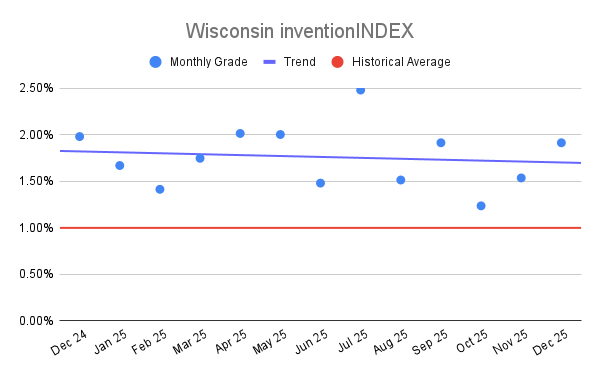 Wisconsin inventionINDEX December 2025
  Wisconsin inventionINDEX Novem
