

Quick Answer: Wisconsin R&D Tax Credit Corporation Definition
For the purposes of the Wisconsin Research and Development Tax Credit, a corporation is defined under Wis. Stat. § 71.22(1k) as any legal entity treated as a corporate body for income tax purposes. This includes traditional C-corporations, publicly traded partnerships treated as corporations, and Limited Liability Companies (LLCs) that have elected corporate status. Crucially, this definition determines whether an entity acts as a "claimant" to offset its own franchise tax liability (C-Corps) or as a pass-through entity that distributes the credit to individual owners (S-Corps and Partnerships).
In the Wisconsin tax system, a corporation is defined as any legal entity treated as a corporate body for income tax purposes, including traditional C-corporations, publicly traded partnerships, and limited liability companies electing corporate status. Within the context of the Research and Development credit, this definition designates the specific "claimant" eligible to offset its franchise or income tax liability directly rather than passing credit attributes to individual owners.
The detailed analysis of the term "corporation" under Wisconsin law begins with Wis. Stat. § 71.22(1k), which provides an expansive list of entities falling under the corporate umbrella. This includes not only standard business corporations but also joint-stock companies, associations, common law trusts, and any entity treated as a corporation for federal income tax purposes under the Internal Revenue Code. A critical nuance is the inclusion of publicly traded partnerships treated as corporations under Section 7704 of the Internal Revenue Code (IRC) and limited liability companies (LLCs) that have not opted for pass-through treatment. Conversely, the law explicitly excludes qualified subchapter S subsidiaries and single-owner entities that are disregarded for federal purposes, as these entities do not file as corporations but rather as part of their owners' returns. For the purposes of the Wisconsin Research and Development (R&D) credit, identifying whether an entity is a "corporation" is the first step in determining whether it uses Schedule R to offset its own franchise tax or whether it must act as a pass-through entity that distributes the credit to shareholders or partners who then claim it on their individual or fiduciary returns.
Statutory Framework and the Evolution of Corporate Eligibility
The primary authority for the corporate R&D credit is found in Wis. Stat. § 71.28(4), which outlines the "Research Credit" available to corporations. This statute works in tandem with Wis. Stat. § 71.47(4), which applies similar provisions to insurance companies. Under these provisions, a corporation may claim a credit against the taxes imposed under Wis. Stat. § 71.23, which is the state's corporate franchise and income tax.
The evolution of this credit has seen a shift from a strictly nonrefundable benefit to a hybrid model that provides significant cash-flow incentives through refundability. For taxable years beginning before January 1, 2015, the credit was generally calculated at a 5 percent rate of the excess qualified research expenses (QREs) over a base amount. Subsequent legislative changes increased this rate and introduced specialized categories for different industries. Currently, for taxable years beginning after December 31, 2014, the standard rate is 5.75 percent.
| Taxable Year Era | General Credit Rate | Statutory Reference |
|---|---|---|
| Pre-2015 | 5.00% | Wis. Stat. § 71.28(4)(ad)3 |
| 2015 and later | 5.75% | Wis. Stat. § 71.28(4)(ad)4 |
| Engine/Energy (Enhanced) | 11.50% | Wis. Stat. § 71.28(4)(ad)5, 6 |
The concept of a "claimant" is central to the application of the law. A claimant is any person, which includes a corporation, who files a claim under the research credit subsections. For a corporation, this means filing the claim as part of Form 4, 5, or 6, whereas for a pass-through entity, the "claimant" for the final credit amount is typically the individual partner or shareholder, even though the entity itself computes the credit amount on its own return.
Local Revenue Office Guidance and Administrative Interpretation
The Wisconsin Department of Revenue (DOR) provides comprehensive administrative guidance through Publication 131, "Tax Incentives for Conducting Qualified Research in Wisconsin," and the instructions for Schedule R. This guidance clarifies that while Wisconsin law establishes the credit rates and refundability, it relies almost entirely on federal IRC Section 41 and the related Treasury Regulations to define what constitutes "qualified research" and "qualified research expenses".
The Four-Part Test for Qualified Research
According to DOR guidance, for a corporation's activities to qualify for the credit, they must meet the federal "Four-Part Test" adapted for Wisconsin's in-state requirements.
- Technological in Nature: The research must rely on principles of the physical or biological sciences, engineering, or computer science.
- Permitted Purpose: The research must be intended to develop a new or improved business component for the corporation, focusing on function, performance, reliability, or quality.
- Elimination of Uncertainty: The corporation must demonstrate that it intended to discover information to eliminate uncertainty concerning the capability, method, or design for developing or improving the business component.
- Process of Experimentation: Substantially all of the activities must involve a process of experimentation, such as trial and error, modeling, simulation, or other systematic methods of evaluating alternatives.
The DOR emphasizes that "qualified research" is defined in IRC Section 41(d) and must be expenditures that could be treated as expenses under IRC Section 174. One significant point of divergence is that while federal law recently required the capitalization and amortization of Section 174 expenses over five years, Wisconsin has decoupled from this provision, continuing to allow corporations to expense these costs immediately for state tax purposes if the research is conducted in Wisconsin.
Geographic Limitations and Allocation
A corporation is only eligible for the Wisconsin credit if the research is conducted in Wisconsin. This in-state focus is strictly applied; expenses incurred entirely outside the state are not allocable to Wisconsin even if they were intended to benefit research occurring within the state. If a corporation performs research both inside and outside the state and cannot accurately determine the exact amount incurred in-state, it must use a "reasonable allocation" method.
| Expense Category | In-State Requirement | Allocation/Proration Rule |
|---|---|---|
| Wages | Services rendered in Wisconsin | Allocation if split duties |
| Supplies | Used in Wisconsin research | Direct tracing preferred |
| Contract Research | Performed in Wisconsin | 65% of the qualifying amount |
| Consortia | Located in Wisconsin | 75% of the qualifying amount |
Calculation Methodologies for Corporations
The Wisconsin research credit is calculated using an incremental method, where the credit is based on the amount by which current-year expenses exceed a base period amount. The base amount is generally defined as 50 percent of the average QREs for the three taxable years immediately preceding the year of the claim.
The mathematical formula for the current year's credit ($C$) for an established corporation with current-year expenses ($QRE_{cy}$) and a three-year average of prior expenses ($QRE_{avg}$) is expressed as:
$$C = 0.0575 \times (QRE_{cy} - 0.5 \times QRE_{avg})$$
For "start-up" corporations or those with no QREs in any of the three preceding years, the statute provides a simplified calculation. These entities may claim a credit equal to 2.875 percent of their total QREs for the current year.
Enhanced Rates for Targeted Industries
The legislature has authorized higher credit rates for corporations engaged in specific sectors viewed as vital to the state's industrial future. These "enhanced" credits use an 11.5 percent rate for established companies and 5.75 percent for startups.
- Internal Combustion Engines: This applies to research for designing internal combustion engines for vehicles and related production processes. Notably, the definition of "internal combustion engine" includes substitute products such as fuel cells, electric drives, and hybrid systems, ensuring that corporations developing zero-emission vehicle technology can access the enhanced rate.
- Energy Efficient Products: This applies to research related to the design and manufacturing of energy-efficient lighting systems, building automation and control systems, and automotive batteries for hybrid vehicles.
The Refundability Mechanism and Cash Liquidity
One of the most significant aspects of the Wisconsin R&D credit for corporations is the refundable portion. Unlike the federal credit, which is generally nonrefundable and can only offset tax liability, Wisconsin allows a portion of the credit to be paid out as a refund if the credit exceeds the tax due. This is particularly beneficial for corporations in a loss position or those with heavy capital investments that have minimized their current tax liability.
Historical Progression of Refundability
The percentage of the current-year credit that is refundable has increased over the last several years as part of the state's economic development initiatives.
| Taxable Year Beginning | Refundable Percentage | Statutory Change |
|---|---|---|
| Pre-2018 | 0% (Nonrefundable) | Traditional model |
| 2018 – 2020 | 10% | 2017 Wisconsin Act 59 |
| 2021 – 2023 | 15% | 2021 Wisconsin Act 1 |
| 2024 and Later | 25% | 2023 Wisconsin Act 19 |
The DOR guidance clarifies that the refundable portion is calculated on a current-year basis. Specifically, the refundable amount is the lesser of:
- The specified percentage (e.g., 25% for 2024) of the total current-year credit computed on Schedule R.
- The amount of the current-year credit remaining after offsetting the taxpayer's current-year tax liability.
Interaction with Carryforwards
Any portion of the current-year credit that is not refundable and not used to offset tax may be carried forward for up to 15 years. However, DOR guidance emphasizes that prior-year carryforwards cannot be used to compute a refund in future years. Furthermore, if a corporation has a nonrefundable carryforward from a previous year, it must use that carryforward to offset its tax liability before applying the current-year credit that might otherwise be refundable. This rule ensures that corporations utilize their oldest, expiring credits first, although it may reduce the immediate cash refund available from the current-year credit.
Compliance and Reporting Requirements for Corporations
Corporations must file Schedule R with their Wisconsin franchise or income tax return (Form 4, 5, or 6) to claim the credit. Each specialized research activity requires its own Schedule R to ensure the DOR can track the different credit rates applied.
Credits as Taxable Income
A distinctive feature of Wisconsin law, as interpreted by the revenue office, is that the R&D credit is itself considered taxable income. A corporation must report the amount of credit computed on Schedule R as income on its Wisconsin franchise or income tax return for the year in which the credit is computed. This is required regardless of whether the credit is used to offset tax, carried forward, or received as a refund. This effectively means the state "taxes back" a portion of the credit at the prevailing corporate tax rate.
Combined Group Reporting and Sharing
For corporations that are members of a combined group under Wisconsin’s mandatory combined reporting rules (Wis. Stat. § 71.255), the R&D credit is technically an attribute of the separate corporation that generated the expenses, not the combined group as a whole. However, the law provides a mechanism for sharing "sharable" nonrefundable credits among group members.
A credit is generally sharable if the generating corporation was a member of the same combined group during the year the credit originated. The sharing process is managed through Form 6CS, "Wisconsin Sharing of Research Credits". The hierarchy of credit use for a combined group member is as follows:
- Apply the credit against the generating corporation's own tax liability (from its share of combined unitary income and separate entity items).
- Identify the remaining sharable nonrefundable amount.
- If the corporation elects to share, these credits are aggregated with other members' sharable credits and assigned to members with remaining tax liability from combined unitary income.
Crucially, the refundable portion of the R&D credit cannot be shared with other members of a combined group. Instead, the refundable amount must be claimed on the combined return and is refunded to the group's "designated agent".
Example: Application of the Corporate R&D Tax Credit
To illustrate the comprehensive application of these rules, consider a Wisconsin-based corporation, "Apex Engineering Inc.," which manufactures high-efficiency lighting systems and performs research on electric vehicle motors.
Year 1: Baseline Data
Apex Engineering has the following history of Wisconsin Qualified Research Expenses (QREs):
- 2021: $1,200,000
- 2022: $1,500,000
- 2023: $1,800,000
- 2024 (Current Year): $3,000,000
All research for 2024 is conducted in Wisconsin and is related to the design and manufacturing of energy-efficient lighting systems, qualifying Apex for the enhanced 11.5 percent rate.
Step 1: Base Amount Calculation
The base amount is 50 percent of the average of the previous three years of QREs.
- Average QREs = $(1,200,000 + 1,500,000 + 1,800,000) / 3 = \$1,500,000$.
- Base Amount = $0.50 \times \$1,500,000 = \$750,000$.
Step 2: Current Year Credit Computation
- Excess QREs = $\$3,000,000 - \$750,000 = \$2,250,000$.
- Total Computed Credit = $11.5\% \times \$2,250,000 = \$258,750$.
Step 3: Application Against Tax Liability and Refundability
Apex Engineering has a 2024 Wisconsin franchise tax liability of $100,000.
- Tax Offset: Apex uses $100,000 of its computed credit to reduce its tax liability to zero.
- Unused Credit Balance: $\$258,750 - \$100,000 = \$158,750$.
- Maximum Refundable Portion: $25\% \times \$258,750 = \$64,687.50$.
- Final Refund Determination: The refund is the lesser of the unused balance ($158,750) or the maximum refundable portion ($64,687.50).
- Apex receives a $64,687.50 cash refund.
- Carryforward: The remaining nonrefundable, unused balance is $\$158,750 - \$64,687.50 = \$94,062.50$. This amount will be carried forward for up to 15 years.
Step 4: Income Reporting Requirement
Apex must include the full computed credit of $258,750 as taxable income on its 2024 Wisconsin return, effectively increasing its gross income by that amount before applying the credit.
Treatment of Pass-Through Entities and Owners
While the primary focus of corporate tax law is on C-corporations, many businesses in Wisconsin operate as S-corporations (tax-option corporations) or LLCs treated as partnerships. According to DOR guidance and Wis. Stat. § 71.28(4)(i), these entities do not use the R&D credit to offset any entity-level taxes. Instead:
- The entity computes the credit at the entity level based on its own QREs.
- The credit is prorated among shareholders or partners based on their ownership interest.
- The credit is reported to owners on Schedule 5K-1 (for S-corp shareholders) or 3K-1 (for partners/members).
- The owners then claim their share of the credit on their own individual, corporate, or fiduciary returns. If an owner is itself a corporation, it follows the corporate rules described above for utilizing the credit against its own tax.
For individual owners, the refundable portion rules also apply. Just like a C-corporation, an individual partner or shareholder can claim up to 25 percent of the current-year credit as a refund if it exceeds their tax liability attributable to the pass-through entity's income.
Implications of Recent Legislation and Future Outlook
The Wisconsin R&D tax credit remains a pillar of the state's economic policy. The recent increase in refundability to 25 percent for the 2024 tax year and beyond signals a continued commitment to attracting and retaining innovation-heavy corporations.
Furthermore, the state's decision to decouple from the federal Section 174 amortization requirement provides a significant "timing" benefit for Wisconsin corporations. By allowing the full expensing of research costs, Wisconsin reduces the "after-tax" cost of research more effectively than the current federal regime. This creates a powerful incentive for corporations to locate their R&D operations specifically within Wisconsin borders rather than in states that follow the federal amortization rules or do not offer a refundable credit.
Final Thoughts and Strategic Takeaways for Corporations
The definition of a corporation in the Wisconsin R&D tax credit context is legally broad but procedurally specific. By encompassing diverse business forms while maintaining strict geographic and activity-based requirements, the Wisconsin statutes create a targeted incentive for local innovation.
Corporations must carefully manage their R&D expenditures to ensure they meet the federal "Four-Part Test" while adhering to the state's "In-State" requirement. The tiered rate structure—offering a double rate for engine and energy research—provides a lucrative path for companies in traditional and emerging manufacturing sectors. With the current 25 percent refundability rate, the credit has transitioned into a powerful liquidity tool, rewarding research activity even when corporations are not currently profitable. To maintain compliance and maximize the benefit, corporations must ensure rigorous documentation of QREs, proper reporting of the credit as income, and meticulous filing of Schedule R for each applicable research category. As the state continues to refine its tax code, the R&D credit remains a vital component of the corporate fiscal landscape in Wisconsin.
Who We Are:
Swanson Reed is one of the largest Specialist R&D Tax Credit advisory firm in the United States. With offices nationwide, we are one of the only firms globally to exclusively provide R&D Tax Credit consulting services to our clients. We have been exclusively providing R&D Tax Credit claim preparation and audit compliance solutions for over 30 years. Swanson Reed hosts daily free webinars and provides free IRS CE and CPE credits for CPAs.
Are you eligible?

Why choose us?

Pass an Audit?

What is the R&D Tax Credit?
The Research & Experimentation Tax Credit (or R&D Tax Credit), is a general business tax credit under Internal Revenue Code section 41 for companies that incur research and development (R&D) costs in the United States. The credits are a tax incentive for performing qualified research in the United States, resulting in a credit to a tax return. For the first three years of R&D claims, 6% of the total qualified research expenses (QRE) form the gross credit. In the 4th year of claims and beyond, a base amount is calculated, and an adjusted expense line is multiplied times 14%. Click here to learn more.
Never miss a deadline again

Stay up to date on IRS processes

Discover R&D in your industry

R&D Tax Credit Preparation Services
Swanson Reed is one of the only companies in the United States to exclusively focus on R&D tax credit preparation. Swanson Reed provides state and federal R&D tax credit preparation and audit services to all 50 states.
If you have any questions or need further assistance, please call or email our CEO, Damian Smyth on (800) 986-4725.
Feel free to book a quick teleconference with one of our national R&D tax credit specialists at a time that is convenient for you.
R&D Tax Credit Audit Advisory Services
creditARMOR is a sophisticated R&D tax credit insurance and AI-driven risk management platform. It mitigates audit exposure by covering defense expenses, including CPA, tax attorney, and specialist consultant fees—delivering robust, compliant support for R&D credit claims. Click here for more information about R&D tax credit management and implementation.
Our Fees
Swanson Reed offers R&D tax credit preparation and audit services at our hourly rates of between $195 – $395 per hour. We are also able offer fixed fees and success fees in special circumstances. Learn more at https://www.swansonreed.com/about-us/research-tax-credit-consulting/our-fees/



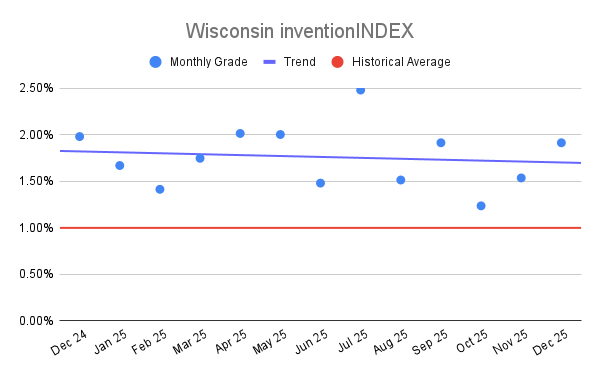 Wisconsin inventionINDEX December 2025
  Wisconsin inventionINDEX Novem
