

Quick Answer: Wisconsin R&D Tax Credit for Individuals
In Wisconsin tax law, an individual is defined as a natural person, including sole proprietors and pass-through entity owners, subject to personal income tax under Chapter 71. For the Research and Development (R&D) Tax Credit, the individual is the ultimate claimant who uses the credit to offset personal tax liability or receive a refundable portion. Key benefits include a 25% refundable credit for tax years beginning on or after January 1, 2024, and the ability to carry forward unused nonrefundable credits for 15 years. Eligibility requires meeting the federal four-part test for qualified research conducted specifically within Wisconsin.
In the regulatory environment of Wisconsin tax law, an individual is defined as a natural person, including sole proprietors and owners of pass-through entities, who is subject to personal income tax under Chapter 71 of the Wisconsin Statutes. Within the specific context of the Research and Development (R&D) credit, the individual serves as the ultimate claimant who utilizes the credit to offset personal tax liability or receives a refundable portion based on qualified research expenses incurred within the state.
The Theoretical and Statutory Definition of the Individual
The definition of an “individual” within the Wisconsin tax system is not merely a descriptive term for a human being but a precise legal construct that determines the scope of taxability and eligibility for state incentives. According to Wisconsin Statutes Section 71.01, the term “individual” is used interchangeably with “natural person” and is distinct from fiduciaries, corporations, and other legal entities. For the purposes of the Research and Development (R&D) tax credit—officially designated as the Credit for Increasing Research Expenses—the individual is the nexus point where business activity meets personal tax obligation. This categorization is vital because, while the research activities themselves are often conducted by legal entities such as Limited Liability Companies (LLCs) or S-corporations, the legal ability to “claim” the credit often rests solely with the individual owners of those entities.
The legal status of an individual is further refined by the concept of domicile. Wisconsin law defines domicile as an individual’s true, fixed, and permanent home where they intend to remain indefinitely and to which they intend to return whenever absent. This definition is central to the R&D credit because the state’s jurisdiction to tax the income of an individual—and consequently their eligibility to claim credits against that tax—depends on whether the individual is a resident or a nonresident deriving income from Wisconsin sources. A resident individual is taxed on their entire net income, regardless of its source, whereas a nonresident is taxed only on income derived from property located or business transacted within the state. This distinction ensures that the R&D credit, which is strictly limited to research conducted within Wisconsin borders, is appropriately targeted toward those contributing to the state’s economic and technological base.
Furthermore, the treatment of “disregarded entities” reinforces the centrality of the individual in this framework. Under Section 7701 of the Internal Revenue Code (IRC), as adopted by Wisconsin, a single-owner entity that is not treated as a separate corporation is disregarded for tax purposes. In such instances, the individual owner is viewed as the direct incurrer of all qualified research expenses (QREs) and the direct recipient of the tax credit. This alignment between federal and state definitions ensures that the individual remains the primary unit of taxation and incentive application, even when conducting business through modern legal structures.
Historical Evolution of Individual Participation in the Research Credit
The participation of individuals in the Wisconsin R&D tax credit has undergone a significant transformation over the last two decades. Historically, the credit was a mechanism primarily designed for C-corporations, reflecting an era where large-scale industrial research was the dominant driver of innovation. It was not until the 2013 tax year that the research credit was officially made available under the individual income tax. This legislative expansion recognized the shifting landscape of American innovation, where a substantial portion of R&D is performed by small businesses, startups, and specialized consultancies organized as pass-through entities.
The growth in individual claims since 2013 has been remarkable. Data from the Wisconsin Department of Revenue (DOR) indicates that the amount of credits claimed by individual filers increased from approximately $10.7 million in nonrefundable credits in 2013 to over $49.8 million in 2019. This 380% growth over a six-year period underscores the importance of the individual claimant in the state’s innovation strategy. The move to include individuals was driven by the realization that tax credits are a powerful tool for lowering the after-tax cost of research, thereby incentivizing the private sector to invest in projects that might otherwise be deemed too risky or unprofitable due to the “spillover effect”.
The legislative journey continued with 2017 Wisconsin Act 59, which introduced the concept of refundability. Prior to this act, the credit was 100% nonrefundable, meaning it could only be used to reduce an individual’s tax liability to zero. Any excess credit had to be carried forward to future years. For many startups and individual entrepreneurs, this was of limited value in the early years of a business when losses are common. Act 59 changed this by allowing individuals to receive a refund of up to 10% of their current-year credit. This percentage was later increased to 15% for tax years beginning in 2021 and, most recently, to 25% for tax years beginning on or after January 1, 2024. This progression reflects a concerted effort by the state to provide immediate liquidity to innovative individuals, effectively acting as a co-investor in their research activities.
The Statutory Mechanics of the Research Credit for Individuals
The Credit for Increasing Research Expenses is codified in several sections of Chapter 71 of the Wisconsin Statutes, with Section 71.07(4k) specifically governing individuals and fiduciaries. The credit is designed to reward taxpayers who increase their investment in qualified research over time, using an incremental calculation method that compares current-year spending to a historical base.
Qualification Criteria: The Four-Part Test
For an individual to claim the credit, the research activities must meet the federal definition of “qualified research” under IRC Section 41(d). This involves a rigorous four-part test that ensures the credit is only applied to truly innovative work:
- Technological Nature: The research must fundamentally rely on principles of the “hard sciences,” such as physical science, biological science, computer science, or engineering.
- Permitted Purpose: The activity must be intended for the development of a new or improved business component, focusing on functionality, performance, reliability, or quality.
- Elimination of Uncertainty: The individual must intend to discover information that would eliminate uncertainty regarding the capability, method, or appropriate design for developing the business component.
- Process of Experimentation: The research must involve a systematic process designed to evaluate alternatives, such as testing, simulation, or trial and error.
Wisconsin law strictly modifies this federal definition by adding a geographic constraint: the research must be performed entirely within the state of Wisconsin. Expenses incurred for research conducted out-of-state are ineligible, even if the individual claimant is a Wisconsin resident.
Eligible Expenses (QREs) for Individuals
Individuals can only include specific types of expenditures in their calculation of qualified research expenses. These are generally divided into “in-house” and “contract” research expenses.
- Wages: The most significant component of QREs is typically the wages paid to employees directly involved in research, including those who perform, supervise, or directly support the research activities. For an individual sole proprietor, these are the wages paid to their staff.
- Supplies: This includes the cost of tangible property, other than land or depreciable property, used in the conduct of qualified research.
- Computer Rental/Lease: Expenses for the right to use computers for qualified research, often including cloud hosting or dedicated development servers, are eligible.
- Contract Research: Individuals can claim 65% of the amount paid to third parties for research conducted on their behalf in Wisconsin. This percentage increases to 75% for payments to qualified research consortia and 100% for payments to eligible small businesses, universities, or federal laboratories.
Calculation Methodologies and Rates
The Wisconsin R&D credit uses the “Regular Incremental Method.” Unlike the federal government, Wisconsin does not offer an Alternative Simplified Credit (ASC). The credit is generally calculated as 5.75% of the excess of current-year QREs over a “base amount”.
The base amount is defined as 50% of the average Wisconsin QREs for the three taxable years immediately preceding the current year. If an individual had no QREs in one or more of the three preceding years, a “startup” rule applies, allowing them to claim 2.875% of their total current-year QREs.
| Credit Type | Normal Rate (Incremental) | Startup Rate (No History) |
|---|---|---|
| General Research | 5.75% of Excess over Base | 2.875% of Total QREs |
| Internal Combustion Engines | 11.5% of Excess over Base | 5.75% of Total QREs |
| Energy Efficient Products | 11.5% of Excess over Base | 5.75% of Total QREs |
The higher rates for internal combustion engines and energy-efficient products reflect the state’s industrial priorities. Internal combustion engine research includes the design of engines and substitute products like fuel cells and electric drives for specific vehicles. Energy-efficient product research covers lighting systems, building automation, and automotive batteries.
The Individual as a Pass-Through Entity Owner
A critical aspect of the “Individual” in Wisconsin tax law is their role as a recipient of credits generated by pass-through entities (PTEs). Partnerships, S-corporations, and LLCs treated as partnerships do not claim the research credit themselves. Instead, the entity computes the credit based on its activities and allocates it to its partners or shareholders.
The individual receives this allocation via a Schedule 3K-1 (for partnerships) or 5K-1 (for S-corporations). The credit flows through in proportion to the individual’s ownership interest in the entity. This means an individual’s personal tax return may consolidate credits from various business sources. When an individual owns an interest in a PTE, they must report the passed-through credit on their personal Schedule R and Schedule CR.
One complex nuance involves the “Add-back” requirement. Wisconsin law dictates that the credit computed for the year is considered taxable income. Therefore, an individual must report the amount of the credit as an addition modification to their federal adjusted gross income on their Wisconsin return. This applies even if the credit is not fully used to offset tax and is carried forward. This policy ensures that the business deduction for research wages and the tax credit for those same wages do not result in an unintended “double benefit” for the individual taxpayer.
Refundability and the 25% Rule for Individuals
The transition to a partially refundable credit is perhaps the most significant benefit for individuals, particularly those in the startup and growth phases of a business. As of the 2024 tax year, individuals can receive a refund for up to 25% of their current-year research credit.
The calculation of the refundable portion for an individual follows a specific “lesser of” logic. After using the current-year credit and any carryforwards to offset their actual Wisconsin income tax liability, the individual calculates the remaining credit. The refundable portion is then the lesser of:
- 25% of the total research credit computed for the current taxable year.
- The amount of current-year credit remaining after subtracting the amount used to offset the individual’s tax liability.
This mechanism ensures that if an individual has no tax liability, they can receive exactly 25% of their credit in cash. If they have some tax liability that uses up 80% of their credit, they can only receive the remaining 20% as a refund, as that is the “lesser” of the two figures. Any portion of the credit that is neither used to offset tax nor refunded may be carried forward for 15 years as a nonrefundable credit. It is vital to note that prior-year credit carryforwards can never be used to calculate a refund; only the “new” credit generated in the current year is eligible.
| Component | Status | Limit |
|---|---|---|
| Current Year Credit | Refundable/Nonrefundable | 25% Refund Limit |
| Prior Year Carryforward | Nonrefundable | 15-Year Expiration |
| Add-back Requirement | Mandatory Income | 100% of Computed Credit |
| Claim Period | Time-limited | 4 years from due date |
Local Revenue Office Guidance and Compliance
The Wisconsin Department of Revenue (DOR) provides specific administrative tools and publications to ensure individuals comply with the law. The most important of these is Publication 131, “Tax Incentives for Conducting Qualified Research in Wisconsin”. This publication serves as the authoritative guide for what constitutes a qualified expense and how to assemble the required documentation.
Documentation Standards for Individuals
Individuals are expected to maintain “contemporaneous” records that support their research claims. The DOR audit guidelines emphasize the importance of identifying the “business component” being improved and the technical uncertainties being addressed. Key documents include:
- Project Lists: A comprehensive list of all R&D projects conducted during the year, categorized by the four-part test.
- Labor Time Sheets: Records showing the specific hours employees spent on research vs. non-research activities.
- Technical Documents: Innovation logs, bug fixes, testing protocols, and photographs or videos of testing prototypes.
- Financial Records: Tax invoices and receipts for supplies and contract research payments.
Filing Requirements
For an individual to claim the credit, they must file Schedule R, “Wisconsin Research Credits,” with their individual income tax return (Form 1 or Form 1NPR for nonresidents). Schedule R is where the incremental calculation is performed and where the refundable portion is determined. If the individual is a member of a pass-through entity, they should also include the Schedule 3K-1 or 5K-1 they received from the entity to verify the source of the credit.
The DOR has the authority to disallow any credit not claimed within four years of the unextended due date of the return for the year in which the credit was computed. Furthermore, if an individual is an owner of a related entity (as defined by IRC Sections 267 or 1563), they may have additional reporting requirements on Schedule RT if they are involved in certain inter-company expense transactions.
Economic Implications for the Individual Taxpayer
The structure of the Wisconsin R&D credit reflects a sophisticated understanding of economic incentives. By allowing the credit to flow through to individuals, the state effectively lowers the “user cost of capital” for innovative projects. For an individual in the top Wisconsin income tax bracket, the credit significantly increases the marginal benefit of every dollar spent on research.
The “spillover” effect is a central justification for these incentives. Research performed by an individual in Wisconsin often creates localized knowledge that benefits the surrounding community and industry clusters. This helps to attract and retain highly educated talent—engineers, scientists, and researchers—who might otherwise seek opportunities in other states. For the individual taxpayer, the credit is not just a tax reduction; it is a critical source of cash flow that can be reinvested in further innovation, hiring, or capital projects.
Detailed Illustrative Example: The Individual Claimant
To demonstrate the application of these rules, consider the case of an individual taxpayer, Dr. Elena Vance, for the 2024 tax year. Dr. Vance is a Wisconsin resident and the sole owner of “Aero-Flow Systems,” a single-member LLC (disregarded entity) located in Milwaukee. Her business specializes in developing energy-efficient building automation controls.
Identify Qualified Research Expenses (QREs)
In 2024, Elena’s business incurred the following expenses for research conducted in Milwaukee:
- Employee Wages: $300,000 for three engineers dedicated 100% to designing new control algorithms.
- Supplies: $40,000 for sensors and circuit boards used in prototypes.
- Contract Research: $100,000 paid to the University of Wisconsin for specialized data analysis.
Because Elena is designing energy-efficient building automation, her activities qualify for the enhanced 11.5% rate.
Total 2024 QREs:
- Wages: $300,000
- Supplies: $40,000
- Contract Research (65% of $100,000): $65,000
- Total: $405,000
Determine the Base Amount
Elena has conducted research in Wisconsin for several years. Her historical QREs are:
- 2023: $350,000
- 2022: $320,000
- 2021: $290,000
Calculation of Average: ($350,000 + $320,000 + $290,000) / 3 = $320,000
Calculation of Base Amount: 50% * $320,000 = $160,000
Compute the Research Credit
Excess QREs: $405,000 (Current) – $160,000 (Base) = $245,000
Total Credit: $245,000 * 11.5% = $28,175
Apply the Add-back Rule
Elena must report the $28,175 computed credit as a Wisconsin addition modification on her Form 1, Line 2. This increases her Wisconsin taxable income by the full amount of the credit.
Calculate the Refundable Portion
Assume Elena’s total Wisconsin income tax liability for 2024 (before the research credit) is $10,000.
- Step A: Offset Tax. She uses $10,000 of her $28,175 credit to reduce her tax liability to $0.
- Step B: Determine Remaining Credit. $28,175 – $10,000 = $18,175.
- Step C: Calculate Maximum Refundable. 25% * $28,175 = $7,043.75.
- Step D: The “Lesser Of” Rule. The refundable portion is the lesser of the remaining credit ($18,175) or the 25% maximum ($7,043.75).
Final Result for Elena:
- Wisconsin Tax Liability: $0
- Cash Refund: $7,043.75
- Carryforward: Elena has $11,131.25 ($18,175 – $7,043.75) in nonrefundable credit to carry forward to the 2025 tax year.
Detailed Analysis of Fiduciaries vs. Individuals
While the term “individual” is often used broadly, the Wisconsin tax code makes specific distinctions when research activities involve estates and trusts. Fiduciaries use Schedule R to report the distribution of the research credit rather than to claim it as a natural person would.
In the fiduciary context, the credit must be prorated between the estate or trust and its beneficiaries based on the income allocable to each. The portion allocated to beneficiaries is reported on their individual Schedule 2K-1s, at which point it becomes an “individual” credit for those beneficiaries. This ensures that the tax benefit follows the income, maintaining the integrity of the state’s progressive tax system.
For grantor trusts, the rules are even more direct. Because a grantor trust is considered owned by the settlor for tax purposes under IRC Sections 671 to 679, the research expenses and resulting credits are treated as if they were incurred directly by the individual grantor. This allows the individual to claim the credit on their personal return, bypassing the complex proration rules that apply to non-grantor trusts.
Final Thoughts and Future Outlook
The conceptualization of the “individual” within the Wisconsin R&D tax credit framework represents a strategic intersection of administrative precision and economic pragmatism. By allowing the benefits of high-level industrial research to flow through to natural persons, Wisconsin has created one of the most robust state-level innovation incentives in the country. The 2024 increase to a 25% refundable threshold for individuals is a transformative policy shift that provides essential capital to the state’s most creative residents.
As the state continues to refine these rules, the role of the individual claimant will likely become even more central. The decoupling from federal Section 174 amortization requirements demonstrates Wisconsin’s willingness to “go its own way” to protect the interests of its taxpayers. For the individual researcher, engineer, or entrepreneur, the Wisconsin R&D tax credit is not merely a technical calculation on a tax form; it is a direct endorsement of their contribution to the state’s future. The combination of tiered rates for strategic industries, the flow-through of entity-level activities, and the immediate liquidity provided by refundability ensures that Wisconsin remains a competitive hub for individual innovation in the 21st century. Individuals claiming this credit should remain diligent in their documentation and attentive to the evolving guidance from the Department of Revenue, as the benefits—and the scrutiny—of these claims continue to grow.
Who We Are:
Swanson Reed is one of the largest Specialist R&D Tax Credit advisory firm in the United States. With offices nationwide, we are one of the only firms globally to exclusively provide R&D Tax Credit consulting services to our clients. We have been exclusively providing R&D Tax Credit claim preparation and audit compliance solutions for over 30 years. Swanson Reed hosts daily free webinars and provides free IRS CE and CPE credits for CPAs.
Are you eligible?

Why choose us?

Pass an Audit?

What is the R&D Tax Credit?
The Research & Experimentation Tax Credit (or R&D Tax Credit), is a general business tax credit under Internal Revenue Code section 41 for companies that incur research and development (R&D) costs in the United States. The credits are a tax incentive for performing qualified research in the United States, resulting in a credit to a tax return. For the first three years of R&D claims, 6% of the total qualified research expenses (QRE) form the gross credit. In the 4th year of claims and beyond, a base amount is calculated, and an adjusted expense line is multiplied times 14%. Click here to learn more.
Never miss a deadline again

Stay up to date on IRS processes

Discover R&D in your industry

R&D Tax Credit Preparation Services
Swanson Reed is one of the only companies in the United States to exclusively focus on R&D tax credit preparation. Swanson Reed provides state and federal R&D tax credit preparation and audit services to all 50 states.
If you have any questions or need further assistance, please call or email our CEO, Damian Smyth on (800) 986-4725.
Feel free to book a quick teleconference with one of our national R&D tax credit specialists at a time that is convenient for you.
R&D Tax Credit Audit Advisory Services
creditARMOR is a sophisticated R&D tax credit insurance and AI-driven risk management platform. It mitigates audit exposure by covering defense expenses, including CPA, tax attorney, and specialist consultant fees—delivering robust, compliant support for R&D credit claims. Click here for more information about R&D tax credit management and implementation.
Our Fees
Swanson Reed offers R&D tax credit preparation and audit services at our hourly rates of between $195 – $395 per hour. We are also able offer fixed fees and success fees in special circumstances. Learn more at https://www.swansonreed.com/about-us/research-tax-credit-consulting/our-fees/



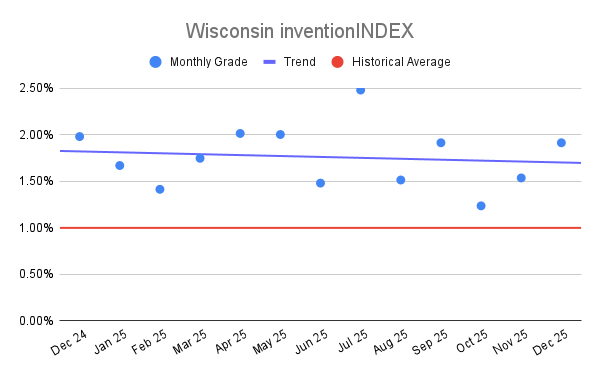 Wisconsin inventionINDEX December 2025
  Wisconsin inventionINDEX Novem
