

The “No Prior QREs” status in Wisconsin applies to claimants who have not incurred qualified research expenses in any one of the three taxable years preceding the credit year. This provision allows startups and new R&D entrants to utilize a non-incremental credit rate—typically 2.875% for general research—applied to their total qualified expenses, rather than calculating an increase over a historical base. This ensures companies without a spending history can still access R&D tax incentives.
In the context of the Wisconsin Research Expense Credit, “No Prior QREs” denotes a tax status triggered when a claimant has not incurred qualified research expenses in any one of the three taxable years immediately preceding the credit year. This status allows the claimant to utilize a non-incremental credit rate, currently set at 2.875% for general research, rather than calculating an increase over a historical base.
Comprehensive Statutory Framework of the Wisconsin Research Credit
The Wisconsin Research Expense Credit is primarily governed by Wis. Stat. § 71.28(4) for corporations and mirrored in § 71.07(4k) for individuals and fiduciaries, as well as § 71.47(4) for insurance companies. Unlike the federal research credit, which is calculated based on complex historical lookback periods and gross receipts factors under Internal Revenue Code (IRC) Section 41, the Wisconsin credit calculation is determined strictly by state statutes, though it adopts the federal definition of “qualified research expenses” by reference. The fundamental purpose of this incentive is to foster a robust innovation ecosystem within the state, encouraging businesses to establish and maintain research and development (R&D) facilities in Wisconsin.
The state’s approach is distinctly incremental, meaning the primary mechanism for generating the credit is increasing research spending relative to a prior three-year period. However, the “No Prior QREs” provision exists as a statutory relief valve for new businesses, startups, or existing firms entering the research space for the first time. This provision ensures that companies are not excluded from the benefit simply because they lack a historical baseline for comparison.
The Tiered Incentive Structure
Wisconsin provides a tiered rate system that distinguishes between general research activities and specific high-priority industrial sectors. These sectors, deemed critical to the state’s manufacturing and energy infrastructure, receive significantly higher credit percentages.
| Research Category | Primary Incremental Rate | No Prior QREs (Startup) Rate | Statutory Reference |
|---|---|---|---|
| General Research and Development | 5.75% | 2.875% | § 71.28(4)(ad)4 |
| Internal Combustion Engines | 11.5% | 5.75% | § 71.28(4)(ad)5 |
| Energy Efficient Products | 11.5% | 5.75% | § 71.28(4)(ad)6 |
The general research rate of 5.75% applies to most industrial and technological research. The enhanced rates of 11.5% (and 5.75% for startups) are targeted toward two specific domains. The first encompasses research related to designing internal combustion engines for vehicles, including vehicle designs powered by such engines and the improvement of production processes for these components. The definition of an internal combustion engine for these purposes explicitly includes substitute products such as fuel cells, electric drives, and hybrid-electric drives.
The second enhanced tier focuses on energy-efficient products, specifically the design and manufacturing of energy-efficient lighting systems, building automation and control systems, or automotive batteries for hybrid-electric vehicles. To qualify, these systems must demonstrably reduce the demand for natural gas or electricity or improve the efficiency of their use.
Defining Qualified Research Expenses (QREs) in the Wisconsin Context
While the calculation method is state-specific, Wisconsin defines the eligibility of expenses by adopting IRC Section 41 as of a specific conformity date—currently December 31, 2020. This means that while federal law may change, Wisconsin only adopts those changes up to that static date unless the legislature specifically acts to update the reference.
In-State Expenditure Requirements
The most critical distinction for Wisconsin QREs is the physical location of the research. Only expenses incurred for research conducted within the state of Wisconsin are eligible. Expenses incurred entirely outside the state are strictly non-allocable to Wisconsin, even if the research directly benefits a Wisconsin-based business component.
Categories of Eligible Expenses
- In-House Research Wages: This includes salaries and wages paid to employees who are “engaged in qualified research.” According to the federal standards adopted by Wisconsin, this includes not only the researchers performing the experiments but also those in direct supervision or direct support of the research activities. Direct supervision refers to first-line managers who oversee the technical aspects of the projects, while direct support includes laboratory assistants who clean equipment or technicians who build prototypes.
- Supplies: Supplies include tangible personal property, other than land or depreciable property, that is used or consumed in the research process. In the manufacturing sector, this frequently includes raw materials used to create experimental prototypes or first-run production items that are scrapped during testing. Notably, Wisconsin provides a separate sales and use tax exemption for machinery and equipment used exclusively and directly in qualified research, which complements the income tax credit.
- Contract Research Expenses: Wisconsin allows a credit for 65% of the amount paid to third-party contractors for qualified research conducted on the taxpayer’s behalf. This percentage increases to 75% for payments made to qualified research consortia. Furthermore, Wisconsin adopts Section 41(b)(3)(D)(i) of the IRC, which allows for 100% of the amount paid to be included if the payments are made to eligible small businesses, universities, or federal laboratories.
- Computer Rental and Hosting Costs: Payments for the use of computers, including cloud computing services for software development or data analysis, are eligible if the resources are located off-premises and the taxpayer is not the primary user of the hardware.
Administrative Guidance for “No Prior QREs” Claimants
The Wisconsin Department of Revenue (DOR) provides detailed administrative guidance through Publication 131 and the annual instructions for Schedule R. These documents delineate the procedural requirements for taxpayers who lack a prior research history.
The “One or More” Rule and Line 9 Instructions
The most significant administrative nuance for new researchers is the “one or more” rule. Wisconsin statutes and Schedule R instructions specify that the “No Prior QREs” calculation is triggered if the claimant had no qualified research expenses in “one or more” of the three taxable years immediately preceding the current year. This is a critical distinction because it means that even a taxpayer who conducted research in two out of the three prior years must still follow the “No Prior” protocol rather than averaging the two active years.
According to the 2024 and 2025 Schedule R instructions, if a taxpayer meets this condition:
- They must check the box on Line 9.
- They must not complete lines 9a through 9e, which are used for calculating the three-year average.
- They must enter “0” on Line 10, effectively setting the “base amount” to zero.
- They must skip Line 12 and proceed to Line 13, where they check the appropriate box to indicate they are utilizing the reduced startup rate (2.875% or 5.75%).
Logic and Policy Implications
The decision to utilize a flat rate for startups rather than an averaged base serves two purposes. First, it prevents the artificial inflation of the credit that would occur if a taxpayer could average two high-spending years with one zero-spending year, which would result in an artificially low base and a massive incremental credit. Second, it simplifies compliance for new companies that may not have maintained the rigorous “contemporaneous documentation” required for years when they were not claiming the credit.
However, this creates a “cliff” effect. A company in its fourth year of research might find that their credit amount decreases even if their spending increases, as they transition from the 2.875% flat rate on all expenses to the 5.75% rate only on the incremental portion above the 50% average base.
The Evolution of Refundability and Liquidity
A major shift in Wisconsin’s R&D tax policy occurred in recent years to provide better support for cash-intensive industries like biotechnology and advanced manufacturing. Historically, the research credit was 100% non-refundable, meaning it could only be used to offset actual tax liability.
Refundable Percentage Progression
The legislature began phasing in refundability to ensure that companies with significant R&D spending but no immediate profitability could still benefit from the incentive.
| Tax Year Period | Refundable Portion Percentage | Statutory Reference |
|---|---|---|
| Pre-2018 | 0% (Non-refundable) | § 71.28(4) |
| 2018 – 2020 | 10% | § 71.28(4)(k) |
| 2021 – 2023 | 15% | § 71.28(4)(k) |
| 2024 and After | 25% | § 71.28(4)(k) |
The refundable portion for tax years beginning on or after January 1, 2024, is calculated as the lesser of:
- 25% of the total research credit computed for the current taxable year.
- The amount of the current-year credit that remains after subtracting the amount used to offset the current year’s tax liability.
This 25% refundability is a significant advantage for startups under the “No Prior QREs” rule. Because these firms often have zero tax liability due to heavy initial investment and lack of revenue, they can receive a direct cash payment for up to 25% of the credit generated. The remaining 75% is non-refundable but can be carried forward for 15 years to offset future tax liabilities.
Non-Refundable Carryforwards
It is vital to distinguish between current-year credits and carryforwards. Only the credit generated in the current year is eligible for the 25% refund. Carryforwards from previous years are non-refundable and do not affect the calculation of the refundable portion. However, a taxpayer can use a carryforward to offset their current tax liability first, which “preserves” the current-year credit for potential refundability.
Federal Conformity and the Section 174 Decoupling
A complex but highly beneficial aspect of Wisconsin research tax law is its decoupling from federal changes regarding the amortization of research and experimental (R&E) expenditures.
The Federal TCJA Amortization Rule
Beginning in 2022, the federal Tax Cuts and Jobs Act (TCJA) required all taxpayers to capitalize and amortize R&E expenditures under Section 174 over five years for domestic research and fifteen years for foreign research. This eliminated the long-standing option for immediate deduction in the year the expense occurred.
Wisconsin’s Selective Non-Conformity
Wisconsin specifically chose not to adopt Section 13206 of the TCJA (P.L. 115-97), which enacted the amortization requirement. Consequently, for Wisconsin tax purposes, the pre-2022 rules remain in effect. This allows Wisconsin taxpayers to:
- Elect to fully deduct R&D expenses in the year they are paid or incurred.
- Alternatively, elect to defer and amortize the expenses over a period of not less than 60 months.
The “Wisconsin Modification” Requirement
Because federal taxable income is the starting point for the Wisconsin return, and that income reflects the federally mandated amortization, taxpayers must adjust their Wisconsin income. This is known as a Wisconsin Modification.
- Addback: Taxpayers must add back the federal amortization of Section 174 expenses to their Wisconsin income.
- Subtraction: Taxpayers then subtract the full amount of qualified research expenses incurred during the year for Wisconsin purposes.
For companies with heavy R&D spend and no prior history, this immediate expensing at the state level provides a massive reduction in state taxable income, which, combined with the 25% refundable credit, creates a dual-layered cash flow benefit.
Entity Structure and Pass-Through Considerations
The Wisconsin research credit is available to a wide variety of entities, including C-corporations, S-corporations, partnerships, LLCs, and individuals.
Pass-Through Entity Dynamics
Partnerships, LLCs treated as partnerships, and tax-option (S) corporations cannot use the research credit to offset tax at the entity level. Instead, these entities compute the credit on Schedule R based on their own research activities and then pass the information to their owners (partners, members, or shareholders) in proportion to their ownership interests. The individual owners then claim the credit on their personal Wisconsin tax returns.
Combined Reporting Groups
For corporations that file as part of a Wisconsin combined group, the rules are more complex. Each member of the combined group must calculate its research credit on a separate company basis, using its own QREs and its own three-year lookback period.
However, Wisconsin law allows for the sharing of non-refundable research credits within the group. After a member uses its credit to offset its own tax liability, it may share the remaining non-refundable balance with other members of the same combined group on a proportionate basis.
Notably, the refundable portion cannot be shared. If a subsidiary generates a credit that results in a refund, that refund is issued to the designated agent for the group but is attributed to that specific member’s activity.
Substantiation, Documentation, and Audit Readiness
The Wisconsin Department of Revenue maintains strict standards for the substantiation of research credits. The burden of proof lies entirely with the taxpayer to demonstrate that the activities meet the federal “Four-Part Test” and that the expenses were incurred in Wisconsin.
The Four-Part Test for Qualified Research
- Permitted Purpose: The research must be undertaken for the purpose of discovering information that is technological in nature and intended for use in developing a new or improved business component.
- Elimination of Uncertainty: The taxpayer must demonstrate that they were attempting to solve a technical challenge where the capability, methodology, or appropriateness of the design was not known at the outset.
- Process of Experimentation: Substantially all of the research activities must constitute elements of a process of experimentation, involving the evaluation of alternatives through modeling, simulation, or systematic trial and error.
- Technological in Nature: The process of experimentation must rely on the principles of engineering, physics, chemistry, biology, or computer science.
Essential Record Keeping
Claimants, especially those with no prior history, must maintain contemporaneous records to survive an audit. The DOR generally recommends retaining these records for at least the statute of limitations period for each year the credit or carryforward is used—typically 4 to 7 years.
- Labor Records: Detailed time sheets or innovating logs showing specifically which projects employees worked on and how much of their time was dedicated to qualified research.
- Technical Documents: Blueprints, schematics, design documentations, testing protocols, and results showing the iterative process of experimentation.
- Expense Substantiation: Tax invoices and receipts for supplies, as well as written contracts and invoices for third-party researchers.
Comparative Analysis: Wisconsin vs. Other States
Understanding Wisconsin’s “No Prior QREs” rule is easier when contrasted with the methods used in other states.
| State | Credit Calculation Method | Treatment of No Prior QREs | Refundability |
|---|---|---|---|
| Wisconsin | Incremental (50% Base) | Flat rate (2.875% or 5.75%) | 25% Refundable |
| Illinois | Incremental (100% Base) | 6.5% rate with $0 base | Non-refundable |
| Michigan | Incremental (100% Base) | Tiered rates with $0 base | Fully Refundable (Capped) |
| Oregon | ASC (50% Base) | 6% rate if no prior years | Partial (Tiered) |
| Delaware | Excess or ASC | 50% of apportioned federal ASC | Fully Refundable |
| Florida | Incremental (100% Base) | 25% reduction for each missing year | Non-refundable |
Wisconsin’s approach is unique in that it effectively “halves” the credit rate for startups. While states like Illinois and Michigan allow the full rate to be applied to the current spending (by setting the base to zero), Wisconsin forces a lower percentage. However, Wisconsin’s 50% base for established companies is much more generous than Illinois’s 100% base, meaning it is easier for a Wisconsin company to stay in the “incremental” zone once they have established a history.
Detailed Example: Badger State Robotics, LLC
Consider Badger State Robotics, LLC, a new Wisconsin-based firm specializing in the design of hybrid-electric internal combustion engines for agricultural drones.
Year 1: Entry into the Market (2024)
In its first year, the company incurs $1,000,000 in Wisconsin QREs. Having no prior history, they fall under the “No Prior QREs” rule.
- Activity Category: Internal Combustion Engines (Enhanced Tier).
- Prior 3-Year History: $0, $0, $0.
- Base Amount (Line 10): $0.
- Credit Rate (Line 13b): 5.75%.
- Credit Generated: $1,000,000 x 0.0575 = $57,500.
- Refundable Portion: Assuming zero tax liability, they receive the lesser of (25% of $57,500 = $14,375) or the remaining credit ($57,500).
- Total Benefit: $14,375 cash refund and $43,125 carryforward.
Year 2: Sustained Innovation (2025)
In its second year, the company spends $1,200,000.
- Prior 3-Year History: 2024 ($1M), 2023 ($0), 2022 ($0).
- Action: Because they still have zeros in the lookback period (2023 and 2022), they must check the box on Line 9 again and use the 5.75% startup rate.
- Credit Generated: $1,200,000 x 0.0575 = $69,000.
- Total Benefit: Another 25% refund ($17,250) and the remaining $51,750 is added to their carryforward.
Year 4: Transition to Full Incremental (2027)
By year four, they have three full years of history: 2026 ($1.5M), 2025 ($1.2M), and 2024 ($1M).
- Average Prior QREs: ($1.5M + $1.2M + $1M) / 3 = $1,233,333.
- Base Amount (50% of Average): $1,233,333 x 0.50 = $616,666.
- Current 2027 Spending: $2,000,000.
- Excess QREs: $2,000,000 – $616,666 = $1,383,334.
- Credit Rate: 11.5% (Full Enhanced Rate).
- Credit Generated: $1,383,334 x 0.115 = $159,083.
- Result: By reaching a full three-year history, the company’s credit capability increases dramatically, rewarding their sustained investment in Wisconsin’s high-tech manufacturing sector.
Strategic Outlook and Final Thoughts
The Wisconsin Research Expense Credit, through its “No Prior QREs” provision, creates a nuanced entry path for new innovators. By providing immediate liquidity through a 25% refundable portion and decoupling from the burdensome federal Section 174 amortization rules, the state has positioned itself as one of the most attractive jurisdictions for R&D-heavy startups in the Midwest.
The transition from the 2.875%/5.75% “startup” rates to the full 5.75%/11.5% “incremental” rates acts as a powerful incentive for businesses to stay consistent in their research spending. Companies that allow their R&D budget to fall to zero in any single year face a “reset” penalty that can significantly degrade their tax benefits for the next three years. For professional tax planners and corporate fiduciaries, managing this three-year lookback period and ensuring rigorous contemporaneous documentation of Wisconsin nexus is paramount to maximizing the long-term value of these credits. As the state continues to refine its definitions of “internal combustion” and “energy efficient” technologies to include modern green-tech solutions, the credit is expected to remain a cornerstone of Wisconsin’s economic growth strategy for the foreseeable future.
Who We Are:
Swanson Reed is one of the largest Specialist R&D Tax Credit advisory firm in the United States. With offices nationwide, we are one of the only firms globally to exclusively provide R&D Tax Credit consulting services to our clients. We have been exclusively providing R&D Tax Credit claim preparation and audit compliance solutions for over 30 years. Swanson Reed hosts daily free webinars and provides free IRS CE and CPE credits for CPAs.
Are you eligible?

Why choose us?

Pass an Audit?

What is the R&D Tax Credit?
The Research & Experimentation Tax Credit (or R&D Tax Credit), is a general business tax credit under Internal Revenue Code section 41 for companies that incur research and development (R&D) costs in the United States. The credits are a tax incentive for performing qualified research in the United States, resulting in a credit to a tax return. For the first three years of R&D claims, 6% of the total qualified research expenses (QRE) form the gross credit. In the 4th year of claims and beyond, a base amount is calculated, and an adjusted expense line is multiplied times 14%. Click here to learn more.
Never miss a deadline again

Stay up to date on IRS processes

Discover R&D in your industry

R&D Tax Credit Preparation Services
Swanson Reed is one of the only companies in the United States to exclusively focus on R&D tax credit preparation. Swanson Reed provides state and federal R&D tax credit preparation and audit services to all 50 states.
If you have any questions or need further assistance, please call or email our CEO, Damian Smyth on (800) 986-4725.
Feel free to book a quick teleconference with one of our national R&D tax credit specialists at a time that is convenient for you.
R&D Tax Credit Audit Advisory Services
creditARMOR is a sophisticated R&D tax credit insurance and AI-driven risk management platform. It mitigates audit exposure by covering defense expenses, including CPA, tax attorney, and specialist consultant fees—delivering robust, compliant support for R&D credit claims. Click here for more information about R&D tax credit management and implementation.
Our Fees
Swanson Reed offers R&D tax credit preparation and audit services at our hourly rates of between $195 – $395 per hour. We are also able offer fixed fees and success fees in special circumstances. Learn more at https://www.swansonreed.com/about-us/research-tax-credit-consulting/our-fees/



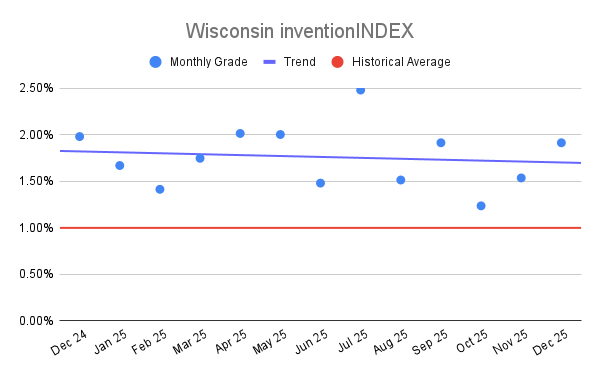 Wisconsin inventionINDEX December 2025
  Wisconsin inventionINDEX Novem
