

What is the Wisconsin R&D Tax Credit for Partners?
The Wisconsin Research and Development (R&D) Tax Credit for partners is a pass-through incentive where the partnership calculates the credit based on qualified research activities within the state, but the tax benefit flows to the individual partners. Partners claim this credit on their personal or corporate returns using Schedule 3K-1. A key feature is the refundable portion, allowing partners to receive up to 25% of the credit as a cash refund if it exceeds their tax liability, subject to specific “lesser of” calculation rules.
In the Wisconsin tax framework, a partner of a partnership is an individual or legal entity holding an ownership interest in a pass-through entity that conducts qualified research within the state. While the partnership performs the research and calculates the credit, the tax benefit flows through to the partner, who then claims it against their personal or corporate tax liability.
The structural legal identity of a partner in this context is defined not by the direct performance of research, but by their pro-rata entitlement to the tax attributes generated by the partnership’s economic activities. Under Wisconsin law, partnerships, limited liability companies (LLCs) treated as partnerships, and tax-option (S) corporations are generally exempt from entity-level income and franchise taxes. Consequently, these entities are prohibited from “claiming” or “using” the research and development (R&D) credit to offset their own tax burdens. Instead, the partnership acts as a computational conduit. It is tasked with the administrative burden of identifying qualified research expenses (QREs) incurred within Wisconsin, applying the statutory formula to determine the credit amount, and then distributing this information to its partners via Schedule 3K-1. For the partner, the credit represents a dual-natured tax asset: a nonrefundable portion that can offset current or future tax liabilities for up to 15 years, and a refundable portion that, as of 2024, allows for a direct cash payment of up to 25% of the current year’s credit. This nuanced relationship ensures that the state’s incentive for innovation reaches the ultimate taxpayers—the partners—thereby lowering their effective cost of capital and encouraging continued investment in the state’s burgeoning technology and manufacturing sectors.
Statutory Foundations and the Pass-Through Mechanism
The Wisconsin research credit is codified under several sections of Chapter 71 of the Wisconsin Statutes, primarily reflecting a bifurcation between individual and corporate claimants. Section 71.07(4k) governs the credit for individuals, including those who are partners in a partnership, while Section 71.28(4) provides the authority for corporations. Despite the different sections, the underlying logic remains consistent: the “claimant” is the person or entity that files a Wisconsin tax return and owes tax, while the “partnership” is the entity that incurs the expenses.
The state’s revenue office guidance clarifies that the eligibility for the credit is determined solely on the basis of the partnership’s activities, not the activities of the individual partners. This is a critical distinction in the law. If a partnership performs qualified research in Wisconsin, a partner residing in another state may still be eligible to claim a portion of that credit on a Wisconsin nonresident or part-year resident return, provided they have Wisconsin-sourced income. However, the law explicitly states that the credit cannot be claimed by a part-year resident or a nonresident of the state in certain specific sub-clauses, though general guidance suggests that for most partnership distributions, the credit follows the income.
The following table outlines the primary statutory provisions governing different types of partners and their respective credit-claiming authority:
| Partner Type | Statutory Authority | Primary Form for Claim |
|---|---|---|
| Individual (Full-year Resident) | Wis. Stat. § 71.07(4k) | Form 1 |
| Individual (Non-resident/Part-year) | Wis. Stat. § 71.07(4k) | Form 1NPR |
| C-Corporation | Wis. Stat. § 71.28(4) | Form 4 or 6 |
| Fiduciary (Estates and Trusts) | Wis. Stat. § 71.07(4k) | Form 2 |
| Tax-Option (S) Corporation Shareholder | Wis. Stat. § 71.07(4k) / § 71.28(4) | Varies by Shareholder |
The Conduit Theory in Practice
The “conduit theory” of taxation applies to the Wisconsin research credit by ensuring that the character of the credit is preserved as it passes from the entity to the owner. When a partnership incurs a dollar of qualified research expense, that expense is transformed into a credit at the entity level through the application of the Wisconsin-specific formula. The partnership then reports each partner’s share of this credit based on their ownership interest at the end of the partnership’s taxable year.
The Department of Revenue (DOR) emphasizes that the partnership itself never “owns” the credit in a way that allows it to reduce its own liability. If a partnership attempts to claim the credit on its own Form 3, the claim will be disallowed. Instead, the partnership must file Schedule R to compute the credit and then issue Schedule 3K-1 to each partner. This administrative sequence is mandatory. A partner cannot simply calculate their own share of the partnership’s expenses and claim the credit; they must receive the official notification of their share from the partnership.
Local State Revenue Office Guidance on Claimants
The Wisconsin Department of Revenue provides extensive guidance through Publication 131, “Tax Incentives for Conducting Qualified Research in Wisconsin,” and the instructions for Schedule R. This guidance identifies the specific parties eligible to claim the credit and those who are excluded.
Eligible Claimants
According to the DOR, the following entities may claim the research credit, including the refundable portion:
- Individuals: Including sole proprietors and partners in a partnership.
- Partners of a Partnership: The primary focus of this analysis, encompassing any person or entity holding an interest in a partnership.
- Shareholders of Tax-Option (S) Corporations: Who receive the credit via Schedule 5K-1.
- Members of Limited Liability Companies (LLCs): Provided the LLC is treated as a partnership or a disregarded entity for tax purposes.
- Corporations: Specifically C-corporations that are partners in a partnership or that conduct research directly.
Prohibited Entities
The DOR is equally explicit about which entities cannot claim the credit:
- Partnerships and LLCs treated as partnerships: These entities compute the credit but do not claim it.
- Tax-Option (S) Corporations: These entities also compute and distribute the credit to shareholders.
There is a narrow exception for taxable years beginning after December 31, 2020. Partnerships and other pass-through entities may elect to claim certain credits at the entity level if the credit results from a contract entered into with the Wisconsin Economic Development Corporation (WEDC) before December 22, 2017. If this election is made, the partners are prohibited from claiming the credit on their own returns. This prevents a “double dip” where both the entity and the partners benefit from the same expenditure.
Defining Qualified Research Expenses (QREs) for the Partner
To understand the value of a partner’s claim, one must look at the underlying expenses identified by the partnership. Wisconsin’s definition of QREs is tethered to Internal Revenue Code (IRC) Section 41, but with a strict geographic limitation. For a partnership expense to qualify, the research must be conducted specifically in Wisconsin.
The Components of QREs
The partnership aggregates three main categories of costs:
- Wages: These are payments to employees for “qualified services.” This includes not just the scientists performing the research, but also the direct supervisors and those providing direct support (e.g., a lab assistant). The DOR follows the federal “80% rule,” which states that if at least 80% of an employee’s services constitute qualified research, then 100% of their wages may be included in the calculation.
- Supplies: Tangible property used in the research process. This excludes land, improvements to land, and depreciable property.
- Contract Research Expenses: Amounts paid to third parties (non-employees) for research performed in Wisconsin on the partnership’s behalf. Generally, only 65% of these expenses are includable. However, if the payment is to a qualified research consortium, the inclusion rate rises to 75%.
| Expense Category | Wisconsin Inclusion Rate | Key Requirement |
|---|---|---|
| In-House Research Wages | 100% | Services performed in Wisconsin. |
| Research Supplies | 100% | Used in research in Wisconsin. |
| Computer Rental/Sharing | 100% | Computer must be in Wisconsin. |
| Contract Research (Standard) | 65% | Research performed in Wisconsin. |
| Research Consortium | 75% | Payments to a Wisconsin-based consortium. |
The Geographic “In-State” Rule
A critical aspect of the partnership’s duty is the exclusion of any research performed outside Wisconsin. Expenses incurred for research in Illinois or Minnesota cannot be part of the Wisconsin credit computation, even if the partnership’s headquarters is in Milwaukee. If a partnership has multi-state operations and cannot precisely track every dollar to a specific state, the DOR allows for a “reasonable allocation” method. This typically involves using the Wisconsin sales factor or a payroll-based allocation to estimate the portion of QREs attributable to Wisconsin.
The Incremental Credit Calculation Methodology
The Wisconsin research credit is designed to reward growth in R&D spending. It is not a credit for the total amount spent, but for the “incremental” increase over a historical base. For a partner, this means the partnership must maintain at least three years of historical data to accurately compute the claim.
The General Research Rate
For most partnerships, the credit is equal to 5.75% of the excess of current-year QREs over a base amount. The base amount is calculated as 50% of the average QREs for the three taxable years immediately preceding the current year.
If a partnership is new and had no QREs in the prior three years, it is considered a “startup” for credit purposes. In this case, the credit rate is reduced to 2.875% of the total current-year QREs. This startup rule provides immediate relief to new ventures that do not yet have a historical spending baseline.
Enhanced Credits for Specialized Industries
Wisconsin law provides significantly higher credit rates for research in specific high-priority areas. These “super” credits follow the same pass-through logic but must be reported on separate Schedules R.
- Internal Combustion Engines: This includes research on the design and manufacture of engines, frames, and related components for motorcycles and other vehicles. The definition is broad, covering fuel cells, electric drives, and hybrid drives as well. The credit rate is 11.5% of the excess QREs (or 5.75% for startups).
- Energy Efficient Products: This applies to research on energy-efficient lighting systems, building automation, and automotive batteries for hybrid vehicles. Like the engine credit, the rate is 11.5% of the excess (or 5.75% for startups).
| Credit Type | Regular Rate (Excess over Base) | Startup Rate (Total QREs) |
|---|---|---|
| General Research | 5.75% | 2.875% |
| Internal Combustion Engines | 11.5% | 5.75% |
| Energy Efficient Products | 11.5% | 5.75% |
Detailed Analysis of the Refundable Portion
One of the most valuable aspects of the Wisconsin research credit for a partner is its refundability. Historically, tax credits were only useful if the taxpayer had a tax liability. For a pre-revenue startup or a partnership experiencing a loss, a nonrefundable credit had no immediate value. The introduction of a refundable portion has transformed the credit into a potential cash infusion.
Evolution of the Refundable Percentage
The percentage of the credit that can be claimed as a refund has increased through successive legislative sessions.
- Before 2018: 0% (100% nonrefundable).
- 2018 – 2020: 10% refundable.
- 2021 – 2023: 15% refundable.
- 2024 and After: 25% refundable.
This 25% refundable option is available to individuals, partners, and corporations, providing significant liquidity.
The “Lesser Of” Rule for Refunds
The computation of the refundable portion is not a flat 25% of the credit. Instead, the partner must follow a specific ordering and calculation rule. The refundable amount is the lesser of:
- 25% of the current year’s research credit.
- The current year’s research credit remaining after the partner has used the credit to offset their Wisconsin tax liability.
This rule ensures that the credit is first used to pay the partner’s taxes. Only the “excess” credit—the portion that didn’t go toward taxes—is eligible for the 25% refund. Furthermore, the DOR mandates that a partner must use any nonrefundable research credit carryforwards from prior years to offset their current tax liability before applying the current year’s credit. This prevents taxpayers from “saving” nonrefundable credits for later and claiming the refund today.
Administrative Compliance: Schedules and Forms
The partnership and the partner have distinct filing requirements that must be harmonized to avoid an audit.
The Partnership’s Responsibility (Form 3 and Schedule R)
The partnership must file a Wisconsin Form 3 (Partnership Return). Attached to this return must be a Schedule R, where the partnership computes the total credit. On Schedule R, the partnership identifies its QREs, calculates the base amount, and determines the tentative credit for the year.
If the partnership received a credit from a lower-tier entity (another partnership in which it owns an interest), it reports this on Line 15 of Schedule R. The partnership then moves these total amounts to the partners’ individual Schedule 3K-1s.
The Partner’s Responsibility (Schedule 3K-1 and Schedule R)
The partner receives the Schedule 3K-1, which provides the following data points:
- The partner’s share of the research credit (nonrefundable and refundable portions).
- The partnership’s FEIN and name.
The partner then completes their own Schedule R and attaches it to their personal or corporate return (e.g., Form 1 or Form 4). On this Schedule R, the partner enters the amount from the 3K-1 on Line 15. The partner then proceeds to calculate their own refundable portion based on their specific tax liability for the year.
Reporting the Credit as Income
A unique and often overlooked requirement of the Wisconsin research credit is that the credit itself is considered taxable income. The partner must report the total credit computed on their Schedule R as “other income” on their Wisconsin return in the year it is computed. This prevents a double tax benefit where the partnership deducts the R&D expenses as business costs and the partner also receives a tax credit for the same dollar spent.
Interaction with Combined Group Members
In the corporate world, many partners are members of a “combined group”—a collection of related corporations that file a single Wisconsin return. The research credit has specific rules in this context.
Generally, credits are attributes of the separate corporation (the partner) rather than the combined group. However, Section 71.255(6)(c) allows members of a combined group to “share” certain nonrefundable research credits. A corporation is not required to share its credits, but if it does, it can only share them with group members that were part of the same combined group in the year the credit originated. This sharing rule does not apply to the refundable portion of the credit, which remains an attribute of the specific claimant that generated it.
For combined groups, QREs are modified so that research funded by one group member and performed by another is considered a QRE of the member performing the research. This ensures that the credit remains tied to the entity actually conducting the innovation and maintaining the Wisconsin-based staff.
Consistency Requirements and Adjustments
The partner’s credit is highly sensitive to the partnership’s historical data. If the partnership’s base-period QREs are incorrect, the entire credit claim can be invalidated.
The Consistency Requirement
Both federal and state law require that the QREs used to determine the base amount must be determined on a basis consistent with the determination of QREs for the current taxable year. For example, if the partnership changes how it tracks research wages in 2024, it must go back and adjust its 2021, 2022, and 2023 figures to use that same methodology. This “apples-to-apples” comparison ensures that the credit only rewards a genuine increase in research activity rather than a change in accounting practices.
Adjustments for Business Changes
If a partnership undergoes a major structural change, such as acquiring or disposing of a portion of its business, adjustments must be made to the historical QREs.
- Acquisitions: If a partnership buys a company that had its own R&D history, the partnership must add that company’s historical QREs to its own base amount.
- Dispositions: If a partnership sells a division, it must subtract the QREs of that division from its historical base.
Additionally, for any “short taxable year” (a tax year covering less than 12 months), the partnership must annualize its QREs. This prevents a partner from receiving an unfairly large credit simply because the “current year” was only six months long while the base period was 36 months long.
Example: Partnership R&D Credit Distribution and Partner Claim
To illustrate the interplay of these rules, consider a hypothetical Wisconsin partnership, “Titan Tech Solutions,” and its individual partner, Sarah, who owns a 50% interest.
Step 1: Titan Tech Solutions Computes the Credit (Schedule R)
Titan Tech is a startup that began research in 2023. It conducts general research in Madison, Wisconsin.
- 2024 (Current Year) QREs: $200,000 (Wages and Supplies in Wisconsin).
- 2023 QREs: $100,000.
- 2022 QREs: $0.
- 2021 QREs: $0.
Base Amount Calculation:
Average of 3 prior years = $(100,000 + 0 + 0) / 3 = 33,333$.
Wisconsin Base Amount = $50% \times 33,333 = 16,666.50$.
Tentative Credit Calculation:
Excess QREs = $200,000 – 16,666.50 = 183,333.50$.
Total Partnership Credit = $183,333.50 \times 5.75% = 10,541.68$.
Step 2: Sarah Receives Her 3K-1
Sarah receives a Schedule 3K-1 from Titan Tech showing her 50% share of the credit.
Sarah’s Share = $10,541.68 \times 0.50 = 5,270.84$.
Step 3: Sarah Files Her Form 1 and Schedule R
Sarah has a 2024 Wisconsin tax liability of $3,000 before credits. She has a nonrefundable research credit carryforward from 2022 of $500$.
Ordering of Credits:
Prior Year Carryforward: Sarah applies her $500 carryforward first.
- Remaining Tax Liability: $3,000 – 500 = 2,500$.
Current Year Credit Offset: Sarah applies her current $5,270.84 credit to the remaining tax.
- Tax Liability is reduced to $0.
- Remaining Current Year Credit: $5,270.84 – 2,500 = 2,770.84$.
Refundable Portion Calculation:
1. Sarah computes the 25% maximum refundable limit: $5,270.84 \times 0.25 = 1,317.71$.
2. Sarah identifies her remaining credit: $2,770.84$.
3. Sarah’s Refund is the lesser of these two: $1,317.71$.
Carryforward to 2025:
Any credit Sarah didn’t use to pay tax or receive as a refund is carried forward for 15 years.
Carryforward = $2,770.84 – 1,317.71 = 1,453.13$.
| Item | Calculation Step | Result |
|---|---|---|
| Sarah’s Total Credit | $5,270.84 \times 50\%$ | $5,270.84$ |
| Tax Liability Offset | (After applying $500$ carryover) | $2,500.00$ |
| Max Refundable Cap | $5,270.84 \times 25\%$ | $1,317.71$ |
| Actual Refund Paid | Lesser of $2,770.84$ or $1,317.71$ | $1,317.71$ |
| Unused Carryforward | $2,770.84 – 1,317.71$ | $1,453.13$ |
Audit and Verification: The Four-Part Test
A partner’s claim is subject to verification by the Wisconsin DOR, which may coordinate with the WEDC for certain credit programs. To withstand an audit, the partnership’s research must meet the “Four-Part Test” derived from IRC Section 41 and incorporated into Wisconsin’s administrative code.
Section 174 (Elimination of Uncertainty)
The activity must be intended to discover information that would eliminate uncertainty concerning the development or improvement of a product or process. Uncertainty exists if the information available to the partnership does not establish the capability or method for developing the business component, or the appropriate design of that component.
Technological in Nature
The research must rely on the principles of the “hard sciences,” such as engineering, physics, chemistry, biology, or computer science. This excludes activities based on social sciences, economics, or humanities.
Business Component Test
The purpose of the research must be to create a new or improved “business component,” which is defined as any product, process, computer software, technique, formula, or invention to be held for sale, lease, or license, or used by the partnership in its trade or business. For manufacturers, this often includes improvements to manufacturing facilities or production processes.
Process of Experimentation
Substantially all (at least 80%) of the activities must constitute a process of experimentation. This involves the identification of uncertainty, the evaluation of alternatives (through modeling, simulation, or trial and error), and the refinement of a hypothesis.
Activities specifically excluded from the credit, which a partner should ensure are not in the partnership’s computation, include:
- Post-production activities and quality control testing.
- Aesthetic or cosmetic changes.
- Consumer surveys and management studies.
- Research conducted outside the United States (and for Wisconsin, outside the state).
- The acquisition of another person’s patent or model.
Economic Implications of the Credit for Partnerships
The Wisconsin research credit serves as a vital economic tool for the state, intended to incite private sector R&D investments by lowering the after-tax cost of innovation. Legislative reports indicate that the research credit was not available under individual income tax until 2013, but since its introduction, it has seen explosive growth. Between 2013 and 2019, credits claimed on individual returns (which include most partners in partnerships) grew by over 380%.
The shift toward refundability is particularly significant for Wisconsin’s manufacturing and biotech sectors. By allowing partners to receive up to 25% of their current year’s credit as a refund, the state provides “immediate liquidity” for R&D-heavy firms that may be operating at a loss while developing new technologies. This policy recognizes the “spillover effect” of R&D—the idea that the knowledge created by one partnership often reduces the costs for other firms and creates broader societal benefits that the partnership cannot capture through sales alone.
Final Thoughts
For a partner of a partnership, the Wisconsin research credit is a powerful yet complex tax incentive that requires meticulous coordination between the entity and the individual claimant. The partnership’s role is purely administrative and computational, while the partner’s role is that of the statutory claimant. By understanding the “in-state” requirement for expenses, the nuances of the 25% refundable computation, and the necessity of reporting the credit as income, partners can ensure they are fully utilizing this benefit while remaining in compliance with DOR guidance. As Wisconsin continues to increase the refundable portion of the credit, it solidifies its position as a competitive environment for innovation-driven partnerships and the entrepreneurs who fund them.
Who We Are:
Swanson Reed is one of the largest Specialist R&D Tax Credit advisory firm in the United States. With offices nationwide, we are one of the only firms globally to exclusively provide R&D Tax Credit consulting services to our clients. We have been exclusively providing R&D Tax Credit claim preparation and audit compliance solutions for over 30 years. Swanson Reed hosts daily free webinars and provides free IRS CE and CPE credits for CPAs.
Are you eligible?

Why choose us?

Pass an Audit?

What is the R&D Tax Credit?
The Research & Experimentation Tax Credit (or R&D Tax Credit), is a general business tax credit under Internal Revenue Code section 41 for companies that incur research and development (R&D) costs in the United States. The credits are a tax incentive for performing qualified research in the United States, resulting in a credit to a tax return. For the first three years of R&D claims, 6% of the total qualified research expenses (QRE) form the gross credit. In the 4th year of claims and beyond, a base amount is calculated, and an adjusted expense line is multiplied times 14%. Click here to learn more.
Never miss a deadline again

Stay up to date on IRS processes

Discover R&D in your industry

R&D Tax Credit Preparation Services
Swanson Reed is one of the only companies in the United States to exclusively focus on R&D tax credit preparation. Swanson Reed provides state and federal R&D tax credit preparation and audit services to all 50 states.
If you have any questions or need further assistance, please call or email our CEO, Damian Smyth on (800) 986-4725.
Feel free to book a quick teleconference with one of our national R&D tax credit specialists at a time that is convenient for you.
R&D Tax Credit Audit Advisory Services
creditARMOR is a sophisticated R&D tax credit insurance and AI-driven risk management platform. It mitigates audit exposure by covering defense expenses, including CPA, tax attorney, and specialist consultant fees—delivering robust, compliant support for R&D credit claims. Click here for more information about R&D tax credit management and implementation.
Our Fees
Swanson Reed offers R&D tax credit preparation and audit services at our hourly rates of between $195 – $395 per hour. We are also able offer fixed fees and success fees in special circumstances. Learn more at https://www.swansonreed.com/about-us/research-tax-credit-consulting/our-fees/



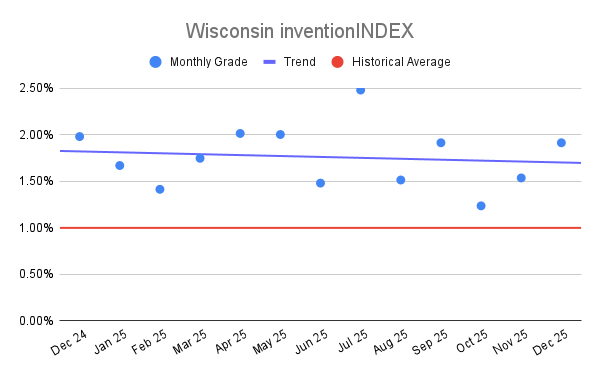 Wisconsin inventionINDEX December 2025
  Wisconsin inventionINDEX Novem
