

What are Wisconsin Qualified Research Expenses (QREs)?
Wisconsin Qualified Research Expenses (QREs) are defined as the sum of in-state wages, supplies, and contract research costs incurred during the pursuit of technological innovation. Unlike the federal credit, Wisconsin strictly requires that all underlying research activities be conducted within the state borders. Key categories include qualified wages for employees directly performing or supervising research, supplies consumed during experimentation, and contract research (with 100% inclusion for payments to eligible small businesses and universities). The credit calculation often decouples from federal IRC Section 174 rules, allowing for immediate expensing of research costs.
Strategic Analysis of Qualified Research Expenses within the Wisconsin Research and Development Tax Credit Framework
Qualified research expenses in Wisconsin are defined as the sum of in-state wages, supplies, and contract research costs incurred during the pursuit of technological innovation. These expenses must align with federal standards under Internal Revenue Code Section 41 while strictly adhering to the geographic requirement that all underlying research activities occur within the borders of the state.
The Wisconsin Research and Development (R&D) tax credit serves as a cornerstone of the state’s fiscal policy aimed at incentivizing high-value industrial activities and fostering a culture of innovation. To navigate the complexities of this credit, tax professionals and corporate leaders must understand that the Wisconsin Department of Revenue (DOR) employs a system of selective conformity to the federal Internal Revenue Code (IRC). This means that while the core definition of what constitutes research is borrowed from federal law, the state has purposefully diverged in several critical areas—most notably in its geographic nexus requirements and its treatment of research and experimental expenditures under IRC Section 174. The meaning of Qualified Research Expenses (QREs) in Wisconsin is thus not merely a subset of federal QREs, but a distinct category of expenditure that requires dedicated tracking, substantiation, and strategic planning.
The Statutory Foundation of Wisconsin Research Credits
The legal authority for Wisconsin’s research credits is found in several sections of the Wisconsin Statutes, primarily § 71.07(4k) for individuals and fiduciary entities, § 71.28(4) for corporations, and § 71.47(4) for insurance companies. These statutes establish the framework for the “Research Credit for Increasing Research,” which is the state’s primary mechanism for rewarding incremental growth in R&D investment.
Historically, Wisconsin has maintained a stable environment for these credits, though recent legislative sessions have introduced significant enhancements to their refundability. The state’s approach to the IRC is characterized by a “frozen” conformity date, currently set to the Code as it existed on December 31, 2022. However, the state legislature frequently acts to decouple from specific federal provisions that it deems contrary to the state’s economic interests.
Decoupling from the Tax Cuts and Jobs Act (TCJA)
Perhaps the most significant development in recent years is Wisconsin’s decision to decouple from the federal changes to IRC Section 174. Under the federal TCJA of 2017, beginning in the 2022 tax year, businesses were required to capitalize and amortize research and experimental expenditures over five years for domestic research and fifteen years for foreign research, rather than deducting them immediately. Wisconsin, recognizing the potential drag this would place on its manufacturing and biotech sectors, did not adopt Section 13206 of Public Law 115-97.
This decoupling creates a divergence in the tax base: for Wisconsin purposes, taxpayers may still follow the pre-2022 federal rules, allowing for the full expensing of research costs in the year they are incurred. This means that a “Wisconsin Modification” is often necessary on the state return to account for the difference between federal amortization and state expensing. This favorable treatment reinforces the value of the QRE definition in Wisconsin, as it permits both an immediate deduction and a credit for the same dollar of expenditure.
Defining the Qualitative Scope of Qualified Research
For an expense to be considered a QRE, the activity to which it relates must first meet the federal definition of “qualified research” under IRC Section 41(d). This is often referred to as the “Four-Part Test,” and the Wisconsin DOR provides extensive guidance in Publication 131 and Schedule R instructions to ensure taxpayers apply these criteria correctly within the state context.
The Four-Part Test in a Wisconsin Context
The application of the Four-Part Test requires a rigorous project-by-project analysis to ensure that only activities with a high degree of technical uncertainty and systematic experimentation are included.
| Test Component | Objective and Application |
|---|---|
| Permitted Purpose | The activity must relate to a new or improved business component’s function, performance, reliability, or quality. It cannot be for aesthetic or cosmetic improvements. |
| Elimination of Uncertainty | The researcher must seek to resolve uncertainty regarding the capability or method for developing the component, or its appropriate design. |
| Process of Experimentation | The activity must involve a systematic evaluation of alternatives, such as trial and error, modeling, or simulation, to resolve the technical uncertainty. |
| Technological in Nature | The process must fundamentally rely on the principles of physical or biological sciences, engineering, or computer science. |
Activities that fail this test—such as post-production quality control, routine data collection, or research in the social sciences—are strictly excluded from the QRE definition.
Quantitative Analysis of Qualified Research Expense Categories
Once the research activity is qualified, the taxpayer must identify the specific costs associated with that activity. Wisconsin recognizes four primary categories of QREs: wages, supplies, computer rental/lease costs, and contract research.
Qualified Wages (In-House Research)
Wages typically constitute the most substantial portion of a Wisconsin R&D claim. The state defines “wages” by referencing IRC Section 3401(a), which generally covers all remuneration for services performed by an employee, including bonuses and the exercise of certain stock options, provided they are reported in Box 1 of federal Form W-2.
However, the inclusion of these wages is limited to “qualified services.” Wisconsin follows the federal three-tier definition of qualified services:
- Directly Performing Research: The actual “hands-on” work of experimentation.
- Directly Supervising Research: The immediate management of researchers, but not general high-level corporate supervision.
- Directly Supporting Research: Activities like lab maintenance, prototype construction, or the specialized cleaning of research environments.
A vital administrative rule in Wisconsin is the “Substantially All” rule: if an employee spends at least 80% of their time on qualified services, 100% of their W-2 wages may be included as QREs. If they spend less than 80%, only the actual percentage of time spent on qualified activities is includable.
Qualified Supplies
Supplies include any tangible property—other than land, improvements to land, or depreciable property—that is used in the conduct of qualified research in Wisconsin. This encompasses raw materials used in the construction of prototypes, chemical reagents, and even extraordinary expenditures for utilities (such as electricity or gas) if the research requires significant non-routine consumption. The DOR emphasizes that these items must be “consumed or destroyed” during the research process to qualify.
Rental or Lease of Computers
This category historically applied to the leasing of mainframe time, but in the modern digital economy, the Wisconsin DOR increasingly acknowledges its application to cloud computing and hosting services. If a company pays for dedicated server space or cloud-based processing power to run simulations or develop new software architecture, these costs can be included, provided the hardware is used for qualified research in Wisconsin.
Contract Research Expenses
Contract research occurs when a taxpayer pays a third party to perform research on its behalf. Under general federal and Wisconsin rules, only 65% of these payments are considered QREs, reflecting the administrative assumption that a portion of the contractor’s fee covers overhead and profit.
Wisconsin, however, provides a strategic advantage through its modification of IRC Section 41(b)(3)(D)(i), which allows for different inclusion rates based on the nature of the contractor:
| Contractor Type | Wisconsin Inclusion Percentage |
|---|---|
| Standard Third-Party Contractor | 65% |
| Qualified Research Consortium | 75% |
| Eligible Small Business | 100% |
| University or Federal Laboratory | 100% |
The 100% inclusion rate for small businesses and universities is a unique feature of Wisconsin law designed to encourage corporate-academic partnerships within the state’s borders. To qualify, the taxpayer must bear the “economic risk” of the research (meaning they must pay even if the research fails) and must retain “substantial rights” to the research results.
The Geographic Nexus: “Conducted in This State”
The most defining characteristic of a Wisconsin QRE is its geographic limitation. Unlike the federal credit, which allows for expenses incurred anywhere in the United States, Wisconsin statutes explicitly state that “qualified research expenses” include only expenses incurred for research “conducted in this state”.
Sourcing Mechanics for Multi-State Entities
For businesses with operations spanning multiple states, this requirement necessitates a rigorous “sourcing” process. Wages must be allocated based on the physical location where the employee performed the work. If a Madison-based engineer spends 20% of their time at a testing facility in Illinois, 20% of their wages must be excluded from the Wisconsin QRE calculation, even if those wages are fully qualified for the federal credit.
| Expense Category | Sourcing Rule for Wisconsin QREs |
|---|---|
| Wages | Sourced to the location of the employee’s physical presence while performing qualified services. |
| Supplies | Sourced to the location where the supplies are physically used or consumed in research. |
| Computer Lease | Sourced to the location of the taxpayer’s research facility using the computing power. |
| Contract Research | Sourced to the location where the contractor physically performs the research. |
If costs are incurred across multiple locations and cannot be directly traced, the DOR allows for a “reasonable allocation” method. However, the DOR cautions that expenses incurred entirely outside Wisconsin—even if for the benefit of a Wisconsin project—cannot be allocated to the state.
Remote Workers and Remote Research
The rise of the remote workforce presents a unique challenge for Wisconsin R&D compliance. Under current DOR guidance, if an employee is physically working from a home office in another state, their wages generally cannot be included as Wisconsin QREs, regardless of the employer’s location. Conversely, a remote worker physically located in Wisconsin performing research for a California-based company could generate Wisconsin QREs for that company, provided the company is subject to Wisconsin’s tax jurisdiction.
Sector-Specific Credits and Enhanced Rates
Wisconsin’s legislative intent to preserve its industrial base is most evident in its tiered credit system. While the general “Research Credit for Increasing Research” carries a rate of 5.75%, the state provides an enhanced rate of 11.5% for two specific sectors: internal combustion engines and certain energy-efficient products.
The Internal Combustion Engine Credit
This tier targets Wisconsin’s historic strength in engine manufacturing. The 11.5% rate applies to QREs incurred for research related to designing internal combustion engines for “vehicles”. The statutory definition is remarkably broad, ensuring the credit remains relevant as technology evolves.
The term “internal combustion engine” specifically includes substitute products such as:
- Fuel cell drives
- Electric drives
- Hybrid drives
Furthermore, the definition of a “vehicle” extends beyond traditional automobiles to include motorcycles, snowmobiles, all-terrain vehicles, boats, personal watercraft, generators, and even aircraft. This ensures that a wide array of Wisconsin manufacturers, from small-engine producers to aerospace contractors, can access the enhanced rate.
The Energy Efficient Product Credit
Similarly, an 11.5% rate is available for research related to the design and manufacturing of products that significantly reduce energy consumption. This includes:
- High-efficiency lighting systems
- Building automation and control systems
- Automotive batteries for hybrid-electric vehicles
To claim these enhanced rates, taxpayers must go beyond the standard Four-Part Test and prove that their business component specifically fits these statutory definitions.
Calculation Methodology: The Wisconsin ASC Approach
Wisconsin utilizes a calculation method that closely mirrors the federal Alternative Simplified Credit (ASC), focusing on the increase in QREs over a rolling three-year base period.
The Base Amount Formula
The credit is computed based on the “excess” QREs, which are defined as the current year’s Wisconsin QREs minus a “base amount”. The base amount is calculated as follows:
$$Base Amount = 50\% \times \left( \frac{QRE_{n-1} + QRE_{n-2} + QRE_{n-3}}{3} \right)$$
Where $QRE_{n-x}$ represents the Wisconsin QREs for the three taxable years immediately preceding the current year. If the taxpayer had no QREs in one or more of those prior years, the base amount is effectively zero for the years without expenses, but the average is still calculated over three years.
Startup Provisions
Recognizing that new companies may not have a three-year history, Wisconsin provides “startup” rates. If a claimant had no Wisconsin QREs in any of the three preceding years, the credit is a flat percentage of the current year’s QREs:
| Research Category | Startup Rate (No Prior QREs) |
|---|---|
| General Research | 2.875% of Current QREs |
| Engines / Energy Efficiency | 5.75% of Current QREs |
Once a company has at least one year of QRE history, it must transition to the standard calculation, which often results in a higher credit as the 50% base amount floor is lower than the flat startup rate in high-growth scenarios.
Evolution of Refundability: A New Liquidity Tool
For decades, the Wisconsin research credit was strictly non-refundable, meaning it could only be used by profitable companies to lower their tax bills to zero. This limited its utility for early-stage biotech and technology startups that often incur significant R&D costs long before they achieve profitability.
Beginning in 2018, the Wisconsin legislature began a phased implementation of refundability, culminating in the current 25% refund provision.
The Refundable Portion Calculation
The refundable portion of the credit is not a separate credit, but a feature of the standard research credit. It is calculated as the lesser of:
- The specified percentage of the total credit computed for the current year.
- The portion of the current year’s credit that was not used to offset the current year’s tax liability.
| Taxable Years Beginning On or After | Refundable Percentage |
|---|---|
| January 1, 2018 | 10% |
| January 1, 2021 | 15% |
| January 1, 2024 | 25% |
Any portion of the credit that is not refunded can be carried forward for 15 years to offset future tax liabilities. This “dual-track” system allows companies to receive immediate cash for a quarter of their credit while banking the rest for future profitability.
Administrative Compliance and Combined Reporting
Filing for the Wisconsin R&D credit requires significant administrative rigor, particularly for corporations that are members of a “combined group” under Wisconsin’s unitary business rules.
Schedule R and Supplemental Forms
All claimants must file Wisconsin Schedule R, “Wisconsin Research Credits,” with their tax return. This form is used to:
- Report the current year’s in-state wages, supplies, and contract research.
- Document the three-year history of QREs to calculate the base amount.
- Compute the current year’s credit at the appropriate rate (5.75% or 11.5%).
- Calculate the refundable portion and the carryforward amount.
Combined Group Sharing Rules
In Wisconsin, corporations that are part of a commonly controlled group and engaged in a unitary business must file a combined report. The research credit is first applied to the tax liability of the member that generated the credit. If that member has excess credit, it may be “sharable” with other members of the group, provided the member was part of the combined group in the year the credit originated.
However, there is a critical distinction between “sharable” and “non-sharable” credits:
- Sharable Credits: Generally, research credits computed on Schedule R for the current year or carried forward from years when the entity was a member of the same combined group.
- Non-Sharable Credits: Credits generated before the entity joined the combined group or during years when the group was not unitary.
Furthermore, for tax years beginning on or after December 15, 2027, the state will implement a cumulative statewide refund limit of $25 million per year for shared research credits. This suggests that large corporate groups must engage in proactive tax planning to ensure they maximize their credit utilization before these caps take effect.
Recordkeeping and Audit Defense Strategies
Given the high value of the R&D credit and the shift toward refundability, the Wisconsin DOR has increased its scrutiny of claims. Taxpayers must be prepared to defend their QREs under audit by providing contemporaneous documentation that bridges the gap between accounting records and technical activities.
Quantitative Substantiation
The auditor’s first step is often to reconcile the QREs reported on Schedule R to the company’s general ledger and payroll records.
- Wages: Taxpayers should maintain W-2s and payroll registers, but more importantly, they must have “Time Tracking Data” or “Time Questionnaires” that identify the specific percentage of time each employee spent on qualified vs. non-qualified activities.
- Supplies: Invoices and purchase orders must be retained. For large-scale manufacturing research, the company should be able to show that the supplies were used in a “Research & Development” cost center or specifically for a prototype build.
- Contract Research: Taxpayers must produce executed contracts that clearly delineate the “rights and risks” associated with the work. The contract must explicitly state that the taxpayer owns the resulting intellectual property and is liable for payment regardless of the research outcome.
Qualitative Substantiation (The Technical Narrative)
The technical defense of the credit relies on proving that the research met the Four-Part Test. The DOR increasingly looks for:
- Innovation Logs: Project-level documentation that describes the technical challenge, the hypotheses tested, and the results of experimentation.
- Design Records: Early-stage sketches, CAD models, or software architecture diagrams that demonstrate the “process of experimentation”.
- Test Results: Lab reports, error logs (such as JIRA records for software), or field testing data that prove the taxpayer was attempting to resolve technical uncertainty.
Without these records, the DOR may disallow the credit even if the accounting records are perfect, as they cannot verify the “Qualified Research” status of the underlying activity.
Comprehensive Case Study: Wisconsin Bio-Engineered Propulsion Systems (WBEPS)
To illustrate the application of these rules, consider “WBEPS,” a fictional mid-sized corporation based in Waukesha, Wisconsin. WBEPS develops advanced hydrogen-based propulsion systems for maritime vehicles (boats) and industrial generators.
2025 Financial Data
In 2025, WBEPS records the following expenditures:
- Internal R&D Salaries: $2,500,000 for 25 engineers located in Waukesha.
- Remote Engineering: $500,000 for 5 engineers living and working in Michigan.
- Testing Supplies: $400,000 for hydrogen fuel, specialized sensor arrays, and prototype components.
- University Partnership: $200,000 paid to the University of Wisconsin-Milwaukee for a combustion efficiency study.
- Independent Contractor: $100,000 paid to a local software firm for a general UI/UX interface for the engine’s control panel.
Identification of Wisconsin QREs
- Wages: Only the $2,500,000 for the Waukesha engineers qualifies. The Michigan salaries are excluded because the research was not “conducted in this state”.
- Supplies: The full $400,000 qualifies as the materials were consumed in Waukesha for qualified engine research.
- Contract Research (University): Because the contractor is a Wisconsin university, WBEPS can include 100% of the $200,000.
- Contract Research (Independent): The $100,000 for UI/UX is excluded entirely. UI/UX (user interface/experience) is considered an aesthetic or cosmetic improvement and does not meet the “Permitted Purpose” of improving the engine’s core function or reliability.
Total 2025 Wisconsin QREs: $2,500,000 (Wages) + $400,000 (Supplies) + $200,000 (Contract) = $3,100,000.
Calculation of the Base Amount
Assume WBEPS has the following history of Wisconsin QREs:
- 2024: $2,800,000
- 2023: $2,400,000
- 2022: $2,000,000
- Three-Year Average: $(2.8M + 2.4M + 2.0M) / 3 = \$2,400,000$.
- Base Amount: $50\% \times \$2,400,000 = \mathbf{\$1,200,000}$.
Determining the Credit Rate
Because WBEPS is researching hydrogen-based propulsion (a “substitute product” for an internal combustion engine) for maritime “vehicles,” the 11.5% enhanced rate applies.
- Excess QREs: $3,100,000 – 1,200,000 = \$1,900,000$.
- Current Year Credit: $1,900,000 \times 11.5\% = \mathbf{\$218,500}$.
Refundability and Liability Offset
WBEPS has a 2025 Wisconsin tax liability of $100,000.
- Offset Liability: The credit first reduces the $100,000 tax bill to zero.
- Remaining Credit: $218,500 – 100,000 = \$118,500.
- Maximum Refundable Portion: $218,500 \times 25\% = \$54,625.
- Actual Refund: The lesser of the remaining credit ($118,500) or the maximum refundable portion ($54,625). WBEPS receives a refund of $54,625.
- Carryforward: $118,500 – 54,625 = \mathbf{\$63,875}$ available to offset tax in 2026 and beyond.
Summary of Findings and Strategic Outlook
The meaning of Qualified Research Expenses in Wisconsin is inextricably linked to the state’s broader economic objective of maintaining its status as a manufacturing and technical hub. By adopting a definition of QREs that favors in-state physical presence, the state ensures that the tax benefits it provides are recycled back into the local economy through high-paying engineering jobs and partnerships with Wisconsin’s educational institutions.
For practitioners, the primary takeaways from current DOR guidance and statutory law are:
- Geography is Absolute: The “conducted in this state” rule is the most frequent point of failure in Wisconsin R&D claims. Rigorous sourcing of wages and contract research is non-negotiable.
- Conformity is Selective: The decoupling from IRC Section 174 amortization is a significant boon for Wisconsin taxpayers, allowing for immediate state-level cash benefits even as federal tax burdens increase.
- Refundability Drives Strategy: The 25% refundability makes the credit a valuable liquidity tool, not just a tax reduction. This changes the return on investment (ROI) calculation for R&D projects in Wisconsin.
- Documentation is the Defense: As the credit rates and refundability increase, so too will the depth of DOR audits. Success in claiming Wisconsin QREs depends as much on the quality of the technical innovation log as it does on the accuracy of the general ledger.
As Wisconsin enters the second half of the 2020s, the R&D tax credit remains its most potent weapon in the regional competition for innovation. By understanding the nuances of the QRE definition—from the 100% university inclusion rule to the broad definition of “vehicles” for engine research—Wisconsin businesses can maximize their fiscal incentives while driving the state toward a more technologically advanced future.
Who We Are:
Swanson Reed is one of the largest Specialist R&D Tax Credit advisory firm in the United States. With offices nationwide, we are one of the only firms globally to exclusively provide R&D Tax Credit consulting services to our clients. We have been exclusively providing R&D Tax Credit claim preparation and audit compliance solutions for over 30 years. Swanson Reed hosts daily free webinars and provides free IRS CE and CPE credits for CPAs.
Are you eligible?

Why choose us?

Pass an Audit?

What is the R&D Tax Credit?
The Research & Experimentation Tax Credit (or R&D Tax Credit), is a general business tax credit under Internal Revenue Code section 41 for companies that incur research and development (R&D) costs in the United States. The credits are a tax incentive for performing qualified research in the United States, resulting in a credit to a tax return. For the first three years of R&D claims, 6% of the total qualified research expenses (QRE) form the gross credit. In the 4th year of claims and beyond, a base amount is calculated, and an adjusted expense line is multiplied times 14%. Click here to learn more.
Never miss a deadline again

Stay up to date on IRS processes

Discover R&D in your industry

R&D Tax Credit Preparation Services
Swanson Reed is one of the only companies in the United States to exclusively focus on R&D tax credit preparation. Swanson Reed provides state and federal R&D tax credit preparation and audit services to all 50 states.
If you have any questions or need further assistance, please call or email our CEO, Damian Smyth on (800) 986-4725.
Feel free to book a quick teleconference with one of our national R&D tax credit specialists at a time that is convenient for you.
R&D Tax Credit Audit Advisory Services
creditARMOR is a sophisticated R&D tax credit insurance and AI-driven risk management platform. It mitigates audit exposure by covering defense expenses, including CPA, tax attorney, and specialist consultant fees—delivering robust, compliant support for R&D credit claims. Click here for more information about R&D tax credit management and implementation.
Our Fees
Swanson Reed offers R&D tax credit preparation and audit services at our hourly rates of between $195 – $395 per hour. We are also able offer fixed fees and success fees in special circumstances. Learn more at https://www.swansonreed.com/about-us/research-tax-credit-consulting/our-fees/



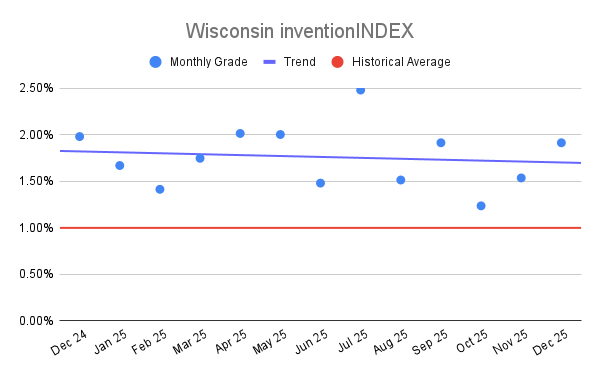 Wisconsin inventionINDEX December 2025
  Wisconsin inventionINDEX Novem
