

A “taxable year” for the purposes of the Wisconsin research credit is the annual accounting period—typically a calendar or fiscal year—used to compute a taxpayer’s federal income tax. This period serves as the critical temporal boundary for identifying Qualified Research Expenses (QREs) incurred within Wisconsin and for establishing the three-year historical base used to calculate incremental credit amounts. Specialized rules apply for 52-53 week filers and short taxable years resulting from business changes.
A taxable year, for purposes of the Wisconsin research credit, is the annual accounting period—typically a calendar or fiscal year—upon which a taxpayer’s federal income tax is computed. It serves as the primary temporal boundary for identifying qualified research expenses incurred in Wisconsin and for establishing the three-year historical base used to calculate incremental credit amounts.
Core Analysis of the Taxable Year Definition
The foundational definition of a taxable year within the Wisconsin tax code is inherently derivative of federal tax law, yet it is applied with specific state-level modifications that have profound implications for the Research and Development (R&D) tax credit. Under Wisconsin Statutes Section 71.02(12) for individuals and fiduciaries, and Section 71.22(10) for corporations, “taxable year” is defined as the taxable period upon the basis of which the taxable income of the taxpayer is computed for federal income tax purposes. This statutory anchor ensures that for the vast majority of taxpayers, the state tax reporting period remains synchronized with the federal period, whether that be a standard twelve-month calendar year, a fiscal year ending on the last day of a month other than December, or a 52-53 week period.
For those taxpayers utilizing the 52-53 week accounting method—common in retail and manufacturing sectors where weekly cycles are paramount—the Wisconsin statute provides a specific closing rule. The taxable year for these entities is deemed to end on the last day of the month closest to the end of the 52-53 week period. This precision is not merely an administrative convenience; it defines the “cutoff” for when qualified research expenses (QREs) are considered “incurred” for a given credit claim. In the context of the Wisconsin research credit, the taxable year serves as the “container” for all eligible expenditures, including in-house wages, supplies, and contract research costs, which must be performed within the state’s borders during that specific period.
Furthermore, the taxable year is the pivot point for calculating the franchise tax, which is the primary tax against which the research credit is applied for corporations. For the privilege of doing business in Wisconsin, corporations pay a franchise tax measured by their Wisconsin net income of the preceding taxable year. This lookback mechanism creates a continuous cycle of reporting where the research activities of one taxable year directly impact the tax liability and credit availability of the subsequent period. The definition also extends to “related entities,” which are identified based on their relationship to the taxpayer during all or any portion of the taxpayer’s taxable year, influencing how expenses are aggregated or shared among controlled groups.
Comparative Statutory Definitions of Taxable Year by Entity Type
| Entity Category | Governing Statute | Definition Source | Treatment of 52-53 Week Periods |
|---|---|---|---|
| Individuals and Fiduciaries | Wis. Stat. § 71.02(12) | Federal Income Tax Basis | Ends on the last day of the month closest to the 52-53 week end. |
| Corporations | Wis. Stat. § 71.22(10) | Federal Income Tax Basis | Ends on the last day of the month closest to the 52-53 week end. |
| Combined Groups | Wis. Admin. Code Tax 2.61 | Member-Specific Basis | Each member determines its own credit based on its own taxable year. |
| Insurance Companies | Wis. Stat. § 71.45 | Federal/Statutory Hybrid | Modified by specific provisions of Subchapter VII. |
Integration with the Research Expense Credit Mechanism
The Wisconsin research credit, primarily codified in Wisconsin Statutes Section 71.28(4) for corporations and Section 71.07(4k) for individuals, is an incremental credit modeled on Section 41 of the Internal Revenue Code (IRC). The “taxable year” is the fundamental unit for the two main components of the credit calculation: the current year’s qualified research expenses and the “base amount”.
The Three-Year Taxable Year Lookback
The Wisconsin credit is designed to reward growth in research investment. Consequently, the law requires a comparison between the research performed in the “current” taxable year and the average research performed in the “three taxable years immediately preceding” the current year. For taxable years beginning after December 31, 2014, the credit is generally equal to 5.75% of the amount by which the current year’s QREs exceed 50% of the average QREs from the prior three taxable years.
The reliance on the “prior three taxable years” necessitates that taxpayers maintain consistent records across these periods. If a taxpayer has a short taxable year in its history—perhaps due to a change in accounting period—that short year still constitutes one of the “three taxable years,” but its expenses must be annualized to prevent an artificial lowering of the base amount. This ensures that the incremental nature of the credit remains intact, comparing apples to apples across different temporal lengths.
Base Amount Variations and Startup Rules
The law recognizes that not all companies have a three-year history of research. For a claimant that had no qualified research expenses in any of the three taxable years immediately preceding the current taxable year, the statute provides a “startup” or “no-history” rate. In such instances, the claimant may take 2.875% of the qualified research expenses for the current taxable year. This provision highlights the critical role of the taxable year as a binary indicator: either a year exists in the corporate history or it does not. The absence of a taxable year (e.g., if the company was not yet incorporated) differs from a taxable year where zero research was performed.
Activity-Based Enhanced Rates Within the Taxable Year
Wisconsin law further bifurcates research activities into specialized categories that enjoy higher credit rates. These activities are assessed on a per-taxable-year basis and require separate calculation on Schedule R.
- Internal Combustion Engines: Research related to designing internal combustion engines for vehicles or improving their production processes earns an 11.5% credit on expenses exceeding the base amount. For these purposes, “internal combustion engine” is interpreted broadly by the Department of Revenue (DOR) to include fuel cells, electric drives, and hybrid drives.
- Energy Efficient Products: Research focused on the design and manufacture of energy-efficient lighting systems, building automation, and control systems also qualifies for the 11.5% rate.
For both enhanced categories, if the taxpayer has no research history in the prior three taxable years, the startup rate is 5.75% of current year expenses. The determination of which rate applies is strictly a function of the activities performed and the expenses incurred within the boundaries of the taxable year being reported.
Department of Revenue Guidance and Administrative Interpretation
The Wisconsin Department of Revenue provides granular guidance on the intersection of the taxable year and research credits through Publication 131 and the instructions for Schedule R. This guidance is essential for translating the high-level statutes into functional tax filings.
The “Short Taxable Year” Annualization Rule
One of the most complex areas of Wisconsin tax administration involves the “short taxable year,” which typically occurs when a business starts mid-year, dissolves, or changes its fiscal year-end. Wisconsin Stat. § 71.28(4)(c) mandates that in the case of any short taxable year, qualified research expenses shall be annualized as prescribed by the department.
The DOR’s administrative guidance, found in the instructions for Schedule R, clarifies that this annualization should follow the principles set forth in IRC Section 41(f)(3). Specifically, the expenses must be multiplied by 12 and divided by the number of months in the short period to determine an annualized figure for base-period comparison. This prevents a six-month year from unfairly skewing the average used in the three-year lookback.
IRC Conformity and the “Stationary” Code Date
A defining feature of Wisconsin’s R&D credit guidance is its approach to Internal Revenue Code conformity. Wisconsin does not automatically follow federal changes to the IRC; instead, it adopts the code as of a specific date. For current R&D credit purposes, Wisconsin generally references the IRC as it existed on December 31, 2021.
This has created a significant disconnect regarding IRC Section 174. At the federal level, for taxable years beginning after 2021, the Tax Cuts and Jobs Act (TCJA) requires research expenses to be capitalized and amortized over five years. However, because Wisconsin has not adopted these changes for the R&D credit, the state still follows the pre-2022 federal provisions. This means that for Wisconsin purposes, research expenses are still considered “incurred” and deductible (or eligible for the credit) in the year they are paid, rather than being spread over five taxable years. Consequently, the definition of a “taxable year’s expenses” for Wisconsin can differ significantly from the federal definition for the same period.
Credit Computation and Refundability Tiers
The DOR has overseen a multi-year transition in the refundability of the research credit, with the applicable percentage tied directly to the start date of the taxpayer’s taxable year.
| Taxable Year Start Date | Refundability Percentage | Statutory/Administrative Reference |
|---|---|---|
| Dec 31, 2017 – Dec 31, 2020 | 10% Refundable | Wis. Stat. § 71.28(4)(k); |
| Jan 1, 2021 – Dec 31, 2023 | 15% Refundable | Wis. Stat. § 71.28(4)(k); |
| On or after Jan 1, 2024 | 25% Refundable | Wis. Act 19; |
The refundable portion is calculated as the lesser of (1) 25% of the current year’s research credit or (2) the current year’s credit remaining after offsetting the current year’s tax liability. This means that the taxable year’s tax liability is the first “gate” through which the credit must pass before the refundable cash benefit can be determined.
Application of Taxable Year in Corporate Transactions
The continuity of a “taxable year” is frequently interrupted by corporate reorganizations, such as acquisitions or dispositions of a major portion of a trade or business. Wisconsin tax law explicitly addresses these scenarios to maintain the integrity of the incremental credit calculation.
Adjustments for Acquisitions and Dispositions
Following the mandates of IRC Section 41(f)(3), Wisconsin requires that if a taxpayer acquires a business during a taxable year, it must adjust its historical QREs to include the QREs of the acquired entity for the three-year base period. This prevents the acquiring company from claiming an enormous credit in the year of purchase simply because its total research spending increased via acquisition rather than through organic growth. Conversely, if a business is disposed of, the seller must reduce its base-period expenses accordingly.
These adjustments are tied to the “taxable year” of the transaction. The DOR guidance emphasizes that if the acquisition occurs mid-year, the research expenses for the period before the acquisition must be properly attributed and adjusted for the entire lookback period. This ensures that the “taxable year” being measured is always compared against a historically relevant and comparable base.
Combined Group Sharing Rules
In the realm of Wisconsin’s combined reporting for corporations, the “taxable year” of each individual member remains the primary frame for credit generation. However, Wisconsin allows for the “sharing” of non-refundable credits among group members. Under Wisconsin Administrative Code Tax 2.61, a member of a combined group must first use its research credit to offset its own tax liability for the taxable year. Any remaining non-refundable credit can then be shared with other members to offset their liabilities, provided the originating member was part of the same combined group during the taxable year the credit was earned. Notably, the refundable portion of the credit cannot be shared; it is strictly limited to the entity that generated the expenses.
Statute of Limitations and Equitable Recoupment
The relationship between the taxable year and the statute of limitations is a critical legal consideration. Under Wisconsin Stat. § 71.75(2), a claim for a refund (which includes a claim for a credit) must generally be filed within four years of the unextended due date of the return for that taxable year.
The Doctrine of Equitable Recoupment
A vital exception to this rigid four-year rule exists in the form of “equitable recoupment,” a principle upheld in American Motors Corp. v. Wisconsin Department of Revenue. This doctrine allows a taxpayer to use “stale” research credits (those from a taxable year for which the four-year statute of limitations has expired) to offset an additional tax assessment made by the DOR for that same period.
The Wisconsin Tax Appeals Commission has clarified that Section 71.28(4)(h), which requires credits to be claimed within the four-year window, does not supersede the doctrine of equitable recoupment. If the DOR opens an audit of a past taxable year and assesses a deficiency, the taxpayer can defend itself by bringing forward allowable research credits from that same taxable year that were never previously claimed. However, this offset is limited to the amount of the new assessment; it cannot result in a net refund to the taxpayer for a year that is otherwise closed by the statute of limitations.
Example Calculation: Short Taxable Year with 25% Refund
To demonstrate the application of these rules, consider the case of “Madison BioTech,” a corporation that changed its accounting period from a calendar year to a fiscal year ending June 30.
The Scenario
Madison BioTech has a short taxable year from January 1, 2024, to June 30, 2024 (6 months).
- Current QREs (6 months): $500,000.
- Prior Taxable Year 1 (2023): $900,000.
- Prior Taxable Year 2 (2022): $850,000.
- Prior Taxable Year 3 (2021): $800,000.
- Wisconsin Tax Liability (for 6 months): $12,000.
Step 1: Annualization for Base Period Comparison
The current year’s expenses are for a 6-month period. To compare them to the prior twelve-month years, we must annualize the expenses.
- Annualized QREs = ($500,000 / 6) * 12 = $1,000,000.
Step 2: Calculating the Base Amount
The base amount is 50% of the average of the prior three taxable years.
- Average = ($900,000 + $850,000 + $800,000) / 3 = $850,000.
- Base Amount = 50% of $850,000 = $425,000.
Step 3: Computing the Credit
- Excess QREs (Annualized) = $1,000,000 – $425,000 = $575,000.
- Tentative Full-Year Credit = 5.75% of $575,000 = $33,062.50.
- Prorated Credit for Short Year = $33,062.50 * (6 / 12) = $16,531.25.
Step 4: Applying Refundability (Post-2023 Rules)
Since the taxable year began in 2024, the 25% refundable rule applies.
- Offset Tax: The $16,531.25 credit first offsets the $12,000 tax liability.
- Unused Credit: $16,531.25 – $12,000 = $4,531.25.
- Maximum Refundable Amount: 25% of $16,531.25 = $4,132.81.
- Final Refund: The refund is the lesser of the unused credit ($4,531.25) or the 25% cap ($4,132.81).
- Refund Amount: $4,132.81.
Step 5: Carryforward and Income Inclusion
- Remaining Carryforward: $4,531.25 – $4,132.81 = $398.44 (Carried forward for 15 years).
- Income Addition: The full credit of $16,531.25 must be added back as Wisconsin income on the tax return for the period ending June 30, 2024.
Legislative Outlook and Future Developments
The Wisconsin research credit is a dynamic area of law, with recent and proposed legislative changes continually reshaping the impact of the taxable year on business incentives.
The 50-Year Carryforward Proposal
As of late 2025, Senate Bill 482 has gained significant traction, proposing to increase the carryover period for unused research credits from 15 years to 50 years. The bill text indicates that this change is designed to provide greater flexibility for businesses that invest heavily in R&D but may not see substantial tax liability for decades, such as those in the pharmaceutical or aerospace sectors. If signed into law, this would radically extend the life of a credit generated in a single taxable year, potentially benefiting businesses well into the middle of the 21st century.
Recent Changes via 2025 Wisconsin Act 15
Enacted in July 2025, Act 15 introduced several tax updates, although it primarily focused on rate reductions and new credits for film production. However, it also confirmed Wisconsin’s continued divergence from certain federal IRC changes for the 2025 taxable year, reinforcing the importance of state-specific R&D credit calculations that ignore federal bonus depreciation and the full impact of TCJA capitalization rules.
Summary of Key Provisions
The following table synthesizes the critical time-based and rate-based provisions governing the Wisconsin research credit across different taxable years.
| Feature | Requirement / Rule | Legal Reference |
|---|---|---|
| Start of Refundability | Taxable years beginning after 12/31/2017. | Wis. Stat. § 71.28(4)(k); |
| Max Refundable (2024+) | 25% of the current year’s credit. | Wis. Act 19; |
| General Rate | 5.75% of excess QREs. | Wis. Stat. § 71.28(4)(ad)4; |
| Enhanced Rate | 11.5% for engines and energy-efficient products. | Wis. Stat. § 71.28(4)(ad)5-6; |
| Lookback Period | Average QREs of the 3 prior taxable years. | Wis. Stat. § 71.28(4)(ad)4.a; |
| Startup Rate | 2.875% (General) or 5.75% (Enhanced). | Wis. Stat. § 71.28(4)(ad)4-6; |
| Deadline to Claim | 4 years from the unextended due date. | Wis. Stat. § 71.75(2); |
| Carryforward Length | 15 taxable years (Proposed 50 years). | Wis. Stat. § 71.28(4)(h); |
The interaction between the taxable year and the Wisconsin research credit is a sophisticated mechanism designed to promote economic growth through innovation. By anchoring the credit to the federal accounting period, the state maintains a level of simplicity for taxpayers, while the specialized rates and refundability options provide powerful incentives for target industries. Taxpayers must navigate the complexities of short taxable years, IRC conformity gaps, and corporate transaction adjustments to fully realize the benefits of this credit. As legislative efforts continue to extend the reach of these incentives, the role of the taxable year remains the essential framework through which all Wisconsin R&D activity is measured and rewarded.
Who We Are:
Swanson Reed is one of the largest Specialist R&D Tax Credit advisory firm in the United States. With offices nationwide, we are one of the only firms globally to exclusively provide R&D Tax Credit consulting services to our clients. We have been exclusively providing R&D Tax Credit claim preparation and audit compliance solutions for over 30 years. Swanson Reed hosts daily free webinars and provides free IRS CE and CPE credits for CPAs.
Are you eligible?

Why choose us?

Pass an Audit?

What is the R&D Tax Credit?
The Research & Experimentation Tax Credit (or R&D Tax Credit), is a general business tax credit under Internal Revenue Code section 41 for companies that incur research and development (R&D) costs in the United States. The credits are a tax incentive for performing qualified research in the United States, resulting in a credit to a tax return. For the first three years of R&D claims, 6% of the total qualified research expenses (QRE) form the gross credit. In the 4th year of claims and beyond, a base amount is calculated, and an adjusted expense line is multiplied times 14%. Click here to learn more.
Never miss a deadline again

Stay up to date on IRS processes

Discover R&D in your industry

R&D Tax Credit Preparation Services
Swanson Reed is one of the only companies in the United States to exclusively focus on R&D tax credit preparation. Swanson Reed provides state and federal R&D tax credit preparation and audit services to all 50 states.
If you have any questions or need further assistance, please call or email our CEO, Damian Smyth on (800) 986-4725.
Feel free to book a quick teleconference with one of our national R&D tax credit specialists at a time that is convenient for you.
R&D Tax Credit Audit Advisory Services
creditARMOR is a sophisticated R&D tax credit insurance and AI-driven risk management platform. It mitigates audit exposure by covering defense expenses, including CPA, tax attorney, and specialist consultant fees—delivering robust, compliant support for R&D credit claims. Click here for more information about R&D tax credit management and implementation.
Our Fees
Swanson Reed offers R&D tax credit preparation and audit services at our hourly rates of between $195 – $395 per hour. We are also able offer fixed fees and success fees in special circumstances. Learn more at https://www.swansonreed.com/about-us/research-tax-credit-consulting/our-fees/



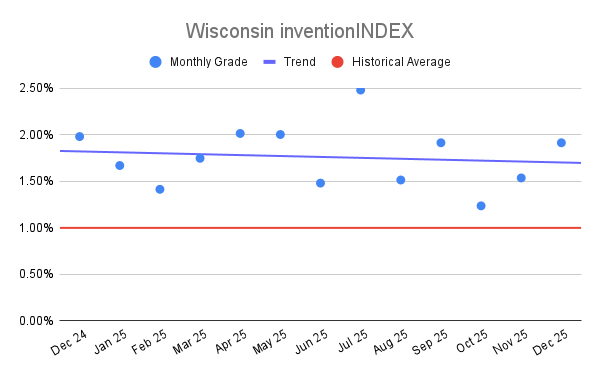 Wisconsin inventionINDEX December 2025
  Wisconsin inventionINDEX Novem
