

For the Wisconsin Research Credit, a “vehicle” is broadly defined as any machine or frame—including stationary generators and heavy machinery—on which an engine is mounted. This classification triggers an enhanced 11.5% credit tier. Crucially, the definition of “internal combustion engine” includes modern substitutes like electric and hybrid drives, making the credit applicable to EV and green energy innovation. To qualify, expenses must be for research supplies (prototypes) or wages, not for depreciable capital assets.
In the context of the Wisconsin research credit, a vehicle is defined as any machine or frame—ranging from trucks and tractors to stationary generators—in which an engine is mounted for functional application. This classification serves as the jurisdictional trigger for an enhanced tax incentive aimed at fostering technological innovation in power systems and mobile machinery within the state.
The Wisconsin research credit represents a sophisticated departure from the federal research tax credit framework established under Section 41 of the Internal Revenue Code. While the federal credit provides a broad incentive for increasing research activities across all industries, Wisconsin has implemented a tiered system that specifically targets the state’s historical and economic strengths in engine manufacturing and heavy machinery. By utilizing a statutory definition of “vehicle” that extends far beyond the traditional concepts of transportation, the Wisconsin legislature has created a specialized fiscal environment for engineering firms, original equipment manufacturers (OEMs), and component suppliers. This report explores the nuanced interplay between the statutory definitions found in Chapter 71 of the Wisconsin Statutes, the administrative guidance provided by the Wisconsin Department of Revenue (DOR), and the technical application of these rules to the process of research and development.
The Statutory Definition and Scope of “Vehicle”
The foundational definition of a vehicle for the purposes of the Wisconsin research credit is found in Wis. Stat. § 71.28(4)(ab)3. Unlike other areas of the law where a vehicle might be defined by its use on public highways or its requirement for a title and registration, the research credit definition is functional and structural. It defines a “vehicle” as any vehicle or frame, including parts, accessories, and component technologies, in which or on which an engine is mounted for use in mobile or stationary applications. This definition is intentionally broad to ensure that the incentive captures the full range of Wisconsin’s industrial output, particularly in the sectors of power generation and heavy equipment.
The statute provides an expansive list of examples that qualify under this definition. The inclusion of “stationary applications” is a critical distinction, as it allows for the inclusion of generators and other non-mobile power units that would otherwise be excluded from a transportation-focused definition. The following table categorizes the specific machines identified in the statute and their associated functional contexts.
| Vehicle Category | Specific Examples Identified in Statute | Functional Application |
|---|---|---|
| Heavy Mobile Machinery | Trucks, Buses, Motor Homes, Vans, Sports Utility Vehicles | Logistics, transit, and consumer transportation. |
| Industrial/Agricultural | Tractors, Construction Equipment, All-Terrain Vehicles | Farming, infrastructure development, and industrial utility. |
| Recreational/Small Unit | Motorcycles, Snowmobiles, Boats, Personal Watercraft, Lawn/Garden Equipment | Leisure, landscaping, and specialized personal mobility. |
| Aviation | Aircraft | Aerospace and high-performance propulsion systems. |
| Power Generation | Generators | Mobile or stationary electrical power supply and distribution. |
The inclusion of “parts, accessories, and component technologies” within the definition of a vehicle signifies that research does not need to be conducted on the finished vehicle to qualify for the enhanced credit. If a company is designing a more efficient fuel pump for a tractor, a more durable drive shaft for a truck, or a sophisticated control module for a generator, that research is considered to be “related to” the vehicle and thus eligible for the higher tier of credit. This “bottom-up” approach acknowledges the complex supply chain inherent in the vehicle industry, where innovation often occurs at the component level before being integrated into a final assembly.
Internal Combustion Engines and Modern Power Drives
The enhanced research credit is inextricably linked to the design of “internal combustion engines.” However, the statutory definition of an internal combustion engine under Wis. Stat. § 71.28(4)(ab)2 is not limited to traditional gasoline or diesel cycles. In a forward-looking move, the legislature defined “internal combustion engine” to include “substitute products such as fuel cell, electric, and hybrid drives”.
This interpretation is vital for the modern engineering landscape. As the global economy shifts toward electrification and sustainable energy, Wisconsin companies transitioning from diesel technology to electric powertrains or hydrogen fuel cells remain eligible for the 11.5% enhanced credit. The state’s policy intent is to support the function of power delivery—whether that power is derived from combustion, chemical reaction in a fuel cell, or electrical storage in a battery—rather than the specific mechanical process of a piston-driven engine.
The relevance of this broad definition cannot be overstated for Wisconsin’s manufacturing hub. For instance, a manufacturer of electric motorcycles or hybrid-electric buses faces significant technical uncertainties related to thermal management, battery integration, and drivetrain efficiency. Because the statute classifies an electric drive as an “internal combustion engine” and a motorcycle or bus as a “vehicle,” these modern R&D activities are fully captured under the enhanced credit tier.
The Technical Anatomy of a “Frame”
A unique aspect of the Wisconsin research credit is the detailed statutory definition of a “frame.” The “frame” often serves as the boundary for what constitutes a “qualified research expense” (QRE) at the enhanced 11.5% rate. The definition of a frame varies depending on the type of vehicle being researched, reflecting the different engineering priorities for different classes of equipment.
Motorcycle Frames
For motorcycles, the definition is the most inclusive. A frame includes “every part of a motorcycle, except the tires”. This means that research into the handlebars, seat suspension, fuel tank geometry, and even the aesthetic fairings (if they relate to aerodynamics or performance) can qualify for the enhanced credit. The exclusion of tires is a consistent theme across all vehicle types, as tires are generally considered separate, often commodity, components where the research is conducted by specialized tire manufacturers rather than the vehicle OEM.
Truck Frames
For trucks, the definition of a frame is more restrictive and focuses on the functional powertrain and control systems. It includes the control system, the fuel train, and the drive train. However, the statute explicitly excludes:
- Tires.
- “Comfort features located in the cab”.
This exclusion of comfort features is a critical regulatory boundary. Research aimed at improving the sound system, the ergonomics of a luxury seat, or the climate control interface in a truck cab might qualify for the general 5.75% research credit, but it would not qualify for the enhanced 11.5% credit. The legislature’s intent was to prioritize “hard” engineering—the systems that move the truck and manage its power—over “soft” consumer-oriented features.
Generator Frames
The definition of a “frame” for a generator further reinforces the state’s focus on power systems. It includes the control modules, fuel train, fuel scrubbing process, fuel mixers, the generator unit itself, heat exchangers, and the exhaust train. By including the “fuel scrubbing process” and “exhaust train,” the law provides an incentive for research into emissions reduction and environmental compliance for stationary power units, which is a major area of R&D for Wisconsin’s generator manufacturers.
The Tiered Credit Rate System
The Wisconsin research credit is divided into two primary tiers for taxable years beginning after December 31, 2014. The standard rate is designed for general innovation, while the enhanced rate targets the vehicle and engine sectors.
| Credit Type | Statutory Basis | Credit Rate (on Excess QREs) | Rate for “Start-ups” (No 3-Year History) |
|---|---|---|---|
| General Research Credit | Wis. Stat. § 71.28(4)(ad)4 | 5.75% | 2.875% |
| Internal Combustion Engine/Vehicle Credit | Wis. Stat. § 71.28(4)(ad)5 | 11.5% | 5.75% |
The “excess QREs” are calculated by subtracting a “base amount” from the current year’s qualified research expenses. The base amount is generally 50% of the average qualified research expenses for the three preceding taxable years. This incremental structure ensures that the credit rewards growth in research spending rather than just maintaining a steady state of R&D.
Refundability and Liquidity Provisions
One of the most significant evolutions in the Wisconsin research credit is the transition from a non-refundable credit to one with a substantial refundable component. This change was motivated by the desire to support pre-revenue startups and R&D-heavy companies that may not yet have a tax liability to offset.
The refundable portion allows a taxpayer to receive a cash payment from the state if the credit exceeds their tax liability. The percentage of the credit that is refundable has increased over time through legislative amendments.
| Taxable Years Beginning | Refundable Percentage of Current Year Credit |
|---|---|
| Before Jan 1, 2021 | 10% |
| 2021 to 2023 | 15% |
| On or After Jan 1, 2024 | 25% |
The refundable portion is calculated as the lesser of:
- The remaining current year credit after offsetting the tax due for that year.
- The applicable percentage (e.g., 25% for 2024) of the total research credit computed for the current year.
Any portion of the credit that is not used to offset tax or received as a refund may be carried forward for up to 15 years to offset future Wisconsin income or franchise tax liabilities. This carryforward period provides long-term value for companies engaged in multi-year development cycles, such as the design of a new aircraft or a next-generation truck platform.
Local State Revenue Office Guidance and Administrative Compliance
The Wisconsin Department of Revenue (DOR) provides administrative guidance through various publications and instructions, most notably Publication 131, “Tax Incentives for Conducting Qualified Research in Wisconsin,” and the instructions for Schedule R.
Filing Requirements
Taxpayers must claim the credit using Schedule R. A critical administrative rule is that a separate Schedule R must be filed for each type of research credit being claimed. A company involved in both general manufacturing research and internal combustion engine research would need to file two separate schedules to report the QREs for each tier separately. This ensures that the DOR can accurately verify that the 11.5% rate is only applied to the specific categories of research authorized by statute.
Qualified Research Expenses (QREs)
Wisconsin generally follows the federal definition of QREs found in IRC Section 41(b), with the primary exception being that the research must be conducted in Wisconsin. Eligible expenses include:
- Wages: W-2 wages paid to employees for actually performing research or for direct supervision or support of research in Wisconsin.
- Supplies: Costs for tangible, non-depreciable property used in the conduct of research, such as prototype materials and testing supplies.
- Contract Research: 65% of the amount paid for research performed by non-employees (or 75% for payments to qualified research consortia).
- Computer Rentals: Amounts paid for the rental or lease of computers used in research.
Non-Conformity with IRC Section 174
A significant point of local guidance involves the state’s reaction to federal changes in the Tax Cuts and Jobs Act (TCJA). For tax years beginning after 2021, the federal government requires taxpayers to capitalize and amortize research and experimental expenditures under Section 174. However, Wisconsin has specifically not adopted these changes for the purposes of the research credit calculation. For Wisconsin purposes, pre-2022 federal provisions apply, meaning research expenditures can still be fully deducted in the year they are incurred. This creates a significant timing benefit for Wisconsin taxpayers compared to the federal system.
Prototyping and the Depreciable Property Exclusion
In the vehicle industry, prototyping is a central component of the R&D process. Whether it is building a full-scale truck to test crash-safety or a small-scale engine model to test fuel mixing, the cost of materials can be substantial. However, there is a complex intersection between the research credit and the rules for depreciable property.
Under both federal and Wisconsin rules, the cost of new machinery or equipment cannot be included in the R&D credit calculation if it is a depreciable asset. Only tangible, non-depreciable material utilized in testing or to build prototypes and samples can be included as supplies QREs.
This creates a high stakes documentation requirement for vehicle manufacturers. If a company builds a prototype truck that is later used in its service fleet or sold to a customer, the IRS and Wisconsin DOR may argue that the truck is a depreciable asset (or inventory) and thus the materials used to build it are not “supplies” under Section 41. To mitigate this risk, companies must document that the prototype was built for the purpose of eliminating technical uncertainty and that its ultimate disposition (such as being scrapped after testing) supports its classification as a research supply.
Practical Example: “The Agricultural Tractor Design Project”
To illustrate how these laws and guidance apply in practice, consider the case of a fictional Wisconsin-based company, Heartland Equipment Solutions, located in Janesville, Wisconsin.
Project Background
In 2024, Heartland initiates a research project to develop a new “High-Efficiency Hybrid Drivetrain” for its flagship line of agricultural tractors. The project involves:
- Designing a new electric motor to supplement the diesel engine (Hybrid Drive).
- Developing a new transmission housing (Drive Train).
- Improving the structural frame to accommodate the weight of the batteries (Frame).
- Optimizing the control software for power distribution (Control System).
Step 1: Verification of Vehicle Status
Under Wis. Stat. § 71.28(4)(ab)3, a tractor is specifically listed as a “vehicle.” Furthermore, a “hybrid drive” is specifically listed as an “internal combustion engine” substitute under § 71.28(4)(ab)2. Therefore, this project qualifies for the enhanced 11.5% credit tier.
Step 2: Identification of Wisconsin QREs
Heartland identifies the following expenses incurred in Janesville during the 2024 tax year:
- Engineer Wages: $2,000,000 (Focusing on hybrid motor design and frame integration).
- Supplies: $500,000 (Includes raw steel for prototype frames, battery cells for lab testing, and custom-machined transmission parts).
- Contract Research: $100,000 (Paid to a Milwaukee-based engineering firm for thermal analysis).
Total Current Year QREs:
- Wages: $2,000,000
- Supplies: $500,000
- Contract Research: $100,000 x 65% = $65,000
- Total = $2,565,000
Step 3: Calculation of the Credit
Heartland has a stable history of R&D in Wisconsin. Their QREs for the three prior years were:
- 2021: $2,200,000
- 2022: $1,800,000
- 2023: $2,000,000
- Average QREs = $2,000,000
- Base Amount (50% of Average) = $1,000,000
Computation:
- Excess QREs = $2,565,000 – $1,000,000 = $1,565,000.
- Current Year Research Credit = $1,565,000 x 11.5% = $179,975.
Step 4: Refundability Application
For the 2024 tax year, Heartland has a Wisconsin franchise tax liability of $100,000.
- Credit used to offset tax: $100,000 (Tax liability reduced to $0).
- Remaining unused credit: $179,975 – $100,000 = $79,975.
- Maximum Refundable Amount: 25% of the total computed credit ($179,975 x 25% = $44,993.75).
- Actual Refund: Since the remaining unused credit ($79,975) is greater than the 25% cap ($44,993.75), Heartland receives a refund of $44,993.75.
- Carryforward: The remaining balance of $34,981.25 ($79,975 – $44,993.75) is carried forward to 2025.
Detailed Analysis of Component Technologies
The phrase “component technologies” in the definition of a vehicle allows the credit to penetrate deep into the specialized manufacturing layers of Wisconsin’s economy. This means that a company does not have to be a manufacturer of complete vehicles to claim the 11.5% credit; they only need to be performing research on a component that is intended for use in a vehicle.
For example, a Wisconsin-based manufacturer of hydraulic systems might perform research to create a “Smart Valve” that integrates with a tractor’s engine control module to optimize fuel usage during heavy lifting. Although the company is a hydraulics manufacturer, not a tractor manufacturer, the research is “related to” a component technology of a vehicle. Provided the research meets the four-part test—particularly the requirement that the information discovered is technological in nature and intended to eliminate uncertainty—the company is eligible for the 11.5% rate.
This creates a causal ripple effect throughout the Wisconsin economy. By incentivizing component-level innovation, the state supports a diverse ecosystem of small and medium-sized enterprises (SMEs) that supply the major OEMs like Harley-Davidson, Oshkosh Corporation, and Mercury Marine. The result is a highly integrated industrial cluster where the tax code reinforces the technical synergies between different manufacturers.
The Role of Production Process Improvements
The enhanced credit is not limited to the design of the vehicle or engine itself; it also applies to “improving production processes for such engines and vehicles”. This is a critical inclusion for Wisconsin’s manufacturing sector.
In many cases, the technical uncertainty in the vehicle industry is not about what to build, but how to build it at scale with high quality and lower costs. For instance, a truck manufacturer might face uncertainty when implementing a new robotic welding process for its chassis. The research into the optimal weld speed, heat distribution, and robotic programming to ensure structural integrity of the “frame” qualifies for the 11.5% credit tier.
This provision allows for “Shop Floor R&D.” Experienced shop floor leaders and manufacturing engineers who are directly contributing to the technical development of new or improved machining programs or assembly processes can have their wages included as QREs. This bridges the gap between the laboratory and the factory floor, acknowledging that in the heavy machinery sector, process innovation is often as complex and uncertain as product innovation.
Documentation and Audit Risks in the Vehicle Sector
Given that the internal combustion engine and vehicle credit is claimed at a rate double that of the general research credit (11.5% vs. 5.75%), it is a high-priority area for DOR audits. The distinction between general research and vehicle-specific research is often a matter of technical nuance that requires robust documentation.
Project-Based Tracking
The DOR expects claimants to maintain contemporaneous records by project. These records must substantiate that the activities meet the four-part test under IRC Section 41(d). For the enhanced credit, the records must also specifically demonstrate the link to an internal combustion engine or vehicle frame. For example, a software developer at a vehicle company must be able to show whether their code was for the “engine control module” (11.5%) or the “driver’s infotainment system” (5.75%, as it may be a comfort feature).
Wage Allocation
The largest component of most R&D claims is employee wages. The DOR requires a reasonable allocation of time for employees who work on both qualifying and non-qualifying activities. In the vehicle context, this means tracking the percentage of time an engineer spends on “functional power systems” versus “aesthetic cab features.” High-quality documentation often includes time-tracking software data or detailed periodic interviews with lead researchers to certify the nature of their work.
Relationship with Other Wisconsin Tax Incentives
The research credit does not exist in a vacuum; it interacts with other Wisconsin-specific incentives, most notably the Manufacturing and Agriculture Credit (MAC).
The MAC provides a credit of 7.5% of “qualified production activities income” (QPAI) derived from Wisconsin property. While the R&D credit targets the investment in innovation (the inputs), the MAC targets the profits from manufacturing (the outputs). For a vehicle manufacturer, these two credits can work in tandem to significantly reduce the overall tax burden. However, the documentation requirements are distinct. The R&D credit requires project-level technical evidence, while the MAC requires proof of the “property factor”—ensuring that the manufacturing property is located in Wisconsin.
The synergy between these credits explains Wisconsin’s success in retaining heavy manufacturing. By lowering the cost of both developing a truck (R&D credit) and building it (MAC), the state makes it economically advantageous for a company to keep its entire value chain—from engineering to final assembly—within Wisconsin borders.
Future Outlook: Electrification and Autonomous Systems
As the automotive and industrial equipment industries move toward autonomous systems and zero-emission powertrains, the Wisconsin research credit’s broad definitions will continue to be tested.
The “Internal Combustion Engine” definition’s inclusion of “electric drives” is already positioned to handle the shift to EVs. However, the emergence of autonomous driving technology—where the “value add” is in sensors, LIDAR, and AI algorithms—will require careful interpretation of the “component technologies” and “control system” definitions. If an AI system is integral to the “control system” of a truck, it should qualify for the 11.5% rate. If it is viewed merely as an “advanced accessory,” it might fall into the 5.75% tier. The current trajectory of DOR guidance suggests a functional approach: if the technology is essential to the operation of the vehicle or its engine substitute, it will likely be granted the enhanced status.
Final Thoughts
The Wisconsin Research and Development Tax Credit provides a uniquely powerful incentive for the vehicle and engine industries. By defining “vehicle” to include everything from stationary generators to aircraft and by expanding “internal combustion engines” to include electric and hybrid drives, the state has created a broad but focused incentive that aligns with its industrial identity. The transition to a 25% refundable credit in 2024 further underscores the state’s commitment to providing immediate liquidity for innovation.
For professional practitioners and corporate tax departments, success in claiming this credit depends on a deep understanding of the statutory boundaries of the “frame” and the meticulous documentation of “process of experimentation” occurring within Wisconsin. By weaving together the statutory definitions of Wis. Stat. § 71.28(4), the administrative instructions of Schedule R, and the technical realities of modern engineering, Wisconsin companies can maximize their fiscal recovery and continue to drive technological advancement in the global power and mobility markets.
Who We Are:
Swanson Reed is one of the largest Specialist R&D Tax Credit advisory firm in the United States. With offices nationwide, we are one of the only firms globally to exclusively provide R&D Tax Credit consulting services to our clients. We have been exclusively providing R&D Tax Credit claim preparation and audit compliance solutions for over 30 years. Swanson Reed hosts daily free webinars and provides free IRS CE and CPE credits for CPAs.
Are you eligible?

Why choose us?

Pass an Audit?

What is the R&D Tax Credit?
The Research & Experimentation Tax Credit (or R&D Tax Credit), is a general business tax credit under Internal Revenue Code section 41 for companies that incur research and development (R&D) costs in the United States. The credits are a tax incentive for performing qualified research in the United States, resulting in a credit to a tax return. For the first three years of R&D claims, 6% of the total qualified research expenses (QRE) form the gross credit. In the 4th year of claims and beyond, a base amount is calculated, and an adjusted expense line is multiplied times 14%. Click here to learn more.
Never miss a deadline again

Stay up to date on IRS processes

Discover R&D in your industry

R&D Tax Credit Preparation Services
Swanson Reed is one of the only companies in the United States to exclusively focus on R&D tax credit preparation. Swanson Reed provides state and federal R&D tax credit preparation and audit services to all 50 states.
If you have any questions or need further assistance, please call or email our CEO, Damian Smyth on (800) 986-4725.
Feel free to book a quick teleconference with one of our national R&D tax credit specialists at a time that is convenient for you.
R&D Tax Credit Audit Advisory Services
creditARMOR is a sophisticated R&D tax credit insurance and AI-driven risk management platform. It mitigates audit exposure by covering defense expenses, including CPA, tax attorney, and specialist consultant fees—delivering robust, compliant support for R&D credit claims. Click here for more information about R&D tax credit management and implementation.
Our Fees
Swanson Reed offers R&D tax credit preparation and audit services at our hourly rates of between $195 – $395 per hour. We are also able offer fixed fees and success fees in special circumstances. Learn more at https://www.swansonreed.com/about-us/research-tax-credit-consulting/our-fees/



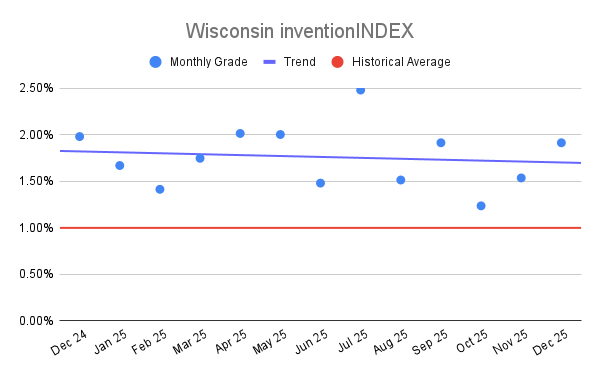 Wisconsin inventionINDEX December 2025
  Wisconsin inventionINDEX Novem
