

Wisconsin R&D Tax Credit: Quick Summary
The Wisconsin Research Expense Credit is calculated based on the Base Amount, which is 50% of the average qualified research expenses (QREs) from the three taxable years preceding the claim year. The credit rewards incremental increases in R&D spending within the state.
- Standard Rate: 5.75% of the excess QREs over the base amount.
- Enhanced Rate: 11.5% for research on internal combustion engines and energy-efficient products.
- Refundability: Up to 25% of the computed credit is refundable for tax years 2024 and later.
- Filing: Claims are filed using Schedule R.
The Average Qualified Research Expenses constitute a rolling three-year historical baseline of Wisconsin-based innovation costs used to establish a taxpayer’s recent spending patterns. This figure is halved to determine the “base amount,” serving as a statutory threshold that ensures tax credits are only awarded for incremental increases in research and development investment within the state.
The Statutory Architecture of the Wisconsin Research Credit
The Wisconsin research credit is established under the authority of Wisconsin Statutes Sections 71.07(4k), 71.28(4), and 71.47(4), which provide the legal framework for individuals, corporations, and insurance companies to claim incentives for increasing qualified research activities. Unlike the federal research credit provided under Internal Revenue Code (IRC) Section 41, which allows for several elective calculation methodologies, Wisconsin mandates a specific incremental method based on the relationship between current year expenditures and a historical base period. This structure reflects a legislative intent to foster economic growth by subsidizing only the portion of research investment that exceeds a normalized historical benchmark. The foundational logic of the credit is centered on the “base amount,” a figure derived directly from the Average Qualified Research Expenses of the three taxable years immediately preceding the claim year.
The legal definition of “qualified research expenses” (QREs) for Wisconsin purposes is heavily tethered to the federal definition found in IRC Section 41(b), but it is subject to several critical state-specific modifications. Specifically, for an expense to enter the calculation of either the current year total or the historical three-year average, it must satisfy the federal four-part test: the research must be for a permitted purpose, seek to eliminate technical uncertainty, involve a process of experimentation, and be technological in nature. However, Wisconsin adds a rigorous nexus requirement: the research must be conducted entirely within the borders of the state. This geographical restriction means that any expenses incurred for research performed outside Wisconsin, even if for the benefit of a Wisconsin-based entity, are excluded from the “Average Qualified Research Expenses” calculation.
The mechanical application of the credit involves a tiered system of rates that depends on the industry and the nature of the research. For most businesses, the credit is equal to 5.75% of the amount by which current year QREs exceed the base amount. However, for specialized sectors such as internal combustion engine design and certain energy-efficient product development, the rate is increased to 11.5%, signaling the state’s strategic prioritization of these industrial clusters. In instances where a taxpayer has no historical research footprint in Wisconsin, the statutes provide a “safe harbor” flat-rate credit—2.875% for general research and 5.75% for specialized research—applied to the total current year QREs. This ensures that new entrants to the Wisconsin innovation economy are not penalized for lacking the three-year historical data required to compute a standard base amount.
Detailed Mechanics of the Base Amount Calculation
The calculation of the “base amount” is the most significant administrative task in claiming the Wisconsin research credit, as it dictates the threshold for refundability and carryforward potential. The process begins with the identification and aggregation of QREs for the three taxable years immediately preceding the year for which the credit is claimed.
Determining the Three-Year Average
To compute the Average Qualified Research Expenses, the taxpayer must sum the Wisconsin-apportioned QREs for each of the three prior years and divide the total by three. This average represents the company’s “normal” level of research activity. The statutory formula then applies a 50% multiplier to this average to arrive at the “base amount”. By setting the base at 50% of the average, the legislature creates an incentive that is mathematically accessible even to firms with stagnant or slightly declining R&D budgets, while providing the maximum benefit to those who are aggressively expanding their Wisconsin operations.
The following table illustrates the standard calculation for a corporation with a consistent three-year research history:
| Tax Year | Wisconsin QREs | Calculation Step | Resulting Value |
|---|---|---|---|
| Year n-3 | $1,200,000 | Historical Data 1 | $1,200,000 |
| Year n-2 | $1,400,000 | Historical Data 2 | $1,400,000 |
| Year n-1 | $1,600,000 | Historical Data 3 | $1,600,000 |
| 3-Year Total | $4,200,000 | Sum of prior 3 years | $4,200,000 |
| Average QRE | $1,400,000 | Total divided by 3 | $1,400,000 |
| Base Amount | $700,000 | 50% of Average QRE | $700,000 |
If the current year’s (Year n) QREs are $2,000,000, the eligible expenses would be the difference between the current year and the base amount ($2,000,000 – $700,000 = $1,300,000). For a standard claimant, the credit would then be $1,300,000 multiplied by 5.75%.
Missing Prior Year Data and the “No-QRE” Election
A critical administrative nuance exists for taxpayers who were not engaged in research in Wisconsin for the entire three-year preceding period. If a claimant had no qualified research expenses in one or more of the three taxable years immediately prior to the claim year, the standard averaging method is abandoned. In these cases, the taxpayer must check the specific box on Line 9 of Wisconsin Schedule R. This election signals that the base amount is effectively zero, and the credit is instead calculated using a reduced rate applied to the current year’s total QREs.
This “startup” or “new researcher” provision is essential for companies that are either newly formed or have recently relocated their research operations to Wisconsin. For example, if a company conducted research in 2023 and 2022 but had no Wisconsin research in 2021, it cannot average the two years and divide by three; it must use the reduced-rate calculation. The reduced rates are designed to balance the benefit: the company receives a credit for all its spending without needing to exceed a base, but the credit percentage is lower to prevent an undue windfall compared to companies that have maintained a long-term presence in the state.
Components of the Average Qualified Research Expenses
The reliability of the base amount depends entirely on the accuracy of the QREs included in the three-year average. Wisconsin defines these expenses by referencing IRC Section 41(b), encompassing both in-house research expenses and a percentage of contract research expenses.
In-House Research Expenses
In-house expenses primarily consist of wages paid to employees who are directly involved in the research process or are providing direct supervision or support. For Wisconsin purposes, “wages” generally refers to the amounts reported on the employee’s Form W-2. However, there is a significant state-level modification regarding the Development Zones credit. Any wages used to compute the Wisconsin Development Zones credit or the Development Zones Jobs credit must be excluded from the research credit calculation to prevent “double-dipping” on the same labor costs. Additionally, supplies used in the research process and certain computer rental or cloud computing costs are included, provided they are not for land or depreciable property.
Contract Research Expenses
Contract research expenses are subject to specific percentage limitations. Generally, only 65% of the amount paid to a third party for qualified research performed in Wisconsin is eligible for inclusion in the QRE total. If the payments are made to a qualified research consortium—defined as a tax-exempt organization organized primarily to conduct scientific research—the eligible portion increases to 75%.
The distinction between in-house and contract research is vital for the historical average. If a company shifts its strategy from using internal staff to hiring contractors, its QREs may naturally decrease due to the 65% haircut, potentially lowering its historical base and increasing future credits. Consequently, the “consistency rule” found in federal and state guidance requires that expenses be treated the same way in the base years as in the credit year. If a taxpayer discovers that they under-reported QREs in a prior year, they should theoretically adjust the historical average to ensure a mathematically honest comparison.
Specialized Industry Credits and Enhanced Base Rates
Wisconsin provides enhanced incentives for specific sectors, which requires taxpayers to segment their Average Qualified Research Expenses by activity type. The calculation methodology for the base amount (the 50% threshold of the three-year average) remains the same, but the credit rates are doubled.
Internal Combustion Engines and Vehicles
This enhanced credit applies to research related to the design and manufacturing of internal combustion engines and the vehicles powered by them. The statutory definition is broad, including substitute products such as fuel cells, electric drives, and hybrid drives. Furthermore, “vehicle” is defined extensively to include motorcycles (every part except tires), trucks (control system, fuel, and drive train), generators (control modules, fuel train, heat exchangers), and even aircraft or snowmobiles.
| Rate Type | General Research | ICE / Specialized Research |
|---|---|---|
| Standard Rate (on Excess) | 5.75% | 11.5% |
| No-Base Rate (Startup) | 2.875% | 5.75% |
Taxpayers engaged in multiple types of research must complete separate Schedules R. For example, a manufacturer developing a more efficient fuel pump (general research) and a new hybrid truck drivetrain (ICE research) would need to track the prior three years of Wisconsin QREs for each project separately to establish two distinct base amounts. This ensures that the state can precisely target the enhanced subsidy to the intended technological advancements.
Energy-Efficient Products
The 11.5% enhanced rate also extends to the design and manufacturing of energy-efficient lighting systems, building automation and control systems, and automotive batteries for hybrid-electric vehicles. To qualify, the research must focus on reducing the demand for natural gas or electricity or improving the efficiency of its use. The administrative requirements for these credits mirror those of the ICE credit, requiring a segregated historical QRE average and a separate Schedule R filing.
The Impact of Federal Law and the Section 174 Decoupling
The “Average Qualified Research Expenses” calculation in Wisconsin is complicated by the state’s selective adoption of the Internal Revenue Code. A major divergence occurred with the federal Tax Cuts and Jobs Act (TCJA). Starting in 2022, federal law requires taxpayers to capitalize and amortize R&D expenses under IRC Section 174 over five years, rather than expensing them in the year incurred.
Wisconsin has specifically decoupled from this provision. For Wisconsin research credit purposes, the state continues to follow the pre-2022 federal rules, which allow for the full current-year expensing of research costs. This creates a “Wisconsin modification” for taxpayers. When calculating the three-year average of QREs for the state credit, a taxpayer may find that their Wisconsin historical expenses are significantly higher than their federal amortized expenses for the same period. This decoupling is a pro-taxpayer measure designed to preserve the immediate cash-flow benefit of the credit and avoid the complexity of state-level amortization schedules for research incentives.
Furthermore, Wisconsin law explicitly excludes several federal aggregation and allocation rules. Sections 41(f)(1), (2), (5), (6), and (h) of the IRC do not apply to the Wisconsin credit. These exclusions mean that Wisconsin maintains a more localized, entity-specific focus on the research credit, rather than adopting the complex federal rules for controlled groups or the Alternative Incremental Credit (AIC).
Combined Reporting and the Average QRE for Unitary Groups
For corporations that are members of a “combined group”—generally a group of commonly controlled corporations engaged in a unitary business—the calculation of Average Qualified Research Expenses is governed by Wisconsin Administrative Code Tax 2.61.
Entity-Level Computation
In general, credits in Wisconsin are considered attributes of the separate corporation rather than the combined group. Each member of a combined group must compute its research credit separately based on its own specific Wisconsin QREs. This means that the “Average Qualified Research Expenses” for the prior three years must be tracked and maintained for each individual member of the group as if they had filed on a separate entity basis.
Sharing of Nonrefundable Credits
While the computation is separate, Section 71.255(6)(c) of the Wisconsin Statutes allows for the sharing of certain research credits among combined group members.
- Utilization: A member must first use its research credit to offset its own current-year tax liability.
- Sharing: Any remaining “sharable” credit can be used by other members of the same combined group to offset their tax liability, provided the liability is attributable to the unitary business.
- Eligibility to Share: Generally, a corporation can only share its nonrefundable research credits if it was a member of that same combined group in the year the credit was originally generated.
This sharing mechanism does not affect the base amount calculation. Each company still compares its current year Wisconsin spend against its own historical Wisconsin three-year average. This prevents companies from “shuffling” expenses within a group to artificially lower a historical base and inflate the resulting credit.
Funded Research within Groups
Special rules apply to research funded by one group member and performed by another. In a combined group, “qualified research expenses” are modified such that research funded by Member A but performed by Member B is considered a QRE of Member B (the performer). The reimbursement from Member A is not considered a QRE for Member A. This ensures that the historical Average Qualified Research Expenses are attributed to the entity that actually maintains the research labor and infrastructure in Wisconsin.
Adjustments for Business Structural Changes
The Average Qualified Research Expenses must be adjusted when there are significant changes to the corporate structure, such as acquisitions or dispositions of a trade or business. These adjustments, based on IRC Section 41(f)(3), are necessary to maintain the integrity of the incremental credit.
Acquisitions
If a corporation acquires a major portion of another trade or business, the acquirer must increase its historical three-year QRE average. The amount of the increase is the Wisconsin QREs attributable to the acquired business during the base period. For example, if Corp A acquires Corp B in 2024, Corp A’s base period for the 2024 credit (2021-2023) must include the Wisconsin research expenses that Corp B incurred during 2021, 2022, and 2023. This prevents Corp A from claiming a “new” increase in research activity that was simply an existing operation it purchased.
Dispositions
Conversely, the seller of a business portion must decrease its historical Average Qualified Research Expenses by the amount of Wisconsin QREs attributable to the divested business, provided the seller also provides the acquirer with the information necessary to make the corresponding acquisition adjustment. This adjustment ensures that the seller’s remaining operations are compared against an appropriate historical benchmark.
Short Taxable Years and Annualization
When a taxpayer has a taxable year of less than 12 months—often due to a change in accounting period or the formation/dissolution of an entity—the law requires that QREs be annualized. This involves multiplying the QREs for the short period by 12 and dividing by the number of months in the short year. Annualization ensures that a short-period expense total is not unfairly compared to a full 12-month historical average.
Revenue Office Guidance on Refundability and Liquidity
The Wisconsin Department of Revenue (DOR) has issued extensive guidance through Publication 131 and various “Common Questions” updates regarding the evolution of the research credit from a nonrefundable carryforward to a partially refundable cash benefit.
Progression of Refundable Percentages
The transition toward refundability has occurred in distinct legislative phases, providing increasingly immediate liquidity to R&D-heavy firms.
| Applicable Period | Refundable Portion of Computed Credit |
|---|---|
| Pre-2018 | 0% (Nonrefundable Carryforward Only) |
| 2018 – 2020 | 10% |
| 2021 – 2023 | 15% |
| 2024 and Later | 25% |
Computation of the Refundable Portion
The DOR clarifies that the refundable portion is determined after the total research credit has been computed using the base amount formula. The maximum refundable amount is the total current-year credit multiplied by the applicable percentage (e.g., 25% for 2025). The actual refund is the lesser of this maximum or the credit remaining after the taxpayer has used the credit to offset their Wisconsin tax liability.
A critical administrative point is that prior-year credit carryforwards do not influence the refundable calculation. Carryforwards from previous years remain strictly nonrefundable and can only be used to reduce current or future tax liability. Furthermore, nonrefundable carryforwards must be used to offset tax liability before the current year’s refundable credit is applied, which generally benefits the taxpayer by preserving the more flexible refundable portion.
Administrative Compliance and the Schedule R Filing Process
The claim for the Wisconsin research credit is filed using Schedule R, “Wisconsin Research Credits,” alongside the taxpayer’s primary income or franchise tax return. The schedule serves as the formal workspace for computing the Average Qualified Research Expenses and the final credit amount.
Line-by-Line Highlight of Schedule R
The construction of the base amount occurs primarily on Lines 9 and 10 of Schedule R.
- Lines 9a through 9c: The taxpayer enters the Wisconsin QREs for each of the three prior years.
- Line 9d: The total of these three years is computed.
- Line 9e: The total is divided by three to arrive at the Average Qualified Research Expenses.
- Line 10: The average is multiplied by 50% to establish the base amount.
- Line 11: The base amount is subtracted from the current year’s total Wisconsin research expenses (determined on Line 8) to find the “Eligible Wisconsin Qualified Research Expenses”.
Pass-Through Entity Responsibilities
Partnerships, LLCs, and S-corporations are “computation-only” entities for the research credit. While they do not pay tax at the entity level and therefore cannot “use” the credit, they are responsible for performing the base amount calculation and reporting the credit to their owners. The entity calculates the total credit on Schedule R and then provides each shareholder or partner with their prorated share of the credit on a Wisconsin Schedule 3K-1 or 5K-1. The owner then reports this credit on their individual return, with the same rules for refundability and the 15-year carryforward apply to the individual owner’s tax situation.
Comprehensive Case Study: Multi-Year Incremental Credit
To synthesize these concepts, consider “Advanced Wisconsin Biotech,” a firm that has been expanding its research operations in Madison, Wisconsin. This case study follows the company through a three-year cycle of growth and structural change.
Phase 1: Establishing the Historical Average
In 2025, the company seeks to claim a research credit. Its Wisconsin QREs for the preceding three years were:
- 2024: $2,100,000
- 2023: $1,800,000
- 2022: $1,500,000
The Average Qualified Research Expenses are ($2,100,000 + $1,800,000 + $1,500,000) / 3 = $1,800,000.
The Base Amount for 2025 is 50% × $1,800,000 = $900,000.
Phase 2: Calculating the 2025 Credit
For the 2025 taxable year, the company incurs $2,500,000 in Wisconsin QREs. All of this research is general manufacturing (5.75% rate).
- Current Year QREs: $2,500,000
- Base Amount: $900,000
- Excess QREs: $1,600,000
- Computed Credit: $1,600,000 × 0.0575 = $92,000.
Phase 3: Tax Liability and Refundability
The company has a Wisconsin franchise tax liability of $50,000 for 2025.
- Offset Tax: Use $50,000 of the $92,000 credit to reduce tax liability to $0.
- Unused Credit: $42,000 ($92,000 – $50,000).
- Max Refundable Amount: $92,000 × 25% = $23,000.
- Actual Refund: Lesser of unused credit ($42,000) or max refundable ($23,000) = $23,000.
- Carryforward: $42,000 – $23,000 = $19,000 to be carried forward for 15 years.
Phase 4: Structural Adjustment (Acquisition)
In 2026, Advanced Wisconsin Biotech acquires a smaller firm, Madison Lab Services, which had Wisconsin QREs of $200,000 in each of 2023, 2024, and 2025.
When computing the base for the 2026 credit, Advanced Wisconsin Biotech must now include these historical costs in its average:
- New 2025 QRE: $2,500,000 + $200,000 = $2,700,000
- New 2024 QRE: $2,100,000 + $200,000 = $2,300,000
- New 2023 QRE: $1,800,000 + $200,000 = $2,000,000
- New Average QRE: $2,333,333
- New Base Amount: $1,166,667
This illustrates how the base amount “follows” the business assets, ensuring that the company must continue to outpace the combined historical spending of its new organization to earn additional credits.
Administrative Challenges and Legal Precedents
Taxpayers navigating the “Average Qualified Research Expenses” requirement must be aware of the administrative and legal hurdles identified by the DOR and the Wisconsin Tax Appeals Commission.
Statute of Limitations for Computing Credits
A significant risk for taxpayers is the “timely claim” requirement of Section 71.28(4)(h). In the case of CA Lawton Co. v. Wisconsin Department of Revenue, the dispute centered on whether a taxpayer could claim carry-forward credits for research expenses incurred ten years prior but never reported on an original return. The DOR argued, and the Commission considered, that a credit cannot be carried forward at all unless it is first “computed and claimed” on a return filed within the four-year statute of limitations for the year the expense was incurred.
This means a taxpayer cannot simply “save” their research data for a decade and then try to use it to offset tax in a later, more profitable year. They must file Schedule R annually—even if they have no tax liability—to establish their “Average Qualified Research Expenses” and the resulting credit amount for that year. Failure to do so within the four-year window may result in the permanent loss of the credit for that period.
Audit Trends and Technical Documentation
DOR audit guidelines emphasize the need for contemporaneous technical documentation that supports the validity of the expenses entering the historical average. Because the “base years” can be as far as three or four years in the past, maintaining project reports, blueprints, and testing logs is crucial. If the DOR disqualifies a project from 2022 during an audit of the 2025 credit, the resulting change in the Average Qualified Research Expenses will shift the base amount for the 2023, 2024, and 2025 tax years, potentially triggering multi-year tax adjustments and interest.
Future Outlook and Legislative Trends
The Wisconsin research tax credit remains a central pillar of the state’s economic policy, with ongoing legislative efforts to further increase its impact. One notable proposal, Senate Bill 70 (later Act 19), which increased refundability to 25%, reflects a broad bipartisan consensus on the value of R&D. There have been further discussions (such as AB 43/SB 70) regarding increasing the refundable portion to 50% for future tax years to compete more aggressively with other states.
Additionally, the state’s continued decoupling from federal IRC Section 174 amortization remains a significant differentiator. While federal taxpayers must wait five years to fully realize the tax deduction for their research spend, Wisconsin taxpayers receive the immediate benefit of both a full deduction and a credit based on the non-amortized historical average. This “super-expensing” environment makes Wisconsin an increasingly attractive destination for high-tech manufacturing and biotechnology firms.
Final Thoughts
The Average Qualified Research Expenses serve as more than just a mathematical variable in the Wisconsin tax code; they represent a stabilization mechanism that ensures the state’s R&D tax credit is a reward for genuine growth and commitment to local innovation. By halving this three-year average to establish a base amount, Wisconsin creates a accessible yet rigorous threshold for incentivizing corporate investment. From the entity-level separate reporting for combined groups to the specialized 11.5% rates for internal combustion engine research, every facet of the base amount calculation is designed to align tax policy with state-level economic priorities. Taxpayers who master the nuances of Schedule R, correctly adjust for structural business changes, and adhere to the strict four-year statute of limitations for computing their credits will find the Wisconsin research credit to be a powerful tool for financing their technical expansion. As the state moves toward even greater refundability, the importance of maintaining an accurate historical QRE average will only grow, serving as the definitive benchmark for the next generation of Wisconsin-made technological advancements.
Who We Are:
Swanson Reed is one of the largest Specialist R&D Tax Credit advisory firm in the United States. With offices nationwide, we are one of the only firms globally to exclusively provide R&D Tax Credit consulting services to our clients. We have been exclusively providing R&D Tax Credit claim preparation and audit compliance solutions for over 30 years. Swanson Reed hosts daily free webinars and provides free IRS CE and CPE credits for CPAs.
Are you eligible?

Why choose us?

Pass an Audit?

What is the R&D Tax Credit?
The Research & Experimentation Tax Credit (or R&D Tax Credit), is a general business tax credit under Internal Revenue Code section 41 for companies that incur research and development (R&D) costs in the United States. The credits are a tax incentive for performing qualified research in the United States, resulting in a credit to a tax return. For the first three years of R&D claims, 6% of the total qualified research expenses (QRE) form the gross credit. In the 4th year of claims and beyond, a base amount is calculated, and an adjusted expense line is multiplied times 14%. Click here to learn more.
Never miss a deadline again

Stay up to date on IRS processes

Discover R&D in your industry

R&D Tax Credit Preparation Services
Swanson Reed is one of the only companies in the United States to exclusively focus on R&D tax credit preparation. Swanson Reed provides state and federal R&D tax credit preparation and audit services to all 50 states.
If you have any questions or need further assistance, please call or email our CEO, Damian Smyth on (800) 986-4725.
Feel free to book a quick teleconference with one of our national R&D tax credit specialists at a time that is convenient for you.
R&D Tax Credit Audit Advisory Services
creditARMOR is a sophisticated R&D tax credit insurance and AI-driven risk management platform. It mitigates audit exposure by covering defense expenses, including CPA, tax attorney, and specialist consultant fees—delivering robust, compliant support for R&D credit claims. Click here for more information about R&D tax credit management and implementation.
Our Fees
Swanson Reed offers R&D tax credit preparation and audit services at our hourly rates of between $195 – $395 per hour. We are also able offer fixed fees and success fees in special circumstances. Learn more at https://www.swansonreed.com/about-us/research-tax-credit-consulting/our-fees/



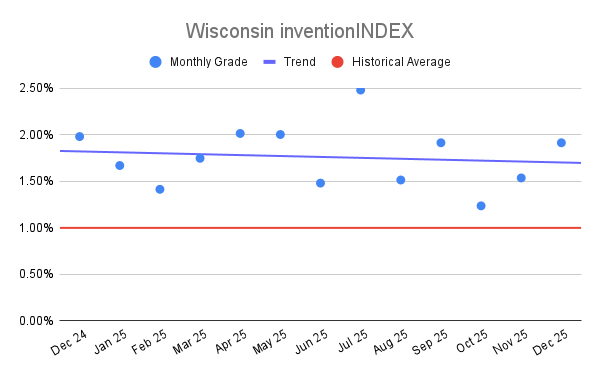 Wisconsin inventionINDEX December 2025
  Wisconsin inventionINDEX Novem
