

What is the Wisconsin Energy Efficient Product Research Credit?
The Wisconsin Research Credit for Activities Related to Certain Energy Efficient Products is an enhanced state tax incentive providing an 11.5 percent credit on qualified research expenses that exceed a defined base period average. It is specifically designed to incentivize innovations in energy-efficient lighting systems, building automation, and hybrid vehicle battery technologies, effectively doubling the standard state research credit rate.
The Wisconsin Research Credit for Activities Related to Certain Energy Efficient Products is an enhanced state tax incentive providing an 11.5 percent credit on qualified research expenses that exceed a defined base period average. It serves as a specialized tier within the broader Wisconsin research and development tax framework, specifically designed to double the standard credit rate for innovations in lighting systems, building automation, and hybrid vehicle battery technologies.
The legislative landscape of Wisconsin’s research incentives is a sophisticated tapestry that intertwines state statutory law, federal Internal Revenue Code (IRC) definitions, and specific administrative guidance from the Wisconsin Department of Revenue (DOR). At its core, the state seeks to incentivize “qualified research” conducted within its borders, but it distinguishes between general research and “enhanced” categories through a tiered rate system. The standard research credit, applicable to most industries, is calculated at 5.75 percent of the excess qualified research expenses (QREs) over the base amount. However, for businesses engaged in the design and manufacturing of specific energy-efficient products, the legislature has authorized a significant increase to an 11.5 percent rate. This policy decision reflects a targeted economic strategy to position Wisconsin as a leader in the burgeoning green technology and energy management sectors. By doubling the credit for these activities, the state essentially subsidizes the high cost of experimental development in fields that offer high social and environmental returns, such as reduced demand for natural gas and electricity.
Statutory Foundations and Historical Evolution
The legal authority for the research credit resides primarily within Chapter 71 of the Wisconsin Statutes. For corporations, Section 71.28(4) provides the primary framework, while individual and fiduciary claimants rely on Section 71.07(4k), and insurance companies utilize Section 71.47(4). These statutes have undergone iterative refinements to align with shifting state priorities and federal tax reforms. One of the most pivotal shifts occurred with 2007 Wisconsin Act 20, which formally established the enhanced 11.5 percent rate for research related to internal combustion engines and certain energy-efficient products. This act was influenced by broader state initiatives, such as those governed by Section 196.374, which mandates that public utilities fund statewide energy efficiency and renewable resource programs. The alignment between utility-funded programs and research tax incentives creates a holistic ecosystem intended to drive down the state’s overall energy footprint through domestic innovation.
The historical trajectory of these credits also reveals a shift in their financial utility. Prior to 2018, Wisconsin research credits were entirely nonrefundable, functioning solely to offset tax liability with any excess carried forward to future years. Recognizing that high-growth startups and R&D-intensive manufacturers often have significant expenses but minimal current tax liability, the legislature introduced refundability. This began with a 10 percent refundable portion for tax years starting after December 31, 2017, which subsequently increased to 15 percent in 2021, and finally reached 25 percent for tax years beginning on or after January 1, 2024. This evolution represents a transition from a simple tax offset to a direct investment mechanism by the state, providing immediate liquidity to firms developing critical energy technologies.
Defining the Enhanced Credit Categories
The applicability of the 11.5 percent “super-credit” is strictly limited to research activities involving specific categories of products. The Department of Revenue’s administrative instructions, particularly those associated with Schedule R, define these categories with precision to ensure that the incentive is only applied to high-priority technological developments.
Energy Efficient Lighting Systems
The first category includes the design and manufacturing of lighting systems that effectively reduce the demand for natural gas or electricity or improve the efficiency of its use. In a modern context, this encompasses a wide range of technological advancements. Research in this category might involve the development of next-generation solid-state lighting, advanced semiconductors for LEDs, or complex ballast and driver technologies that optimize energy throughput. Furthermore, the focus on “reducing demand” often includes the integration of advanced sensors and controls that allow lighting arrays to react to ambient light levels or occupancy, thereby ensuring that energy is only consumed when and where it is strictly necessary.
Building Automation and Control Systems (BACS)
BACS represent a significant area of qualified research in Wisconsin, particularly as the “Intelligent Building” market continues to grow. These systems are defined as automated frameworks that converge and connect various facility technologies through information flow to a monitoring point. For a research activity in this category to qualify for the 11.5 percent credit, it must be related to the design and manufacturing of systems that reduce energy demand. The technical architecture of a BACS eligible for research credits typically includes three tiers: the management level (human interface), the automation level (primary control devices), and the field device level (sensors and activators).
Qualified research might include:
- Developing proprietary communication protocols that allow disparate HVAC and lighting systems to share data for optimized load balancing.
- Designing machine-learning algorithms that analyze building usage patterns to predict and prepare for peak energy demand.
- Improving the durability and precision of field sensors that monitor temperature, CO2 levels, or humidity to ensure climate control systems operate at maximum efficiency.
Automotive Batteries for Hybrid-Electric Vehicles
The third category specifically targets the energy storage components of hybrid-electric drives. Wisconsin statutes broaden the definition of an “internal combustion engine” for these purposes to include substitute products such as fuel cells, electric drives, and hybrid systems. Research must be related to the design and manufacturing of automotive batteries used in these vehicles. This typically includes the chemistry and hardware of the battery cells themselves, as well as the battery management systems (BMS) that regulate charging cycles, thermal management, and energy discharge. As the automotive industry shifts toward electrification, this provision serves as a strategic lure for manufacturers of battery modules and power electronics to locate their research centers within Wisconsin.
Federal Conformity and the “Four-Part Test”
While Wisconsin provides its own credit rates and specific product categories, it heavily leverages federal definitions to determine what constitutes “qualified research.” The state specifically references Section 41 of the Internal Revenue Code (IRC) to define qualified research expenses. To be eligible for the credit, a research project must pass the federal “four-part test”:
- Permissible Purpose: The research must relate to a new or improved function, performance, reliability, or quality of a “business component”—defined as a product, process, software, technique, formula, or invention to be held for sale, lease, or license, or used by the taxpayer in their trade or business.
- Technological in Nature: The research must fundamentally rely on principles of the physical or biological sciences, engineering, or computer science.
- Elimination of Uncertainty: The activity must be intended to discover information to eliminate uncertainty concerning the capability or method for developing or improving the business component, or the appropriate design of that component.
- Process of Experimentation: Substantially all of the activities must involve a process of experimentation, which includes the evaluation of alternative designs, systematic trial and error, or modeling and simulation.
Critical Points of Non-Conformity
Despite its reliance on federal standards, Wisconsin maintains several important “decoupling” points from the IRC. First and foremost, for Wisconsin credit purposes, the qualified research must be conducted entirely within the state. Any research performed outside Wisconsin borders is strictly excluded from the QRE pool, regardless of its importance to a Wisconsin-based product.
Second, Wisconsin has historically chosen not to adopt certain federal changes regarding energy research. Specifically, IRC Section 41(f)(6), which provides special rules for energy research consortiums, does not apply for Wisconsin research credit purposes. This means that while a federal credit might allow for expanded treatment of payments to an energy research consortium, the Wisconsin credit adheres to the standard contract research rules (generally 65 percent inclusion).
Third, a major conflict exists regarding the timing of deductions. Under the federal Tax Cuts and Jobs Act (TCJA), businesses are now required to capitalize and amortize research expenses under IRC Section 174 over five years for domestic research. Wisconsin, however, has not adopted these federal amortization requirements for state tax purposes, generally continuing to allow the immediate expensing of research and experimental costs. This creates a significant “book-to-tax” difference for firms operating in Wisconsin, where they may have to capitalize costs on their federal return while simultaneously expensing them for state purposes—all while claiming a state credit on those same expenditures.
Calculation Mechanics and the Tiered Rate System
The calculation of the Wisconsin Research Credit for Activities Related to Certain Energy Efficient Products follows an incremental model. This structure is intended to reward companies not just for their total R&D spend, but specifically for their increase in R&D spend over time.
The Standard Incremental Credit
For established companies with a history of research in Wisconsin, the credit is calculated as 11.5 percent of the excess of current-year QREs over a base amount. The base amount is defined as 50 percent of the average QREs incurred in the three taxable years immediately preceding the current year.
The mathematical formula for this calculation is:
Credit = 0.115 times (QRE_current – Base Amount)
Where:
- QRE_current represents qualified research expenses for the current tax year.
- QRE_n-1, QRE_n-2, and QRE_n-3 represent qualified research expenses for the three prior tax years.
The Startup Credit Rate
For businesses that had no qualified research expenses in any of the three preceding taxable years, the state provides a “startup” rate. In this scenario, the base amount is zero, and the credit is equal to 5.75 percent of the current year’s qualified research expenses. This is effectively half of the standard 11.5 percent rate but provides immediate support to new ventures before they have established a three-year average against which to measure an increase.
Comparison of Tiered Rates
| Research Category | Rate on Excess (Established) | Rate on Total QRE (Startup) |
|---|---|---|
| General Research Activities | 5.75% | 2.875% |
| Internal Combustion Engines | 11.5% | 5.75% |
| Certain Energy Efficient Products | 11.5% | 5.75% |
This tiered structure creates a powerful incentive for firms to pivot their research focus toward energy-efficient products. A firm that reallocates its R&D budget from general manufacturing improvements to high-efficiency lighting design effectively doubles its state tax credit on those expenditures.
Qualified Research Expenses (QREs)
The expenses that can be included in the credit calculation are categorized into four primary groups, provided they are incurred for research conducted in Wisconsin.
Wages for Qualified Services
Wages constitute the largest component of most research credit claims. To qualify, wages must be paid to an employee for performing, directly supervising, or directly supporting qualified research. Direct supervision includes the immediate management of researchers, while direct support includes activities such as a lab technician cleaning equipment used in an experiment or a machinist creating a prototype. A “substantially all” rule applies here: if at least 80 percent of an employee’s services are qualified, 100 percent of their wages may be included in the QRE pool.
Supplies Used in Research
Supplies include any tangible property (other than land or depreciable property) used in the conduct of qualified research. This often includes raw materials used for prototypes, chemicals for laboratory testing, and electrical components for breadboarding new control systems. For energy-efficient product research, this might specifically include various diodes, heat sinks, or battery cell chemicals consumed during testing cycles.
Computer Rental or Leasing Costs
Costs incurred for the right to use computers to conduct qualified research are eligible. This is increasingly relevant for building automation firms that rely on high-performance cloud computing or remote server clusters for energy simulation and modeling. These costs must be for the actual use of the computer, not for software licenses or general-purpose office equipment.
Contract Research Expenses
When a company hires a third party to perform research on its behalf, it can generally include 65 percent of the amount paid as a qualified research expense. This reduction accounts for the overhead and profit margins built into third-party contracts. If the third party is a “qualified research consortium”—a tax-exempt organization organized primarily to conduct scientific research—the inclusion rate increases to 75 percent. In the context of energy efficiency, this often involves contracts with university engineering departments for fundamental research into battery thermodynamics or lighting optics.
Refundability and the 2024 Threshold
The transformation of the Wisconsin research credit into a partially refundable incentive is one of its most significant modern features. For many years, the inability of pre-revenue startups to benefit from nonrefundable credits was seen as a barrier to innovation. The gradual increase in the refundable portion has mitigated this issue.
The 25 Percent Refund Mechanism
For tax years beginning on or after January 1, 2024, up to 25 percent of the research credit is refundable. The computation of the refundable portion follows a “lesser of” logic to ensure the state only pays out cash after tax obligations are satisfied.
The refundable portion is the lesser of:
- 25 percent of the current year’s research credit.
- The current year’s research credit remaining after subtracting the amount used to offset the current year’s tax liability.
This means if a company has a large credit and a small tax bill, they will first use the credit to zero out their taxes, and then receive a check for up to 25 percent of their total credit. The remaining balance (the nonrefundable portion) is not lost; it is carried forward to be used against future taxes.
Carryforward Limitations
Any portion of the research credit that is neither used to offset current-year tax nor refunded may be carried forward for up to 15 years. Some specific older statutes referenced a 25-year carryforward for certain credits, but the 15-year window is the standard for contemporary claims. It is vital to note that a credit carryforward from a previous year is not used to compute the refundable portion in a future year; only the current year’s credit generation can trigger a refund.
Administrative Compliance and Filing Requirements
The Wisconsin Department of Revenue (DOR) enforces strict procedural requirements for claiming research credits. The primary document used is Wisconsin Schedule R.
Multi-Schedule Filing
A critical administrative rule is that a claimant must file a separate Schedule R for each type of research credit being claimed. For example:
- A company researching both more efficient industrial engines and new building automation systems must file two separate Schedules R.
- One schedule will compute the credit for “Internal Combustion Engines” at 11.5 percent.
- The other schedule will compute the credit for “Certain Energy Efficient Products” at 11.5 percent.
This separation is necessary for the DOR to track the fiscal impact of each specific incentive and to verify that the expenses are properly categorized.
Pass-Through Entity Treatment
Partnerships, Limited Liability Companies (LLCs) treated as partnerships, and S-corporations are “pass-through entities” that do not pay income tax themselves. Consequently, they cannot “claim” the research credit to offset tax. Instead, the credit is computed at the entity level based on the company’s Wisconsin research activities. The computed credit then “flows through” to the partners, members, or shareholders in proportion to their ownership interests.
These individual owners then claim the credit on their personal tax returns (e.g., Form 1 or 1NPR). The pass-through entity must provide each owner with the necessary information on Schedule 3K-1 (for partnerships) or Schedule 5K-1 (for S-corps).
Combined Group Sharing
For large corporate groups filing a combined return, the research credit is generally considered an attribute of the separate corporation that performed the research, not the entire group. However, Wisconsin Statute Section 71.255(6)(c) allows for the sharing of nonrefundable research credits among members of the same combined group, provided they were members of the group in the year the credit was generated. The refundable portion of the credit, however, cannot be shared and must be claimed by the member that generated it.
Practical Example and Calculation Scenario
To understand how these rules apply in a real-world setting, we can examine a hypothetical scenario for a Wisconsin-based manufacturer, “Delta Efficiency Systems.”
The Activity
Delta Efficiency Systems develops advanced wireless building automation nodes. In 2024, they spent $1,000,000 on research conducted entirely in Madison, Wisconsin. This research was aimed at improving the energy-balancing capabilities of their control systems, qualifying them for the 11.5 percent enhanced credit rate.
The Qualified Research Expenses (QREs)
The $1,000,000 in QREs consisted of:
- $800,000 in wages for engineers.
- $100,000 in supplies for prototypes.
- $100,000 in payments to a third-party testing lab ($100,000 x 65% = $65,000 eligible).
- Total 2024 QREs: $965,000.
The Base Period
Delta’s prior three years of Wisconsin QREs were:
- 2023: $600,000
- 2022: $500,000
- 2021: $400,000
- Average: (600,000 + 500,000 + 400,000) / 3 = $500,000.
- Base Amount (50% of Average): $250,000.
The Credit Calculation
Delta calculates its credit on Schedule R, Line 12c:
- Excess QREs: $965,000 – $250,000 = $715,000.
- Current Year Credit (11.5%): $715,000 x 0.115 = $82,225.
Applying Tax and Refundability
Suppose Delta Efficiency Systems has a 2024 Wisconsin corporate tax liability of $30,000.
- Offset Tax: The company uses $30,000 of its $82,225 credit to eliminate its tax bill.
- Remaining Credit: $82,225 – $30,000 = $52,225.
- Maximum Refundable Amount: Delta calculates 25% of its total current credit ($82,225 x 0.25 = $20,556.25).
- Lesser of Calculation: Delta compares the remaining credit ($52,225) against the 25% cap ($20,556.25).
- Refund Amount: Delta receives a refund check for $20,556.25.
- Carryforward: The remaining unused, nonrefundable portion ($52,225 – $20,556.25 = $31,668.75) is carried forward to 2025.
Interplay with Other Incentives
The Research Credit for Activities Related to Certain Energy Efficient Products does not exist in a vacuum. It often works in conjunction with other state incentives, particularly sales and use tax exemptions.
Sales and Use Tax Exemption for Research
Wisconsin provides a sales and use tax exemption for machinery, equipment, and fuel or electricity used “exclusively and directly” in qualified research. This is a powerful secondary benefit. While the research credit reduces income or franchise tax, the sales tax exemption provides an immediate upfront savings on the purchase of lab equipment and the energy used to power it. To claim this, companies must provide an exemption certificate (Form S-211) to their vendors.
Local Utility Programs
Under Section 196.374, public utilities must fund programs to reduce energy costs for local governments and manufacturing businesses. A business conducting R&D on energy-efficient products might receive direct grants or rebates from these utility-run programs (often branded as “Focus on Energy”) for implementing the very technologies they are developing. This creates a multi-layered support system: state tax credits for the development phase, sales tax exemptions for the equipment, and utility rebates for the implementation phase.
Documentation and Audit Defense
The Department of Revenue (DOR) has the authority to audit research credit claims for up to four years (or longer in cases of substantial underreporting). Because the “enhanced” credits (11.5 percent) represent a significant fiscal outlay for the state, they are often subject to closer scrutiny.
The Innovation Log
Audit guidelines suggest that claimants maintain detailed documentation of their projects. This often takes the form of an “Innovation Log” which records the specific technical uncertainties encountered and the experiments conducted to resolve them. This log should be contemporaneous, meaning it is updated as the research happens, rather than being reconstructed years later during an audit.
Record Retention Checklist
To defend an 11.5 percent research credit claim, a company should retain:
- Project narratives and testing protocols.
- Results of analysis from testing and trial runs.
- Photographs and videos of prototypes.
- W-2 forms and payroll records for all researchers.
- Contemporaneous time logs or labor tracking data.
- Invoices for all supplies and contract research payments.
Economic and Social Implications
The existence of the Research Credit for Activities Related to Certain Energy Efficient Products is supported by the economic theory of “spillover effects.” Government research incentives are intended to correct for market failures where private firms may under-invest in R&D because they cannot capture the full economic value of their discoveries. When a Wisconsin firm develops a breakthrough in building automation or battery efficiency, the benefits extend to other firms that utilize these technologies, to consumers who see lower energy bills, and to the state at large through reduced environmental impact and energy independence.
Furthermore, these credits play a vital role in talent retention. By lowering the after-tax cost of R&D, Wisconsin makes it financially feasible for firms to hire and retain highly compensated engineers and researchers who might otherwise be drawn to traditional tech hubs on the coasts. This maintains a high-skill workforce that supports the state’s broader manufacturing and technology infrastructure.
Summary of Local State Revenue Office Guidance
The Wisconsin Department of Revenue provides several key publications and resources for taxpayers:
- Publication 131: The comprehensive guide to tax incentives for conducting qualified research in Wisconsin.
- Schedule R Instructions: The primary source for the mechanical requirements of claiming the credit, including the separate filing requirements for energy-efficient products.
- DOR Common Questions: Online FAQs that clarify the refundability rules and the interaction between current-year credits and prior-year carryforwards.
- Tax Bulletins: Periodic updates that explain how new state legislation or federal tax changes affect the research credit.
For practitioners and business owners, the message from the revenue office is clear: the credit is a powerful tool, but it requires meticulous adherence to both the spirit of the “energy efficiency” requirement and the letter of the documentation and calculation rules. The 11.5 percent rate is a privilege granted to those driving the state toward a more efficient future, and it must be supported by evidence that the research conducted was both technological in nature and specifically related to the statutory categories of lighting, building automation, or hybrid vehicle technology.
Who We Are:
Swanson Reed is one of the largest Specialist R&D Tax Credit advisory firm in the United States. With offices nationwide, we are one of the only firms globally to exclusively provide R&D Tax Credit consulting services to our clients. We have been exclusively providing R&D Tax Credit claim preparation and audit compliance solutions for over 30 years. Swanson Reed hosts daily free webinars and provides free IRS CE and CPE credits for CPAs.
Are you eligible?

Why choose us?

Pass an Audit?

What is the R&D Tax Credit?
The Research & Experimentation Tax Credit (or R&D Tax Credit), is a general business tax credit under Internal Revenue Code section 41 for companies that incur research and development (R&D) costs in the United States. The credits are a tax incentive for performing qualified research in the United States, resulting in a credit to a tax return. For the first three years of R&D claims, 6% of the total qualified research expenses (QRE) form the gross credit. In the 4th year of claims and beyond, a base amount is calculated, and an adjusted expense line is multiplied times 14%. Click here to learn more.
Never miss a deadline again

Stay up to date on IRS processes

Discover R&D in your industry

R&D Tax Credit Preparation Services
Swanson Reed is one of the only companies in the United States to exclusively focus on R&D tax credit preparation. Swanson Reed provides state and federal R&D tax credit preparation and audit services to all 50 states.
If you have any questions or need further assistance, please call or email our CEO, Damian Smyth on (800) 986-4725.
Feel free to book a quick teleconference with one of our national R&D tax credit specialists at a time that is convenient for you.
R&D Tax Credit Audit Advisory Services
creditARMOR is a sophisticated R&D tax credit insurance and AI-driven risk management platform. It mitigates audit exposure by covering defense expenses, including CPA, tax attorney, and specialist consultant fees—delivering robust, compliant support for R&D credit claims. Click here for more information about R&D tax credit management and implementation.
Our Fees
Swanson Reed offers R&D tax credit preparation and audit services at our hourly rates of between $195 – $395 per hour. We are also able offer fixed fees and success fees in special circumstances. Learn more at https://www.swansonreed.com/about-us/research-tax-credit-consulting/our-fees/



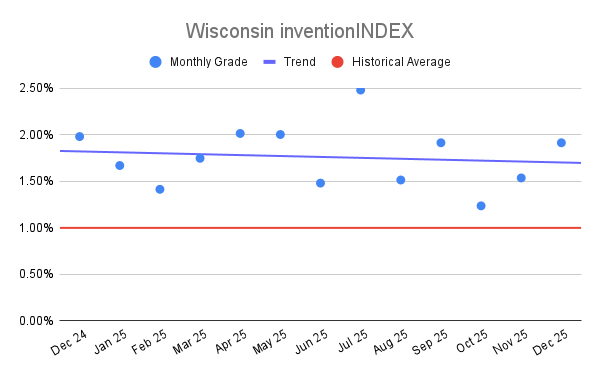 Wisconsin inventionINDEX December 2025
  Wisconsin inventionINDEX Novem
