

The Research Credit for Increasing Research Activities is a Wisconsin tax incentive that reduces tax liability based on incremental spending on qualified research conducted within the state. It allows businesses to offset income or franchise taxes and provides a cash refund for up to 25% of the current year’s unused credit.
The Wisconsin research credit system represents a sophisticated intersection of state industrial policy and federal tax alignment. Since its inception in 1984, the credit has functioned as a primary mechanism for the State of Wisconsin to foster a climate of innovation, particularly within its robust manufacturing and biotechnology sectors. While the credit fundamentally mirrors the structural requirements of Internal Revenue Code (IRC) Section 41, Wisconsin’s implementation includes specific geographic restrictions, tiered rate structures for targeted technologies, and a progressively increasing refundable component that distinguishes it from many other state-level R&D incentives. To understand the credit’s application, one must navigate a complex landscape of Wisconsin Statutes, Department of Revenue (DOR) publications, and administrative rules that govern everything from the definition of a “frame” in a motorcycle to the sharing of credits within a multi-corporate combined group.
Legislative Intent and Economic Foundation
The primary legislative intent behind the Wisconsin research credit is to lower the after-tax cost of research and development (R&D) to stimulate private investment that might otherwise not occur due to market failures. Economic research cited by the Wisconsin Legislative Fiscal Bureau suggests that private firms often invest in R&D only to the level where the appropriable revenues make the investment profitable, ignoring the broader social returns—such as technological spillovers—that benefit the public and other firms. Studies have indicated that the optimal social investment in R&D may be twice the actual private amount invested, with social returns to private investment sometimes reaching a ratio of 4 to 1.
Wisconsin’s specific focus on “increasing” research activities reflects an incremental credit philosophy. Rather than subsidizing the total R&D spend, the credit targets the marginal dollar spent above a historical base. This design is intended to reward businesses that expand their innovative footprint in Wisconsin, rather than those maintaining a status quo. Furthermore, the credit acts as a competitive tool to attract and retain high-compensated engineers and researchers who might otherwise migrate to national innovation hubs. By making R&D cheaper, Wisconsin enables local firms to offer more competitive compensation packages and sophisticated laboratory infrastructure.
Statutory Authority and Classification
The credit is codified across several sections of the Wisconsin Statutes, depending on the type of taxpayer claiming the incentive:
| Taxpayer Type | Statutory Section |
|---|---|
| Individuals, Estates, and Trusts | Section 71.07(4k) |
| Corporations (Income and Franchise Tax) | Section 71.28(4) |
| Insurance Companies | Section 71.47(4) |
These statutes empower the Wisconsin Department of Revenue to administer the credit, providing the “full power” to conduct proceedings and take actions necessary to ensure compliance. The statutes also define the three primary types of research activities that qualify for varying credit rates:
- General Research Activities: The standard credit for qualified research expenses.
- Internal Combustion Engine Research: An enhanced credit for research related to engines and the vehicles they power.
- Energy Efficient Product Research: An enhanced credit for research related to lighting, building automation, and hybrid vehicle batteries.
Defining Qualified Research: The Federal-State Nexus
Wisconsin defines “qualified research” by referencing IRC Section 41(d) and related federal regulations. However, the state’s conformity to the IRC is “static,” meaning it adheres to the code as it existed on specific dates, subject to selective decoupling.
The Four-Part Test for Eligibility
To be eligible for the Wisconsin research credit, a project must satisfy the rigorous “Four-Part Test” established under federal law and adopted by the Wisconsin DOR:
- Permitted Purpose: The activity must relate to a new or improved business component’s function, performance, reliability, or quality. A business component is defined as any product, process, software, technique, formula, or invention to be held for sale, lease, or license, or used in the taxpayer’s trade or business.
- Elimination of Uncertainty: The taxpayer must encounter uncertainty at the outset regarding the capability or method of developing the component, or its appropriate design.
- Process of Experimentation: Substantially all activities must involve a process of experimentation, which includes evaluating one or more alternatives through modeling, simulation, or systematic trial and error.
- Technological in Nature: The research must fundamentally rely on the principles of hard sciences, such as engineering, computer science, biological science, or physical science.
Geographic Nexus: The “In-State” Requirement
The most critical modification to the federal definition is the geographic limitation. Wisconsin Statutes Section 71.28(4)(ad)4.a. specifies that “qualified research expenses” include only expenses incurred for research conducted in the state of Wisconsin. This is a strict nexus requirement; expenses incurred for research performed entirely outside the state cannot be allocated to Wisconsin, even if the resulting technology is used exclusively by a Wisconsin branch. If a project involves research conducted both inside and outside the state, the taxpayer must use a reasonable allocation method—often based on labor hours or specific project tracking—to isolate the Wisconsin-based portion.
Classification of Qualified Research Expenses (QREs)
Under the guidance of DOR Publication 131 and the instructions for Schedule R, QREs are divided into in-house expenses and contract expenses.
In-House Research Expenses
In-house expenses are the direct costs incurred by the taxpayer’s own operations within Wisconsin:
- Wages: This includes payments to employees for actually performing research, or for the direct supervision and support of research. “Wages” generally correspond to the amount reported on the employee’s federal W-2. A crucial exclusion exists: wages used to calculate the Wisconsin Development Zones Jobs Credit cannot be reused for the research credit.
- Supplies: Costs for tangible property used in the research process, excluding land, improvements to land, and any property subject to depreciation.
- Computer Rental/Lease: Amounts paid for the use of computers in qualified research, which in modern contexts often includes cloud hosting costs for dedicated development servers.
Contract Research Expenses
When research is outsourced to third parties, the taxpayer can only include a portion of the cost, reflecting the overhead and profit margins often baked into such contracts:
- General Contractors: 65% of the amount paid for qualified research performed in Wisconsin.
- Research Consortia: 75% of payments to a qualified research consortium—defined as a 501(c)(3) or (6) non-profit organized primarily to conduct scientific research.
- Special Inclusion Rule: Wisconsin modifies the federal standard by allowing 100% of payments to be included if they are made to eligible small businesses, universities, or federal laboratories for research conducted in Wisconsin.
Computational Methodologies and Rates
The Wisconsin research credit utilizes a regular incremental calculation method. There is no alternative simplified credit (ASC) equivalent in Wisconsin, which requires taxpayers to maintain at least three years of historical QRE data to establish a base.
The Tiered Rate Structure
The credit rate depends on the technological focus of the research:
| Research Type | Standard Rate (Excess over Base) | Startup Rate (Total QREs) |
|---|---|---|
| General Qualified Research | 5.75% | 2.875% |
| Internal Combustion Engines | 11.5% | 5.75% |
| Energy Efficient Products | 11.5% | 5.75% |
Determining the Base Amount
For established companies, the “base amount” is 50% of the average Wisconsin QREs for the three taxable years immediately preceding the claim year. If a claimant has no QREs in any of those three preceding years, they are categorized as a “startup” for credit purposes and receive a reduced rate applied to their total current year Wisconsin QREs.
Enhanced Credits for Targeted Technologies
Wisconsin’s commitment to its industrial legacy is evident in the 11.5% enhanced credit rates. These are specifically designed for industries that form the backbone of the state’s high-value manufacturing economy.
Internal Combustion Engines and Vehicles
This enhanced credit applies to designing internal combustion engines and vehicles powered by them, as well as improving the production processes for these components. The statutory definition of “internal combustion engine” is forward-looking and includes substitute products such as fuel cell, electric, and hybrid drives.
Statutes further clarify the scope through specific definitions:
- Frame: For a motorcycle, this includes every part except tires. For a truck, it includes the control system, fuel, and drive train (excluding comfort features or tires). For a generator, it encompasses control modules, fuel scrubbing processes, heat exchangers, and exhaust trains.
- Vehicle: Defined as any frame or component technology in which an engine is mounted for mobile or stationary applications.
Energy Efficient Products
The 11.5% rate also incentivizes the design and manufacturing of products that mitigate energy demand. Qualifying activities must relate to:
- Energy-efficient lighting systems.
- Building automation and control systems.
- Automotive batteries for use in hybrid-electric vehicles.
To claim these enhanced rates, taxpayers must segregate these costs and file a separate Schedule R for each category.
The Refundable Portion of the Research Credit
Historically, the Wisconsin research credit was entirely non-refundable, serving only as an offset against tax liability. However, to support pre-revenue startups and firms in cyclical downturns, the state introduced a refundable cash component.
Evolution of Refundability Percentages
The refundable portion has increased significantly through legislative action:
- Tax years 2018–2020: 10% refundable.
- Tax years 2021–2023: 15% refundable.
- Tax years 2024 and beyond: 25% refundable.
Computation of the Refund
The refundable portion is calculated on Schedule R (Line 20) and is determined by a “lesser of” comparison. Specifically, the refundable amount is the lesser of:
- 25% of the total current year research credit.
- The unused portion of the current year credit remaining after offsetting the current year’s tax liability.
It is vital to distinguish between current year credits and carryforwards. Prior year credit carryforwards are non-refundable and must be used to offset tax before the current year credit is applied. Furthermore, a current year unused credit that is not refunded cannot become refundable in a future year; it simply enters the 15-year non-refundable carryforward pool.
Pass-Through Entities: S-Corporations, Partnerships, and LLCs
In Wisconsin, pass-through entities (PTEs) compute the research credit at the entity level but do not use it to offset entity-level tax (except in cases of certain entity-level tax elections). Instead, the credit flows through to the owners.
Proration and Claiming
The entity must calculate the credit based on its Wisconsin-based research activities and provide that information to each partner, shareholder, or member. The owners claim the credit in proportion to their ownership interests using Schedule 3K-1 (for partnerships/LLCs) or 5K-1 (for S-corps).
Individuals and C-corporations receiving these flow-through credits are eligible to claim the refundable portion on their respective returns. However, the PTE itself must report the distribution of the credit on Schedule R.
Combined Reporting and Credit Sharing
For corporations that are members of a Wisconsin combined group, the treatment of research credits is governed by Administrative Code Tax 2.61 and 2.62.
Sharable vs. Non-sharable Credits
Research credits are generally attributes of the separate corporation that generated them. However, “sharable” non-refundable credits can be used by other members of the unitary group. To be sharable, the corporation must typically have been a member of the same combined group during the year the credit originated.
A corporation with sharable credits is not required to share them. If it chooses to share, it must first use the credit to offset its own tax liability. Any remaining sharable credit is then allocated proportionately to other group members based on their share of the combined group’s tax liability. Refundable credits are not shared; they are claimed on the combined return and refunded to the group’s designated agent.
Funded Research in Combined Groups
A specific rule in Tax 2.61(10)(a) addresses funded research within a combined group. If one member funds research performed by another member, the expenses are considered QREs of the member performing the research. The funding member cannot claim the credit for those payments. This ensures that the credit is tied to the entity actually conducting the innovation in Wisconsin.
Federal Decoupling and IRC Section 174
The landscape of R&D taxation shifted dramatically with the federal Tax Cuts and Jobs Act (TCJA). Under the TCJA, businesses were required to capitalize and amortize research and experimental expenditures over 5 years (domestic) or 15 years (foreign) starting in 2022.
Wisconsin has explicitly decoupled from this amortization requirement. Wisconsin continues to allow the full, immediate expensing of R&E costs for state tax purposes. This creates a mandatory Wisconsin modification on the tax return: taxpayers must add back the federal amortization deduction and subtract the full Wisconsin research expense. Because Wisconsin defines “qualified research” by reference to IRC 174, this decoupling means the Wisconsin credit calculation uses the full current year expense, while the federal credit might use the amortized amount.
Administrative Guidance and Recordkeeping
The Wisconsin Department of Revenue provides extensive guidance through Publication 131 and the instructions for Schedule R. Taxpayers are advised that the “burden of proof” for a credit claim lies with them.
Audit Triggers and Evidence
The DOR may audit research credit claims to ensure the activities meet the Four-Part Test and the geographic nexus. Essential documentation includes:
- Project Lists: A comprehensive list of all R&D projects with descriptions of the technical goals and uncertainties.
- Labor Tracking: Time sheets or allocation models that link specific employee wages to specific projects.
- Financial Substantiation: Invoices and receipts for supplies and contract payments.
- Process Evidence: Innovation logs, bug fix records, testing protocols, and photographs of prototypes.
Statute of Limitations and Carryforwards
A claim for the research credit must be filed within four years of the unextended due date of the return for the year the expenses were incurred. In the case of CA Lawton Co. v. Wisconsin Department of Revenue, the Tax Appeals Commission clarified that a taxpayer cannot claim a 15-year carryforward unless the credit was first “computed and claimed” on a return filed within the 4-year statute of limitations. This means if a firm incurs R&D expenses in 2020 but fails to report them until 2026, those credits are lost, even though the 15-year carryforward window would theoretically still be open.
Comprehensive Computational Example
To demonstrate the application of these rules, consider “Oshkosh Innovate LLC,” a Wisconsin-based manufacturer specializing in energy-efficient power systems. The entity is a partnership with two equal partners (Partner A and Partner B).
Step 1: Identify Wisconsin QREs for 2024
Oshkosh Innovate LLC incurs the following expenses in Wisconsin:
- Wages for Engine Design: $600,000 (researching hybrid drive frames).
- Supplies for Engine Lab: $150,000.
- Wages for General Manufacturing Improvement: $200,000.
- Contract Research (Wisconsin University): $100,000 (qualifies for 100% inclusion).
Totals for 2024:
- Enhanced (Engine) QREs: $750,000 ($600k wages + $150k supplies).
- General QREs: $300,000 ($200k wages + $100k contract).
Step 2: Establish the Base Amount
The LLC’s average Wisconsin QREs for the prior three years (2021-2023) were $500,000 for Engine research and $200,000 for General research.
- Engine Base Amount: 50% of $500,000 = $250,000.
- General Base Amount: 50% of $200,000 = $100,000.
Step 3: Compute the Credits
- Enhanced Credit: 11.5% of ($750,000 – $250,000) = 11.5% of $500,000 = $57,500.
- General Credit: 5.75% of ($300,000 – $100,000) = 5.75% of $200,000 = $11,500.
- Total LLC Credit: $69,000.
Step 4: Flow-Through to Partners
The LLC issues Schedule 3K-1s to its partners. Each partner receives a credit of $34,500.
Step 5: Partner A’s Tax Return (C-Corporation)
Partner A has a Wisconsin tax liability of $5,000. It also has a $2,000 non-refundable research credit carryforward from 2022.
- Prior Year Carryforward: Used first. Tax liability reduced to $3,000 ($5,000 – $2,000).
- Current Year Credit Offset: Partner A uses $3,000 of its $34,500 current year credit to reduce tax to zero.
- Remaining Current Credit: $31,500 ($34,500 – $3,000).
- Refund Calculation:
- Maximum Refund (25% of current year credit): $34,500 x 0.25 = $8,625.
- Unused Credit: $31,500.
- Refundable Amount: Lesser of $8,625 or $31,500 = $8,625.
- Carryforward to 2025: $31,500 – $8,625 = $22,875.
Strategic Implications and Future Outlook
The Wisconsin Research Credit remains a dynamic component of the state’s fiscal strategy. For the 2023-2025 biennium, there were legislative proposals (AB 43/SB 70) to increase the refundable portion even further—up to 50%—to combat the growing pool of unused, non-refundable credits, which was projected to reach over $800 million by 2023. While the current 25% refundability offers significant relief, the sheer volume of carryforwards suggests that many Wisconsin firms still generate more credits than they can utilize, highlighting the credit’s role as a long-term investment rather than just a yearly tax break.
For multistate taxpayers, the Wisconsin credit offers a unique planning opportunity due to the IRC 174 decoupling. While federal tax bills may rise due to amortization, Wisconsin’s immediate expensing provides a valuable state-level offset. However, the lack of an alternative simplified credit method means that rigorous historical data management is non-negotiable for any firm seeking to claim these benefits. As Wisconsin continues to pivot toward advanced energy and automotive technologies, the enhanced 11.5% rates will likely remain the centerpiece of the state’s industrial R&D policy, providing a significant competitive advantage to firms that anchor their innovation labs within the Badger State.
Final Thoughts
In conclusion, the Wisconsin research credit for increasing research activities is a powerful but administratively demanding tool. By weaving together federal standards with state-specific enhancements and a generous refund mechanism, Wisconsin has created a robust framework for incentivizing the next generation of technological breakthroughs. Taxpayers who master the nuances of Schedule R, geographic allocation, and the refundable “lesser of” logic stand to recover significant capital to fuel their ongoing innovative missions.
Who We Are:
Swanson Reed is one of the largest Specialist R&D Tax Credit advisory firm in the United States. With offices nationwide, we are one of the only firms globally to exclusively provide R&D Tax Credit consulting services to our clients. We have been exclusively providing R&D Tax Credit claim preparation and audit compliance solutions for over 30 years. Swanson Reed hosts daily free webinars and provides free IRS CE and CPE credits for CPAs.
Are you eligible?

Why choose us?

Pass an Audit?

What is the R&D Tax Credit?
The Research & Experimentation Tax Credit (or R&D Tax Credit), is a general business tax credit under Internal Revenue Code section 41 for companies that incur research and development (R&D) costs in the United States. The credits are a tax incentive for performing qualified research in the United States, resulting in a credit to a tax return. For the first three years of R&D claims, 6% of the total qualified research expenses (QRE) form the gross credit. In the 4th year of claims and beyond, a base amount is calculated, and an adjusted expense line is multiplied times 14%. Click here to learn more.
Never miss a deadline again

Stay up to date on IRS processes

Discover R&D in your industry

R&D Tax Credit Preparation Services
Swanson Reed is one of the only companies in the United States to exclusively focus on R&D tax credit preparation. Swanson Reed provides state and federal R&D tax credit preparation and audit services to all 50 states.
If you have any questions or need further assistance, please call or email our CEO, Damian Smyth on (800) 986-4725.
Feel free to book a quick teleconference with one of our national R&D tax credit specialists at a time that is convenient for you.
R&D Tax Credit Audit Advisory Services
creditARMOR is a sophisticated R&D tax credit insurance and AI-driven risk management platform. It mitigates audit exposure by covering defense expenses, including CPA, tax attorney, and specialist consultant fees—delivering robust, compliant support for R&D credit claims. Click here for more information about R&D tax credit management and implementation.
Our Fees
Swanson Reed offers R&D tax credit preparation and audit services at our hourly rates of between $195 – $395 per hour. We are also able offer fixed fees and success fees in special circumstances. Learn more at https://www.swansonreed.com/about-us/research-tax-credit-consulting/our-fees/



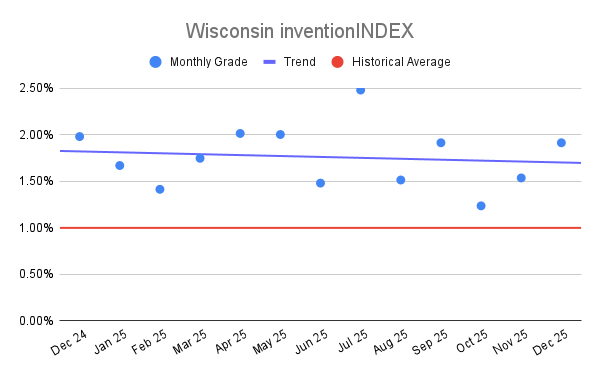 Wisconsin inventionINDEX December 2025
  Wisconsin inventionINDEX Novem
