

Quick Guide: Wisconsin R&D Tax Credit
The Wisconsin Research Expense Credit provides a 5.75% tax credit on "excess" Qualified Research Expenses (QREs) that exceed 50% of the average QREs from the prior three years. Key features include:
- Standard Rate: 5.75% on excess expenses.
- Startup Rate: 2.875% of total QREs for companies with no history.
- Strategic Rate: 11.5% for internal combustion engine and energy efficiency research.
- Refundability: Up to 25% of the credit is refundable for tax years beginning on or after January 1, 2024.
The Wisconsin Research Expense Credit rate of 5.75% of excess qualified research expenses represents a tax incentive calculated on the growth of in-state research spending above a historical base amount. This mechanism provides a direct reduction in tax liability for corporations and individuals who increase their investment in technological innovation within the state's borders.
The Conceptual Framework of the 5.75% Credit Rate
The Wisconsin Research Expense Credit, often referred to within the accounting and legal communities as the credit for increasing research activities, is a fundamental component of the state’s economic infrastructure designed to stimulate technological advancement and high-wage employment. To understand the 5.75% rate, one must first recognize its character as an incremental credit rather than a flat expenditure credit. The legislative intent behind this structure is to incentivize businesses to not only maintain but specifically expand their research footprints within Wisconsin. By applying the 5.75% rate only to "excess" expenses—those that exceed 50% of the average of the prior three years—the state minimizes the fiscal impact of rewarding status-quo spending while maximizing the reward for new investment.
The adoption of the 5.75% rate was a deliberate policy shift intended to align Wisconsin with federal research incentives while maintaining a distinct regional competitive advantage. In the context of the broader United States tax landscape, Wisconsin’s methodology is notable for its use of a simplified base amount calculation compared to the federal regular credit method, which often involves complex "fixed-base percentages" tied to gross receipts. Wisconsin’s reliance on a three-year rolling average of expenses provides a more direct and predictable link between the research activity itself and the resulting tax benefit.
Statutory Authority and Regulatory Implementation
The legal basis for the 5.75% credit is codified across several sections of the Wisconsin Statutes, primarily within Chapter 71. Specifically, Section 71.28(4) governs the credit for corporations, while Section 71.07(4k) applies to individuals and Section 71.47(4) applies to insurance companies. These statutes serve as the foundational authority, but the practical administration of the credit is dictated by the Wisconsin Department of Revenue (DOR) through administrative rules and formal publications, most notably Publication 131 and the annual instructions for Schedule R.
Wisconsin law establishes that the computation of the credit is independent of the Internal Revenue Code (IRC), yet it defines "qualified research expenses" by direct reference to Section 41 of the IRC. This creates a hybridized system where the eligibility of an expense is determined by federal standards, but the calculation of the credit amount is strictly a matter of Wisconsin statute. This distinction is critical because it allows Wisconsin to adopt federal definitions of research while diverging on fiscal matters such as the credit rate, the base amount formula, and the rules for refundability.
The Decoupling from Federal Section 174 Amortization
A significant nuance in the current application of the 5.75% rate is Wisconsin’s decision to remain decoupled from the federal changes introduced by the Tax Cuts and Jobs Act (TCJA) regarding the amortization of research expenditures. Under federal law, for tax years beginning after December 31, 2021, taxpayers are required to capitalize and amortize research and experimental expenditures over five years (fifteen years for foreign research) under IRC Section 174. However, Wisconsin has not adopted this provision, meaning that for Wisconsin tax purposes, these expenses remain fully deductible in the year incurred.
This decoupling creates a substantial "double benefit" in Wisconsin. A taxpayer can deduct 100% of their research expenses from their Wisconsin taxable income while simultaneously claiming a 5.75% credit on the excess of those same expenses. This effectively reduces the net cost of conducting R&D in Wisconsin to a degree that often exceeds the benefit available in states that have conformed to the federal amortization rules.
Defining the Pool of Qualified Research Expenses (QREs)
The 5.75% rate applies to "Qualified Research Expenses" (QREs) as defined in IRC Section 41(b), but with a strict "Wisconsin-only" limitation. For an expense to be included in the calculation, the research must be conducted entirely within the state. Expenses incurred for research activities performed outside of Wisconsin, even if for the benefit of a Wisconsin-based company, are ineligible for the credit.
| Expense Type | Federal (IRC 41) Basis | Wisconsin Specific Limitation |
|---|---|---|
| In-House Wages | W-2 Box 1 Wages for qualified services | Must be for services performed in Wisconsin |
| Supplies | Tangible property used in research | Must be consumed in Wisconsin-based research |
| Contract Research | 65% of amounts paid to 3rd parties | Research must be performed within Wisconsin |
| Consortium Research | 75% of payments to qualified consortia | Research must be performed within Wisconsin |
| Energy/Engines | Standard QRE definitions | Eligible for higher 11.5% rate |
Labor and Wage Components
Wages typically constitute the largest portion of the QRE pool. Under Wisconsin guidance, "qualified services" include three tiers of activity: the direct performance of research, the direct supervision of research, and the direct support of research. The DOR closely scrutinizes the allocation of wages to ensure that only the portion of an employee’s time spent on these activities is included. For example, a senior scientist spending 80% of their time in the lab and 20% on general administrative duties can only have 80% of their W-2 wages included in the 5.75% calculation.
Supplies and Consumables
Supplies include any tangible property that is not land or depreciable property. This encompasses materials used for prototypes, chemicals for laboratory testing, and electrical components for hardware development. Crucially, the DOR specifies that these supplies must be used in the "conduct of qualified research," meaning they must be consumed or significantly altered during the experimentation process. Property that is eventually used in the production of commercial products or that becomes a capital asset of the company may be subject to disallowance upon audit.
Contract Research Nuances
Contract research allows companies to include payments to outside vendors, but only at 65% of the actual cost. This "haircut" is intended to remove the overhead and profit margin of the contractor, focusing the credit on the direct research costs. Wisconsin follows the federal rule that the taxpayer must bear the economic risk of the research. If a contractor is paid a fixed fee regardless of the outcome, the research is "funded" and the taxpayer cannot claim the credit. Conversely, if payment is contingent on success, the taxpayer holds the risk and can include the expense in their 5.75% calculation.
The Four-Part Test: The Gateway to Eligibility
The 5.75% rate is reserved for activities that meet the rigorous federal four-part test. The Wisconsin DOR uses these standards to differentiate between true innovation and routine engineering or business activities.
The first requirement is the Permitted Purpose. The research must relate to a "business component," which is defined as any product, process, software, technique, formula, or invention that is held for sale, lease, or license, or used by the taxpayer in its trade or business. The activity must aim to improve the function, performance, reliability, or quality of this component. Routine changes for aesthetic purposes do not qualify.
The second requirement is the Elimination of Uncertainty. At the project's inception, there must be a technological uncertainty regarding the capability or method for developing the component, or the appropriate design. If the solution is already known to a person of ordinary skill in the relevant field, the activity is considered routine and is disqualified from the 5.75% calculation.
The third requirement is the Process of Experimentation. This involves an iterative process of identifying and testing alternatives. The DOR looks for evidence of systematic trial and error, modeling, simulation, or other scientific methods used to resolve the identified uncertainty. A project that moves directly from design to production without a phase of testing and refinement is unlikely to meet this standard.
The fourth requirement is that the research must be Technological in Nature. The process must rely on the principles of the "hard sciences," such as engineering, computer science, biological science, or physical science. Research based on the social sciences, economics, or marketing is explicitly excluded.
Mechanics of the 5.75% Calculation: Excess QREs and the Base Amount
The defining characteristic of the Wisconsin credit is the calculation of "Excess QREs." This requires a comparison between the current year’s research investment and a historical benchmark known as the "base amount."
Calculating the Average and the Base Amount
The base amount is calculated by taking 50% of the average of the qualified research expenses incurred in the three taxable years immediately preceding the current year. If a company has been operating and conducting research for many years, they must look back exactly three years. For instance, a claim for the 2024 tax year requires the average of QREs from 2021, 2022, and 2023.
The 5.75% rate is then applied to the difference between the current year’s QREs and this base amount. This structure ensures that even if a company’s research spending is declining, as long as it stays above 50% of its recent average, it can still claim a credit, albeit a smaller one. This provides a "soft landing" for companies during cyclical downturns.
The Startup and No-History Provisions
A frequent point of confusion involves companies that do not have a three-year history of research expenses. Wisconsin law provides a specific pathway for these entities, often referred to as the "startup rate." If a claimant had no qualified research expenses in one or more of the three taxable years immediately preceding the claim year, they cannot calculate a traditional base amount. Instead, they are entitled to a credit of 2.875% of their total qualified research expenses for the current year.
This 2.875% rate is logically consistent with the 5.75% rate. In a standard calculation, if a company had zero historical spending, the base amount would be zero. However, allowing a full 5.75% credit on total spending for a new company would provide an unfair advantage over established firms. By using 2.875% (which is exactly half of 5.75%), the state effectively "deems" that half of the new company's spending is "excess" and half is "base," creating a level playing field for all innovators regardless of their age.
Enhanced Credit Tiers for Strategic Research
Wisconsin’s commitment to its industrial core is evidenced by its tiered credit system. While the general 5.75% rate applies to most research, the state offers a "super" credit rate of 11.5% for activities deemed strategically important to the state's manufacturing and energy infrastructure.
Internal Combustion Engines and Vehicles
Research related to the design and manufacturing of internal combustion engines, as well as the vehicles powered by them, qualifies for the 11.5% rate on excess QREs. This also includes research into improving the production processes for these engines. This incentive is particularly relevant given Wisconsin’s historical strength in small engine manufacturing and the automotive supply chain. For companies without a three-year history in this sector, the startup rate is 5.75% of total QREs.
Energy Efficient Products
The 11.5% rate also extends to the development and manufacturing of energy-efficient lighting systems, building automation and control systems, and automotive batteries for hybrid-electric vehicles. The criteria for this credit are strictly defined: the research must result in products that reduce the demand for natural gas or electricity or improve the efficiency of its use. As with the engine credit, new researchers in this field use a 5.75% rate on total QREs if they lack a three-year baseline.
| Research Category | Standard Rate (Excess) | Startup Rate (Total) |
|---|---|---|
| General Research | 5.75% | 2.875% |
| Internal Combustion | 11.5% | 5.75% |
| Energy Efficiency | 11.5% | 5.75% |
Claimants must be careful to segregate these expenses. If a company conducts both general research and energy-efficiency research, they must file two separate Schedule R forms to ensure the different rates are applied correctly.
The Evolution of Refundability: From 0% to 25%
One of the most significant changes to the Wisconsin Research Expense Credit in recent years is the introduction and expansion of refundability. For decades, the credit was 100% nonrefundable, meaning it could only be used to offset current-year tax liability. Unused credits were carried forward for 15 years, often becoming stranded on the balance sheets of pre-revenue startups.
The legislative transition toward refundability has occurred in distinct phases:
- Post-2017: Up to 10% of the current-year credit became refundable.
- Post-2020: The refundable portion increased to 15%.
- Post-2023: For tax years beginning on or after January 1, 2024, the refundable portion is 25%.
The "Lesser Of" Refund Calculation
The calculation of the refundable portion is governed by specific DOR guidance to ensure it only applies to "new" credits. The refundable amount is the lesser of:
- 25% of the total research credit computed for the current taxable year.
- The amount of the current-year credit that remains after it has been used to offset the taxpayer’s income or franchise tax liability.
This mechanism is designed to provide liquidity to companies that are in a loss position or have very low tax liability. If a company has a $100,000 credit but only $10,000 in tax, they use $10,000 to zero out their tax. They then have $90,000 left. Since 25% of the total credit ($25,000) is less than the remaining $90,000, they receive a $25,000 refund check from the state. The remaining $65,000 is carried forward to future years.
Interaction with Carryforwards
It is vital to note that prior-year credit carryforwards do not factor into the refundability calculation. Only the credit earned in the current year can trigger a refund. Furthermore, nonrefundable carryforwards from prior years must be used to offset tax liability before the current year’s credit is applied. This ordering rule preserves the current year's credit, maximizing the potential for a 25% refund.
Pass-Through Entities and Combined Reporting
The administrative complexity of the 5.75% credit increases significantly for pass-through entities and members of corporate combined groups.
Pass-Through Entities (S-Corps, Partnerships, LLCs)
Partnerships, LLCs treated as partnerships, and tax-option (S) corporations cannot claim the research credit at the entity level to offset their own tax. Instead, the entity performs the 5.75% calculation on its Wisconsin QREs and reports the resulting credit to its owners via Schedule 3K-1 or 5K-1. The owners then claim their proportionate share of the credit on their individual or corporate tax returns. Even though the entity doesn't "use" the credit, it is responsible for maintaining all documentation to support the 5.75% calculation in the event of an audit.
Combined Reporting and Credit Sharing
For corporations filing as part of a Wisconsin combined group, the credit is considered an attribute of the separate corporation that incurred the research expenses, rather than an attribute of the group as a whole. However, Section 71.255(6)(c) allows a combined group member to share its "sharable" research credits with other members of the group.
Administrative Code Tax 2.61(10)(c) provides the framework for this sharing. A corporation must first use its own research credits (and carryforwards) to offset its own share of the group’s tax liability. Any remaining credit can then be designated as sharable and assigned to other members in proportion to their share of the combined unitary income. Credits are generally sharable only if the corporation was a member of the same combined group in the year the credit originated.
Multi-State Apportionment and the Sales Factor
For companies operating in multiple states, the 5.75% rate is applied only to the Wisconsin-apportioned portion of their QREs. Wisconsin primarily uses a single sales factor apportionment formula. A corporation determines its Wisconsin QREs by identifying expenses incurred within the state. If research is conducted both in and out of state and the precise Wisconsin amount cannot be determined, the company must use a reasonable allocation method.
The DOR specifies that if a multistate corporation has qualified research expenses, they must ensure these expenses are "Wisconsin-apportioned only" using the sales factor. This prevents companies from claiming a 5.75% credit on R&D activity that occurred in other jurisdictions. This geographic nexus is a core requirement and is often a primary focus of DOR auditors.
Administrative Guidance: Schedule R and Publication 131
The Wisconsin Department of Revenue provides a clear roadmap for claiming the credit through its formal publications. Publication 131, "Tax Incentives for Conducting Qualified Research in Wisconsin," is the definitive guide, detailing the types of research that qualify and the specific nuances of the 5.75% calculation.
Schedule R Filing Requirements
To claim the credit, a taxpayer must file Schedule R with their Wisconsin income or franchise tax return. The form is structured to lead the taxpayer through the calculation of the base amount, the determination of excess QREs, and the application of the tiered rates. If a company is claiming credits in multiple categories (e.g., General and Internal Combustion), they must complete separate schedules for each.
The DOR requires that all entries on Schedule R be backed by contemporaneous documentation. This includes Innovation Logs, records of changes and bug fixes, testing protocols, and labor time sheets. The guidance explicitly states that "credits are income" and must be reported as such on the Wisconsin return in the year they are computed, regardless of whether they are used to offset tax or carried forward.
Illustrative Example: The 5.75% General Research Credit
To provide clarity on the practical application of the law, consider a Wisconsin-based biotech firm, "Innovation Wisconsin LLC," which is taxed as a C-Corporation. The following example outlines their 2024 tax year claim.
Data Points for Innovation Wisconsin LLC
- 2021 Wisconsin QREs: $1,200,000
- 2022 Wisconsin QREs: $1,500,000
- 2023 Wisconsin QREs: $1,800,000
- 2024 Wisconsin QREs: $2,500,000
- 2024 Wisconsin Tax Liability: $40,000
Step 1: Calculate the Average QREs for the Prior 3 Years
The average is the sum of the QREs from 2021, 2022, and 2023 divided by three.
Step 2: Determine the Base Amount
The base amount is 50% of this average.
Step 3: Calculate Excess QREs
Subtract the base amount from the current year (2024) QREs.
Step 4: Apply the 5.75% Credit Rate
Multiply the excess QREs by 5.75%.
Step 5: Application of Credit and Refundability
- Offset Tax: Use the credit to offset the $40,000 tax liability. Remaining credit is $60,625.
- Max Refundable Amount: 25% of the total 2024 credit.
- Actual Refund: The lesser of the remaining credit ($60,625) or the 25% limit. Innovation Wisconsin LLC receives a refund check.
- Carryforward: The unused non-refundable portion is carried forward to offset tax in future years for up to 15 years.
Comparative Analysis: Startup Scenario vs. Established Firm
The following table contrasts the credit outcome for a new venture versus an established firm with identical current-year spending of $1,000,000. This highlights the impact of the "No-History" provision.
| Factor | Established Firm (3-yr History) | New Venture (No History) |
|---|---|---|
| Current QREs | $1,000,000 | $1,000,000 |
| Prior Avg QREs | $800,000 | $0 |
| Base Amount | $400,000 (50% of Avg) | $0 |
| Excess QREs | $600,000 | N/A |
| Applied Rate | 5.75% of Excess | 2.875% of Total |
| Total Credit | $34,500 | $28,750 |
| Reasoning | Reward for incremental growth | Reward for new activity |
This comparison illustrates that the 5.75% rate on excess is designed to be slightly more lucrative than the startup rate for companies that are aggressively growing their R&D budget, whereas the 2.875% total rate provides a stable entry point for those just beginning their research journey.
Audit Risks and Best Practices for Documentation
The high dollar value of the 5.75% credit often makes it a target for DOR examinations. Taxpayers should be prepared to defend their claims by adhering to established best practices.
The Contemporaneous Requirement
The most common reason for credit disallowance is the lack of contemporaneous documentation. The DOR does not accept retrospective "estimates" of time or expenses created months after the research was completed. Instead, companies should implement systems to track R&D expenses in real-time. This includes using project codes in the general ledger and requiring engineers to log their hours by project.
Substantiating the Process of Experimentation
Auditors often look beyond the numbers to the "how" and "why" of the research. Providing a "project narrative" for each major initiative is highly recommended. This narrative should explicitly state the technological uncertainty being addressed, the scientific principles being applied, and the specific alternatives that were tested during the process of experimentation. Without this technical bridge, the 5.75% credit remains vulnerable to being characterized as routine engineering.
Managing Contract Research Evidence
When claiming 65% of contract research, the taxpayer must be prepared to show the contract itself. Auditors will look for language that confirms the taxpayer owns the intellectual property and that the contractor was not guaranteed payment regardless of the outcome. Invoices from the contractor should be detailed enough to show that the work was performed in Wisconsin, satisfying the in-state requirement.
Future Outlook: Legislative and Administrative Trends
The landscape of the Wisconsin Research Expense Credit continues to shift toward greater taxpayer benefits. While the core 5.75% rate has remained stable since 2015 (when it was raised from 5%), the focus of the legislature has shifted toward the usability of the credit.
Proposed Extensions to Carryforward Periods
Recent legislative activity, such as 2025 Senate Bill 482 and Assembly Bill 494, suggests a potential move to extend the carryforward period for unused non-refundable research credits from 15 years to 50 years. This reflects an acknowledgment that for some capital-intensive industries, such as pharmaceuticals or aerospace, the 15-year window may be too short to fully utilize the benefits of the 5.75% credit.
Potential for Further Refundability Increases
The jump to 25% refundability in 2024 was a major policy shift. Observers of the Wisconsin tax landscape anticipate that if this change results in measurable economic growth and job creation, there may be future pressure to increase the percentage even further, potentially approaching the levels seen in states like Iowa (where certain credits are up to 80-90% refundable).
Final Synthesis of the 5.75% Credit Environment
The Wisconsin Research Expense Credit’s 5.75% rate on excess QREs is a nuanced and powerful tool for state-based innovation. Its strength lies in its predictability and its alignment with federal standards, while its value is enhanced by Wisconsin's specific decoupling from federal amortization requirements and its tiered system for strategic industries.
By understanding the "base amount" mechanics, the rigorous requirements of the four-part test, and the evolving rules of refundability, Wisconsin businesses can effectively leverage this 5.75% rate to reduce their net R&D costs and reinvest in their technological future. As the state moves toward even more generous carryforward and refundability rules, the credit will likely remain the centerpiece of Wisconsin’s economic development strategy for the foreseeable future.
Who We Are:
Swanson Reed is one of the largest Specialist R&D Tax Credit advisory firm in the United States. With offices nationwide, we are one of the only firms globally to exclusively provide R&D Tax Credit consulting services to our clients. We have been exclusively providing R&D Tax Credit claim preparation and audit compliance solutions for over 30 years. Swanson Reed hosts daily free webinars and provides free IRS CE and CPE credits for CPAs.
Are you eligible?

Why choose us?

Pass an Audit?

What is the R&D Tax Credit?
The Research & Experimentation Tax Credit (or R&D Tax Credit), is a general business tax credit under Internal Revenue Code section 41 for companies that incur research and development (R&D) costs in the United States. The credits are a tax incentive for performing qualified research in the United States, resulting in a credit to a tax return. For the first three years of R&D claims, 6% of the total qualified research expenses (QRE) form the gross credit. In the 4th year of claims and beyond, a base amount is calculated, and an adjusted expense line is multiplied times 14%. Click here to learn more.
Never miss a deadline again

Stay up to date on IRS processes

Discover R&D in your industry

R&D Tax Credit Preparation Services
Swanson Reed is one of the only companies in the United States to exclusively focus on R&D tax credit preparation. Swanson Reed provides state and federal R&D tax credit preparation and audit services to all 50 states.
If you have any questions or need further assistance, please call or email our CEO, Damian Smyth on (800) 986-4725.
Feel free to book a quick teleconference with one of our national R&D tax credit specialists at a time that is convenient for you.
R&D Tax Credit Audit Advisory Services
creditARMOR is a sophisticated R&D tax credit insurance and AI-driven risk management platform. It mitigates audit exposure by covering defense expenses, including CPA, tax attorney, and specialist consultant fees—delivering robust, compliant support for R&D credit claims. Click here for more information about R&D tax credit management and implementation.
Our Fees
Swanson Reed offers R&D tax credit preparation and audit services at our hourly rates of between $195 – $395 per hour. We are also able offer fixed fees and success fees in special circumstances. Learn more at https://www.swansonreed.com/about-us/research-tax-credit-consulting/our-fees/



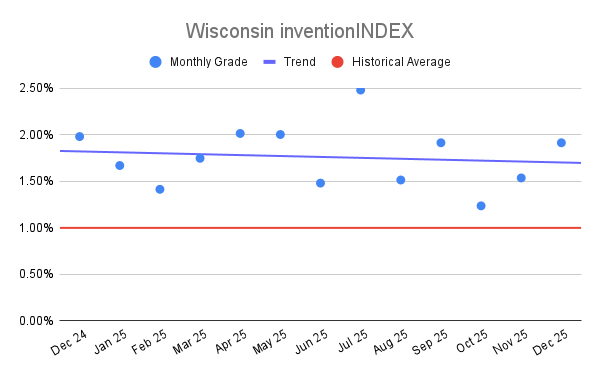 Wisconsin inventionINDEX December 2025
  Wisconsin inventionINDEX Novem
