

Quick Answer: Wisconsin R&D Credit for New Claimants
The Wisconsin Research Expense Credit offers a specific 2.875% flat rate for "new claimants"—entities with no qualified research expenses in the previous three taxable years. Unlike the standard incremental calculation, this rate applies to the total Qualified Research Expenses (QREs) incurred within Wisconsin for the current year. This incentive is designed to provide immediate liquidity to startups and companies relocating to Wisconsin, bypassing the base-period calculations required for established firms.
For entities with no qualified research history in Wisconsin, the 2.875% credit rate provides a direct tax offset calculated against the total qualified research expenses (QREs) incurred within the state during the current taxable year. This specific rate serves as a foundational incentive for startups and new market entrants, allowing them to bypass the standard incremental calculation that requires a three-year historical base period.
The Wisconsin Research Expense Credit, primarily codified under Wisconsin Statutes Sections 71.28(4) and 71.07(4k), represents a strategic effort by the state to foster a robust innovation ecosystem. By decoupling from certain federal constraints while maintaining a tether to the core definitions of Internal Revenue Code (IRC) Section 41, Wisconsin has created a tax environment that rewards both established research intensives and emerging technological firms. The 2.875% rate is not merely a mathematical alternative; it is a policy tool designed to mitigate the "base period" penalty that typically affects young companies or established firms relocating their research activities to Wisconsin. Under the standard incremental model, a company’s credit is determined by its growth in research spending relative to a moving average of the prior three years. For a company with no prior spending, a literal application of the incremental formula could lead to distorted results or disqualification from immediate benefits. The 2.875% rate provides a predictable, flat-rate mechanism that ensures immediate liquidity, which is often critical for the survival of early-stage ventures in the biotechnology, manufacturing, and software engineering sectors.
Statutory Framework and Legislative Intent
The legal architecture of the Wisconsin Research Expense Credit is built upon a combination of state statutory language and federal regulatory definitions. Wisconsin Statutes Section 71.28(4) governs the credit for corporations, while Section 71.07(4k) provides the framework for individuals and pass-through entities, such as partners in a partnership or shareholders in a tax-option (S) corporation. The state has historically leveraged the federal Section 41 rules to define what constitutes "qualified research," but it maintains several critical modifications that reflect local economic priorities. One of the most significant requirements is the "Wisconsin Nexus," which mandates that all qualified research expenses must be incurred for research conducted specifically within the state.
The legislative intent behind these credits, as outlined in various General Fund Tax papers from the Legislative Fiscal Bureau, is to correct for market failures. Private firms often under-invest in research and development because they cannot capture the full economic value of their innovations; the "spillover effects" of their research benefit the broader public and other firms without compensation to the original innovator. By providing a tax credit, Wisconsin lowers the after-tax cost of R&D, thereby incentivizing a level of investment that more closely aligns with the social benefit of technological progress. The 2.875% rate specifically addresses the "barrier to entry" for new firms, ensuring that the state remains competitive against other jurisdictions that might offer more immediate, non-incremental incentives.
Statutory Rates and Incremental LogicThe Wisconsin credit system is tiered based on the history of the claimant and the nature of the research being performed. For most businesses, the standard credit is 5.75% of the amount by which current-year QREs exceed 50% of the average QREs from the three preceding taxable years. This "incremental" approach is designed to reward companies for increasing their investment in the state. However, the law provides a specific "safe harbor" rate for those without a three-year history.
| Claimant Profile | Applicable Credit Rate | Calculation Base |
|---|---|---|
| Established (3+ years history) | 5.75% | Excess QREs over 50% of 3-year average |
| New Claimant (0 years history) | 2.875% | Total current year QREs |
| Internal Combustion Engines (Established) | 11.5% | Excess QREs over 50% of 3-year average |
| Internal Combustion Engines (New) | 5.75% | Total current year QREs |
| Energy Efficient Products (Established) | 11.5% | Excess QREs over 50% of 3-year average |
| Energy Efficient Products (New) | 5.75% | Total current year QREs |
The 2.875% rate is exactly half of the 5.75% standard rate. The logic of this reduction is that while established firms only get a credit on their growth (the portion above the 50% base), new claimants get the credit on their entire spend. This prevents a "windfall" for new firms while still providing a substantial benefit that acknowledges their lack of a historical baseline.
The "New Claimant" Definition and the Three-Year Rule
A critical aspect of applying the 2.875% rate is the precise definition of a "new claimant." According to guidance from the Wisconsin Department of Revenue (DOR) and Publication 131, a claimant qualifies for the 2.875% rate if they had no qualified research expenses in "any of the 3 taxable years immediately preceding" the year for which the credit is claimed. This condition is more nuanced than it initially appears. If a company has been in business for ten years but only started conducting research in Wisconsin this year, they are considered a "new claimant" for the purposes of the credit.
Furthermore, the DOR provides specific instructions for entities that may have a partial history. If a claimant had QREs in only one or two of the three preceding years, they are still directed to use the 2.875% rate. The rationale is that an average cannot be properly calculated for an incremental base if the three-year window is incomplete. In such cases, the taxpayer must check the specific box on Schedule R, Line 9, which signals to the DOR that the entity is bypassing the incremental calculation in favor of the flat-rate 2.875% application.
Taxable Year ConsiderationsThe credit applies to taxable years beginning after December 31, 2014, for most modern corporate structures. However, the inclusion of individuals and pass-through entities dates back to tax years beginning on or after January 1, 2013. For a new claimant, the first "taxable year" of research sets the clock for future eligibility. In the second year of research, the claimant will still typically use the 2.875% rate because they will not yet have a "three taxable years preceding" history. This "on-ramp" period allows the firm to accumulate a three-year history before transitioning to the 5.75% incremental model, which potentially offers a higher dollar-value credit as the research program scales up.
Qualified Research Expenses: The Nexus Requirement
To claim the 2.875% credit, the expenses must meet the definition of "qualified research expenses" (QREs) as set forth in Section 41 of the Internal Revenue Code. However, Wisconsin imposes a strict geographic limitation: expenses must be incurred for research conducted in Wisconsin. This creates a "nexus" requirement that is often the subject of audit scrutiny.
Categories of Eligible ExpensesThere are three primary pillars of QREs that a new claimant can include in their 2.875% calculation.
| Expense Category | Description | Wisconsin Limitation |
|---|---|---|
| In-House Wages | Payments to employees for research, supervision, or support. | Research must be performed in WI. |
| Supplies | Tangible property used in research (non-depreciable). | Must be used in WI labs/facilities. |
| Contract Research | Payments to third parties for research on the firm's behalf. | Research must be conducted in WI. |
For wages, the claimant must include only the portion of the employee's time dedicated to qualified research. For example, if a lead engineer spends 80% of their time on new product development and 20% on general administrative tasks, only 80% of their Wisconsin-apportioned W-2 wages may be included in the QRE pool. Supplies are generally limited to items that are consumed during the research process, such as chemicals in a lab or materials used to build a prototype that is not intended for eventual sale.
Contract Research NuancesContract research is subject to a statutory haircut. Only 65% of the amount paid to an outside contractor for qualified research can be included in the QRE calculation. This percentage increases to 75% if the payments are made to a "qualified research consortium," which typically includes non-profit scientific research organizations or universities. For new claimants in Wisconsin, this creates a significant incentive to partner with the University of Wisconsin system or other local research institutions, as the higher includable percentage (75%) directly increases the 2.875% credit amount.
Federal Decoupling and the TCJA Impact
One of the most complex areas of modern tax practice for the Wisconsin R&D credit involves the state's response to the federal Tax Cuts and Jobs Act (TCJA). Under federal law (specifically the changes to IRC Section 174), businesses are now required to capitalize and amortize research expenses over five years (fifteen years for foreign research) rather than expensing them immediately. However, Wisconsin has not adopted Section 13206 of P.L. 115-97.
This means that for Wisconsin purposes, the pre-2022 federal provisions remain in effect. Claimants can still technically expense these costs for state purposes in the year they are incurred when calculating their credit base. This decoupling provides a significant administrative and financial advantage for Wisconsin-based researchers, as it avoids the complicated amortization schedules required at the federal level and allows the 2.875% rate to be applied to the full, non-amortized QRE amount for the current year.
Enhanced Tiers for Strategic Industries
While the 2.875% rate is the "general" rate for new claimants, Wisconsin law identifies specific industries that are eligible for "Enhanced" rates. These sectors are deemed vital to the state’s industrial heritage and its future in the green economy.
Internal Combustion Engine ResearchFor companies engaged in the design of internal combustion engines or related vehicles, the credit rates are doubled. An established firm would receive 11.5% on their incremental growth, while a new claimant in this sector receives 5.75% of their total current year QREs. The definition of an "internal combustion engine" is modern and expansive, including not only traditional gasoline and diesel engines but also "substitute products" such as fuel cells, electric drives, and hybrid-electric vehicle drives.
Energy Efficient ProductsA similar enhancement exists for research related to "Energy Efficient Products." This includes the design and manufacturing of energy-efficient lighting systems, building automation and control systems, and automotive batteries for hybrid-electric vehicles. To qualify for the 5.75% new claimant rate in this category, the research must be proven to reduce the demands for natural gas or electricity or improve the efficiency of its use.
| Industry Type | Established Incremental Rate | New Claimant Flat Rate |
|---|---|---|
| General Software/Manufacturing | 5.75% | 2.875% |
| EV/Engine Research | 11.5% | 5.75% |
| Smart Building/Lighting | 11.5% | 5.75% |
Refundability and the 2024 Transition
The most dramatic shift in the value proposition of the 2.875% credit rate has been the state's move toward refundability. Historically, the research credit was nonrefundable, meaning it could only be used to offset actual tax liability. Any unused credit was carried forward for 15 years. For many new claimants—especially high-tech startups that operate at a loss for several years—a nonrefundable credit provided no immediate benefit.
The Evolution of Refundable PercentagesBeginning with tax year 2018, the state introduced a partial refund mechanism. This allows a portion of the "earned" credit to be paid out as a cash refund even if the company has zero tax liability.
- 2018–2020: 10% of the credit was refundable.
- 2021–2023: 15% of the credit was refundable.
- 2024 and beyond: 25% of the credit is refundable.
For a new claimant calculating their credit at the 2.875% rate, this means that one-quarter of their credit can be converted directly into cash to fund further research or operational costs. This "cash-back" feature makes the Wisconsin credit one of the more attractive state-level R&D incentives in the United States, particularly for capital-intensive sectors like biotechnology.
The Refundability CalculationThe refundable portion is calculated using a "lesser of" logic. According to Publication 131 and Schedule R instructions, the refundable amount is the lesser of:
- The maximum percentage for the year (e.g., 25% for 2024) multiplied by the total current year research credit.
- The amount of the current year research credit remaining after subtracting the amount used to offset the taxpayer's current year income or franchise tax.
Any portion of the credit that is not refunded and not used to offset current tax becomes a nonrefundable carryforward.
Filing Procedures and Administrative Compliance
To successfully claim the 2.875% credit, taxpayers must navigate the Department of Revenue's filing requirements with precision. The primary document for this purpose is Wisconsin Schedule R.
Schedule R Instructions for New ClaimantsThe instructions for Schedule R contain specific "Line 9" logic for entities with no research history. The claimant must:
- Check the box on Line 9 to indicate they had no QREs in one or more of the three prior years.
- Leave Lines 9a through 9e blank.
- Enter "0" on Line 10 (the base amount).
- Enter the current year's Wisconsin QREs on Line 11.
- Use the 2.875% rate (or 5.75% for enhanced industries) to compute the total credit.
A claimant must file a separate Schedule R for each type of research credit they are claiming. For example, if a company is performing both general software research and research into hybrid-electric batteries, they must complete one Schedule R for the 2.875% general credit and a second Schedule R for the 5.75% enhanced energy-efficient products credit.
Pass-Through Entity ReportingFor partnerships, limited liability companies (LLCs) treated as partnerships, and tax-option (S) corporations, the credit is computed at the entity level but "flows through" to the individual owners. These entities do not "use" the credit to offset their own tax (as they are generally non-taxable at the entity level for income tax purposes). Instead, they calculate the credit on Schedule R and then prorate the amount among shareholders, partners, or members based on their ownership interest. These owners then claim the credit on their own individual returns (e.g., Form 1 or Form 1NPR).
Documentation and Audit Readiness
Given the increased value of the credit due to its refundable nature, the Wisconsin DOR has signaled a focus on rigorous substantiation. New claimants must be prepared to prove both the "qualification" of their research and the "location" of the expenses.
Proving the "Four-Part Test"The DOR follows federal standards in requiring that research meet four criteria:
- Technological in Nature: The research must fundamentally rely on the hard sciences.
- Permissible Purpose: It must be for a new or improved business component’s function, performance, or quality.
- Elimination of Uncertainty: The research must seek to discover information to resolve a technical uncertainty.
- Process of Experimentation: Substantially all activities must involve a process of testing and evaluating alternatives.
Recommended records for a new claimant include:
- Project Lists: A comprehensive list of all research projects active during the year.
- Employee Time Tracking: Logs or systems that track the hours spent by employees on specific qualified tasks.
- Supply Invoices: Documentation showing that materials were purchased for and used in research within Wisconsin.
- Contractor Agreements: Contracts specifying the nature of the research to be performed and the location of the work.
Comprehensive Example: The "Badger Bio-Tech" Scenario
To illustrate the application of these rules, consider a hypothetical startup, Badger Bio-Tech LLC, which begins operations in Madison, Wisconsin, in 2024.
Step 1: Expense IdentificationDuring 2024, Badger Bio-Tech incurs the following expenses in its pursuit of a new energy-efficient pharmaceutical manufacturing process.
| Expense Detail | Amount | Wisconsin Qualified? | Includable Amount |
|---|---|---|---|
| Lead Scientist (WI resident) | $150,000 | Yes (100% R&D) | $150,000 |
| Lab Technician (WI resident) | $80,000 | Yes (100% R&D) | $80,000 |
| Lab Supplies (Consumed in WI) | $45,000 | Yes | $45,000 |
| Outsourced Software Dev (WI-based firm) | $100,000 | Yes (65% limit) | $65,000 |
| Outsourced Testing (IL-based firm) | $50,000 | No (Non-WI nexus) | $0 |
| Total QRE Pool | $340,000 |
Badger Bio-Tech is a new claimant with no research history in 2021, 2022, or 2023. Under normal circumstances, they would use the 2.875% rate. However, because their research relates to "Energy Efficient Products" (the manufacturing process reduces electricity demand for pharmaceutical production), they qualify for the enhanced "New Claimant" rate of 5.75%.
Credit Total = $340,000 x 0.0575 = $19,550
Step 3: Refundability Calculation (2024 Rules)Assume the owners of Badger Bio-Tech have a combined Wisconsin tax liability of $2,000 that can be offset by this credit.
- Tax Offset: The first $2,000 of the credit is used to reduce the owners' tax liability to zero.
- Remaining Credit: $19,550 - 2,000 = $17,550.
- Maximum Refundable Limit: 25% of the total credit generated.
Refund Max = 19,550 x 0.25 = $4,887.50 - Actual Refund: The refund is the lesser of the remaining credit ($17,550) or the 25% cap ($4,887.50). The owners receive a cash refund of $4,887.50.
- Carryforward: The unused, nonrefundable portion of the credit is carried forward.
Carryforward = 17,550 - 4,887.50 = $12,662.50
This carryforward can be used by the owners to offset their Wisconsin income tax for the next 15 years.
Interaction with Other State Credits
New claimants should also be aware of how the R&D credit interacts with other Wisconsin incentives. Specifically, the "Development Zones" credit can provide an additional layer of benefit. Under Wisconsin Statutes Section 71.28(1dx), a corporation may claim a credit for research conducted within a designated development zone.
This Development Zone Research Credit is calculated as 5% of the incremental increase in research expenses. However, there is an "anti-double-dipping" provision: compensation used to compute the Development Zone credit cannot also be used to compute the standard Research Expense Credit. Taxpayers must strategically choose which credit offers the higher value, or carefully allocate expenses between the two if they are performing research both inside and outside of a designated zone.
Combined Group Reporting and Credit Sharing
For larger corporations that are members of a "combined group" for Wisconsin tax purposes, the 2.875% rate and subsequent credit have unique sharing rules. Generally, a corporation can only share its nonrefundable research credits with other members of the combined group if it was a member of that same group during the year the credit was originated.
Importantly, the refundable portion of the credit cannot be shared. It must be claimed by the specific member that generated the credit and is refunded to the designated agent of the group. If a member wishes to share the nonrefundable portion, they must first use it to offset their own individual tax liability within the group return before any excess can be applied to the liabilities of other members.
Future Outlook and Legislative Trends
The landscape for the Wisconsin Research Expense Credit is one of expansion. Beyond the recent increase in refundability to 25%, there are active legislative efforts to extend the carryforward period. Assembly Bill 494 and Senate Bill 482, introduced in the 2025 legislative session, propose extending the carryforward period for unused research credits from 15 years to 50 years.
This proposal recognizes that for industries with extremely long development cycles—such as aerospace or deep-tech manufacturing—a 15-year window may expire before the company reaches full commercial profitability and a high tax liability. A 50-year carryforward would essentially ensure that no "earned" credit ever goes to waste, further incentivizing long-term capital commitments in the state. Additionally, the state's continued refusal to adopt the federal capitalization requirements of the TCJA positions Wisconsin as a "tax haven" for R&D within the Midwest, potentially attracting firms from neighboring states that have more restrictive conformity to the current IRC.
Final Thoughts
The 2.875% credit rate for new claimants is a cornerstone of Wisconsin's strategy to democratize innovation. By providing a flat-rate alternative to the complex incremental model, the state ensures that the next generation of researchers can access vital capital during their most vulnerable stages. Whether through the general 2.875% rate or the enhanced 5.75% rate for green energy and automotive innovation, the credit serves as a powerful tool for economic development. As refundability percentages rise and carryforward periods potentially extend, the Wisconsin Research Expense Credit remains a vital consideration for any firm seeking to conduct high-value research within the state's borders. Success in claiming these credits requires a deep understanding of the nexus requirements, the specific filing mechanics of Schedule R, and a rigorous approach to documenting the technological merit of the research performed.
Who We Are:
Swanson Reed is one of the largest Specialist R&D Tax Credit advisory firm in the United States. With offices nationwide, we are one of the only firms globally to exclusively provide R&D Tax Credit consulting services to our clients. We have been exclusively providing R&D Tax Credit claim preparation and audit compliance solutions for over 30 years. Swanson Reed hosts daily free webinars and provides free IRS CE and CPE credits for CPAs.
Are you eligible?

Why choose us?

Pass an Audit?

What is the R&D Tax Credit?
The Research & Experimentation Tax Credit (or R&D Tax Credit), is a general business tax credit under Internal Revenue Code section 41 for companies that incur research and development (R&D) costs in the United States. The credits are a tax incentive for performing qualified research in the United States, resulting in a credit to a tax return. For the first three years of R&D claims, 6% of the total qualified research expenses (QRE) form the gross credit. In the 4th year of claims and beyond, a base amount is calculated, and an adjusted expense line is multiplied times 14%. Click here to learn more.
Never miss a deadline again

Stay up to date on IRS processes

Discover R&D in your industry

R&D Tax Credit Preparation Services
Swanson Reed is one of the only companies in the United States to exclusively focus on R&D tax credit preparation. Swanson Reed provides state and federal R&D tax credit preparation and audit services to all 50 states.
If you have any questions or need further assistance, please call or email our CEO, Damian Smyth on (800) 986-4725.
Feel free to book a quick teleconference with one of our national R&D tax credit specialists at a time that is convenient for you.
R&D Tax Credit Audit Advisory Services
creditARMOR is a sophisticated R&D tax credit insurance and AI-driven risk management platform. It mitigates audit exposure by covering defense expenses, including CPA, tax attorney, and specialist consultant fees—delivering robust, compliant support for R&D credit claims. Click here for more information about R&D tax credit management and implementation.
Our Fees
Swanson Reed offers R&D tax credit preparation and audit services at our hourly rates of between $195 – $395 per hour. We are also able offer fixed fees and success fees in special circumstances. Learn more at https://www.swansonreed.com/about-us/research-tax-credit-consulting/our-fees/



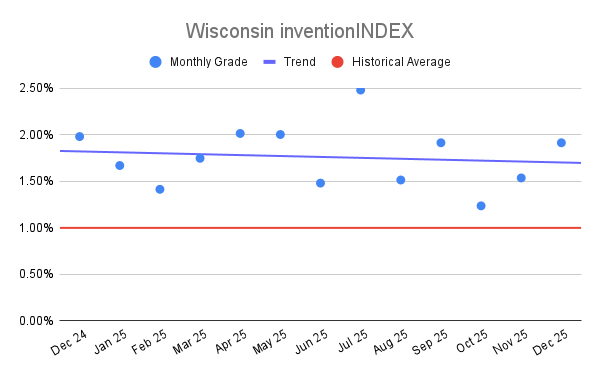 Wisconsin inventionINDEX December 2025
  Wisconsin inventionINDEX Novem
