

Quick Summary: Wisconsin Research Facilities Credit Carryforward
The Wisconsin Research Facilities Credit is a legacy, nonrefundable tax incentive for capital investments in research infrastructure made prior to January 1, 2014. While new credits can no longer be generated, unused amounts can be carried forward for 15 years. Companies must prioritize these "Carryforward only" credits on Schedule R before utilizing current-year refundable expense credits to maximize tax efficiency and prevent expiration.
The Research Facilities Credit (Carryforward only) refers to the remaining balance of nonrefundable tax credits earned by businesses for capital investments in Wisconsin research infrastructure prior to the credit's statutory sunset on December 31, 2013. These credits, originally generated through the construction or equipment of research-oriented buildings, can no longer be newly produced but may be applied against tax liabilities for up to fifteen years following their initial computation.
The transition of the Wisconsin research and development tax credit landscape from a facility-based incentive to a primarily expense-based incentive reflects a broader shift in regional economic policy aimed at prioritizing human capital and continuous innovation over static physical assets. To understand the "Carryforward only" status of the Research Facilities Credit, one must examine the specific legal architecture established under Wisconsin Statutes Section 71.28(5). While the state provides active research tax credits equal to a percentage of the increase in a business’s qualified research expenses, the facility-specific credit was designed to offset the significant costs associated with building the physical environment required for such research to occur.
Historical Evolution and Legislative Intent
The Wisconsin Research Facilities Credit was established during a period when the state sought to bolster its reputation as a hub for advanced manufacturing and biotechnology. By offering a credit for the "construction and equipping" of new or expanded facilities, the legislature intended to anchor research-intensive companies within state lines, knowing that significant capital investments in real property often lead to long-term employment stability. Between the inception of the credit and its sunset in 2013, the state adjusted the incentive rates to reflect changing economic priorities, eventually increasing the standard credit from 5 percent to 10 percent for most entities in the later years of the program.
The decision to sunset the credit after December 31, 2013, signaled the Department of Revenue’s shift toward the "Research Expense Credit" under Section 71.28(4). This modern credit focuses on the "increasing" nature of research, rewarding companies that grow their annual spending on wages, supplies, and contract research. However, because the capital investments made in facilities were often multi-million dollar projects, many companies generated more credits in a single year than they could possibly use against their immediate tax liability. This necessitated the 15-year carryforward provision, which allows these legacy credits to remain on the books as a deferred tax asset, used year-over-year until they are either exhausted or they expire.
| Era | Primary Statute | Standard Rate | Enhanced Rate (Engines/Energy) | Credit Status |
|---|---|---|---|---|
| Pre-2007 | § 71.28(5) | 5.0% | N/A | Active Generation |
| 2007-2013 | § 71.28(5) | 10.0% | 10.0% | Active Generation |
| 2014-Present | § 71.28(5) | 0.0% | 0.0% | Carryforward Only |
The "Carryforward only" designation on current Wisconsin tax forms such as Schedule R serves as a reminder that the entry point for new facility credits is closed. Taxpayers who previously invested in tangible, depreciable property for research purposes must now track these amounts through a rigorous schedule of expiration dates, ensuring that they prioritize the use of these older, nonrefundable facility credits before they apply current-year research expense credits.
Statutory Framework and Eligible Expenditures
The legal authority for the Research Facilities Credit is found primarily in Wisconsin Statutes Sections 71.28(5) for corporations, 71.07(5) for individuals, and 71.47(5) for insurance companies. The statute defined "qualified research expenses" by referencing Section 41 of the Internal Revenue Code (IRC), but with critical state-specific modifications. Most notably, the credit was strictly limited to expenses incurred for research conducted in the state of Wisconsin.
Definition of Tangible Depreciable PropertyUnder the law as it existed prior to 2014, eligible amounts included only those paid or incurred for tangible, depreciable property. This specifically excluded "replacement property," as the state’s goal was to incentivize expansion and new technological footprints rather than the mere maintenance of existing facilities. This focus on depreciable property meant that the costs of land acquisition were ineligible, while the costs of constructing a new laboratory, installing specialized HVAC systems for cleanrooms, and equipping the facility with fixed scientific instruments were generally qualifying.
If a building was used for both research and non-research purposes (such as a factory that included a small R&D wing), the taxpayer was required to reasonably allocate the expenses. Wisconsin Statute 71.28(5)(d) mandates that if qualified research expenses are incurred partly within and partly outside the state, or for mixed-use facilities, the amount must be prorated. This proration remains a high-focus area for Department of Revenue auditors when examining carryforward claims from the 2012-2013 tax years.
Comparison of Credit TypesTo properly categorize the Research Facilities Credit (Carryforward only), it is useful to contrast it with the current Research Expense Credit. While both are governed by IRC Section 41 definitions, their mechanics differ substantially.
| Feature | Research Expense Credit (§ 71.28(4)) | Research Facilities Credit (§ 71.28(5)) |
|---|---|---|
| Applicable Costs | Wages, Supplies, Computer Lease, 65% Contract | Construction and Equipment (Buildings) |
| Calculation Method | Incremental (Over 50% of 3-year Average) | Flat Percentage of Current Year Spend |
| Refundability | Partially Refundable (up to 25% in 2024) | Nonrefundable (100% offset only) |
| Current Status | Active - New Credits Allowed | Sunset - Carryforward Only |
| Carryforward Period | 15 Years | 15 Years |
Administrative Guidance from the Department of Revenue
The Wisconsin Department of Revenue (DOR) provides administrative clarity through Publication 131, Tax Incentives for Conducting Qualified Research in Wisconsin. This publication serves as the primary guidance for taxpayers attempting to navigate the complexities of research credits, particularly the transition from the facilities credit to the expense credit. One of the most important administrative rules regarding these credits is that they are considered "income" for Wisconsin tax purposes.
Credits as Taxable IncomeUnlike many federal credits, the Wisconsin research credit computed on Schedule R must be reported as income on the Wisconsin franchise or income tax return in the year it is computed. This rule applies even if the credit is not used in the current year and is instead carried forward. For a taxpayer who earned a $100,000 Research Facilities Credit in 2013, they were required to add that $100,000 to their Wisconsin taxable income in 2013. When they subsequently use that carryforward in 2024, no further income adjustment is necessary, as the tax "cost" of the credit was paid at its inception.
Order of Application and PriorityThe Department of Revenue specifies a strict hierarchy for the application of credits to offset tax liability. Under Wisconsin law, nonrefundable credits must be used before refundable credits. Furthermore, within the category of nonrefundable credits, those with an expiration date should be utilized in the order they were earned (first-in, first-out) to minimize the risk of forfeiture.
The DOR guidance in Publication 131 and the common questions section on their website clarify the interaction between the nonrefundable Research Facilities Credit carryforward and the partially refundable Research Expense Credit:
- First, the taxpayer applies any nonrefundable carryforwards (including the facilities credit) to reduce the gross tax liability toward zero.
- Only after the tax liability has been reduced as much as possible by nonrefundable credits does the taxpayer calculate the refundable portion of the current year’s research expense credit.
- Importantly, a prior year research credit carryforward cannot be used to compute the refundable portion of the current year's credit. Refundability is strictly a feature of the current year's Research Expense Credit generation.
Reporting and Compliance: Schedule R and Schedule CF
For a taxpayer to successfully claim the Research Facilities Credit (Carryforward only), they must complete and file Wisconsin Schedule R. This form is used by individuals, C-corporations, and tax-exempt entities to report and claim research credits.
Detailed Steps for Schedule R CompletionIn the context of the "Carryforward only" facility credit, the following lines on Schedule R (based on 2024/2025 instructions) are critical:
- Carryforward Identification: The taxpayer must identify the portion of the credit that originated from historical facility investments. While the "Current year credit" lines for research facilities (historically found in Section B of older forms) are now effectively zeroed out for new claims, the carryforward amount is aggregated on the general carryover line.
- Line 22 (and associated lines): Taxpayers enter the amount of research credit from prior taxable years that was not used to offset tax liability and has not yet expired.
- Schedule CF Integration: Claimants must also include Schedule CF, which provides a detailed aging of all unused credits. This schedule serves as the "audit trail" for the 15-year expiration clock, showing the year of origin for each credit piece.
The burden of proof for the validity of a carryforward remains with the taxpayer. Because the Research Facilities Credit (Carryforward only) stems from investments made over a decade ago, maintaining contemporaneous records is essential. The DOR requires that businesses keep detailed records of the qualified research activities (QRAs) conducted in the facility and the specific costs incurred.
For facility credits, the "Four-Part Test" defined by IRC Section 41 is the standard for whether the activities conducted inside the building qualified as research:
- Permitted Purpose: The research must relate to a new or improved business component’s function, performance, reliability, or quality.
- Elimination of Uncertainty: The activity must intended to discover information to eliminate uncertainty concerning the capability, method, or design of the business component.
- Process of Experimentation: Substantially all activities must constitute a process of experimentation, involving the evaluation of alternatives.
- Technological in Nature: The research must fundamentally rely on principles of physical or biological science, engineering, or computer science.
If an auditor challenges a facility credit carryforward in 2025 that was earned in 2012, the taxpayer must be able to produce the construction blueprints, project descriptions, and capital expenditure ledgers from that 2012 project.
Application to Pass-Through Entities (PTEs)
Wisconsin’s research credits, including the facility credit carryforward, follow a flow-through mechanism for S-corporations, partnerships, and LLCs treated as partnerships.
The Distribution ProcessPTEs are not eligible to claim the research credit against their own tax liability. Instead, the entity computes the eligibility and amount of the credit based on its own research activities and provides that information to its partners, members, or shareholders. For the Research Facilities Credit (Carryforward only), the "generation" phase happened at the entity level years ago, and the unused portion now resides on the individual tax returns of the owners.
| Entity Type | Reporting Form | Recipient Reporting |
|---|---|---|
| Partnership | Schedule 3K-1 | Form 1 or Form 4 (Partner) |
| S-Corporation | Schedule 5K-1 | Form 1 or Form 4 (Shareholder) |
| LLC (PTE) | Schedule 3K-1 | Form 1 or Form 4 (Member) |
The owners claim the credit in proportion to their ownership interest. If an owner cannot use the full amount of their allocated credit because their personal tax liability is too low, the unused balance becomes a carryforward for that specific individual or corporate partner.
Basis and Source LimitationsFor shareholders of tax-option (S) corporations, the credit is subject to specific limitations. Historically, the credit could only be offset against the tax imposed on the shareholder's prorated share of the tax-option corporation's income. This "source" limitation ensures that a taxpayer cannot use a research credit from a tech-startup investment to offset taxes owed on unrelated income, such as capital gains from real estate or wages from an unrelated job. This nuance is vital for high-net-worth investors who may have complex carryforward schedules across multiple pass-through investments.
Combined Group Reporting and Credit Sharing
Wisconsin's transition to combined reporting in 2009 created a unique set of rules for how "sharable" and "non-sharable" research credits are handled within a unitary business group.
Sharable vs. Non-Sharable CarryforwardsA corporation is not required to share its nonrefundable research credits, but Wisconsin Statute 71.255(6)(c) allows members of a combined group to do so under specific conditions. For a research facility credit carryforward to be "sharable," the corporation must generally have been a member of the same combined group in the year the credit originated.
- Pre-2009 Origination: If the facility credit originated before the mandatory combined reporting era (January 1, 2009), the corporation can still share it if it would have been in that same combined group had Wisconsin law required combined reporting at that time.
- Unitary Business Requirement: The sharing is only permitted between members of the same "unitary business." Administrative Code Tax 2.62 identifies centralized research and development as a hallmark of a unitary business, reinforcing the idea that research performed at one facility often benefits the entire corporate group.
When a combined group member has a significant Research Facilities Credit carryforward, it follows these steps:
- First, apply the carryforward to its own gross tax liability attributable to its separate entity items and its share of the combined unitary income.
- If a balance remains, the member can elect to share all or a portion of that "sharable" amount with other group members.
- This sharing is reported on Form 6CS, Wisconsin Sharing of Research Credits.
This sharing mechanism is incredibly valuable for large manufacturing groups where a specialized research subsidiary (which may generate little to no revenue) built a facility pre-2014. The sharing rules allow the "parent" or other profitable "sales" subsidiaries to utilize that subsidiary's facility carryforwards, effectively reducing the group’s overall state tax liability.
Interaction with Federal Law and Recent IRC Changes
Wisconsin’s research tax credit system leverages Internal Revenue Code Section 41 for its foundational definitions, but it does not follow federal law in all respects.
Federal Section 174 Amortization and Section 280CA major point of divergence between federal and Wisconsin law involves the treatment of research expenditures under IRC Section 174. Following the federal Tax Cuts and Jobs Act (TCJA), businesses are now required to amortize R&D expenses over 5 or 15 years for federal purposes, rather than deducting them immediately. However, Wisconsin currently follows the pre-2022 federal provisions, meaning the state allows for full immediate expensing of these items for Wisconsin purposes.
For a taxpayer utilizing a Research Facilities Credit carryforward, this divergence can create "Wisconsin modifications" on the tax return. Because the Wisconsin credit is based on the federal definition of research but uses different timing rules for expenses, the taxpayer must be diligent in tracking the "book-to-tax" and "federal-to-state" differences that arise.
IRC Section 383 and Corporate ReorganizationsIf a corporation with a large Research Facilities Credit carryforward undergoes a change in ownership, the limitations of IRC Section 383 apply. Section 383 limits the amount of tax liability that can be offset by pre-change credits in any post-change year. This is designed to prevent "credit trafficking," where a profitable company buys a failing company solely to acquire its tax credits. Wisconsin strictly enforces these federal limitations on state-level research carryforwards.
Detailed Example: Multi-Year Lifecycle of a Research Facility Credit
To illustrate how the Research Facilities Credit (Carryforward only) applies in practice, consider the following scenario involving "Badger Aerospace Components," a hypothetical C-corporation based in Milwaukee.
Phase 1: Generation (2012)In 2012, Badger Aerospace invested $20,000,000 to expand its facility for testing high-temperature alloys.
- Qualified Expenditures: $20,000,000 (New construction + equipment).
- Credit Rate: 10%.
- Credit Earned: $2,000,000.
- Reporting: Badger Aerospace reported $2,000,000 as Wisconsin income on its 2012 return.
- Utilization: Due to heavy R&D spending and low sales, the company had $0 tax liability in 2012.
- Carryforward Established: $2,000,000 carryforward created, set to expire in 2027 (15-year succeeds).
Over the next decade, Badger Aerospace utilized small portions of the credit. By the start of the 2024 tax year, the company had $1,200,000 of the original facility credit remaining.
Phase 3: Current Year Application (2024)In 2024, Badger Aerospace has a breakthrough and generates significant profit.
- 2024 Gross Wisconsin Tax Liability: $500,000.
- 2024 Research Expense Credit (Current Year): The company also conducted new research in 2024, earning a $200,000 credit (25% refundable).
The Calculation Sequence:
- Prioritize Carryforward: Badger Aerospace must first use its nonrefundable Research Facilities Credit carryforward. It uses $500,000 of its $1,200,000 carryover to reduce its 2024 tax liability to $0.
- Evaluate 2024 Credit: Because the 2024 tax liability is now $0, the company cannot use the $200,000 Research Expense Credit as an offset.
- Calculate Refund: Under current Wisconsin law (2024+), the company can claim a refund for a portion of the current year credit.
- Maximum Refundable Amount: 25% of $200,000 = $50,000.
- Lesser of Rule: The refund is the lesser of (a) the $50,000 maximum or (b) the remaining unused current year credit ($200,000).
- Result: Badger Aerospace receives a $50,000 refund check.
- Final Carryforward Positions:
- Legacy Facility Credit: $700,000 remaining ($1.2M - $500k), still expiring in 2027.
- 2024 Expense Credit: $150,000 remaining ($200k - $50k refund), expiring in 2039.
Strategic Outcome: By utilizing the "Carryforward only" facility credit first, the company protected its cash flow and maximized its liquidity through the refundable portion of the current year’s expense credit. If the company had reversed the order, it might have lost the facility credits to expiration in 2027 while leaving new credits on the table.
Nuanced Insights and Future Outlook
The "Carryforward only" status of the Research Facilities Credit highlights a significant "stranded credit" risk for Wisconsin’s cyclical industries.
The Expiration TrapFor many biotechnology and advanced manufacturing firms, the "valley of death"—the period between capital investment and product commercialization—can often exceed 15 years. This creates a scenario where a company builds a world-class facility, earns millions in facility credits, but sees those credits expire just as the company finally becomes profitable enough to owe tax. This systemic issue is the primary driver behind Wisconsin Senate Bill 482, which proposes extending the carryforward period from 15 years to 50 years.
If this legislation passes, it would retroactively apply to existing credits that have not yet expired. For a company with a facility credit expiring in 2027, the extension would transform that credit from a "ticking clock" asset into a permanent tax shield that could be used well into the middle of the 21st century.
Accounting for Carryforwards (ASC 740)For professional accountants and corporate controllers, these carryforwards require careful financial statement reporting under ASC 740 (Accounting for Income Taxes).
- Deferred Tax Assets (DTA): The Research Facilities Credit carryforward is recorded as a DTA on the balance sheet.
- Valuation Allowance: If it is "more likely than not" that a company will not generate enough Wisconsin taxable income before the 15-year expiration date, the company must record a valuation allowance to offset the DTA.
- Impact of SB 482: The passage of the 50-year extension would likely allow many Wisconsin companies to release their valuation allowances, resulting in a significant "one-time" boost to reported net income on their financial statements.
Summary of Local State Revenue Office Resources
The Wisconsin Department of Revenue provides several critical touchpoints for entities managing these credits.
| Resource | Primary Utility | Source Reference |
|---|---|---|
| Publication 131 | Definitive guide on R&D definitions and state-specific modifications. | 9 |
| Schedule R | The primary tax form for computing and claiming the credit. | 10 |
| Schedule CF | Tracks the 15-year expiration lifecycle of all unused credits. | 10 |
| Form 6CS | Facilitates sharing of research credits among combined group members. | 10 |
| DOR FAQ Section | Provides practical examples of the order of credit application. | 12 |
Final Thoughts
The Research Facilities Credit (Carryforward only) is a legacy of Wisconsin’s robust early-2000s industrial policy, representing billions of dollars in historical investment in the state’s research infrastructure. While the mechanism for generating new facility credits closed on December 31, 2013, the carryforward provision ensures that those who made these substantial capital commitments continue to receive the promised tax relief for a 15-year window. For the modern Wisconsin taxpayer, the strategic management of these carryforwards requires a sophisticated understanding of the order of credit application, the nuances of combined group sharing, and the ongoing divergence between federal and state research definitions. As legislative efforts continue to push for longer carryforward durations, the Research Facilities Credit remains a vital, if aging, component of the state’s toolkit for incentivizing technological advancement and economic growth.
Who We Are:
Swanson Reed is one of the largest Specialist R&D Tax Credit advisory firm in the United States. With offices nationwide, we are one of the only firms globally to exclusively provide R&D Tax Credit consulting services to our clients. We have been exclusively providing R&D Tax Credit claim preparation and audit compliance solutions for over 30 years. Swanson Reed hosts daily free webinars and provides free IRS CE and CPE credits for CPAs.
Are you eligible?

Why choose us?

Pass an Audit?

What is the R&D Tax Credit?
The Research & Experimentation Tax Credit (or R&D Tax Credit), is a general business tax credit under Internal Revenue Code section 41 for companies that incur research and development (R&D) costs in the United States. The credits are a tax incentive for performing qualified research in the United States, resulting in a credit to a tax return. For the first three years of R&D claims, 6% of the total qualified research expenses (QRE) form the gross credit. In the 4th year of claims and beyond, a base amount is calculated, and an adjusted expense line is multiplied times 14%. Click here to learn more.
Never miss a deadline again

Stay up to date on IRS processes

Discover R&D in your industry

R&D Tax Credit Preparation Services
Swanson Reed is one of the only companies in the United States to exclusively focus on R&D tax credit preparation. Swanson Reed provides state and federal R&D tax credit preparation and audit services to all 50 states.
If you have any questions or need further assistance, please call or email our CEO, Damian Smyth on (800) 986-4725.
Feel free to book a quick teleconference with one of our national R&D tax credit specialists at a time that is convenient for you.
R&D Tax Credit Audit Advisory Services
creditARMOR is a sophisticated R&D tax credit insurance and AI-driven risk management platform. It mitigates audit exposure by covering defense expenses, including CPA, tax attorney, and specialist consultant fees—delivering robust, compliant support for R&D credit claims. Click here for more information about R&D tax credit management and implementation.
Our Fees
Swanson Reed offers R&D tax credit preparation and audit services at our hourly rates of between $195 – $395 per hour. We are also able offer fixed fees and success fees in special circumstances. Learn more at https://www.swansonreed.com/about-us/research-tax-credit-consulting/our-fees/



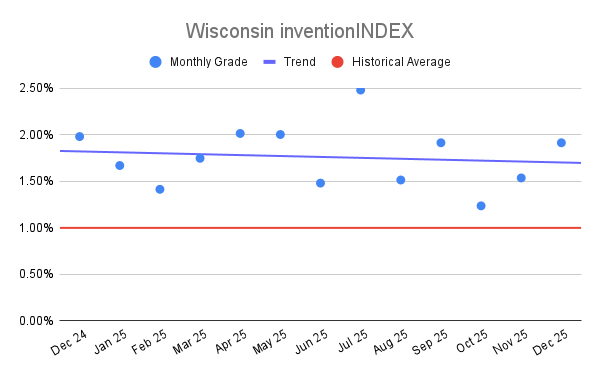 Wisconsin inventionINDEX December 2025
  Wisconsin inventionINDEX Novem
