

Quick Answer: How does the Wisconsin R&D Tax Credit work for S Corporations?
A Wisconsin tax-option (S) corporation computes the R&D credit at the entity level based on qualified research expenses (QREs) incurred within the state. However, the credit flows through to shareholders, who claim it on their individual income tax returns. Key features include:
- Flow-Through Nature: The corporation files Schedule R, but shareholders use the credit to offset personal WI tax liability via Schedule 5K-1.
- Refundability: Up to 25% of the current year’s credit is refundable for shareholders.
- Calculation: Generally 5.75% of QREs exceeding a base amount (11.5% for engine/energy research).
- PTET Caution: Election to pay entity-level tax (7.9%) may prevent using the credit to offset that specific tax, potentially leading to carryforwards.
A Wisconsin tax-option (S) corporation is a flow-through business entity that passes income, losses, and tax credits, including those for research and development, to its shareholders for taxation at the individual level. In the context of the Wisconsin research credit, these corporations serve as the primary vehicle for performing qualified research activities, though the fiscal benefits of the credit—including a 25% refundability component—are ultimately realized on the personal income tax returns of the owners.
The integration of the tax-option (S) corporation into the Wisconsin revenue system is a cornerstone of the state’s efforts to foster a competitive environment for innovation and industrial advancement. By aligning state tax treatment with federal Subchapter S principles, Wisconsin permits small and mid-sized enterprises to conduct complex research and development without the burden of double taxation. The Wisconsin research credit, formally recognized as the credit for increasing research expenses, is specifically tailored to incentivize localized investment by providing tiered rates based on the nature of the research and a generous refund mechanism for businesses that have not yet achieved high profitability. This report provides an exhaustive examination of the legal definitions, administrative guidance, and practical applications of these provisions, with a particular focus on the evolving standards for the 2024 tax year and beyond.
Statutory Definitions and the Subchapter S Nexus
The term “tax-option (S) corporation” is unique to Wisconsin law, though it is inextricably linked to the federal Internal Revenue Code. Under Wisconsin Statutes Section 71.34(1g), the state generally adopts the definitions of S corporations as established under Subchapter S of the Internal Revenue Code (IRC). For a corporation to be treated as a tax-option entity in Wisconsin, it must maintain a valid federal S election.
To qualify for this status, the entity must meet a stringent set of criteria defined at the federal level and adopted by the Wisconsin Department of Revenue (DOR). The corporation must be a domestic entity, organized under the laws of the United States or a specific state. Ownership is limited to 100 shareholders, who must be individuals, certain estates, or specific trusts, such as Grantor Trusts, Qualified Subchapter S Trusts (QSSTs), or Electing Small Business Trusts (ESBTs). Furthermore, the entity is permitted only a single class of stock, ensuring that all outstanding shares confer identical rights to distributions and liquidation proceeds, regardless of variations in voting rights.
Wisconsin law mandates that any corporation electing S status for federal purposes is automatically treated as a tax-option (S) corporation for state purposes, unless the corporation specifically elects to “opt out” of this treatment under Wisconsin Statutes Section 71.365(4)(a). This opt-out provision is a critical departure from federal conformity, allowing a firm to be taxed as a flow-through entity for federal purposes while remaining a C corporation for state franchise tax purposes. Such an election is irrevocable for five years and is typically used in complex tax planning scenarios where state-level corporate attributes, such as loss carryforwards, are more advantageous at the entity level.
Table 1: Entity Comparison and Flow-Through Mechanics
| Entity Type | Wisconsin Classification | Tax Treatment Mechanism | Primary Governing Statute |
|---|---|---|---|
| Federal S-Corp | Tax-Option (S) Corporation | Income/Credits flow to shareholders | Wis. Stat. § 71.34 |
| Federal C-Corp | Corporation | Taxed at the entity level (7.9%) | Wis. Stat. § 71.23 |
| Partnership | Partnership | Income/Credits flow to partners | Wis. Stat. § 71.19 |
| LLC | Dependent on federal filing | Flows through or taxed as corp | Wis. Stat. § 71.19 |
The flow-through nature of the tax-option (S) corporation means that the entity itself is generally not subject to the Wisconsin franchise or income tax. Instead, the corporation calculates its net income or loss and identifies its tax-option items—including the research credit—and reports these to its shareholders on Schedule 5K-1. The shareholders then include these items on their individual Wisconsin returns, where the research credit acts as a dollar-for-dollar reduction of their personal tax liability.
The Framework of the Wisconsin Research Credit
The Wisconsin research credit is modeled after the federal credit for increasing research activities under IRC Section 41, but it is restricted to activities conducted within the geographic boundaries of the state. The primary purpose of the credit is to incentivize private sector R&D investments by lowering the after-tax cost of innovation, thereby addressing market failures where firms may not be fully rewarded for the positive spillover effects of their technological breakthroughs.
Qualified Research Activities (QRA)
The eligibility for the Wisconsin credit is predicated on the performance of “qualified research.” Wisconsin Department of Revenue Publication 131 and the instructions for Schedule R define qualified research by referencing the federal four-part test. To pass this test, a project must meet the following criteria:
- Elimination of Uncertainty: The research must be intended to discover information that would eliminate uncertainty concerning the development or improvement of a business component. Uncertainty exists if the information available to the taxpayer does not establish the capability or method for developing or improving the component or the appropriate design of the component.
- Process of Experimentation: Substantially all of the activities must constitute a process of experimentation. This involves the evaluation of alternatives through modeling, simulation, systematic trial and error, or other scientific methods.
- Technological in Nature: The research must rely on the principles of physical or biological sciences, engineering, or computer science.
- Qualified Purpose: The research must be intended to improve the function, performance, reliability, or quality of a new or improved business component, such as a product, process, formula, or software.
Administrative guidance explicitly excludes certain activities from being considered qualified research. These include research conducted after the beginning of commercial production, the adaptation of existing business components to a particular customer’s need, surveys, market research, and research in the social sciences or humanities.
Qualified Research Expenses (QRE) in Wisconsin
For a tax-option (S) corporation to claim the credit, it must incur “qualified research expenses” (QREs) in Wisconsin. These expenses are categorized into four main types:
- In-House Research Wages: These are wages paid to employees for “qualified services,” which includes the direct performance of research, the direct supervision of research, or the direct support of research. Wisconsin requires that these wages be for services performed within the state.
- Supplies: This includes tangible property, other than land or depreciable property, that is used in the conduct of qualified research in Wisconsin.
- Computer Rental/Lease Expenses: Amounts paid to another person for the right to use computers for research purposes are eligible, provided the computer is used for qualified research and the cost is incurred in Wisconsin.
- Contract Research Expenses: Payments to non-employees for qualified research are eligible, but they are subject to statutory limitations. Generally, only 65% of the amount paid is considered a QRE. However, this increases to 75% for payments to qualified research consortia and 100% for payments to eligible small businesses, universities, and federal laboratories.
Wisconsin mandates that only expenses incurred for research conducted in the state qualify for the credit. If a tax-option (S) corporation conducts research both inside and outside Wisconsin and cannot accurately determine the portion of expenses incurred in the state, the Department of Revenue allows for a reasonable allocation based on sales, property, or payroll, though an actual accounting of in-state expenses is preferred.
Table 2: Wisconsin QRE Eligibility and Thresholds
| Expense Category | Statutory Inclusion | Specific Wisconsin Constraint |
|---|---|---|
| Employee Wages | 100% of W-2 Wages | Must be for services performed in WI |
| Supplies | 100% of Cost | Excludes land and depreciable assets |
| Computer Usage | 100% of Rental/Lease | Must be for computers in research |
| General Contract Research | 65% of Amount Paid | Research must be performed in WI |
| Consortium Research | 75% of Amount Paid | Must be a 501(c)(3) or 501(c)(6) |
| Small Business Contract | 100% of Amount Paid | Entity must meet “Small Business” criteria |
The Tiered Calculation Method and Statutory Rates
Wisconsin utilizes a single regular incremental method for computing the research credit, which differs from the federal Alternative Simplified Credit (ASC) used by many other states. The credit is based on the increase in QREs over a base amount.
The General Research Credit
For most industries, the credit equals 5.75% of the excess of current-year Wisconsin QREs over a base amount. The base amount is defined as 50% of the average Wisconsin QREs for the three preceding taxable years. If a tax-option (S) corporation had no qualified research expenses in any of the three preceding years, the credit is simplified to 2.875% of the current year’s QREs.
The mathematical representation of the credit for an established firm is:
Credit = 0.0575 × (QRE current – Base Amount)
For a startup or a firm with no prior history:
Credit = 0.02875 × QRE current
Enhanced “Super” Research Credits
Wisconsin provides significantly higher credit rates for research in specific high-priority industrial sectors. These enhanced credits use the same incremental calculation logic but apply a rate of 11.5% to the excess QREs.
The enhanced rates apply to research related to the design and manufacturing of internal combustion engines and energy-efficient products. The Department of Revenue provides expansive definitions for these categories to ensure broad application within the state’s manufacturing base.
Internal Combustion Engines and Vehicles
The term “internal combustion engine” includes not only traditional gas and diesel engines but also substitute products such as fuel cell, electric, and hybrid drives. The research must be related to the engine itself or the “frame” and component technologies of the vehicle in which the engine is mounted. A “vehicle” is broadly defined to include:
- Trucks, tractors, and motorcycles.
- Snowmobiles and all-terrain vehicles (ATVs).
- Boats and personal watercraft.
- Construction and lawn/garden maintenance equipment.
- Aircraft and stationary generators.
Energy Efficient Products
This category targets the development of products that reduce the demand for natural gas or electricity. Eligible research includes:
- Energy-efficient lighting systems.
- Building automation and control systems.
- Automotive batteries specifically designed for use in hybrid-electric vehicles.
| Activity Type | Excess Credit Rate | Startup/Zero-Base Rate |
|---|---|---|
| General Research | 5.75% | 2.875% |
| Internal Combustion Engines | 11.5% | 5.75% |
| Energy Efficient Products | 11.5% | 5.75% |
The Evolution of Credit Refundability
A transformative shift in Wisconsin’s R&D tax policy occurred with the introduction of refundability. Historically, the credit was entirely non-refundable, meaning it could only be used to offset an existing tax liability, with any excess carried forward. For many growing S corporations, this meant accumulating millions in “paper” credits that provided no immediate cash flow benefit.
The 2018–2024 Transition
Recognizing the need for liquidity among startups and R&D-heavy firms, the Wisconsin legislature introduced a phased increase in the refundable portion of the credit:
- Tax Years Beginning After December 31, 2017: Up to 10% of the research credit became refundable.
- Tax Years Beginning On or After January 1, 2021: The refundable portion increased to 15%.
- Tax Years Beginning On or After January 1, 2024: The refundable portion reached its current peak of 25%.
The Refundability Formula
For a tax-option (S) corporation shareholder, the refundable portion is calculated on their individual return based on the current year’s credit distributed to them. The refundable amount is defined as the lesser of:
- 25% of the current year’s research credit.
- The current year research credit remaining after subtracting the amount of that credit used to offset the individual’s tax liability.
It is vital to distinguish between current-year credits and carryforwards. According to Wisconsin Statutes Sections 71.07(4k)(e)2. and 71.28(4)(k), only the credit generated in the current taxable year is eligible for the 25% refund. Prior year credit carryovers are non-refundable and are used to offset tax liability before the current year’s credit is applied, thereby maximizing the potential for a refund on the new credit.
Table 3: Historical Evolution of Wisconsin R&D Credit Refundability
| Effective Date Range | Refundable Percentage | Limitation Rule |
|---|---|---|
| Pre-2018 | 0% | 15-year carryforward only |
| 2018 – 2020 | 10% | Lesser of 10% of credit or unused portion |
| 2021 – 2023 | 15% | Lesser of 15% of credit or unused portion |
| 2024 – Present | 25% | Lesser of 25% of credit or unused portion |
Administrative Reporting and Distribution Mechanisms
The operationalization of the research credit within a tax-option (S) corporation requires strict adherence to Department of Revenue reporting standards. Failure to follow these procedures can result in the disallowance of the credit at the shareholder level.
The Role of Schedule R
Schedule R is the primary form used to compute the research credit and, for pass-through entities, to report its distribution.
- Entity Filing: The tax-option (S) corporation must complete Schedule R and include it with its Form 5S return.
- Shareholder Filing: Each shareholder who claims the credit must also include a copy of the corporation’s Schedule R with their personal return.
- Multiple Credits: A separate Schedule R must be filed for each type of research credit claimed (e.g., one for general research and one for internal combustion engines).
Distribution to Shareholders via Schedule 5K-1
The total credit computed by the corporation is prorated among the shareholders based on their ownership interests in the corporation during the taxable year.
- Proration Logic: If a shareholder owns 40% of the corporation’s stock, they are allocated 40% of the total research credit.
- Schedule 5K-1 Reporting: The corporation reports the prorated credit on the shareholder’s Schedule 5K-1. The 5K-1 must clearly state the amount of the current year’s credit and any share of the refundable portion.
The Addition Modification Requirement
A unique and often overlooked aspect of the Wisconsin research credit is that it is considered taxable income. Under Wisconsin law, the amount of the credit computed in a taxable year must be reported as income on the corporation’s return, even if the credit is not fully used or is carried forward. This results in an “addition modification” that increases the income flowing through to the shareholders, effectively taxing the value of the credit at the shareholder’s individual tax rate.
The Pass-Through Entity-Level Tax (PTET) Election
In late 2018, Wisconsin enacted a voluntary election allowing pass-through entities, including S corporations, to pay tax at the entity level. This election, codified in Section 71.365(4m), was a response to the federal limitation on the deduction for state and local taxes (SALT).
Election Mechanics and the 7.9% Tax Rate
To make the election, a tax-option (S) corporation must obtain the consent of shareholders holding more than 50% of the shares. Once the election is made on Form 5S, the corporation’s Wisconsin net income is taxed at a flat rate of 7.9%, which is equivalent to the state’s corporate franchise tax rate.
When the entity-level tax is paid:
- Shareholders do not include their share of the corporation’s income, gain, loss, or deductions in their own Wisconsin adjusted gross income.
- The corporation pays the tax directly, and this tax is deductible for federal purposes, thereby bypassing the individual SALT cap.
The Research Credit “Trap” under PTET
The PTET election has significant negative implications for the utilization of the research credit. Under Wisconsin Statutes Section 71.365(4m)(d)2., the tax credits available under Chapter 71—including the R&D credit—may not be claimed by the tax-option corporation to offset the 7.9% entity-level tax.
As a result, the R&D credit still flows through to the shareholders on their Schedule 5K-1. However, because the shareholders no longer report the S corporation’s income on their individual returns, they often lack the tax liability necessary to use the credit. While the credit remains refundable up to the 25% limit, the remaining 75% must be carried forward by the shareholder for up to 15 years. This can lead to a situation where the corporation is paying a 7.9% cash tax while the shareholders are sitting on large, unusable credit carryforwards.
| Decision Factor | No Entity-Level Election | With Entity-Level Election (PTET) |
|---|---|---|
| Tax Rate | Shareholder’s Marginal Rate | Flat 7.9% at Entity Level |
| SALT Cap Benefit | No (Subject to $10,000 cap) | Yes (Entity tax is deductible) |
| R&D Credit Offset | Yes (Offsets individual tax) | No (Cannot offset entity tax) |
| Refundability | 25% of Current Year Credit | 25% of Current Year Credit |
| Credit Utilization | Immediate for most owners | Often deferred (Carryforward) |
Withholding Requirements for Nonresident Shareholders
Tax-option (S) corporations with nonresident shareholders face additional compliance burdens. Wisconsin requires these entities to withhold tax on the income allocable to nonresidents to ensure the state receives its share of revenue.
Form PW-1 and PW-2
- Form PW-1: The corporation must file Form PW-1 annually to report and pay the withholding tax for all nonresident shareholders whose share of Wisconsin income is $2,000 or more (for tax years starting in 2024; previously $1,000).
- Form PW-2: Nonresident shareholders may file Form PW-2 to claim an exemption from withholding if they meet certain criteria, such as having previously overpaid their Wisconsin taxes or being exempt from taxation in the state.
If a nonresident shareholder is eligible for the research credit, the credit can be used to reduce the amount the corporation is required to withhold on their behalf. This is a vital liquidity management tool for nonresident owners of Wisconsin-based innovation firms.
Combined Reporting and Unitary Business Logic
For larger corporate structures where a tax-option (S) corporation is a member of a combined group—for instance, if the S corporation is a Qualified Subchapter S Subsidiary (QSub) owned by a C corporation—special rules apply to the sharing of the research credit.
Unitary Business Principles
Participants in a commonly controlled economic enterprise are considered a unitary business if their activities generate a synergy that produces a flow of value among them. This includes centralized management, functional integration, and economies of scale.
Sharing of Nonrefundable Credits
Under Section 71.255(6)(c), members of a combined group may share their nonrefundable research credits, but only under specific conditions:
- The member must first use the credit to offset its own tax liability before sharing the excess.
- The credits must be “sharable,” meaning the member was part of the same combined group in the year the credit was generated.
- The shared credit can only be used to offset the tax liability of other members to the extent that liability is attributable to the unitary business.
Again, the Department of Revenue emphasizes that the refundable portion of the credit (the 25% component) is strictly an attribute of the separate corporation and cannot be shared with other members of the group.
Comprehensive Practical Example: AeroEngines WI, Inc.
To illustrate the interplay of all the discussed rules, consider AeroEngines WI, Inc., a Wisconsin tax-option (S) corporation founded in 2021. The firm designs high-efficiency hybrid drives for stationary power generators.
Ownership Structure:
- Shareholder A (Wisconsin Resident): 60% ownership.
- Shareholder B (Illinois Resident): 40% ownership.
2024 Financial and Research Data:
- Net Ordinary Business Income: $1,000,000.
- Current Year Wisconsin QREs: $500,000 (Qualified under the Internal Combustion Engine/Hybrid Drive category).
- 2021 QREs: $100,000.
- 2022 QREs: $150,000.
- 2023 QREs: $250,000.
Step 1: Calculate the Credit at the Entity Level
AeroEngines must first determine its base amount.
- Prior 3-Year Average: (100,000 + 150,000 + 250,000) / 3 = 166,666.67.
- Base Amount (50% of Average): $83,333.33.
Because the research relates to hybrid drives for generators, it qualifies for the 11.5% enhanced rate.
- Excess QREs: $500,000 – 83,333.33 = 416,666.67.
- Total Wisconsin Research Credit: 416,666.67 × 0.115 = 47,916.67.
Step 2: Distribution to Shareholders
The credit and income are distributed based on ownership percentages.
For Shareholder A (60%):
- Prorated Income: $600,000.
- Prorated Research Credit: $28,750.
- Addition Modification (Income): Shareholder A must add the $28,750 credit to their Wisconsin income.
For Shareholder B (40%):
- Prorated Income: $400,000.
- Prorated Research Credit: $19,166.67.
- Addition Modification (Income): Shareholder B must add the $19,166.67 credit to their Wisconsin income.
Step 3: Individual Shareholder Utilization (The 25% Refund)
Assume Shareholder A has a Wisconsin tax liability of $40,000 from all sources (including AeroEngines income). Shareholder B, after accounting for credits from other sources and lower marginal rates, has a Wisconsin tax liability of $1,000.
Shareholder A Analysis:
- Tax Due: $40,000.
- Credit Used: $28,750 (offsets tax entirely).
- Final Tax Paid: $11,250.
- Refundable Portion: Since all of the current-year credit was used to offset tax, there is no unused credit. Refund = $0.
Shareholder B Analysis:
- Tax Due: $1,000.
- Credit Used: $1,000 (offsets tax).
- Unused Current Year Credit: $18,166.67.
- Maximum Refund Calculation: 19,166.67 × 25% = 4,791.67.
- Final Refund: The lesser of the unused credit ($18,166.67) or 25% of the total credit ($4,791.67). Refund = $4,791.67.
- Carryforward: 18,166.67 – 4,791.67 = 13,375. This amount is carried forward to 2025.
Step 4: Alternative Scenario – PTET Election
If AeroEngines had elected to pay the 7.9% entity-level tax:
- Entity Tax: 1,000,000 × 0.079 = 79,000.
- Credit Utilization: The $47,916.67 credit cannot offset this $79,000 tax.
- Shareholder Impact: The shareholders still get the credit, but they no longer have the $1,000,000 in income on their personal returns.
- Shareholder A: If they have no other Wisconsin income, they would use $0 credit against tax, receive a $7,187.50 refund (25% of their share), and carry forward the rest.
- The Difference: The company would pay $79,000 in cash to the state, significantly higher than the taxes Alice and Bob would have paid individually after applying their full credits. This demonstrates why the PTET election requires careful analysis for R&D-heavy S corporations.
Documentation and Audit Substantiation
The Wisconsin Department of Revenue maintains a rigorous audit program for research credits. Tax-option (S) corporations are required to maintain contemporaneous records that substantiate both the qualified nature of the research and the geographic location of the expenses.
Required Records
- Project Documentation: Technical reports, design drawings, testing logs, and project notes that prove the process of experimentation and the elimination of technological uncertainty.
- Payroll Records: Time-tracking data or reliable percentage-of-time estimates that link specific employee wages to qualified research activities performed in Wisconsin.
- Supply Invoices: Documentation showing that supplies were used in a research laboratory or experimental setting within the state.
- Contractor Agreements: Contracts and invoices clearly detailing the scope of work performed by third parties and affirming that the research was conducted in Wisconsin.
The statute of limitations for the Wisconsin research credit is generally four years from the date the return was filed. However, if a credit is carried forward, the DOR may examine the records from the year the credit was generated, even if that year is outside the normal four-year window, to ensure the carryforward amount is accurate.
Final Thoughts
The intersection of tax-option (S) corporation law and the Wisconsin research credit creates a powerful incentive for in-state innovation. The 2024 shift to 25% refundability represents a significant milestone, providing a direct cash infusion to firms that are investing heavily in the future of Wisconsin’s industrial sectors, particularly those focused on advanced engine technologies and energy efficiency.
For the practitioner and the business owner, the primary takeaways are as follows:
- The tax-option (S) corporation is a pass-through conduit; while the research happens at the entity level, the credit’s value is realized by the shareholders.
- The geographic nexus is absolute; only Wisconsin-based QREs are eligible.
- The enhanced 11.5% rate provides a massive advantage for manufacturers in the engine and energy sectors, but it requires precise adherence to the statutory definitions of “vehicle” and “energy-efficient product.”
- The PTET election, while beneficial for SALT cap management, can severely hinder the utility of R&D credits and should be modeled carefully before being implemented.
- Refundability is a “use it or lose it” feature for the current year; carryforwards do not qualify for future refunds.
As Wisconsin continues to refine its tax code, the stability of the research credit and its alignment with federal standards provide a predictable framework for long-term R&D planning. By meticulously documenting activities and understanding the flow-through mechanics of the tax-option (S) corporation, Wisconsin businesses can significantly reduce their effective tax rate and accelerate their pace of discovery.
Who We Are:
Swanson Reed is one of the largest Specialist R&D Tax Credit advisory firm in the United States. With offices nationwide, we are one of the only firms globally to exclusively provide R&D Tax Credit consulting services to our clients. We have been exclusively providing R&D Tax Credit claim preparation and audit compliance solutions for over 30 years. Swanson Reed hosts daily free webinars and provides free IRS CE and CPE credits for CPAs.
Are you eligible?

Why choose us?

Pass an Audit?

What is the R&D Tax Credit?
The Research & Experimentation Tax Credit (or R&D Tax Credit), is a general business tax credit under Internal Revenue Code section 41 for companies that incur research and development (R&D) costs in the United States. The credits are a tax incentive for performing qualified research in the United States, resulting in a credit to a tax return. For the first three years of R&D claims, 6% of the total qualified research expenses (QRE) form the gross credit. In the 4th year of claims and beyond, a base amount is calculated, and an adjusted expense line is multiplied times 14%. Click here to learn more.
Never miss a deadline again

Stay up to date on IRS processes

Discover R&D in your industry

R&D Tax Credit Preparation Services
Swanson Reed is one of the only companies in the United States to exclusively focus on R&D tax credit preparation. Swanson Reed provides state and federal R&D tax credit preparation and audit services to all 50 states.
If you have any questions or need further assistance, please call or email our CEO, Damian Smyth on (800) 986-4725.
Feel free to book a quick teleconference with one of our national R&D tax credit specialists at a time that is convenient for you.
R&D Tax Credit Audit Advisory Services
creditARMOR is a sophisticated R&D tax credit insurance and AI-driven risk management platform. It mitigates audit exposure by covering defense expenses, including CPA, tax attorney, and specialist consultant fees—delivering robust, compliant support for R&D credit claims. Click here for more information about R&D tax credit management and implementation.
Our Fees
Swanson Reed offers R&D tax credit preparation and audit services at our hourly rates of between $195 – $395 per hour. We are also able offer fixed fees and success fees in special circumstances. Learn more at https://www.swansonreed.com/about-us/research-tax-credit-consulting/our-fees/



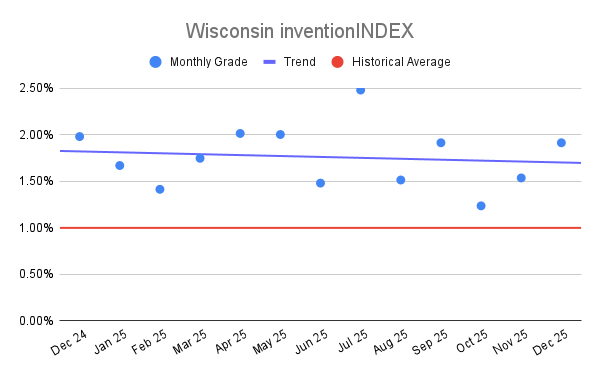 Wisconsin inventionINDEX December 2025
  Wisconsin inventionINDEX Novem
