

Wisconsin Statutes Section 71.07(4k) provides an individual income tax credit for qualified research expenses incurred in Wisconsin. Key features include:
- Credit Rates: 5.75% for general research; 11.5% for internal combustion engine and energy-efficient product research.
- Refundability: Up to 25% of the credit is refundable for tax years 2024 and later.
- Eligibility: Available to individuals, sole proprietorships, and pass-through entities (S-Corps, LLCs, Partnerships).
- Carryforward: Unused non-refundable credits can be carried forward for 15 years.
Wisconsin Statutes Section 71.07(4k) establishes an individual income tax credit for qualified research expenses incurred for activities conducted within the state, offering tiered incentive rates and partial refundability. The provision serves to align the tax burdens of individuals and pass-through entity owners with Wisconsin’s broader strategic economic goal of fostering high-tech industrial innovation and human capital retention.
Historical Context and Economic Rationale of Research Incentives in Wisconsin
The Wisconsin Research Expense Credit, as codified under Section 71.07(4k) for individual filers and Section 71.28(4) for corporate entities, represents a multi-decade legislative effort to anchor high-value research and development (R&D) activities within the state’s borders. Historically, the state’s economy was heavily reliant on traditional manufacturing and agriculture; however, the transition toward the knowledge economy necessitated a fiscal framework that subsidized the inherent risks of technological experimentation. The economic rationale for these credits is fundamentally rooted in the concept of positive externalities, where the social returns of innovation—such as a more skilled workforce, technological spillovers to other firms, and the creation of intellectual property—exceed the private returns captured by the individual business owner.
Since its inception, the credit has undergone several structural shifts. Initially designed solely for C-corporations, the legislature expanded the credit to individuals and pass-through entities starting in tax year 2013 to reflect the changing nature of business organization, where many R&D-heavy startups and mature engineering firms are structured as Limited Liability Companies (LLCs) or S-corporations. This expansion ensured that the state’s tax policy remained neutral regarding the choice of business entity while continuing to drive investment in critical sectors like biotechnology, internal combustion engineering, and clean energy systems.
The fiscal impact of these credits has been substantial. According to Department of Revenue (DOR) statistics, research credit claims grew by over 360% between 2009 and 2018, reflecting both increased R&D activity and the success of the credit in attracting innovative firms. The introduction of refundability in 2018 marked another pivotal moment, transforming the credit from a mere tax-offsetting mechanism into a liquidity-generating tool for pre-revenue firms.
Statutory Interpretation and Definitions under Section 71.07(4k)
The application of Section 71.07(4k) relies on a complex interplay between state statutes and federal tax law. Wisconsin generally adopts the definitions of “qualified research” and “qualified research expenses” found in Section 41 of the Internal Revenue Code (IRC), but with several critical Wisconsin-specific modifications that narrow the scope to in-state activities and expand the rates for specific technological components.
The Geographic Nexus and In-State Expenses
The primary requirement under § 71.07(4k)(b)4 is that expenses must be incurred for research conducted specifically in the state of Wisconsin. This geographic restriction requires taxpayers to rigorously bifurcate their R&D spend if they operate in multiple jurisdictions. For multistate taxpayers, the DOR provides guidance that expenses must be apportioned, often using the Wisconsin sales factor, though a direct accounting of wages for employees physically present in Wisconsin labs is the gold standard for substantiation.
Qualifying Entities and the Pass-Through Mechanism
Section 71.07(4k) is specifically situated within the individual income tax chapter, yet its primary users are often owners of pass-through entities. The statute clarifies that while partnerships, LLCs, and tax-option (S) corporations cannot claim the credit at the entity level to offset their own tax liability, they are the primary sites where the “economic activity” occurs.
| Entity Type | Credit Calculation Role | Credit Utilization Role |
|---|---|---|
| Individual / Sole Proprietor | Calculates and claims directly on personal return. | Offsets personal income tax (Form 1). |
| Partnership / LLC | Calculates credit at entity level; provides K-1 to partners. | Flow-through to partners/members. |
| S-Corporation | Calculates credit at entity level; provides K-1 to shareholders. | Flow-through to shareholders. |
| Estate / Trust | Calculates credit at entity level; provides K-1 to beneficiaries. | Flow-through to beneficiaries. |
The allocation to individual owners must be in proportion to their ownership interest. For example, a 25% partner in a Wisconsin engineering firm is entitled to 25% of the research credit generated by that firm’s activities.
Detailed Definitions of Technical Components
Wisconsin’s statute is notably granular regarding the definitions of vehicles and engine components, which is necessary to support the enhanced 11.5% credit rate for certain industries.
- Internal Combustion Engine: This term is broadly interpreted to include not only traditional gasoline and diesel engines but also modern technological substitutes. Specifically, it encompasses fuel cells, electric drives, and hybrid drives. This definition allows Wisconsin to remain a leader in “engine” research even as the industry pivots toward electrification.
- Vehicle: The statute defines a vehicle as any frame, including parts and accessories, in which an engine is mounted for mobile or stationary use. This includes a wide array of equipment, from snowmobiles and all-terrain vehicles to generators and aircraft.
- Frame: The definition of “frame” varies by vehicle type. For a motorcycle, it includes every part except the tires. For a truck, it includes the control system and the drive train but excludes comfort features in the cab. For a generator, the “frame” encompasses modules, fuel mixers, heat exchangers, and exhaust trains.
These definitions are critical for legal compliance, as expenses related to the “comfort features” of a truck cab, for instance, must be excluded from the calculation of the enhanced credit rate, even if those features were part of a larger R&D project.
The Calculation Framework: Base Amounts and Incrementalism
Wisconsin employs an incremental credit model designed to reward companies for expanding their R&D footprint, rather than merely subsidizing existing levels of activity. The basic calculation relies on comparing current-year Qualified Research Expenses (QREs) against a historical baseline.
The General Research Credit Calculation
For most taxpayers, the credit is 5.75% of the amount by which current-year Wisconsin QREs exceed the “base amount.” The base amount is generally defined as 50% of the average Wisconsin QREs for the three preceding taxable years. If the taxpayer had no QREs in any of the three prior years, the credit is calculated using a “startup” rate of 2.875% of the total current-year QREs.
| Scenario | Calculation Method | Effective Rate |
|---|---|---|
| Established Firm (General) | 5.75% of (Current QREs – [50% of 3-year Average]) | 5.75% (Incremental) |
| Startup Firm (General) | 2.875% of Total Current QREs | 2.875% (Flat) |
| Established Firm (Engine/Energy) | 11.5% of (Current QREs – [50% of 3-year Average]) | 11.5% (Incremental) |
| Startup Firm (Engine/Energy) | 5.75% of Total Current QREs | 5.75% (Flat) |
This tiered structure creates a significant incentive for firms involved in the design of internal combustion engines and energy-efficient products, as their credit rate is precisely double that of general research.
Eligible Expense Categories (QREs)
The Department of Revenue clarifies that expenses must be non-capital in nature to qualify as QREs. The three primary categories are:
- Wages: Payments for the performance of research, direct supervision, or direct support of research in Wisconsin.
- Supplies: Tangible property used in the research process, excluding land and depreciable assets.
- Contract Research: Amounts paid to third parties for research. Wisconsin follows federal rules, generally allowing 65% of these costs to be included, or up to 75% if paid to a qualified research consortium.
Refundability and the 25% Cash-Back Mechanism
Perhaps the most significant legislative change in recent years is the increase in the refundable portion of the credit. This evolution reflects the state’s desire to support companies that are in a “loss” position—typical for R&D-heavy startups—and cannot immediately use a nonrefundable credit.
Progression of Refundable Percentages
The legislature has steadily increased the refundable portion of the current-year credit to improve the liquidity of Wisconsin firms:
- Prior to 2018: 0% refundable (strictly nonrefundable).
- 2018–2020: 10% refundable.
- 2021–2023: 15% refundable.
- 2024 and Later: 25% refundable.
Computation of the Refund
The refundable portion is calculated using a “lesser of” formula. Under § 71.07(4k)(e)2.ad, the refund is the lesser of:
- The maximum refundable percentage (currently 25%) multiplied by the total credit computed for the current year.
- The amount of the current-year credit that remains after it has been used to offset the taxpayer’s current-year tax liability.
It is crucial to note that credit carryforwards from previous years do not qualify for the refund. Furthermore, taxpayers are permitted (and encouraged) to use their nonrefundable carryforwards to offset tax liability before applying the current-year credit, thereby maximizing the amount of the current-year credit that remains available for a refund.
Interaction with Federal Law and IRC Conformity Issues
A major area of concern for tax professionals is the divergence between federal and Wisconsin law regarding the treatment of research expenses. While Wisconsin references IRC § 41 for the credit definition, it has decoupled from certain federal changes introduced by the Tax Cuts and Jobs Act (TCJA).
The IRC § 174 Amortization Conflict
Starting in 2022, federal law under IRC § 174 requires taxpayers to capitalize research expenses and amortize them over 5 years (for domestic research) or 15 years (for foreign research). Wisconsin, however, has not adopted this change for state tax purposes.
This creates a significant “Schedule I” adjustment on Wisconsin returns. For federal purposes, a taxpayer might only deduct 10% of their research spend in the first year (due to the mid-year convention of the 5-year amortization). For Wisconsin purposes, the taxpayer may still be entitled to an immediate 100% deduction of those same expenses. This non-conformity simplifies the state tax deduction but complicates the overall compliance process by requiring dual record-keeping.
Add-back Requirements: Credits as Income
In Wisconsin, the research credit is not “tax-free” money. Under § 71.07(4k), the amount of the credit computed for the year must be reported as income on the Wisconsin return. This is often referred to as the “add-back” requirement because taxpayers must add the credit amount to their federal adjusted gross income to arrive at their Wisconsin taxable income.
This addition must be made in the year the credit is computed, even if the taxpayer cannot use the credit that year and must carry it forward. For individuals, this is reported on Schedule AD (Additions to Income).
State Revenue Office Guidance and Administrative Compliance
The Wisconsin Department of Revenue provides extensive guidance through various publications and instructions to ensure taxpayers comply with the rigorous documentation requirements of the credit.
Primary Compliance Documents
Taxpayers and their advisors must navigate several forms to successfully claim and document the credit:
- Schedule R: This is the foundational form used to compute the research credit. A separate Schedule R must be filed for each type of credit (e.g., one for general research and another for internal combustion engines).
- Publication 131: Titled “Tax Incentives for Conducting Qualified Research in Wisconsin,” this is the definitive guide for understanding who is eligible and what records must be kept.
- Schedule AD / Schedule M: Used to report the computed credit as income to the state. Residents use Schedule AD; nonresidents use Schedule M.
- K-1 Schedules: For pass-through entity owners, the credit amount must be correctly transcribed from their Schedule 3K-1 or 5K-1 onto their personal Schedule R.
Audit Substantiation and Documentation Standards
The DOR expects taxpayers to maintain records that satisfy the “Four-Part Test” of IRC § 41. This includes:
- Project-Level Accounting: Credits should be tracked by project, not just in the aggregate.
- Wage Documentation: Evidence of the specific time employees spent on research activities, often documented through contemporaneous time-tracking software.
- Technological Documentation: Laboratory notes, CAD drawings, testing results, and failed prototype analysis to prove that a “process of experimentation” occurred.
Failure to provide this documentation can lead to the full disallowance of the credit upon audit. The statute of limitations typically allows the DOR four years to audit a return, but this period can be extended if the taxpayer is using credit carryforwards from earlier years.
Complex Application Example: High-Tech Manufacturing Case Study
To synthesize the various rules of Section 71.07(4k), consider the case of “Superior Power Systems LLC” (SPS), a Wisconsin-based manufacturer of advanced battery systems for electric vehicles. SPS is an S-corporation owned 100% by a Wisconsin resident, Jamie.
Part 1: SPS Entity-Level Computation (2024)
SPS conducts $2,000,000 of battery research in Wisconsin. This research qualifies for the enhanced 11.5% rate as it relates to automotive batteries for hybrid/electric vehicles.
- Historical QREs:
- 2021: $800,000
- 2022: $1,200,000
- 2023: $1,000,000
- Average QREs: ($800,000 + $1,200,000 + $1,000,000) / 3 = $1,000,000.
- Base Amount: 50% of $1,000,000 = $500,000.
- Excess QREs: $2,000,000 (Current) – $500,000 (Base) = $1,500,000.
- Total Credit: $1,500,000 * 11.5% = $172,500.
Part 2: Individual Claim for Jamie
SPS issues Jamie a Schedule 5K-1 showing $172,500 in research credits. Jamie also has a $20,000 research credit carryforward from 2022.
Tax Reporting Order of Operations:
- Add-back: Jamie adds $172,500 to her income on Schedule AD, Line 21.
- Determine Tax Liability: Jamie’s Wisconsin income tax liability before credits is $50,000.
- Apply Carryforwards First: Jamie uses her $20,000 carryforward from 2022. Remaining tax liability = $30,000.
- Apply Current-Year Credit: Jamie uses $30,000 of her $172,500 current-year credit to reduce her tax to zero. Remaining current-year credit = $142,500.
- Calculate Refund:
- Maximum Refund (25% of $172,500) = $43,125.
- Remaining Current Credit = $142,500.
- Refund Amount: Jamie receives a refund of $43,125.
- Calculate Carryforward for 2025:
- $142,500 (Unused current) – $43,125 (Refunded) = $99,375.
- Jamie can carry forward $99,375 for 15 years.
Future Legislative Outlook and Policy Implications
The legislative landscape for the Wisconsin research credit remains active, with significant proposals currently under debate that could fundamentally change the long-term utility of these credits.
The 50-Year Carryforward (Senate Bill 482)
Introduced in the 2025-2026 session, Senate Bill 482 seeks to extend the carryforward period for unused research credits from the current 15 years to 50 years. This bill recognizes that the capital-intensive nature of industries like pharmaceuticals and aerospace may result in a “tax loss” position for decades before the company generates enough income to utilize its credits. By extending the carryforward to 50 years, Wisconsin aims to provide more flexibility for businesses that make long-term investments in the state’s innovation infrastructure.
Strategic Impact of Refundability Increases
The DOR continues to monitor the impact of the 25% refundability rate on the state’s fiscal position. Early reports suggest that refundability has successfully incentivized startups to choose Wisconsin over neighboring states like Illinois or Minnesota, which may have different credit structures. The ability to receive a cash refund—effectively a 25% “cash-back” on unused credits—provides a powerful tool for economic development agencies like the Wisconsin Economic Development Corporation (WEDC) when recruiting new firms.
Final Thoughts and Strategic Recommendations
Wisconsin Statutes Section 71.07(4k) represents a mature and highly targeted tax incentive framework that rewards both general research and specific high-priority technological sectors. For individual taxpayers and pass-through entity owners, the credit offers a significant opportunity to reduce tax liability and, in many cases, generate immediate cash flow through the refund mechanism. However, the complexity of the statutory definitions—particularly regarding “frames” and “engines”—requires careful legal and technical analysis.
To maximize the benefit of the credit while minimizing audit risk, taxpayers should adopt a “defense-first” documentation strategy, ensuring that every hour of wage expense and every dollar of supply cost is directly linked to a technological “business component” developed in Wisconsin. Furthermore, the mandatory income add-back requirement must be integrated into annual tax planning to avoid unexpected liability. As Wisconsin continues to pivot toward green technology and advanced manufacturing, Section 71.07(4k) will undoubtedly remain the cornerstone of the state’s fiscal policy for innovation.
Who We Are:
Swanson Reed is one of the largest Specialist R&D Tax Credit advisory firm in the United States. With offices nationwide, we are one of the only firms globally to exclusively provide R&D Tax Credit consulting services to our clients. We have been exclusively providing R&D Tax Credit claim preparation and audit compliance solutions for over 30 years. Swanson Reed hosts daily free webinars and provides free IRS CE and CPE credits for CPAs.
Are you eligible?

Why choose us?

Pass an Audit?

What is the R&D Tax Credit?
The Research & Experimentation Tax Credit (or R&D Tax Credit), is a general business tax credit under Internal Revenue Code section 41 for companies that incur research and development (R&D) costs in the United States. The credits are a tax incentive for performing qualified research in the United States, resulting in a credit to a tax return. For the first three years of R&D claims, 6% of the total qualified research expenses (QRE) form the gross credit. In the 4th year of claims and beyond, a base amount is calculated, and an adjusted expense line is multiplied times 14%. Click here to learn more.
Never miss a deadline again

Stay up to date on IRS processes

Discover R&D in your industry

R&D Tax Credit Preparation Services
Swanson Reed is one of the only companies in the United States to exclusively focus on R&D tax credit preparation. Swanson Reed provides state and federal R&D tax credit preparation and audit services to all 50 states.
If you have any questions or need further assistance, please call or email our CEO, Damian Smyth on (800) 986-4725.
Feel free to book a quick teleconference with one of our national R&D tax credit specialists at a time that is convenient for you.
R&D Tax Credit Audit Advisory Services
creditARMOR is a sophisticated R&D tax credit insurance and AI-driven risk management platform. It mitigates audit exposure by covering defense expenses, including CPA, tax attorney, and specialist consultant fees—delivering robust, compliant support for R&D credit claims. Click here for more information about R&D tax credit management and implementation.
Our Fees
Swanson Reed offers R&D tax credit preparation and audit services at our hourly rates of between $195 – $395 per hour. We are also able offer fixed fees and success fees in special circumstances. Learn more at https://www.swansonreed.com/about-us/research-tax-credit-consulting/our-fees/



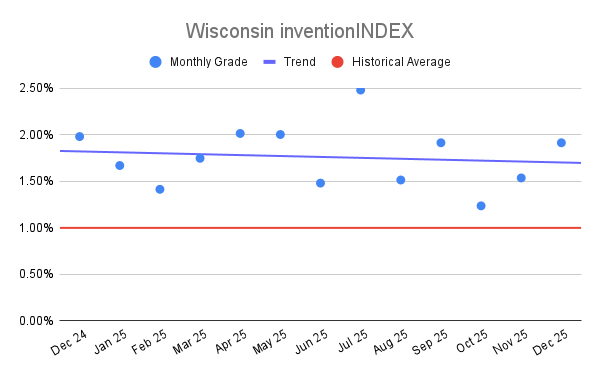 Wisconsin inventionINDEX December 2025
  Wisconsin inventionINDEX Novem
