

Quick Answer: Wisconsin Tax-Option Corporation Shareholder R&D Credit
A shareholder of a tax-option corporation (S-Corp) in Wisconsin is the ultimate claimant of R&D tax credits generated by the entity. While the corporation calculates the credit on Schedule R, the credit flows through to the shareholder via Schedule 5K-1 based on their pro-rata ownership. Key requirements include:
- Flow-Through Mechanics: The credit is reported on the shareholder’s personal income tax return (Form 1).
- Income Add-Back: The amount of the credit claimed must be added back to the shareholder’s Wisconsin taxable income.
- Refundability: Up to 25% of the credit is refundable for qualified expenses incurred in 2024 and beyond.
- Limitations: Usage is subject to stock basis, at-risk rules, and passive activity loss limitations.
A shareholder of a tax-option corporation is an individual or entity owning stock in a Wisconsin S-corporation, which functions as a pass-through entity for tax purposes. Under Wisconsin law, these shareholders are the ultimate claimants of the corporation’s research and development tax credits, receiving them pro-rata based on their ownership interest.
The tax-option corporation, a distinct nomenclature utilized by the Wisconsin Department of Revenue to describe an S-corporation, represents a fundamental shift in the taxation of innovative businesses within the state. While a standard C-corporation is taxed as a separate legal entity, a tax-option corporation is generally exempt from the Wisconsin franchise or income tax at the corporate level, instead electing to have its income, losses, and credits flow through to the personal tax returns of its shareholders. This “conduit” treatment is particularly vital when analyzing the Wisconsin Research and Development (R&D) tax credit, as the mechanism for claiming the credit depends entirely on the legal classification of the business entity and the specific eligibility of its owners. For the shareholder, this means that the research and development activities performed by the corporation in Wisconsin are treated as if the shareholder performed them personally, albeit on a scale proportionate to their equity in the company. The complexity of this relationship is governed by Wisconsin Statutes Chapter 71, administrative rules, and the state’s periodic adoption of the Internal Revenue Code (IRC).
Statutory Definition and Shareholder Eligibility Requirements
The term “tax-option corporation” is defined under Wisconsin law as a corporation which is treated as an S-corporation under Subchapter S of the Internal Revenue Code and has not specifically elected out of such treatment for Wisconsin purposes under sec. 71.365(4)(a), Wis. Stats. This definition is inherently linked to federal eligibility, as the corporation must first qualify for and maintain S-corporation status under federal law to be considered a tax-option corporation at the state level. For the shareholder, this implies a strict adherence to both federal and state regulations regarding who can hold stock in such an entity.
Eligible Shareholder Categories
Wisconsin law mirrors federal regulations in limiting the types of entities that can be shareholders of a tax-option corporation. This limitation is designed to ensure that the income of the corporation remains subject to a single layer of individual-level taxation rather than being deferred or shielded through complex corporate layers.
| Shareholder Type | Legal Qualification and Limitations |
|---|---|
| Individuals | Must be U.S. citizens or residents; nonresident individuals are permitted but must report Wisconsin-sourced income. |
| Estates | Includes the estates of deceased individuals and estates of individuals in bankruptcy proceedings. |
| Grantor Trusts | Trusts where the grantor is treated as the owner for tax purposes; the individual grantor is the effective shareholder. |
| Qualified Subchapter S Trusts (QSST) | Must have a single income beneficiary who is a U.S. citizen or resident; all income must be distributed currently. |
| Electing Small Business Trusts (ESBT) | Allows for multiple beneficiaries; tax on S-corporation items is generally paid at the trust level. |
| Tax-Exempt Organizations | Certain 501(c)(3) charitable organizations and 401(a) qualified retirement plan trusts. |
The corporation must not have more than 100 shareholders, and for the purposes of this count, family members are often treated as a single shareholder under federal rules adopted by Wisconsin. Furthermore, the requirement that the corporation have only one class of stock is critical for the R&D tax credit. A corporation is deemed to have only one class of stock if all outstanding shares confer identical rights to distribution and liquidation proceeds, even if voting rights vary. This ensures that the R&D credit is distributed fairly and pro-rata across the shareholder base, preventing the “streaming” of credits to specific shareholders who might have a higher tax liability.
The Wisconsin Research Credit: Structural Foundations
The Wisconsin research credit is modeled after the federal credit for increasing research activities found in Section 41 of the Internal Revenue Code. However, the Wisconsin credit is not a simple carbon copy of the federal credit; it is a separate state-level incentive that incorporates specific geographic and industry-based nuances. The primary distinction is that the credit only applies to “qualified research expenses” (QREs) incurred for research conducted within the state of Wisconsin.
Fixed-Date Adoption of the Internal Revenue Code
A significant aspect of Wisconsin’s tax law is the “fixed-date” adoption of the IRC. For taxable years beginning on or after January 1, 2024, Wisconsin defines the “Internal Revenue Code” as the federal IRC as amended to December 31, 2022. This means that federal tax law changes enacted after that date do not automatically apply for Wisconsin purposes unless the Wisconsin legislature takes specific action to adopt them. This decoupling can lead to differences in how QREs are calculated, particularly if federal law changes the treatment of research and experimental expenditures under Section 174.
The Four-Part Test for Qualified Research
For a shareholder to claim a credit passed through from their tax-option corporation, the activities of that corporation must meet the rigorous four-part test established by federal law and adopted by the Wisconsin Department of Revenue. This test ensures that the credit supports genuine innovation rather than routine business activities.
- Elimination of Uncertainty: The research must be intended to discover information that would eliminate uncertainty regarding the development or improvement of a business component. Uncertainty exists if the information available to the corporation does not establish the capability or method for developing the component, or the appropriate design of the component.
- Process of Experimentation: The corporation must demonstrate that substantially all of its activities constitute a process of experimentation. This involves the evaluation of one or more alternatives through modeling, simulation, systematic trial and error, or other methodologies designed to achieve a desired result.
- Technological in Nature: The research must fundamentally rely on the principles of physical or biological sciences, engineering, or computer science. Research based on social sciences, arts, or humanities does not qualify.
- Qualified Purpose: The purpose of the research must be to create a new or improved business component, which is defined as a product, process, software, technique, formula, or invention that will be held for sale, lease, or license, or used in the taxpayer’s trade or business.
Activities that are expressly excluded from the definition of qualified research include quality control testing, advertising or promotions, consumer surveys, efficiency surveys, management studies, and research conducted after the beginning of commercial production of a business component.
Qualified Research Expenses (QREs) and Geographic Nexus
The credit calculation is based on the amount of QREs paid or incurred by the tax-option corporation during the taxable year. These expenses must have a direct nexus to Wisconsin to be eligible for the state credit.
Categories of Eligible Expenses
| Expense Type | Wisconsin Definition and Eligibility |
|---|---|
| In-House Research Wages | Wages paid to employees for the actual conduct of research or for the direct supervision or support of research activities within Wisconsin. |
| Research Supplies | Tangible property (excluding land and improvements) used directly in the conduct of qualified research in the state. |
| Contract Research Expenses | Generally, 65% of the amount paid to non-employees for qualified research performed in Wisconsin. |
| Research Consortium Payments | 75% of the amount paid to a qualified research consortium for research conducted on behalf of the taxpayer. |
| Eligible Small Business/University Payments | 100% of the amount paid to certain small businesses, universities, or federal laboratories for research. |
The “in-state” requirement is strictly enforced. If a tax-option corporation has employees working on a research project both in Wisconsin and at a location in another state, only the portion of the wages attributable to the work performed within Wisconsin can be included in the calculation of the Wisconsin research credit. This necessitates precise time-tracking and record-keeping by the corporation to substantiate the geographic location of the research activities.
Mechanics of the Credit Calculation for Pass-Through Entities
Tax-option corporations do not claim the research credit to offset their own tax liability because they are generally not subject to the Wisconsin franchise or income tax. Instead, the corporation performs the credit calculation at the entity level using Wisconsin Schedule R. The result of this calculation is then allocated to the shareholders.
The Incremental Calculation Method
The Wisconsin research credit is an incremental credit, meaning it is designed to reward companies that increase their research spending compared to a historical baseline. The credit is generally equal to a percentage of the amount by which the current year’s QREs exceed a “base amount”.
The base amount is defined as 50% of the average QREs for the three taxable years immediately preceding the year for which the credit is claimed. If a corporation has no QREs in any of the three preceding years, a different calculation applies to support “startup” activities.
Credit Rates and Tiers
Wisconsin provides tiered credit rates based on the nature of the research activity. These tiers are intended to provide enhanced support for industries that the state deems critical to its economic growth.
| Activity Type | Standard Rate (on excess QREs) | Startup Rate (if no prior QREs) |
|---|---|---|
| General Research | 5.75% | 2.875% |
| Internal Combustion Engines | 11.5% | 5.75% |
| Certain Energy Efficient Products | 11.5% | 5.75% |
The enhanced rate for “Energy Efficient Products” specifically targets research into building automation and control systems, lighting systems, and automotive batteries for hybrid vehicles.
Mathematical Formula for the General Credit
The credit for a standard research project is calculated as follows:
C = 0.0575 × (QRE_current – (0.50 × (QRE_n-1 + QRE_n-2 + QRE_n-3) / 3))
If the corporation had no QREs in the prior three years:
C = 0.02875 × QRE_current
The Flow-Through Process and Shareholder Reporting
After the corporation computes the total credit on Schedule R, it must distribute this credit among its shareholders. This distribution is mandatory and must follow the pro-rata ownership of the shareholders.
Schedule 5K-1: The Shareholder’s Document
The tax-option corporation reports each shareholder’s share of the credit on Wisconsin Schedule 5K-1. This schedule serves as the primary communication from the corporation to the shareholder regarding their portion of all “tax-option items”. The research credit is listed on Schedule 5K-1, and the shareholder must then transfer this information to their own tax return.
Treatment of the Credit as Income
A unique and often overlooked requirement of the Wisconsin research credit is that the credit itself is considered “income” to the claimant. When a shareholder claims the credit on their personal Wisconsin tax return, they must add the amount of the credit back to their income. This “add-back” is necessary because the expenses that generated the credit (such as wages and supplies) were already deducted by the corporation in determining the net income that flowed through to the shareholder. Failing to include the credit as income would result in an impermissible double tax benefit—both a deduction for the expenses and a credit for the same expenses.
Refundability and Carryforward Provisions
Wisconsin has significantly modernized the research credit by introducing and subsequently increasing its refundable portion. This is a critical feature for shareholders of companies that are in a growth phase and may not yet have sufficient tax liability to utilize the full amount of the credit.
The Evolution of Refundability Rates
The refundable portion of the credit allows a taxpayer to receive a cash refund for a portion of the credit that exceeds their tax liability.
| Taxable Years Beginning On or After | Refundable Percentage |
|---|---|
| January 1, 2018 | 10% |
| January 1, 2021 | 15% |
| January 1, 2024 | 25% |
Calculation of the Refundable Portion
The refundable portion is the lesser of two values:
- 25% (for 2024 and later) of the total research credit computed for the current year.
- The amount of the current year’s research credit that remains after it has been used to offset the claimant’s tax liability for the year.
It is important to note that the refundability only applies to the credit generated in the current taxable year. Any unused credit that is not refunded may be carried forward for up to 15 years to offset future Wisconsin tax liability. However, once a credit becomes a “carryforward,” it is no longer eligible to be refunded in future years.
Shareholder-Level Limitations: Basis, At-Risk, and Passive Activity
Even though a credit flows through to the shareholder, their ability to use that credit (or the losses associated with the research) is subject to three distinct layers of limitations imposed by the Internal Revenue Code and adopted by Wisconsin.
The Stock Basis Limitation
A shareholder can only deduct losses and claim certain credits to the extent of their “basis” in the corporation’s stock and any debt the corporation owes them. Basis is a measure of the shareholder’s investment in the company.
- Increases to Basis: Basis is increased by capital contributions and the shareholder’s share of the corporation’s income (including tax-exempt income).
- Decreases to Basis: Basis is decreased by distributions (dividends/cash) and the shareholder’s share of the corporation’s losses and nondeductible expenses.
If a corporation incurs heavy R&D expenses that lead to a net loss, a shareholder with zero basis cannot deduct those losses on their personal return. Instead, the losses are “suspended” and carried forward indefinitely until the shareholder has enough basis to absorb them.
The At-Risk Limitation
The at-risk rules, found in IRC Section 465, limit the amount of loss a shareholder can claim to the amount they could actually lose in the business. This generally includes the amount of cash contributed and the adjusted basis of property contributed, as well as amounts borrowed for use in the activity for which the shareholder is personally liable.
The Passive Activity Loss (PAL) Limitation
Under IRC Section 469, a shareholder’s participation in the corporation is classified as either “active” or “passive”. If the shareholder does not “materially participate” in the corporation’s activities, any losses and credits from that corporation are considered passive.
- Passive Loss Restriction: Passive losses can generally only be used to offset passive income from other activities.
- Passive Credit Restriction: If the R&D credit is a passive credit, it can only be used to offset the portion of the shareholder’s tax liability that is attributable to passive income.
If a shareholder is a passive investor, they may find themselves unable to use the R&D credit immediately, even if they have a high total tax liability, unless that liability stems from other passive investments.
The Entity-Level Tax Election (71.365(4m))
In response to federal changes in the State and Local Tax (SALT) deduction cap, Wisconsin introduced an election that allows tax-option corporations to pay tax at the entity level. This election dramatically changes how the R&D credit is utilized.
Mechanics of the Election
When a tax-option corporation makes the election to pay tax at the entity level under sec. 71.365(4m)(a), Wis. Stats.:
- Corporate Taxation: The corporation pays a flat tax (currently 7.9%) on its Wisconsin net income.
- No Flow-Through of Attributes: The items of income, loss, and credit do not flow through to the shareholders’ personal returns for that year.
- Entity Claims the Credit: The R&D credit is claimed by the corporation itself to offset its 7.9% entity-level tax.
- Shareholder Credit for Tax Paid: The shareholders receive a nonrefundable credit on their personal Wisconsin returns for their share of the tax the corporation paid at the entity level.
This election is optional and can be made on an annual basis. It requires a strategic analysis by the shareholders, as the R&D credit might be more valuable at the individual level (where tax rates can vary) than at the corporate level, or vice versa. If the election is made, the corporation still provides a Schedule 5K-1 to the shareholders, but the shareholders do not report the income or credits on their personal returns; instead, they report the “tax paid” credit.
Documentation and Audit Readiness
The Wisconsin Department of Revenue (DOR) is known for its rigorous auditing of R&D tax credits. Both the tax-option corporation and its shareholders must be prepared to substantiate every dollar of the credit claimed.
Contemporaneous Documentation Requirements
Administrative code and DOR publications emphasize the need for contemporaneous documentation—records created at the time the research was actually conducted.
| Required Documentation | Specific Examples |
|---|---|
| Project Descriptions | Documents explaining the research objective and the technical uncertainty being addressed. |
| Employee Time Records | Detailed logs or time-tracking software showing the hours spent on qualified vs. non-qualified tasks. |
| Lab and Testing Notes | Innovation logs, results of trial runs, bug-fix records, and photographs or videos of testing. |
| Financial Substantiation | Invoices for research supplies, payroll records for research wages, and contracts for third-party research. |
| Executive Oversight | Minutes from board meetings or management review committees discussing the research projects and budgets. |
For shareholders, the risk of an audit is shared. If the DOR audits the tax-option corporation and disallows a portion of the R&D credit, the DOR can recover the invalid credits from the corporation (if the entity-level election was made) or directly from the individual shareholders who claimed the credit on their personal returns.
Corporate Reorganizations and Credit Carryovers
The R&D credit is considered an attribute of the corporation that generated it. In the event of a corporate reorganization, such as a merger or acquisition, the ability to carry forward unused R&D credits is governed by IRC Section 383, as adopted and limited by Wisconsin law.
If a tax-option corporation is acquired by another entity, the unused R&D credits may be limited based on the value of the corporation at the time of the change in ownership. This prevents companies from “buying” tax credits by acquiring struggling businesses with large credit carryforwards. Shareholders involved in a business sale or restructuring must conduct thorough due diligence to determine the “sharability” and “carryover” potential of their R&D credits.
Case Study: Application of the Law to a Wisconsin Innovator
To illustrate the interaction of these various laws and guidance, we consider the case of “Superior Engine Designs, S.C.,” a tax-option corporation located in Milwaukee.
Fact Pattern
Superior Engine Designs has two shareholders, Alex and Taylor, each owning 50% of the company. In 2024, the company engaged in research to develop a new, high-efficiency internal combustion engine for industrial use.
- Current Year QREs (2024): $500,000 (all in Wisconsin).
- Prior Year QREs (2023): $400,000.
- Prior Year QREs (2022): $300,000.
- Prior Year QREs (2021): $200,000.
Step 1: Calculate the Base Amount
The base amount is 50% of the average of the prior three years:
Average = ($400,000 + $300,000 + $200,000) / 3 = $300,000
Base Amount = $300,000 × 0.50 = $150,000
Step 2: Determine the Credit Amount
Because the research relates to internal combustion engines, the company qualifies for the enhanced 11.5% rate.
Excess QREs = $500,000 – $150,000 = $350,000
Total Credit = $350,000 × 0.115 = $40,250
Step 3: Pass-Through to Shareholders
The company issues a Schedule 5K-1 to Alex and Taylor, each showing a credit of $20,125.
Step 4: Shareholder Level Utility (Alex)
Alex is a full-time employee and “materially participates” in the business. Alex has a Wisconsin tax liability of $15,000 before the credit.
- Income Add-Back: Alex must increase their Wisconsin taxable income by $20,125.
- Offset Tax: Alex uses $15,000 of the credit to reduce their tax liability to zero.
- Remaining Credit: $5,125.
- Refundable Calculation:
- Maximum possible refund (25% of current credit): $20,125 × 0.25 = $5,031.25.
- Unused current year credit: $5,125.
- Refund Amount: $5,031.25 (the lesser of the two).
- Carryforward: The remaining $93.75 ($5,125 – $5,031.25) is carried forward for 15 years.
Step 5: Shareholder Level Utility (Taylor)
Taylor is a passive investor and does not work for the company. Taylor has a total tax liability of $25,000, but none of it is from passive income.
- Passive Activity Limitation: Because the credit is from a passive activity and Taylor has no passive income, Taylor cannot use the credit to offset their current tax liability.
- Refundable Calculation:
- Maximum possible refund: $5,031.25.
- Unused current year credit: $20,125.
- Refund Amount: $5,031.25.
- Carryforward: Taylor carries forward the remaining $15,093.75 for 15 years.
Final Thoughts: Strategic Implications for Wisconsin Shareholders
The shareholder of a tax-option corporation occupies a unique position in the Wisconsin tax ecosystem. They are the direct beneficiaries of the state’s most aggressive innovation incentive, the R&D tax credit, yet they are also the individuals responsible for navigating the complex web of pass-through rules, basis limitations, and documentation standards.
The transition to a 25% refundable credit represents a significant opportunity for shareholders to monetize their R&D efforts, providing essential liquidity that can be reinvested into further research and development. However, the requirement to treat the credit as income and the potential for credits to be “trapped” by passive activity or basis rules means that the credit is not a simple windfall. Shareholders must work closely with their tax-option corporations to ensure that the corporation’s activities are properly documented and that the pro-rata allocation is handled with precision. In an era of increasing scrutiny and evolving state tax policy, the informed shareholder is the one best equipped to transform technical innovation into meaningful tax savings.
Who We Are:
Swanson Reed is one of the largest Specialist R&D Tax Credit advisory firm in the United States. With offices nationwide, we are one of the only firms globally to exclusively provide R&D Tax Credit consulting services to our clients. We have been exclusively providing R&D Tax Credit claim preparation and audit compliance solutions for over 30 years. Swanson Reed hosts daily free webinars and provides free IRS CE and CPE credits for CPAs.
Are you eligible?

Why choose us?

Pass an Audit?

What is the R&D Tax Credit?
The Research & Experimentation Tax Credit (or R&D Tax Credit), is a general business tax credit under Internal Revenue Code section 41 for companies that incur research and development (R&D) costs in the United States. The credits are a tax incentive for performing qualified research in the United States, resulting in a credit to a tax return. For the first three years of R&D claims, 6% of the total qualified research expenses (QRE) form the gross credit. In the 4th year of claims and beyond, a base amount is calculated, and an adjusted expense line is multiplied times 14%. Click here to learn more.
Never miss a deadline again

Stay up to date on IRS processes

Discover R&D in your industry

R&D Tax Credit Preparation Services
Swanson Reed is one of the only companies in the United States to exclusively focus on R&D tax credit preparation. Swanson Reed provides state and federal R&D tax credit preparation and audit services to all 50 states.
If you have any questions or need further assistance, please call or email our CEO, Damian Smyth on (800) 986-4725.
Feel free to book a quick teleconference with one of our national R&D tax credit specialists at a time that is convenient for you.
R&D Tax Credit Audit Advisory Services
creditARMOR is a sophisticated R&D tax credit insurance and AI-driven risk management platform. It mitigates audit exposure by covering defense expenses, including CPA, tax attorney, and specialist consultant fees—delivering robust, compliant support for R&D credit claims. Click here for more information about R&D tax credit management and implementation.
Our Fees
Swanson Reed offers R&D tax credit preparation and audit services at our hourly rates of between $195 – $395 per hour. We are also able offer fixed fees and success fees in special circumstances. Learn more at https://www.swansonreed.com/about-us/research-tax-credit-consulting/our-fees/



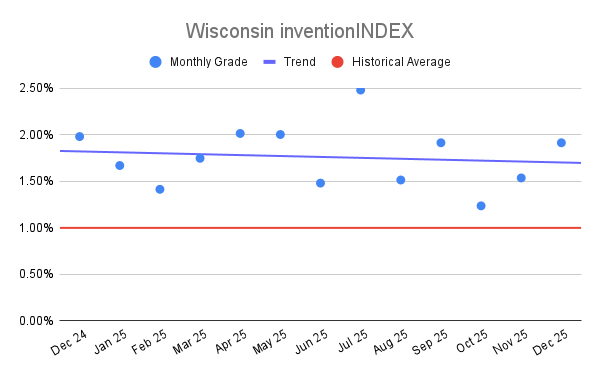 Wisconsin inventionINDEX December 2025
  Wisconsin inventionINDEX Novem
