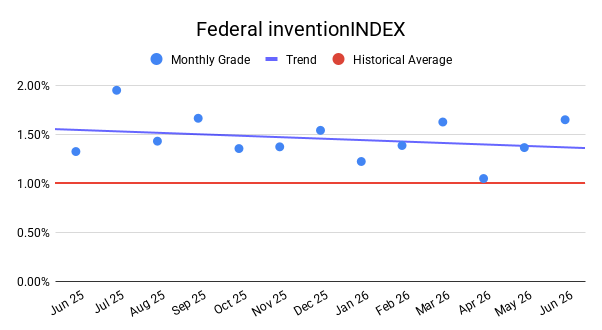
Patent of the Month June 2026: Universal City Studios Redefines Interactive Attractions
The theme-parks-amusement industry is constantly pushing the boundaries of technology to create highly immersive and seamless experiences for guests. For the month of June 2026, a revolutionary new processing system has been awarded the prestigious Patent of the Month. The patent, titled "Amusement content processing systems and methods" (U.S. Patent No. 12,616,907), introduces an intelligent, dynamic architecture designed for real-time media adaptation within live entertainment environments.
This groundbreaking invention was developed and filed by Universal City Studios LLC. To discover more about their extensive themed entertainment offerings and technology initiatives, you can visit the official corporate website for Universal Destinations & Experiences. Their newly patented system operates by identifying the precise operational characteristics of an accessory worn or held by a guest, enabling a central processor to modify the ongoing amusement data stream on the fly to deliver adjusted content customized specifically for that hardware.
Why the Invention is So Innovative
Universal City Studios LLC has introduced a monumental shift in how interactive park environments interact with guest gear. Traditionally, interactive devices used in amusement parks, such as specialized wands, augmented reality (AR) headsets, or electronic wristbands, receive rigid, pre-determined data streams. These legacy systems fail to account for the fluctuating state of individual devices, such as hardware variations, remaining battery levels, processing limitations, or specific user configurations.
The core innovation of this system lies in its ability to execute real-time content modification based on the accessory’s exact operational profile. Rather than pushing a uniform signal to every device, a central processor intercepts the primary attraction data stream, analyzes the technical characteristics of the connected device, and automatically rewrites the control instructions. By transmitting a modified data stream, the system optimizes visuals, haptic feedback, and audio tailored specifically to what that precise piece of hardware can support at that exact moment. This eliminates latency, reduces device-side processing strain, and guarantees a flawless guest experience regardless of device age or battery condition.
Winning Patent of the Month for June 2026
The selection of U.S. Patent No. 12,616,907 as the June 2026 Patent of the Month highlights its profound impact on the future of the theme-parks-amusement industry. As major theme parks move aggressively toward fully synchronized, mixed-reality environments, managing thousands of interactive guest devices simultaneously has become a primary engineering hurdle. Universal’s solution elegantly bridges the gap between complex centralized park data and localized edge-device capabilities.
Industry experts selected this patent because it directly solves the critical issues of scalability and device interoperability. Instead of forcing theme parks to deploy identical, expensive hardware upgrades across an entire attraction, this processing method allows legacy accessories to function seamlessly alongside next-generation gear. This breakthrough drastically reduces park infrastructure costs while maximizing the visual and interactive depth of modern rides, solidifying its place as the standout amusement innovation of the month.
U.S. R&D Tax Credit Eligibility and Practical Applications
The practical application and technical development of the technology described in this patent present a strong case for the U.S. Research and Development (R&D) Tax Credit under Internal Revenue Code Section 41. To qualify for this federal incentive, a company’s activities must meet a strict four-part test. First, the project must aim to create a new or improved product or process (permitted purpose). Second, the process must be technological in nature, relying on computer science, engineering, or physical principles. Third, it must involve the elimination of technical uncertainty regarding capability, methodology, or design. Finally, the company must engage in a structured process of experimentation, evaluating alternatives through testing, modeling, and simulation. In implementing Universal’s patented system, engineering teams must write sophisticated stream-modification software, construct dynamic communication protocols, and design complex algorithms capable of assessing accessory hardware in real time. The extensive code development, network architecture optimization, and iterative hardware-to-software testing required to achieve sub-millisecond data modification directly fulfill the process of experimentation requirement. Consequently, the employee wages, specialized supply costs, and third-party contractor expenses incurred during the design, prototyping, and integration phases of this content processing system represent highly eligible expenditures for the U.S. R&D tax credit.