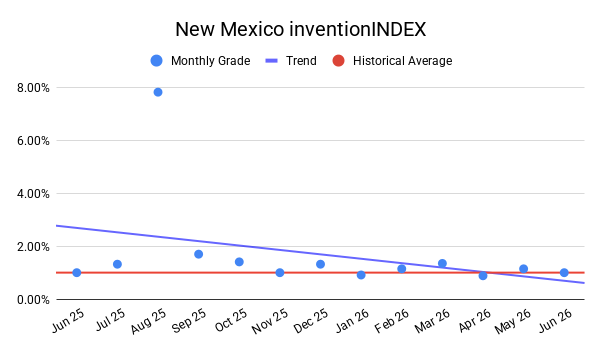
The Santa Fe County Exclusion denotes the statutory classification of Santa Fe as a non-rural jurisdiction, restricting local R&D tax credits to standard rates of 5%. This designation prevents businesses within the county from accessing the doubled 10% rural bonus incentives available to firms in less populated regions.
The Technology Jobs and Research and Development Tax Credit Act, codified as NMSA 1978, Sections 7-9F-1 through 7-9F-13, serves as a primary driver for New Mexico’s technology-based economy by providing a favorable tax climate for businesses engaging in research and experimentation. While the credit is available statewide, the legislative architecture utilizes a geographic tier system to encourage investment in underdeveloped areas. In this system, the “Santa Fe County Exclusion” represents a critical boundary in the state’s economic geography. By excluding Santa Fe County—along with Bernalillo and Doña Ana—from the “rural area” definition, the state legislature effectively concentrates higher-value subsidies in the state’s periphery while maintaining a standard incentive structure for the established metropolitan hubs. This exclusion is not merely a matter of population data but a deliberate policy choice reflected in the state’s administrative guidance and statutory amendments, particularly those enacted in 2015 and 2019. To understand the impact of this exclusion, one must examine the intersection of tax law, regional economic development goals, and the administrative protocols of the New Mexico Taxation and Revenue Department (TRD).
The Statutory Origin and Legislative Intent of the R&D Tax Credit
The New Mexico Technology Jobs and Research and Development Tax Credit was established in 2000 to foster high-wage employment and promote industrial innovation in the fields of science and technology. The primary goal was to make New Mexico a competitive alternative to established tech hubs like California’s Silicon Valley or the Research Triangle in North Carolina. By lowering the cost of doing business through credits against gross receipts tax (GRT), compensating tax, and withholding tax, the state aimed to stimulate a “virtuous cycle” of research investment and job creation.
The credit underwent a major transformation in 2015 with the passage of the 1st Special Session, Chapter 2, which renamed the act and increased the credit percentages from 4% to 5%. Crucially, this amendment also clarified the mechanism for claiming the credit and refined the geographic distinctions that govern the “rural bonus.” The legislative intent behind the rural bonus is to mitigate the economic disadvantages of operating in less populated areas, such as limited access to specialized labor, higher transportation costs, and sparse infrastructure. Because Santa Fe County serves as the state’s administrative capital and a central node in the “Northern New Mexico Technology Corridor,” it is viewed as a location where businesses already enjoy significant competitive advantages. Therefore, the legislature deemed it unnecessary to provide the doubled rural incentive to businesses located within this county.
The Evolution of the Rural Definition
In the context of New Mexico tax law, “rural” is a term of art that varies across different tax programs. For the Technology Jobs and Research and Development Tax Credit, the definition is strictly governed by the population and specific county exclusions listed in the Taxation and Revenue Department (TRD) guidance.
| Criteria | Rural Area Definition (R&D Credit) | Santa Fe County Status |
|---|---|---|
| Population Threshold | Counties with fewer than 200,000 residents | Excluded regardless of future shifts |
| Explicit County Exclusions | Bernalillo, Doña Ana, Santa Fe | Named as an excluded “Non-Rural” county |
| Proximity to Urban Areas | Some credits use a 10-mile zone; R&D uses county lines | Entire county is considered non-rural |
| Designation Authority | NMSA 7-9F-3 and TRD designation | Statutory exclusion |
This specific exclusion differs slightly from the “Rural Jobs Tax Credit,” which uses a population benchmark of 30,000 for municipalities and includes a 10-mile buffer zone around larger cities. The R&D tax credit’s approach is more broad-brushed, identifying Santa Fe County as a whole as an urban/metropolitan area. This ensures that even the more remote parts of Santa Fe County are bound by the 5% credit rate, whereas a facility just across the border in San Miguel or Rio Arriba County would qualify for the 10% rate.
Mechanics of the Basic Technology Jobs and R&D Tax Credit
The “Basic Credit” is the foundational tier of the incentive. For a taxpayer conducting qualified research at a qualified facility in Santa Fe County, the credit is equal to 5% of “qualified expenditures”. If the same facility were located in a rural county, the rate would be 10%.
Qualified Expenditures and Facilities in the Santa Fe Context
To qualify for the credit in Santa Fe, an expenditure must meet the criteria outlined in NMSA 7-9F-7. The “qualified expenditure” is defined as the purchase price of property or services used in conducting research at a “qualified facility”.
- Labor Costs: This includes wages paid to employees who perform, supervise, or directly support research activities. These wages must be reported on a Form W-2 and included in the employer’s payroll expense.
- Physical Assets: Machinery and equipment purchased for research use are eligible. However, if the business has already claimed a credit for this equipment under the Investment Credit Act, it is barred from claiming it under the R&D credit to prevent “double-dipping”.
- Intellectual and Technical Resources: This category covers computer software, software upgrades, technical manuals, and laboratory books.
- Third-Party Services: Payments to consultants and contractors are eligible, provided they are based in New Mexico and their work is directly tied to the research project.
A “qualified facility” is a location in New Mexico where qualified research is conducted, but it excludes federal national laboratories. For businesses in Santa Fe, this distinction is vital because of the county’s proximity to Los Alamos National Laboratory. While a private company cannot claim credits for work done at the national lab, it can claim credits for research conducted at its own private facility within Santa Fe County that supports or utilizes technology transferred from the labs.
Application Against Combined Tax Liabilities
The Basic Credit is non-refundable for most taxpayers but can be applied against what the TRD calls “modified combined tax liability”. In Santa Fe, where local tax rates are high, understanding the components of this liability is essential for accurate filing.
| Tax Program | Eligibility for Basic Credit Offset | Santa Fe Specific Nuance |
|---|---|---|
| State Gross Receipts Tax | Yes | Limited to the state portion (5.125%) |
| Local Option GRT | No | Credits cannot offset city/county portions |
| Compensating Tax | Yes | Applies to out-of-state purchases used in Santa Fe |
| Withholding Tax | Yes | Offsets the state income tax withheld from employees |
The 2015 and 2019 amendments specifically excluded “local option gross receipts taxes” from the list of taxes that the basic credit can be claimed against. Since Santa Fe residents and businesses pay a combined GRT rate that includes several local increments (for public health, infrastructure, etc.), the R&D credit only effectively reduces the state-level portion of that bill.
The Additional Credit: The Payroll Growth Benchmark
Beyond the Basic Credit, the Act offers an “Additional Credit” of 5% (or 10% in rural areas) against the taxpayer’s personal or corporate income tax liability. Because Santa Fe is excluded from the rural rate, the total potential credit for a Santa Fe-based firm is capped at 10% (5% Basic + 5% Additional), whereas a rural firm can reach 20%.
The $75,000 Requirement
Eligibility for the Additional Credit in Santa Fe is not automatic; it is earned through job creation. The taxpayer must demonstrate that their annual payroll expense increased by at least $75,000 for every $1 million in qualified expenditures claimed.
The TRD calculates this growth by comparing the “annual payroll expense” (current year) to the “base payroll expense” (the average of the previous three years or the prior year, depending on the taxpayer’s history). For a Santa Fe firm with $2,000,000 in R&D expenditures, the required payroll growth would be $150,000. If the firm only increased payroll by $100,000, they would only qualify for a prorated portion of the Additional Credit.
Refundability and Small Business Liquidity
A critical advantage for “Qualified Research and Development Small Businesses”—defined as having 50 or fewer employees—is that the Additional Credit is refundable. For a startup in Santa Fe, this provides a direct cash infusion if the credit amount exceeds their corporate income tax liability.
The refundability is subject to a sliding scale based on total expenditures to prevent massive state outlays to highly capitalized firms:
- Expenditures under $3 million: 100% of the excess credit is refunded.
- Expenditures between $3 million and $4 million: Two-thirds (66.6%) of the excess is refunded.
- Expenditures between $4 million and $5 million: One-third (33.3%) of the excess is refunded.
In the Santa Fe County context, a small business with $2 million in expenditures would receive a 5% Additional Credit ($100,000). If that business has zero income tax liability, the state would issue a check for $100,000. A rural competitor with the same metrics would receive a check for $200,000, highlighting the stark financial reality of the Santa Fe County Exclusion.
Administrative Guidance: The Role of the Santa Fe Revenue Office
The New Mexico Taxation and Revenue Department (TRD) manages the R&D credit through its headquarters in Santa Fe and regional offices in Albuquerque, Las Cruces, Roswell, and Farmington. For Santa Fe-based businesses, the proximity to the TRD headquarters provides a logistical advantage, but the administrative requirements remain rigorous.
The Application Lifecycle (RPD-41385 and RPD-41386)
The TRD does not permit a taxpayer to claim the R&D credit on a tax return without prior certification. The process follows a strict timeline and requires specific documentation.
- Application Phase (Form RPD-41385): Within one year of the end of the calendar year in which expenditures were made, the taxpayer must submit Form RPD-41385, “Application for Technology Jobs and Research and Development Tax Credit”. This form requires a categorization of expenses and a narrative project description.
- TRD Audit and Approval: The TRD’s audit staff reviews the application to ensure that the research meets the statutory definition and that the expenditures are documented. If the facility is in Santa Fe, they verify that the 5% rate is applied correctly.
- Certification: Upon approval, the TRD issues a “Credit Document” or “Notice of Approval”.
- Claim Phase (Form RPD-41386): The taxpayer then uses the approved credit to offset liabilities on their CRS-1 (Combined Reporting System) or income tax returns.
FYI-106: The Definitive Guidance
The TRD’s primary publication for this credit is FYI-106: Claiming Business-Related Tax Credits for Individuals and Businesses. This document serves as the “instruction manual” for taxpayers. It clarifies that credits are non-transferable and cannot be sold as business assets. It also details the “Carry Forward” provisions: for the Basic Credit in Santa Fe, any unused portion can be carried forward for up to three years.
Local Reporting Nuances for Santa Fe
When a Santa Fe business files its gross receipts tax return, it must use the correct location code to ensure the tax rate is accurate. This is particularly important because the R&D credit only applies to the state portion of the tax.
| Location | Code | Standard GRT Rate (Example) | R&D Credit Application |
|---|---|---|---|
| City of Santa Fe | 01-102 | ~8.0% – 8.5% | 5% rate against the 5.125% state share |
| Santa Fe County (Other) | 01-502 | Varies by district | 5% rate against the 5.125% state share |
TRD guidance in FYI-105 and the CRS-1 Filer’s Kit emphasizes that failure to use the correct location code can lead to assessments of underpayment, even if the total tax paid is correct, because the revenue is misallocated between the state and the City of Santa Fe.
Economic Impact and Fiscal Performance Analysis
The Legislative Finance Committee (LFC) provides annual tax expenditure assessments that quantify the effectiveness of the R&D credit. In the July 2025 assessment, the data reveals a program that is growing in scale but remains geographically concentrated.
Statewide Trends vs. Santa Fe Concentration
The LFC report indicates that the Technology Jobs and R&D Credit resulted in $11.2 million in state support during FY24. There were 390 claims made, a significant increase from previous years. The average cost per job created by this credit is estimated at $35,000.
For Santa Fe County, the exclusion from rural rates has not prevented a steady stream of claims. However, it has influenced the type of research conducted. Santa Fe’s technology sector is heavily weighted toward software development, media technology (bolstered by the film industry), and biosciences. These industries often have high labor-to-equipment ratios, making the Additional Credit (based on payroll) highly relevant for local firms.
| FY24 Impact Metrics | Program Value |
|---|---|
| Total Expenditures (Foregone Revenue) | $11.2 Million |
| Total Claims | 390 |
| Economic Return on Investment (ROI) | 92% ($0.92 per $1 spent) |
| Revenue Recapture Rate | 19% |
| State GDP Increase Attributable to Credit | $20.9 Million |
The negative return in revenue (-81%) means that for every dollar the state “spends” on the credit, it only directly recovers 19 cents in new tax revenue over a 20-year period. However, the economic ROI of 92% suggests that the program is successful in growing the state’s overall economy, even if it does not “pay for itself” in pure tax receipts.
The Role of Santa Fe in the Tech Corridor
The Santa Fe County Exclusion reflects the county’s role as a “mature” economic environment. The LFC notes that geographic targeting (rural bonuses) helps distressed areas, but the majority of R&D expenditures still occur in the “Non-Rural” counties: Bernalillo, Doña Ana, and Santa Fe. This concentration suggests that the presence of an educated workforce and technical infrastructure—factors abundant in Santa Fe—are more significant drivers of R&D location decisions than the difference between a 5% and 10% tax credit.
Comparative Case Study: The Santa Fe County Exclusion in Action
To demonstrate the practical application of the law and the TRD guidance, we can contrast two technology firms with identical financial profiles but different locations.
Firm A: Santa Fe Software Solutions (Santa Fe County)
Location: Midtown District, Santa Fe.
Status: Non-Rural (Santa Fe County Exclusion).
Qualified Expenditures: $1,000,000 (Cloud servers, NM software engineers, office lab equipment).
Payroll Growth: $80,000 (Meets the $75,000 requirement).
- Basic Credit Calculation: $1,000,000 × 0.05 = $50,000.
- Application: Firm A applies this against its state-portion GRT and the withholding tax for its 15 employees.
- Additional Credit Calculation: $1,000,000 × 0.05 = $50,000.
- Application: Applied against corporate income tax. As a small business, any excess is refundable.
- Total Benefit: $100,000.
Firm B: Mora Media Tech (Mora County)
Location: Rural Mora County (near the Santa Fe border).
Status: Rural Area.
Qualified Expenditures: $1,000,000 (Identical to Firm A).
Payroll Growth: $80,000 (Identical to Firm A).
- Basic Credit Calculation: $1,000,000 × 0.10 = $100,000.
- Additional Credit Calculation: $1,000,000 × 0.10 = $100,000.
- Total Benefit: $200,000.
Analysis of the Disparity
The Santa Fe County Exclusion results in a $100,000 “location penalty” for Firm A. From a business planning perspective, Firm A must justify this $100,000 cost through the benefits of Santa Fe’s ecosystem, such as proximity to venture capital, the state legislature, and a higher density of technical talent. The TRD guidance ensures that this geographic boundary is firm: if Firm A were to try and claim the rural rate while operating in Santa Fe, a TRD auditor would disallow the credit, potentially resulting in an underpayment penalty and interest.
Compliance Challenges and Audit Risks for Santa Fe Businesses
For businesses in Santa Fe, the risk of “audit churn” is a significant concern. The TRD utilizes the “Combined Reporting System” to track payments, and discrepancies in reporting locations are a frequent trigger for inquiries.
The “First Use” and Compensating Tax Issue
One of the most complex areas of guidance involves the “Compensating Tax.” If a Santa Fe tech firm buys a high-powered microscope from Germany, it must report compensating tax to the TRD. NMSA 1978, Section 7-9-7 states that the reporting location for compensating tax should be the location where the property is first used.
If the firm inadvertently reports the use at a different location (e.g., a storage site in a rural county) to try and snag a higher credit rate, they run afoul of the law. TRD guidance in TRD-41412 Instructions clarifies that the location must be the “business location at which gross receipts would have been required to be reported had the transaction been subject to the gross receipts tax”. For a Santa Fe firm, this is almost always a Santa Fe location code, cementing the 5% credit rate.
Payroll Verification and W-2 Consistency
The TRD’s audit process for the Additional Credit focuses heavily on payroll verification. The guidance in Section 7-9F-6 specifies that “wages” are those included in Box 1 of the annual W-2 statement.
Common errors for Santa Fe businesses include:
- Including independent contractor (1099) payments in the payroll growth calculation. Only W-2 wages qualify.
- Including employees who are not based at the “qualified facility” in Santa Fe. If an employee works remotely from Texas but is “assigned” to the Santa Fe office, their wages may be challenged during an audit.
- Failing to account for the “Base Payroll” accurately. If a Santa Fe company acquires another firm, the jobs created through the merger do not count as “new” jobs for the credit.
Local Option GRT Bifurcation
Perhaps the most common error for Santa Fe taxpayers is applying the 5% credit against the total GRT liability. Because Santa Fe’s total GRT rate might be 8.4375% (composed of 5.125% state and 3.3125% local), the credit can only offset the 5.125% portion. Taxpayers who offset the local portion will likely receive a “Notice of Assessment” from the TRD for the unpaid local taxes.
Future Policy Directions: Will the Exclusion Remain?
The Santa Fe County Exclusion is a product of its time—a period of relative prosperity and population growth in Northern New Mexico. However, several factors could influence future legislative changes.
Population Thresholds and Census Data
The current definition of a “Rural Area” for the R&D credit relies on a population threshold of 200,000. While Bernalillo (Albuquerque) and Doña Ana (Las Cruces) are well above this, Santa Fe County’s population is closer to the margin. However, because the statute explicitly names Santa Fe County as an excluded entity, even a drop in population would not automatically trigger rural status without a legislative amendment.
The Rise of “Economically Distressed” Sub-Zones
There is growing interest in moving away from county-level exclusions toward “place-based” planning. The Santa Fe County Economic Development Plan recognizes that while the county is affluent overall, it has pockets of economic distress. If the state were to adopt the “Job Training Incentive Program” (JTIP) model, parts of Santa Fe County could eventually qualify for higher incentives based on local unemployment rates or business closures, even if the county as a whole remains “non-rural”.
Impact of Remote Work and “Location Neutral” Businesses
The 2021 legislative highlights and recent LFC reports mention the importance of broadband for “location-neutral” businesses in rural areas. For Santa Fe, this creates a competitive threat. If a software firm can operate from a rural county with a 10% R&D credit and lower overhead, the 5% Santa Fe rate becomes a harder sell. This may eventually force the legislature to reconsider the Santa Fe County Exclusion to remain competitive with the state’s own rural incentives.
Final Thoughts: Navigating the Santa Fe Tax Landscape
The Santa Fe County Exclusion is a foundational element of the New Mexico Technology Jobs and Research and Development Tax Credit. It represents a statutory commitment to regional equity by providing lower incentives in the state’s most established tech hub. For the Santa Fe-based innovator, this means the state provides a 5% Basic Credit against state-level GRT, compensating, and withholding taxes, and a 5% Additional Credit against income taxes for those who meet the $75,000 payroll growth benchmark.
Administrative compliance requires a deep understanding of TRD publications like FYI-106 and a rigorous approach to documentation using forms RPD-41385 and RPD-41386. Businesses must be particularly careful to exclude local option GRT from their credit applications and to maintain W-2 records that tie employees specifically to the Santa Fe facility.
Ultimately, the Santa Fe County Exclusion is a recognition of the county’s strength. While it may appear as a “penalty” in a spreadsheet comparison with a rural county, it is a byproduct of Santa Fe’s status as a premier location for research and development. By understanding these nuances, Santa Fe businesses can effectively leverage the available 5% to 10% in credits to fuel their growth while avoiding the pitfalls of administrative non-compliance.