The United States Patent and Trademark Office has officially granted Patent No. 12,623,042 to SharpMed, LLC for their cutting-edge invention titled “Endotracheal tube relief valve.” This newly issued patent marks a major milestone in respiratory critical care technology, offering emergency practitioners, anesthesiologists, and intensive care units a highly protective and adaptive airway accessory designed to completely eliminate intubation-induced barotrauma during high-flow passive oxygenation procedures.
According to the official patent documentation, the medical device features an adapter housing configured to couple with an endotracheal tube, a self-sealing instrument port allowing a stylet to pass through, a dual safety pressure relief valve assembly, and an integrated alarm mechanism. The foundational breakthrough of this system rests on its ability to continuously channel high-flow oxygen directly toward the glottic opening while automatically venting excess pressure and initiating a direct user notification if a closed, hyper-pressurized pulmonary state occurs, preserving patient lung integrity during complex airway management scenarios.
Why the Invention Is Truly Innovative
During emergency airway management, clinical operators face a delicate balancing act between providing sufficient oxygenation and preventing severe pulmonary injury. When dealing with difficult intubations, a patient can rapidly develop life-threatening hypoxia, which often prompts medical professionals to administer high-flow oxygen through the endotracheal tube while preparing to position it correctly. However, if the tube tip becomes obstructed by soft tissue or if the balloon cuff is inflated while high-flow gas continues to stream in without an exhaust route, a closed pulmonary loop is formed. Traditional respiratory components do not possess built-in, local pressure-regulation features. This deficiency can cause intrapulmonary pressures to climb exponentially in seconds, causing catastrophic alveolar rupture, tension pneumothorax, or sudden cardiovascular collapse.
The mechanical solution engineered by SharpMed, LLC resolves this clinical vulnerability by placing passive, highly responsive safety mechanisms directly on the airway interface. By integrating specialized silicone relief valves with a self-sealing stylet entry port, the design allows physicians to use standard intubation tools like rigid stylets or bougies without interrupting the protective, airtight seal. If the internal circuit pressure reaches an unsafe threshold, the pressure relief valves immediately actuate to vent the excess gas into the ambient environment. Concurrently, the integrated alarm system provides instantaneous acoustic or tactile feedback to the clinician. This configuration removes the cognitive burden of manual pressure monitoring from the operator, allowing them to focus entirely on visual cues and safe tube placement while establishing an extended, secure apnea window for the patient.
Recognized as June 2026 Patent of the Month
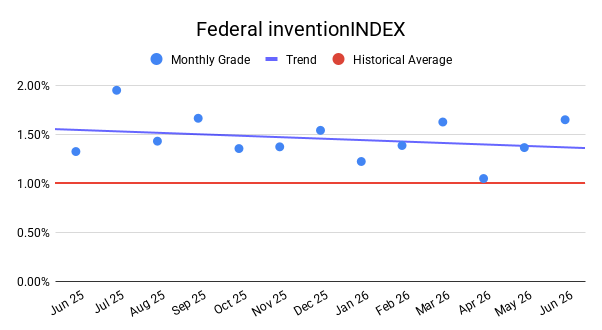
This protective airway design has secured the prestigious “Patent of the Month” distinction for June 2026 within the pharma-medical-devices-healthcare industry. The selection committee focused heavily on the advanced micro-engineering and meticulous material science required to manufacture the device. Embedding two independently functioning silicone relief valves alongside a responsive alarm framework inside a small, low-profile polycarbonate housing requires exceptional dimensional tolerance controls. The device must remain exceptionally lightweight and compact so that it does not exert downward mechanical leverage or kinking forces on the delicate endotracheal tube assembly during critical operations.
Furthermore, the committee emphasized the immense commercial and operational utility this tool brings to modern hospital systems and emergency response fleets. By mitigating the acute risk of severe lung tear injuries during intubation, the device lowers the incidence of high-liability medical errors and secondary intensive care complications. Because the entire structure is engineered using cost-effective, medical-grade injection-molded polymers, it functions seamlessly as a single-use, disposable medical asset. This compatibility matches the strict infection-control standards required in modern operating rooms and trauma bays, providing healthcare networks with an accessible, high-yield safeguard that transforms emergency airway management protocols globally.
U.S. R&D Tax Credit Eligibility and Practical Applications
From an industrial and clinical product development perspective, the rigorous engineering iterations required to create this endotracheal tube safety system provide an excellent foundation for claiming the United States Research and Development (R&D) Tax Credit under Internal Revenue Code Section 41. To be eligible for these substantial federal and state tax incentives, the development activities must satisfy a strict four-part test, meaning the work must be technological in nature, target the structural or functional improvement of a business component, eliminate technical uncertainty, and utilize a systematic process of experimentation. Medical device manufacturers and specialized biotechnology firms can capture significant qualified research expenses (QREs) by fully documenting their development cycles. Eligible activities include the computational fluid dynamics modeling performed to optimize gas venting flow rates, the iterative prototyping of the self-sealing silicone slits to verify they maintain airtight seals during stylet manipulation, and the acoustical engineering involved in tuning the built-in mechanical alarm. Additionally, performing extensive bench testing to evaluate valve fatigue under varying humidity levels, along with executing automated stress tests to confirm that the polycarbonate housing withstands accidental impact drops, represents classic qualified research and development work that directly reinforces an R&D tax credit application.