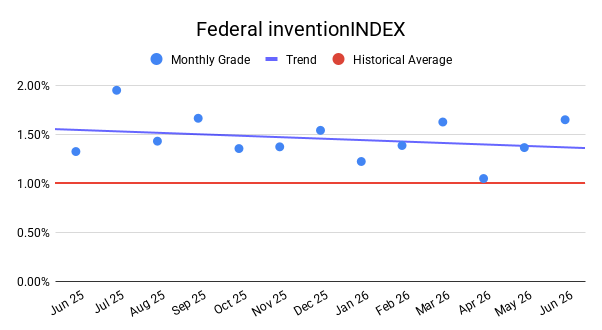
The United States Patent and Trademark Office has officially granted Patent No. 12,618,237 to Cover Technologies, Inc. for their cutting-edge invention titled “Ceiling FAÇADE system.” This newly issued patent marks a major milestone in architectural engineering and modular construction technology, offering real estate developers and prefab home builders a highly integrated, energy-efficient, and streamlined ceiling assembly designed to accelerate on-site installation while optimizing climate control.
According to the official patent documentation, the ceiling façade system features a ceiling tile including an interior panel, a heating element, and an insulator layer arranged over the heating element. The foundational breakthrough of this system rests on its ability to integrate dynamic thermal regulation components directly within prefabricated structural ceiling panels, allowing developer teams to achieve precise climate management and clean aesthetic lines without the necessity of installing bulky, standalone HVAC ductwork or exposed radiator equipment.
Why the Invention Is Truly Innovative
Traditional real estate development and building construction face significant hurdles when it comes to installing HVAC and interior finishes. Conventional drop ceilings or drywall assemblies require multiple steps: hanging structural grids, running extensive metal ductwork, weaving complex electrical wiring, and layering thick insulation blankets. This sequential, multi-trade process creates immense scheduling coordination challenges, introduces numerous opportunities for human error, and extends construction timelines. Furthermore, traditional forced-air heating systems are inherently inefficient, causing uneven heat distribution, creating dust circulating drafts, and requiring valuable square footage for drop-downs or soffits that reduce a building’s interior volume.
The solution engineered by Cover Technologies, Inc. eliminates these design and installation inefficiencies completely. By manufacturing a composite ceiling tile that combines the finish panel, a high-performance heating element, and a built-in insulation barrier into a single, factory-calibrated building component, the system collapses several steps of the construction cycle into a simple installation procedure. The integrated heating elements utilize radiant technology to distribute warmth evenly throughout the room from above, eliminating cold spots and drafts. Because the panels are pre-engineered to connect seamlessly via integrated structural edges, they hide all electrical and mechanical linkages behind a flush, modern facade. This ensures real estate projects can maximize vertical clearance and maintain pristine architectural aesthetics while dramatically cutting down on-site labor requirements.
Recognized as June 2026 Patent of the Month
This advanced modular ceiling infrastructure has proudly secured the “Patent of the Month” distinction for June 2026 within the real-estate-development industry. The selection committee focused heavily on the profound macroeconomic and labor-saving implications of this panelized approach. In a modern development landscape plagued by chronic labor shortages, rising material costs, and strict municipal energy codes, any technology that compresses multi-trade timelines while boosting energy efficiency represents a massive market advantage. The committee praised Cover Technologies, Inc. for turning a notoriously fragmented interior assembly process into a repeatable, assembly-line product that can be deployed rapidly across high-end residential or commercial properties.
Additionally, the environmental and structural engineering synergy within the patent played a major role in securing this honor. By combining insulation and heating directly within the ceiling facade, the panel prevents thermal bridging and heat loss through the upper roof or floor assembly. The tight engineering tolerances of the panels ensure they snap together perfectly, reducing the risk of air leakage and helping buildings easily achieve strict environmental certifications like LEED or Passive House status. Real estate developers gain an institutional-grade building component that significantly elevates asset value, reduces long-term operational utility bills for occupants, and dramatically speeds up the time-to-market for new construction builds.
U.S. R&D Tax Credit Eligibility and Practical Applications
From a commercial and corporate development perspective, the practical engineering work associated with developing and optimizing this integrated ceiling facade system provides an excellent pathway for companies seeking to claim the United States Research and Development (R&D) Tax Credit under Internal Revenue Code Section 41. To qualify for these lucrative tax incentives, the development activities must satisfy a strict four-part test: the work must be technological in nature, target the creation or improvement of a business component’s function, eliminate technical uncertainty, and involve a systematic process of experimentation. Real estate development firms, prefab manufacturers, and structural engineering groups can qualify for substantial tax savings by fully documenting their iterative design cycles. Eligible activities encompass the advanced thermal and thermodynamic simulation modeling required to prevent hotspots across the panel, the electrical engineering needed to design low-voltage radiant circuits that operate safely behind interior panels, and the material science testing performed to select fire-retardant insulative layers that meet rigid municipal building codes. Furthermore, manufacturing physical panel prototypes to eliminate technical uncertainty regarding structural load tolerances, edge-interlocking mechanics, or thermal expansion behaviors represents a classic example of qualified research expenses (QREs) that directly support a successful R&D tax credit application.