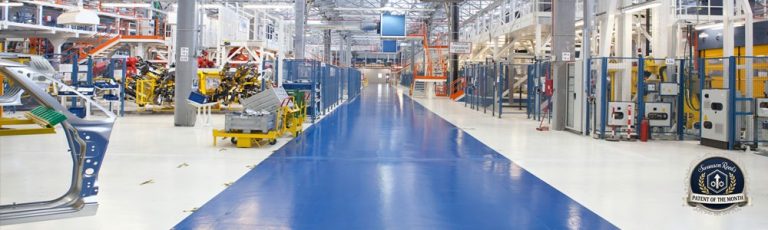
This study analyzes the intersection of United States federal and Missouri state R&D tax credit requirements with the specialized industrial ecosystem of Springfield, Missouri. By examining five regional industries—stainless steel, remanufacturing, food processing, logistics, and medical technology—it provides a comprehensive framework for establishing statutory eligibility and maximizing innovation incentives.
The Legislative and Administrative Framework of the Research and Development Tax Credit
The landscape of corporate innovation incentives in the United States is currently undergoing a profound structural shift. At both the federal and state levels, legislative reforms, updated administrative guidance, and shifting judicial doctrines dictate how enterprises fund, execute, and document their research and development activities. For businesses operating in Springfield, Missouri—a regional economic powerhouse characterized by a diverse amalgamation of legacy manufacturing and emerging technology sectors—navigating the intersection of Internal Revenue Code (IRC) Section 41, IRC Section 174, and the Missouri Revised Statutes (RSMo) Section 620.1039 requires a highly nuanced understanding of statutory requirements and historical case law.
United States Federal R&D Tax Credit (IRC Section 41 and Section 174)
The federal Credit for Increasing Research Activities, codified under IRC Section 41, allows taxpayers to claim a percentage of their qualified research expenditures (QREs) to directly offset federal income tax liabilities. Originally enacted as part of the Economic Recovery Tax Act of 1981 to prevent the offshoring of high-tech jobs and to stimulate domestic innovation, the credit relies on a stringent, multi-tiered framework to differentiate routine operational and business expenditures from credit-eligible technological advancements.
The Statutory Four-Part Test
To qualify for the federal R&D tax credit, an activity must comprehensively and simultaneously satisfy the following four criteria, applied specifically at the business component level:
- The Section 174 Test (Permitted Purpose): Expenditures must be eligible for treatment as research and experimental expenditures under IRC Section 174. The research must be undertaken to develop a new or improved “business component”—statutorily defined as a product, process, computer software, technique, formula, or invention—held for sale, lease, license, or used by the taxpayer in a trade or business. The improvement must relate to the component’s functionality, performance, reliability, or quality, rather than mere aesthetic or cosmetic changes.
- The Technological in Nature Test: The research activities must fundamentally rely on principles of the “hard” sciences. The statute explicitly limits this to physical or biological sciences, engineering, or computer science. Research relying on the social sciences, arts, or humanities is strictly excluded.
- The Elimination of Uncertainty Test: At the onset of the research endeavor, the taxpayer must face objective technical uncertainty regarding the capability or methodology for developing or improving the business component, or the appropriate design of the business component. If the outcome is easily predictable using standard industry practices, uncertainty does not exist.
- The Process of Experimentation Test: Substantially all of the research activities must constitute a systematic process of evaluating alternatives to overcome the identified technical uncertainty. Historically interpreted as the “80% rule,” this requires that at least 80% of the activities involve a scientific method of formulating hypotheses, modeling, simulation, systematic trial and error, and iterative refinement.
Federal Legislative Updates and Tax Accounting Shifts
The tax accounting treatment of research expenditures has been fundamentally altered in recent years, creating cash-flow challenges for innovative firms. Under the Tax Cuts and Jobs Act (TCJA) of 2017, the historical ability to immediately deduct Section 174 research and experimental expenses in the year they were incurred was revoked. For tax years beginning after December 31, 2021, taxpayers were forced to capitalize and amortize domestic research costs over a five-year period (and foreign research costs over a fifteen-year period). This paradigm shift temporarily increased the tax burden on companies engaged in high-volume research activities, contrary to decades of prior U.S. economic policy.
However, recent legislative movements have introduced new complexities and potential reliefs. The implementation of P.L. 119-21, commonly referred to as the One Big Beautiful Bill Act, added a new Section 174A to the Internal Revenue Code. Section 174A(a) allows taxpayers to once again deduct amounts paid or incurred for domestic research and experimental expenditures in tax years beginning after December 31, 2024. Alternatively, under Section 174A(c), a taxpayer may explicitly elect to charge such expenditures to a capital account and amortize them ratably over a period of not less than 60 months, beginning with the month in which the taxpayer first realizes benefits from the expenditures. Furthermore, Section 70302(f) of P.L. 119-21 provides taxpayers with complex transition options (detailed in Rev. Proc. 2025-28) to recover unamortized amounts paid or incurred during the mandatory capitalization period between January 1, 2022, and December 31, 2024.
Enhanced IRS Scrutiny and Form 6765 Revisions
Concurrently, the Internal Revenue Service has drastically increased the qualitative and quantitative reporting burden on taxpayers seeking the Section 41 credit. Historically, Form 6765 was utilized primarily for reporting top-line quantitative data, with detailed qualitative project documentation retained in the taxpayer’s files for potential audits. The revised Form 6765, finalized after extensive stakeholder feedback, now mandates the inclusion of highly granular data directly on the filed return.
For tax years beginning after December 31, 2024 (Tax Year 2025), the completion of the new “Section G—Business Component Information” is mandatory for all taxpayers, unless they meet specific exemption criteria (e.g., Qualified Small Businesses claiming a payroll tax offset, or taxpayers with total QREs of $1.5 million or less and gross receipts of $50 million or less). Section G demands exhaustive granularity, requiring taxpayers to:
- Identify the exact number of business components generating QREs.
- Provide detailed qualitative descriptions of the specific research activities performed for each individual business component.
- Report the specific amount of officer wages included as wage QREs, subjecting executive compensation to immediate algorithmic scrutiny.
- Isolate and identify any completely new categories of expenditures previously unclaimed by the entity.
- Provide detailed answers regarding controlled group dynamics and acquisitions/dispositions occurring during the credit year.
These enhanced reporting requirements signify a shift toward centralized, data-driven IRS risking, where claims lacking detailed business component mapping will be immediately flagged for examination or summary denial.
The Evolution of Federal Case Law
Recent federal tax court decisions further emphasize the extraordinarily high evidentiary bar established by the IRS. In Little Sandy Coal v. Commissioner, the court ruled entirely against the taxpayer due to a lack of contemporaneous documentation directly linking specific employee activities to a defined process of experimentation. The court emphasized that the “substantially all” fraction (the 80% rule) must be rigorously quantified, and vague estimations of engineering time spent on new vessel designs were insufficient to prove that experimentation took place.
Similarly, in Moore v. Commissioner (T.C. Memo. 2023-20), the IRS successfully disallowed 65% of a Chief Operating Officer’s wages claimed as QREs. While the taxpayer argued the COO managed the R&D department, the court found the taxpayer failed to substantiate that the officer was engaged in the “direct performance” or “direct supervision” of qualified research as defined by Regs. Sec. 1.41-2(c), rather than just high-level administrative oversight. In Phoenix Design, an engineering firm was denied credits because its architectural and mechanical design work (designing MEPF systems for hospitals) did not face true technical uncertainty; the court ruled that simply applying known engineering standards to a new building layout does not fulfill the Section 174 test for discovering information.
However, the balance of power between the IRS and taxpayers was dramatically altered by the Supreme Court’s landmark 2024 decision in Loper Bright Enterprises v. Raimondo. This ruling overturned the decades-old Chevron deference doctrine, which previously mandated that courts defer to federal agencies’ interpretations of ambiguous laws. For R&D tax credit claims, Loper Bright strictly limits the IRS’s ability to enforce overly narrow, agency-created interpretations of ambiguous statutory terms—such as what constitutes a “business component” or the exact boundaries of “internal use software”. This empowers taxpayers and their legal counsel to rely on standard industry definitions and independent judicial interpretation during audits and litigation, potentially expanding eligibility for software and manufacturing firms.
The Missouri Qualified Research Expense (QRE) Tax Credit
For nearly two decades, the State of Missouri operated at a competitive disadvantage regarding innovation incentives; its original state-level R&D tax credit program expired on January 1, 2005, driving high-tech capital to neighboring states. Recognizing the critical economic necessity to retain and attract advanced manufacturing, bioscience, and software engineering capital, the Missouri General Assembly enacted House Bill 2400 (HB 2400). Signed into law by Governor Mike Parson, HB 2400 reinvigorated the Missouri Qualified Research Expense Tax Credit under RSMo Section 620.1039, making it effective for all tax years beginning on or after January 1, 2023.
State Statutory Mechanics, Calculations, and Caps
The Missouri QRE credit aligns closely with the federal IRC Section 41 definition of qualified research—expressly adopting the federal Four-Part Test—but introduces strict geographic and calculation limitations to ensure taxpayer funds directly benefit the state economy.
- Geographic Limitation: Only QREs (wages, supplies, computer rentals, and 65% of contract research) physically incurred within the borders of Missouri qualify for the state credit.
- Incremental Calculation and Base Amount: Unlike the federal Alternative Simplified Credit (ASC), Missouri utilizes a strictly incremental calculation model. Taxpayers earn the credit solely on “additional qualified research expenses”—defined as the difference between the current tax year’s Missouri QREs and the average of the taxpayer’s Missouri QREs incurred in the three immediately preceding tax years. Crucially, a taxpayer must have incurred Missouri QREs in at least one of the three preceding years to establish a valid base; entities with zero prior QREs do not qualify.
- The 200% Limitation: To prevent massive single-year windfalls, the statute imposes a ceiling: current-year eligible QREs are strictly capped at 200% of the prior three-year average. Any QREs exceeding this 200% threshold do not generate state tax credits.
- Credit Rates and the University Bonus: The standard credit rate is 15% of the additional qualified research expenses. However, the rate increases to 20% if the incremental expenses relate to research conducted in direct conjunction with a public or private college or university located within the state of Missouri.
- Fiscal Caps and Set-Asides: The program features strict fiscal restraints. No single taxpayer may be issued more than $300,000 in credits per calendar year. Furthermore, there is an annual, aggregate statewide program cap of $10 million. To promote economic diversity, exactly $5 million of this $10 million cap is strictly reserved for allocation to minority business enterprises, women’s business enterprises, and small businesses. If total eligible claims exceed the cap, DED distributes the awards on a pro-rata basis, though new businesses (less than five years old) are granted priority and issued full tax credits before any pro-rata dilution occurs.
- Utilization and Transferability: The credits are nonrefundable but can be carried forward for up to 12 years to offset Missouri corporate income tax (excluding withholding) and financial institutions tax liabilities. In a massive advantage for startups lacking current tax liabilities, the Missouri QRE credits are fully transferable, sellable, and assignable for cash.
- Sales Tax Exemption: In addition to the income tax credit, HB 2400 specifically exempts the purchase of “Missouri qualified research and development equipment” from all state and local sales and use taxes.
State Administrative Rulings and Case Law
Administration of the credit involves dual oversight. Taxpayers must apply through the Missouri Department of Economic Development (DED) via the Submittable online portal during an annual window (August 1 through September 30 for the prior tax year). Upon approval, DED issues a tax credit certificate, which the taxpayer then attaches to Form MO-TC and files with the Missouri Department of Revenue (DOR) to claim the offset. Disputes regarding eligibility, fraud, or application denials are escalated to the Missouri Administrative Hearing Commission (AHC).
Because the Missouri statute explicitly incorporates the federal definition of QREs from 26 U.S.C. 41, the AHC often defers to federal tax court precedent. However, specific Missouri rulings have established localized interpretations critical to regional industries. A landmark precedent for Missouri manufacturers is the case of TG Missouri Corp. v. Commissioner (133 T.C. 278, 2009). The IRS argued that third-party tooling and mold costs incurred by the Missouri-based automotive parts manufacturer should be excluded from QREs because supplies must not be “property of a character subject to the allowance for depreciation.” The U.S. Tax Court sided with TG Missouri, ruling that because the manufacturer’s clients ultimately took ownership of the molds, the tooling was not depreciable in the hands of the taxpayer. Therefore, the massive tooling expenditures were fully includible as supply QREs. As detailed in the subsequent case studies, this ruling is foundational for Springfield’s heavy manufacturing and remanufacturing sectors.
| Feature | Federal IRC Section 41 | Missouri RSMo 620.1039 |
|---|---|---|
| Geographic Scope | Domestic United States | Strictly within Missouri |
| Base Calculation | Gross receipts logic or Alternative Simplified Credit (ASC) | Strictly the average of 3 prior years’ MO QREs |
| Standard Rate | Generally 20% of excess (or up to 14% via ASC) | 15% of incremental excess QREs |
| Collaboration Bonus | Energy research consortiums / basic research | 20% if partnered with a Missouri University |
| Maximum Claim | Generally uncapped | Maximum $300,000 per taxpayer per year |
| Carryforward | Up to 20 years | Up to 12 years |
| Transferability | Generally non-transferable (except QSB payroll offset) | Fully transferable, sellable, or assignable |
Springfield’s Economic Evolution and Sector-Specific R&D Eligibility
Springfield, historically celebrated as the “Queen City of the Ozarks” and universally recognized as the geographic birthplace of historic Route 66, has undergone a radical economic metamorphosis. Originally an isolated agricultural outpost in the mid-19th century, the city’s industrial foundation was truly laid in the 1870s through the aggressive expansion of the St. Louis-San Francisco Railway (affectionately known as the “Frisco”). By headquartering its operational hub and massive repair shops in Springfield, the Frisco Railroad catalyzed explosive population growth, connecting the rich agricultural and timber output of the Ozarks to the rapidly industrializing national markets.
As the influence of rail waned and the Interstate Highway System developed in the mid-20th century, Springfield’s economy fractured and diversified, evolving from a localized transit hub into a highly complex metropolitan statistical area (MSA). Today, the Springfield region features highly specialized, world-class industrial clusters. The following five exhaustive case studies examine the historical genesis of these distinct industries in Springfield, and technically detail how their modern, day-to-day engineering and software development activities legally satisfy the rigorous thresholds of both federal and Missouri R&D tax credits.
Advanced Stainless Steel Manufacturing
Historical Development and Geographic Concentration
Springfield produces the vast majority of all stainless steel equipment utilized in the American beverage, pharmaceutical, dairy, and chemical processing industries. This hyper-concentrated industrial cluster—comprising over 30 distinct companies and employing approximately 3,000 skilled tradesmen, fabricators, and engineers—represents roughly one out of every five manufacturing jobs in the entire region. Remarkably, this entire ecosystem can trace its industrial lineage to a single entity: the Paul Mueller Company.
Founded in 1940 by Paul Mueller and Gordon Mann as a modest heating, furnace repair, and general sheet metal shop in a 900-square-foot garage, the company was forced to adapt rapidly during World War II. Recognizing a military need, Mueller pivoted to fabricating automated poultry processing equipment (scalders and eviscerators). In the post-war era, as Southwest Missouri developed into a major dairy production zone, shifting federal and state health regulations mandated the phase-out of traditional, unhygienic milk cans in favor of fully refrigerated, sanitary stainless-steel holding tanks. Mueller seized this massive market opportunity, developing the iconic EmBee milk coolers and pivoting entirely to dairy vats. By 1960, the company had abandoned general sheet metal work to focus exclusively on high-grade stainless steel pressure vessels and commercial food processing equipment.
As the Paul Mueller Company expanded into a global giant (today occupying a 1-million-square-foot facility on a 50-acre site), its highly trained workforce naturally decentralized. Over the decades, former Mueller engineers, salesmen, and master fabricators left to launch their own successful support and fabrication companies across the Ozarks. Entities such as Custom Metalcraft (founded by former Mueller salesman Dwayne Holden in 1977), Stainless Fabrication Inc. (SFI, founded in 1985), Tank Components Industries (TCI, founded in 2000), and Watson Metal Masters established deep roots. This splintering created an unparalleled regional talent pool, establishing an ecosystem where support companies specializing in precision polishing, dished tank heads, and manways exist symbiotically alongside primary fabricators, permanently cementing Springfield as the “Stainless Steel Capital of the U.S.”.
R&D Tax Credit Eligibility Analysis
The fabrication of custom, industrial-scale stainless steel equipment is not a routine manufacturing process; it requires continuous, high-risk metallurgical and mechanical innovation. Companies in this sector regularly encounter profound technical uncertainties regarding fluid dynamics, thermodynamic heat transfer, and metallurgical corrosion resistance under extreme chemical exposures.
- Elimination of Uncertainty & Process of Experimentation: When a Springfield fabricator is contracted to engineer a custom, 500,000-gallon biopharmaceutical bioreactor or a proprietary vapor compression still, standard fabrication guidelines are legally and practically insufficient. Engineers must utilize advanced Computer-Aided Design (CAD) and finite element analysis (FEA) to simulate pressure thresholds under variable thermal loads. The fabrication process itself requires research into new automated CNC plasma cutting techniques and the evaluation of novel nickel-alloy compositions to prevent weld-decay. The iterative testing of weld radiographies and non-destructive examinations to achieve mandatory, stringent ASME “U” or NBIC “R” certifications constitutes a definitive, statutorily protected process of experimentation.
- Federal & State Alignment: The wages paid to CAD engineers, metallurgists, and welding supervisors physically located in Springfield facilities directly qualify as in-house wage QREs under IRC 41(b)(2)(B). Furthermore, following the TG Missouri Corp. precedent, the specialized consumable materials and custom, single-use tooling required for prototype testing—provided the fabricator does not ultimately capitalize them—can be claimed as highly lucrative supply QREs. At the state level, these companies can claim the 15% RSMo 620.1039 credit on the incremental increase of these domestic wages and supplies, providing crucial cash flow to offset the massive capital expenditures required to maintain global manufacturing dominance.
Heavy-Duty Remanufacturing
Historical Development and Corporate Philosophy
Remanufacturing is the comprehensive, highly technical industrial process of returning a previously used, catastrophically worn, or non-functional product—known as a “core”—to a condition that is functionally equivalent to, or superior than, its original new condition. Springfield’s total dominance in this $160 billion global industry is completely synonymous with the remarkable history of SRC Holdings Corporation and its founder, Jack Stack.
In 1974, the massive conglomerate International Harvester built a major engine remanufacturing center in Springfield. However, by 1983, amid a severe national agricultural and industrial recession, International Harvester was failing catastrophically, shedding up to 1,000 employees a week globally. The Springfield plant was slated for closure. To save the facility and the livelihoods of its 119 employees, plant manager Jack Stack orchestrated an extraordinarily desperate employee buyout. The management team scraped together $100,000 in personal cash and secured a staggering $8.9 million loan—an unprecedented and highly volatile 89:1 debt-to-equity ratio.
To survive this crushing debt burden, Stack instituted a radical, transparent philosophy of corporate governance known as “Open-Book Management,” later popularized as the “Great Game of Business”. Stack opened the company’s financial ledgers to every employee on the shop floor, teaching mechanics and janitors the “language of business” so they understood exactly how their daily efficiencies impacted debt covenants and profitability. This empowerment strategy was spectacularly successful. Springfield ReManufacturing Corp. (now SRC Holdings) rapidly paid down its debt, saw its internal stock price rise from $0.10 in 1983 to over $199 per share by 2015, and organically spawned over 60 individual spin-off companies. The SRC model attracted massive joint ventures, bringing entities like John Deere (creating John Deere Reman) and Case New Holland (creating CNH Reman) to Springfield. Today, Springfield serves as the undisputed global center of excellence for heavy-duty engine, agricultural, and automotive remanufacturing.
R&D Tax Credit Eligibility Analysis
Remanufacturing is profoundly misunderstood by federal tax authorities, who often erroneously conflate the process with routine maintenance, reverse-engineering exceptions, or standard repair assembly. In reality, returning a catastrophic diesel engine failure to Original Equipment Manufacturer (OEM) specifications—or engineering the core to surpass original specifications to permanently eliminate the root cause of the initial failure—is an intense, legally qualified R&D endeavor.
- Technological in Nature & Experimentation: When an SRC subsidiary or John Deere Reman facility receives a degraded core—such as an obsolete diesel turbocharger or a heavily clogged emissions filter—standard repair manuals do not apply. Engineers must deeply analyze the core to understand the specific thermal or kinetic failure mechanism. Developing new salvaging techniques involves rigorous metallurgical and mechanical science. For example, researching advanced thermal spray reclamation processes to rebuild deformed cylinder heads, or designing proprietary chemical baths and ultrasonic cleaning methods to reduce oil-based deposits in diesel particulate filters without destroying the underlying ceramic substrate, requires continuous testing. Engineers iterate through multiple CNC machining tolerances and experimental material coatings until the remanufactured part consistently passes rigorous dynamometer load testing.
- Federal & State Alignment: The extensive time spent by specialized engineering personnel developing these new salvage protocols, creating first-article remanufacturing CAD blueprints, and testing prototype cores qualifies directly as in-house wage QREs. The degraded parts consumed and destroyed during structural limit testing qualify as supply QREs. Under Missouri’s HB 2400, these expenditures allow local remanufacturers to leverage the 15% state tax credit. By utilizing the concurrent federal and state credits, Springfield remanufacturers can offset the massive capital risks associated with entering new product lines, such as aerospace or medical equipment remanufacturing.
Food and Beverage Manufacturing and Processing
Historical Development and Geological Utilization
The rolling agricultural topography of the Kickapoo Prairie and the Ozarks historically positioned Springfield as a localized nexus for dairy and food processing. However, the city’s elevation to a global food manufacturing hub was driven by an intersection of bizarre federal agricultural policies and unique local geology.
In the 1970s, attempting to protect American dairy farmers from severe inflation, the federal government (under the Carter administration) enacted policies that artificially inflated milk prices, inadvertently triggering a massive, uncontrollable overproduction of dairy. Under the Agricultural Act of 1949, the government was legally obligated to purchase this surplus to stabilize the market. By 1981, the USDA had accumulated over 500 million pounds of surplus dairy, converting it into processed blocks of “Government Cheese” to extend its shelf life. Facing a logistical nightmare of where to store this astronomical volume, the government turned to Springfield.
Beneath the city lies the “Springfield Underground”—a colossal, 3.2 million square foot network of former limestone mines lying over 100 feet below the surface. These massive caverns, featuring 40-foot ceilings capable of accommodating semi-trucks and rail cars, are naturally climate-controlled at a constant 60 degrees Fahrenheit, requiring a fraction of the energy normally needed for refrigeration. The USDA utilized the caves to warehouse the cheese stockpile.
This unique geological asset anchored massive private food corporations to the city long after the government cheese was distributed. Kraft Heinz established a predominant, permanent footprint; operating since 1954, its Springfield plant is the nation’s principal production center for iconic brands like Kraft Macaroni & Cheese, Kraft Singles, and Velveeta, relying heavily on the Springfield Underground for temperature-controlled aging and logistics. Recognizing the region’s agricultural diversity, central location, and highly specialized food-science workforce, modern food innovators have also flocked to Springfield. Notably, Vital Farms constructed its “Egg Central Station” (ECS) in Springfield, an award-winning, highly automated washing and packing facility designed to process pasture-raised eggs from hundreds of regional family farms.
R&D Tax Credit Eligibility Analysis
Food manufacturing involves profound complexities in organic chemistry, biological process engineering, and industrial automation, moving far beyond mere recipe testing.
- Product Formulation & Technical Uncertainty: When Kraft Heinz develops new formulations for natural cheese or aims to accelerate the continuous manufacturing process without compromising the consumer’s organoleptic experience, food scientists must engage in complex biological modeling. Understanding the interactions of micro-scale protein structures, oral colloid rheology, and bulk elastic properties requires systemic, scientific trial and error regarding ingredient ratios, enzymatic reactions, and thermal processing times. This directly satisfies the Section 174 definition of experimental research intended to eliminate technical uncertainty regarding product formulation.
- Process Engineering: For companies like Vital Farms, the R&D is not merely in the food product itself; it is embedded in the facility architecture. Designing a continuous flow-through facility utilizing industry-leading robotics and visual-recognition automation to sort and grade fragile agricultural products improves production efficiency. Furthermore, engineering the facility to achieve strict environmental metrics—such as operating as a zero-waste-to-landfill site and earning LEED Gold Certification—requires iterative architectural and mechanical engineering experimentation.
- Federal & State Alignment: Pilot plant batch runs, microbiological testing, and the integration of automated sorting algorithms qualify under IRC Section 41. Because corporate entities continually expand and technologically upgrade their Springfield facilities (e.g., Kraft Heinz’s recent $48 million operational enhancement), they generate immense incremental QREs. This perfectly positions them to capture the Missouri 15% QRE credit, driving down their state corporate income tax liabilities and incentivizing further local expansion.
Transportation, Logistics, and Autonomous Technology
Historical Development and the Shift to Rubber
As the dominant economic influence of the Frisco Railroad slowly waned in the mid-20th century, the advent of the Interstate Highway System fundamentally altered Springfield’s logistical destiny. In 1926, Springfield businessman John T. Woodruff successfully lobbied to route the newly conceived Chicago-to-Los Angeles highway directly through the city, forever establishing Springfield as the “Birthplace of Route 66”. The subsequent construction of Interstate 44 along a similar corridor shifted the region’s freight dominance from rail to rubber.
The city gave birth to legendary mid-century motor carriers like Campbell 66 Express and rapidly evolved into a national trucking hub. Today, Springfield is home to modern logistics giants like Prime Inc. (founded in 1970 by Robert Low with a single dump truck, now operating one of the largest refrigerated and flatbed fleets in North America) and Wilson Logistics. The industry is structurally supported by the aforementioned Springfield Underground, where vast rail-to-truck transloading operations save carriers thousands of dollars per load by seamlessly shifting bulk freight between modalities. However, the modern logistics sector in Springfield has transcended mere physical transportation, morphing into a highly sophisticated technology industry driven by software, predictive algorithms, and artificial intelligence.
R&D Tax Credit Eligibility Analysis
The logistical complexity of routing thousands of trucks across the continent while managing volatile fuel prices, strict Hours-of-Service regulations, and refrigerated climate controls necessitates deep investment in computer science and vehicular telemetry.
- Autonomous Vehicle Integration: Wilson Logistics recently made global trucking history by placing the world’s first large-scale order for autonomous trucking technology, partnering with the robotics firm Locomation to deploy “Autonomous Relay Convoy” (ARC) technology. This human-guided autonomy allows two electronically tethered trucks to operate in tandem; one driver pilots the lead truck while the follower truck navigates autonomously, allowing the second driver to rest. For Wilson Logistics, safely integrating aftermarket radar, lidar, and AI-driven telemetry into their existing Peterbilt and Freightliner fleets involves extensive software engineering, testing data relay latency in variable weather conditions, and mitigating environmental signal interference.
- Internal Use Software (IUS) & Routing Algorithms: For massive fleets like Prime Inc., utilizing off-the-shelf logistics software is impossible. Developing proprietary Transportation Management Systems (TMS) to optimize fleet fuel efficiency, predict mechanical maintenance failures using telematics, and algorithmically route refrigerated cargo based on real-time weather data involves incredibly complex computer science. Software developed for internal operations faces the IRS’s stringent “High Threshold of Innovation” test under IRC Section 41, meaning the software must be highly innovative, involve significant economic risk, and not be commercially available.
- Federal & State Alignment: The salaries of Springfield-based software engineers coding complex logistics algorithms, and the engineering time spent retrofitting truck fleets with experimental autonomous sensors, represent high-value wage QREs. The Locomation pilot programs clearly constitute a systematic process of evaluating alternatives to eliminate the technical uncertainties of autonomous tandem operation. These substantial software and engineering expenditures are prime candidates for both federal capitalization under Section 174 and lucrative state credits under RSMo 620.1039.
Medical Technology and Healthcare Innovation
Historical Development and the “Medical Mile”
Springfield operates as the central, indispensable healthcare nexus for a vast multi-state region across the Ozarks. The city’s massive medical infrastructure—which today employs tens of thousands of residents—is historically anchored along National Avenue, colloquially known as the “Medical Mile”.
This dominance is rooted in the early 20th century. In 1906, local benefactress Ellen Burge donated a duplex to serve as a Methodist hospital. By 1948, the facility was near bankruptcy; local businessman Lester E. Cox orchestrated a massive financial turnaround, saving the hospital and laying the groundwork for what is now the sprawling CoxHealth system. Concurrently, the Sisters of Mercy established St. John’s Hospital in 1891, which evolved into the modern Mercy Springfield complex. Because there are few other major metropolitan areas in the immediate vicinity, these two competing, world-class health systems built massive trauma centers and specialized clinics to serve rural populations.
Beyond primary patient care, Springfield aggressively pivoted toward medical technology and commercialized biological research. In 2006, utilizing federal funding championed by Congressman Roy Blunt, Missouri State University transformed a dilapidated Missouri Farmers Association (MFA) feed mill in downtown Springfield into the Roy Blunt Jordan Valley Innovation Center (JVIC). JVIC operates under a highly unique, collaborative model, bringing university researchers and advanced corporate partners (such as Brewer Science and SRC Electrical) under one physical roof to commercialize applied research in nanotechnology, flexible hybrid electronics, and advanced biomaterials.
R&D Tax Credit Eligibility Analysis
The intersection of clinical healthcare, combat medicine, and advanced materials science generates the most legally robust forms of R&D data.
- Clinical and Bio-Material Research: Within JVIC and local medical research institutes (such as those affiliated with Mercy and CoxHealth), interdisciplinary teams engage in cutting-edge research. For example, local researchers utilized millions in Department of Defense grants to develop advanced amniotic membranes—collections of proteins formed into contact lenses to rapidly heal catastrophic combat eye injuries. Eliminating the uncertainty of thermal degradation—specifically, engineering the proteins to survive outside the strict 36-46 degree Fahrenheit window on a desert battlefield without power—requires intense, systematic biological experimentation and failure testing. Concurrently, corporate affiliates at JVIC engage in developing microscopic semiconductor packaging for wearable, implantable medical devices.
- Federal & State Alignment (The 20% Bonus): Under federal law, these biomedical and electronic engineering efforts easily meet the Four-Part Test, as they rely purely on the biological sciences and physics. More importantly, at the state level, RSMo 620.1039 contains a specific, highly lucrative provision designed precisely for entities like JVIC: if qualified research expenses relate to research conducted in conjunction with a public or private college or university located in Missouri, the taxpayer is automatically eligible for an elevated 20% state tax credit (as opposed to the standard 15%). For advanced manufacturing companies partnering with Missouri State University at JVIC, this creates a massive financial arbitrage, allowing them to dramatically offset corporate tax liabilities while subsidizing the exorbitant costs of nanotechnology development.
| Industry Sector | Core Springfield Entities | Primary R&D Activity | QRE Classification |
|---|---|---|---|
| Stainless Steel | Paul Mueller Co., SFI, TCI | Metallurgical stress testing, automated CNC plasma development, custom bio-reactor engineering. | Employee Wages, Supply/Scrap Costs, Third-party testing. |
| Remanufacturing | SRC Holdings, John Deere Reman | Reverse engineering OEM tolerances, developing thermal spray reclamation processes for cylinder heads. | Employee Wages, Destructive Testing Supplies. |
| Food Processing | Kraft Heinz, Vital Farms | Rheology and colloidal modeling for cheese formulation, robotic flow-through architecture. | Employee Wages, Raw Material formulations (Supplies). |
| Logistics / Transport | Wilson Logistics, Prime Inc. | Integrating radar/lidar for tandem autonomous platooning, coding predictive TMS routing algorithms. | Software Engineer Wages, Cloud Computing Rentals. |
| MedTech / Bio | JVIC, Brewer Science, CoxHealth | Developing flexible hybrid electronics, stabilizing amniotic membranes for combat trauma. | Employee Wages, Lab Supplies, Contract Research (20% MO Bonus). |
Strategic Compliance, Documentation, and Auditing Realities
The identification and monetization of R&D tax credits is an inherently adversarial process. Both the IRS and the Missouri Department of Revenue rigorously audit these claims to ensure taxpayers are not illegally subsidizing routine operational expenses, aesthetic upgrades, or standard manufacturing overhead under the guise of “research.”
Strict Substantiation and the End of Estimation
The transition to mandatory capitalization under IRC Section 174 and the rollout of the newly expanded Form 6765 Section G represent a complete paradigm shift in IRS enforcement priorities. The IRS will no longer accept high-level estimations of research costs or vague, post-hoc interviews with engineers. Based on recent tax court rulings like Little Sandy Coal, taxpayers in Springfield’s manufacturing and engineering sectors must implement and maintain rigorous contemporaneous documentation—such as granular time-tracking logs linked to specific projects, CAD revision histories, pilot plant batch records, and failed prototype schematics—to explicitly prove that an employee engaged in a legitimate “process of experimentation”.
For internal-use software development in the logistics and transportation sector, the documentation must definitively pass the “High Threshold of Innovation” test, proving through architectural blueprints and commit logs that the software was highly customized, not commercially available, and resolved significant technical risk.
State Reporting and Allocation Priorities
At the state level, claiming the RSMo 620.1039 credit requires meticulous adherence to strict administrative timelines and allocations. Applications must be submitted via the DED’s Submittable portal during the rigidly designated August 1 through September 30 window for the prior tax year. Because the Missouri credit is structurally capped at $10 million annually, awards are distributed on a pro-rata basis if total eligible claims exceed the cap. However, the statute explicitly grants full priority allocation to new businesses (less than five years old) before any pro-rata reductions apply to larger corporations. This statutory quirk heavily incentivizes startup formation and spin-offs within Springfield’s tech incubators, such as the eFactory.
Taxpayers must also maintain stringent compliance with the Tax Credit Accountability Act, submitting annual reports to the Missouri Department of Revenue for three years post-issuance. Failure to produce the nexus between the Missouri-based wage data reported on the federal Form 6765 and the state application will likely result in denial by the Administrative Hearing Commission.
Final Thoughts
Springfield, Missouri, represents a highly unique convergence of geographic, historical, and legislative forces. Born from the expansive rail lines of the Frisco, tempered by the agricultural necessity of the Ozarks, and pioneered by visionary, risk-tolerant entrepreneurs like Paul Mueller and Jack Stack, the city’s industrial base is uniquely suited to capitalize on modern federal and state tax incentives.
The successful reinstatement of the Missouri Qualified Research Expense Tax Credit via HB 2400, functioning in tandem with the federal IRC Section 41 credit, provides a powerful financial multiplier for the region’s businesses. Whether a firm is developing advanced stainless steel biopharma reactors, engineering autonomous truck fleets, or stabilizing combat-ready medical biomaterials at JVIC, the legal pathways to significantly offset corporate tax liabilities exist and are highly lucrative. However, as the IRS implements the rigorous, component-level reporting requirements of the updated Form 6765 and strictly enforces mandatory Section 174 amortization, Springfield enterprises must replace informal innovation tracking with highly disciplined, contemporaneous tax-accounting architectures to survive the inevitable administrative scrutiny and protect their capital.
The information in this study is current as of the date of publication, and is provided for information purposes only. Although we do our absolute best in our attempts to avoid errors, we cannot guarantee that errors are not present in this study. Please contact a Swanson Reed member of staff, or seek independent legal advice to further understand how this information applies to your circumstances.