Industrial Case Studies and Tax Credit Eligibility in Independence, Missouri
To fully understand the nuanced application of federal and state R&D tax credits, it is absolutely necessary to examine the specific industrial fabric of the target region. Independence, Missouri, possesses a highly distinct economic history that has organically fostered specialized commercial sectors over the past two centuries. The following comprehensive case studies demonstrate precisely why and how these local industries evolved, the highly technical nature of their modern research activities, and how these sophisticated activities intersect with United States federal tax law and Missouri state tax statutes.
Case Study: Small Caliber Ammunition and Defense Manufacturing
The defense manufacturing sector in Independence is anchored by the massive Lake City Army Ammunition Plant (LCAAP), an expansive 3,935-acre facility established in 1941 by Remington Arms at the direct behest of the United States Army. The site was selected largely due to the formidable political influence of then-Senator Harry S. Truman, who sought to decentralize vital military production away from vulnerable coastal areas while capitalizing on the region’s robust rail infrastructure and secure, central geographic position. During the height of World War II, the plant reached an astonishing peak production capacity of nearly seven billion rounds of ammunition in the single year of 1944. Following the war, the facility went through periods of activity aligning with conflicts such as the Korean War, during which the government expanded the plant to include a dedicated production line for .30 caliber ammunition. Today, operating under a government-owned, contractor-operated (GOCO) model managed by Winchester Ammunition (a division of Olin Corporation), LCAAP stands as the single largest producer of small arms ammunition for the United States Armed Forces, outputting well over 1.4 billion rounds annually and producing more than 17 billion rounds between the years 2000 and 2018.
Modern research and development activities at LCAAP and among its surrounding defense subcontractor network involve highly technical, multi-disciplinary engineering. A primary example is the continuous development of next-generation small-arms munitions, such as the rigorous testing required for the U.S. Army’s Next Generation Squad Weapons program. Research activities in this domain include the complex metallurgical engineering of new bi-metal or advanced polymer cartridge casings, which are meticulously designed to reduce the overall weight of a soldier’s combat load without sacrificing structural integrity. Furthermore, chemical engineers are constantly engaged in formulating advanced propellants to increase muzzle velocity while ensuring they do not exceed the critical chamber pressure limits of the designated firearms. Additionally, historical waste handling practices—which relied heavily on unlined lagoons and open burn pits—led to widespread environmental contamination, resulting in the site’s placement on the United States Environmental Protection Agency’s Superfund National Priorities List in 1987. Consequently, continuous environmental engineering research is conducted to develop novel remediation processes for groundwater severely contaminated by perchlorates, industrial solvents, and heavy metals.
Under Internal Revenue Code (IRC) Section 41, the development of new ammunition calibers, specialized propellants, or environmentally sustainable chemical disposal processes clearly qualifies as “technological in nature,” relying entirely on the hard science principles of metallurgy, chemistry, and environmental science. However, contractors operating at LCAAP or similar defense facilities must carefully navigate the precarious “Funded Research” exclusion detailed under Section 41(d)(4)(H). According to the landmark United States Court of Appeals for the Federal Circuit cases Fairchild Industries, Inc. v. United States (1995) and Lockheed Martin Corp. v. United States (2000), a taxpayer can only legally claim the federal R&D credit if they bear the absolute financial risk of failure and retain “substantial rights” to the research results. If a United States Department of Defense contract guarantees payment to the contractor regardless of the research’s ultimate success, or if the federal government retains exclusive, restrictive rights to the generated intellectual property, the contractor’s expenditures are fundamentally disqualified from the tax credit.
Furthermore, the bespoke design and fabrication of specialized tooling, dies, and molds utilized on the LCAAP assembly lines present unique tax optimization opportunities. In TG Missouri Corp. v. Commissioner (2009), the United States Tax Court definitively ruled that the costs of production molds designed, iteratively modified, and ultimately retained by the taxpayer for production purposes could be considered a qualified supply expense under Section 41(b)(2)(C). The IRS had aggressively argued that these items were excluded because they constituted “property of a character subject to depreciation,” but the court found they were tangible property actively used and consumed in the research activity. Missouri-based defense contractors and machine shops can actively utilize this powerful judicial precedent for both the federal credit and the Missouri Qualified Research Expense (QRE) Tax Credit, provided the tooling development and physical experimentation occur explicitly within the state’s geographic borders.
Case Study: Commercial Food Science, Preservation, and Processing
Independence earned the historic moniker “Queen City of the Trails” throughout the 19th century as the primary jumping-off point for the arduous Oregon, California, and Santa Fe trails. Outfitting desperate emigrants for a treacherous, six-month transcontinental journey was an absolutely enormous economic engine for the region; pioneers relied heavily on locally manufactured, highly preserved food supplies to survive the crossing. The sheer scale of this food logistics and preservation network was evidenced by the massive cargo of the steamboat Arabia, which sank in the suffocating mud of the Missouri River near Independence in 1856 while carrying vast quantities of outfitting supplies intended for the covered wagon trade. This rich legacy of food processing continued with the establishment of early industrial grist mills, such as Watts Mill, which was constructed in 1838 and ground vital grain into flour and cornmeal for the endless wagon trains heading west. Today, this profound heritage of food innovation is channeled directly through the modern Ennovation Center. Following the 2007 closure of the Independence Regional Hospital, a coalition of local economic development councils ingeniously repurposed the 28,000-square-foot medical building into a state-of-the-art business incubator. Since opening its doors in 2010, the Ennovation Center has provided specialized commercial kitchen access, advanced laboratory equipment, and scientific mentorship to over 600 businesses, fundamentally transforming the local food manufacturing ecosystem and generating millions in regional economic impact.
Startups and established commercial food manufacturers utilizing incubation facilities like the Ennovation Center engage in highly rigorous food science research that far exceeds standard culinary arts. Research and development activities include systematically experimenting with novel biochemical preservation techniques designed to dramatically extend product shelf life without the introduction of artificial chemical additives. Additionally, food scientists in the region develop alternative protein formulations utilizing advanced mechanical extrusion processes, and optimize complex fermentation variables to create entirely new, stable beverage lines. Furthermore, the broader Missouri Agriculture Foundation’s “Show-Me State Food, Beverage and Forest Products Manufacturing Initiative” actively encourages and subsidizes R&D into advanced nutritional sciences, applied clinical translational research, and the enhanced commercial utilization of key commodity grains and livestock.
Under the strict parameters of IRC Section 41, merely creating a new recipe or altering a flavor profile does not intrinsically qualify as research, but systematically experimenting with the biochemical properties of ingredients to solve specific manufacturing and preservation uncertainties absolutely does. In Union Carbide Corp. v. Commissioner (2009, affirmed by the 2nd Circuit in 2012), the courts critically examined the use of supply costs in routine industrial process testing. The Tax Court described the “primary purpose” of experimental trials as a paramount indicator of qualified research activity. When an Independence-based food startup conducts a scaled-up production trial to scientifically validate a new preservation method or a novel extrusion technique, the raw agricultural materials consumed and ultimately destroyed or sold as scrap during that specific batch may qualify as supply QREs. This is legally permissible provided the trial’s primary, documented purpose was to resolve a technical uncertainty regarding the manufacturing process, rather than simply to produce a commercial product for immediate retail sale. The Union Carbide decision also notably allowed the use of oral testimony from employees to prove the amount of qualified expenses under the Cohan doctrine, though modern IRS audit practices strongly prefer, and often demand, contemporaneous written records to avoid catastrophic disallowance. If a food science startup operating at the Ennovation Center strategically collaborates with a Missouri public university’s agriculture department to conduct this research, they become instantly eligible for the elevated 20% Missouri state credit rate on their additional QREs, maximizing their financial return on innovation.
Case Study: Advanced Manufacturing and Heavy Mechanical Assembly
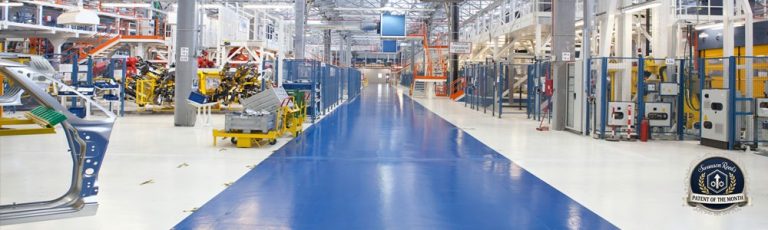
The manufacturing of heavy transportation equipment and mechanical components in Independence dates back to the antebellum period, driven by the intense demands of western expansion. Hiram Young, an extraordinary African-American man born into chattel slavery in Tennessee who meticulously purchased his freedom in 1847, became one of the leading manufacturers of heavy-duty wagons for the grueling Oregon Trail. Establishing his manufacturing business in Independence in 1851, Young’s factory expanded massively to meet the relentless demands of westward pioneers and the famous “Forty-niners”. By 1860, his sprawling operation was producing 300 massive wagons and 6,000 highly durable ox yokes annually, employing a massive local workforce of 50 to 60 men and establishing him as Kansas City’s first “Colored Man of Means”. This profound legacy of heavy transportation manufacturing evolved continuously over the subsequent century. Today, the state of Missouri operates as a central, vital hub in North America’s “Automotive Alley,” with modern regional manufacturers relying heavily on highly advanced, automated production facilities, exporting over $19 billion in manufactured products annually.
Modern advanced manufacturing in the Independence region involves deeply sophisticated mechanical engineering, robotics, and materials science. R&D activities frequently include the complex design and integration of custom robotic assembly cells, prototyping lightweight structural components using novel aerospace-grade composite materials, and developing new, proprietary welding techniques specifically formulated for high-strength, low-alloy steel variants. Engineers constantly engage in severe destructive testing, computerized stress-strain simulations, and highly complex thermal dynamic modeling to ensure that newly developed mechanical components meet extreme safety tolerances and performance thresholds before mass production can commence.
The design, development, and iterative refinement of these advanced manufacturing processes are highly eligible for both federal and state R&D credits, serving as a lucrative mechanism to offset the massive capital requirements of industrial modernization. However, the exact nature of the expenses must meet incredibly strict substantiation criteria to survive an IRS audit. In Fudim v. Commissioner (1994), the United States Tax Court categorically denied R&D credits for rapid prototyping inventions due to a complete and utter lack of substantiation of the actual experimental activities performed by the taxpayer. Conversely, in United States v. McFerrin (2009), the United States Court of Appeals for the Fifth Circuit addressed the controversial use of estimates in claiming the credit, initially reversing lower court penalties on inadequate documentation and upholding the use of reasonable estimates, although subsequent courts have aggressively tightened these documentation standards. For a modern manufacturing firm in Independence developing a new, heavily automated assembly line, the specific time spent by engineering staff designing the system, the wages of technical operators running experimental validation test batches, and the total cost of raw materials scrapped during the testing and integration phase all represent highly qualified research expenses. Furthermore, the modern Missouri QRE program explicitly provides a $5 million legislative set-aside (carved out of its total $10 million annual cap) specifically designated for small, minority, and women-owned businesses. Modern minority-owned manufacturing enterprises—operating as the direct, inspirational industrial descendants of Hiram Young’s historic enterprise—can uniquely leverage this specific set-aside to reliably fund their technological advancements without facing the severe pro-rata reductions that larger corporations might experience.
Case Study: Healthcare Informatics and Medical Data Architecture
Independence’s vital healthcare industry has shifted radically from localized, philanthropic pioneer medicine to sophisticated, highly data-driven national health networks. The modern era of local medicine began in earnest with the founding of the Eleanor Taylor Bell Hospital in 1906, funded by a generous $100,000 donation from physician Simeon Bell, which later morphed into the Independence Regional Health Center. By 2007, the regional healthcare landscape consolidated massively with the opening of Centerpoint Medical Center, a sprawling, state-of-the-art facility featuring 285 beds, the area’s only Level II Trauma Center, advanced robotic surgery capabilities, and comprehensive oncology services. Concurrently, the Government Employees Health Association (GEHA), headquartered in the immediate Kansas City/Lee’s Summit/Independence corridor, has grown exponentially since its humble 1937 inception into one of the largest, most complex health and dental benefit provider networks available to federal employees in the United States.
The contemporary R&D focus within these massive healthcare entities lies not just in clinical trials, but heavily in health informatics, enterprise software architecture, and predictive medical analytics. Institutions like GEHA employ armies of Enterprise Architects and Salesforce Solutions Architects to meticulously design scalable, highly secure cloud environments that perfectly align complex business administration strategies with flawless technical execution. R&D activities involve the rigorous development of proprietary software algorithms designed to analyze vast datasets of patient outcomes, predicting hospital readmission risks with high accuracy, optimizing massive provider network contracting, and creating interoperable software solutions that seamlessly bridge disparate, archaic legacy medical record systems without ever violating the stringent, federally mandated HIPAA compliance protocols.
Software development is heavily and aggressively scrutinized under federal R&D tax laws, particularly when the software is developed primarily for internal administrative use (commonly referred to as Internal Use Software, or IUS). The federal Treasury regulations stipulate a severe “High Threshold of Innovation” test for IUS, requiring the software to be demonstrably and highly innovative, entail significant economic and technical risk during development, and not be commercially available for purchase off-the-shelf. The foundational judicial precedent for software QREs was notably shaped by Apple Computer, Inc. v. Commissioner (1992), wherein the Tax Court comprehensively addressed the four-part test specifically concerning the complex nature of software development expenses. Furthermore, the United States Court of Appeals for the Fifth Circuit in United Stationers Supply Co. v. United States (2000) originally narrowed the “discovery test,” although subsequent regulatory updates by the Treasury have favorably removed the requirement that research must exceed the current state of knowledge in the entire field, requiring only that it be entirely new to the specific taxpayer conducting the research. For major Missouri entities like GEHA or Centerpoint claiming the Missouri QRE tax credit, the lucrative wages of software architects, data scientists, and systems engineers physically located and performing research activities at a facility in Missouri are fully eligible for the state credit. However, under the incredibly strict documentation rules affirmed by the United States Tax Court and the Seventh Circuit in Eustace v. Commissioner (2001), taxpayers absolutely cannot rely on rough estimations or the Cohan doctrine for software claims; strict, contemporaneous documentation connecting specific employee hours to specific, highly qualified software modules is a mandatory prerequisite for survival during an IRS examination.
Case Study: Municipal Energy Infrastructure and Smart Grid Technology
The essential energy utility sector in Independence traces its origins directly to the 1880s, initially driven by wealthy agricultural visionaries rather than massive industrial conglomerates. Cattleman A.C. Gudgell, who famously imported British Herefords to completely revolutionize the American beef industry and solve the problem of skinny hindquarters in livestock, utilized his vast agricultural wealth as a primary investor in the Independence Power & Light Company, securing a street lighting franchise in August 1887. Following a catastrophic fire in February 1901 that completely destroyed the original, highly inefficient private plant, local government officials recognized the critical necessity of reliable infrastructure and aggressively transitioned the system to a public, municipally owned utility. Throughout the tumultuous 20th century, Independence Power & Light (IPL) continuously and successfully adapted to severe macroeconomic shocks, surviving the devastating 1970s energy crises—which saw global oil prices quadruple practically overnight and forced the rapid, expensive construction of new gas turbine-generators at Substations H and I to maintain grid stability—and evolving into a highly modern entity integrating complex fiber optic networks and Supervisory Control and Data Acquisition/Energy Management Systems (SCADA/EMS) throughout the 1990s.
Today, municipal utilities like IPL and their expansive networks of regional engineering consulting partners are heavily invested in Smart Grid modernization, a massive technological shift spurred historically by the federal mandate within the Energy Independence and Security Act of 2007. Research and development in this highly regulated sector involves designing incredibly complex mathematical algorithms for Advanced Metering Infrastructure (AMI), developing proprietary, fault-tolerant software to safely integrate highly volatile Distributed Energy Resources (DER) such as residential solar panels into the fragile legacy grid, and creating massive, real-time load-balancing simulations for the impending surge of bidirectional electric vehicle charging networks.
Utility engineering and infrastructure design present severe, unique substantiation challenges under the “Process of Experimentation” requirement mandated by Section 41(d)(1)(C). The recent, highly impactful United States Tax Court decision in Phoenix Design Group, Inc. v. Commissioner (December 2024) serves as a critical, unignorable warning for all engineering firms operating in this utility space. In the Phoenix Design case, the IRS successfully and aggressively argued that a firm designing mechanical, electrical, and plumbing systems entirely failed to prove it engaged in qualified research because it lacked specific, contemporaneous documentation demonstrating a systematic, scientific evaluation of design alternatives. The court wholly disallowed the claimed tax credits and imposed a severe 20% accuracy-related penalty, emphasizing clearly that the standard, routine application of established engineering principles does not, under any circumstance, constitute a “process of experimentation”. To successfully claim both the lucrative federal credit and the 15% Missouri QRE credit, utility engineering firms operating in Independence must maintain rigorously detailed, contemporaneous testing logs, simulation outputs, and iterative design histories that irrefutably prove they evaluated multiple distinct technical alternatives to resolve specific, documented technical uncertainties regarding smart grid load capacities or communication latencies.
Detailed Analysis of United States Federal R&D Tax Credit Law
The federal research and development tax credit framework is a highly complex, deeply nuanced area of tax law governed primarily by Internal Revenue Code Section 41 (Credit for Increasing Research Activities) and Section 174 (Amortization of Research and Experimental Expenditures). The interaction between these two distinct sections of the tax code has become increasingly perilous and complex in recent years, requiring exacting legal interpretation and meticulous accounting precision to avoid devastating audit adjustments and associated penalties.
IRC Section 41: The Four-Part Test
To legally constitute “qualified research,” the underlying activities must satisfy a rigorous, cumulative Four-Part Test strictly defined under Section 41(d) of the Internal Revenue Code. Failure to definitively meet any single prong of this test completely disqualifies the research expenditures from credit eligibility.
| Test Component | Legal Requirement under IRC Section 41(d) | Application and Judicial Standard |
|---|---|---|
| Section 174 Test | Expenditures must be legally treatable as expenses under IRC Section 174. | The taxpayer must explicitly identify a specific technical uncertainty regarding the capability, method, or appropriate design of a business component. The research undertaken must seek to definitively eliminate this specific uncertainty. |
| Technological in Nature | The research must be undertaken to discover information that relies fundamentally on principles of physical or biological sciences, engineering, or computer science. | Economic, market, or psychological research is explicitly excluded by statute. The research must rely on the “hard sciences” rather than aesthetic or subjective evaluations. |
| Business Component Test | The intended application of the discovered information must be specifically for use in developing a new or improved business component of the taxpayer. | A “business component” is broadly defined as any product, process, computer software, technique, formula, or invention held for sale, lease, or used continuously in the taxpayer’s trade or business. |
| Process of Experimentation | “Substantially all” (statutorily defined as 80% or more) of the research activities must constitute elements of a true process of experimentation for a qualified purpose. | A qualified purpose explicitly includes enhancing function, performance, reliability, or quality. As highlighted in Phoenix Design Group (2024), the taxpayer must scientifically evaluate one or more alternatives to achieve the desired result, and document this evaluation. |
IRC Section 174: Capitalization Complexities (2022-2025)
Historically, Section 174 was highly favorable to taxpayers, allowing them to immediately deduct all research and experimental expenditures in the exact year they were incurred, providing immediate and substantial cash flow benefits. However, following the sweeping legislative changes implemented by the Tax Cuts and Jobs Act (TCJA), taxpayers are now subjected to severely restrictive, mandatory capitalization rules. For all tax years beginning after December 31, 2021, Specified Research or Experimental Expenditures (SREs) can no longer be deducted immediately; they must be capitalized and slowly amortized over a mandatory 5-year period for domestic research conducted within the United States, and a punitive 15-year period for foreign research.
The United States Department of the Treasury and the Internal Revenue Service have been forced to issue a continuous, complex stream of interim guidance to address the profound accounting complexities and widespread confusion this massive legislative shift created. Notice 2023-63 (issued in September 2023) provided critical interim guidance on the specific treatment of software development costs and long-term contracts under the new capitalization regime. This was subsequently expanded by Notice 2024-12 (issued in January 2024), which addressed highly specific ambiguities regarding short tax years and the complex mechanics of contract research. To somewhat ease the overwhelming administrative burden placed on corporate tax departments, Revenue Procedure 2023-11 allowed taxpayers to utilize automatic consent procedures for accounting method changes without the arduous requirement of filing a formal Form 3115, utilizing a simplified cut-off method. Most recently, Revenue Procedure 2025-8 (issued in January 2025) permitted successive automatic accounting method changes for tax years starting between 2022 and 2024, providing critical, highly necessary adaptability as congressional legislative efforts—such as the highly politicized, ultimately blocked Tax Relief for American Families and Workers Act of 2024, which attempted a retroactive repeal of the mandatory capitalization rules—remain completely stalled and uncertain.
Substantive Precedents and Compliance Risks
The IRS currently maintains a highly adversarial, intensely skeptical stance toward R&D credit substantiation, routinely deploying specialized engineering agents to aggressively audit claims. Federal Form 6765 (Credit for Increasing Research Activities) has been recently and significantly modified to include Section E, which mandates highly detailed qualitative disclosures regarding the specific business components being claimed, forcing taxpayers to show their hand before an audit even begins.
Furthermore, taxpayers must carefully and strategically navigate the Section 280C election. Businesses that affirmatively elect Section 280C claim a statutorily reduced credit to explicitly avoid a prohibited double benefit, thereby bypassing the requirement to reduce their Section 174 deductions by the exact amount of the credit claimed. Crucially, this election is irrevocable and must be made on a timely filed original return; it cannot be made on an amended return. With the ongoing, restrictive amortization requirements of Section 174, the complex strategic calculus of utilizing the Section 280C election has shifted dramatically, as the diminished present value of amortized deductions must be meticulously mathematically weighed against the immediate cash flow generated by the credit.
Detailed Analysis of Missouri State R&D Tax Credit Law
In parallel with complex federal efforts, the State of Missouri has successfully enacted robust, highly targeted legislation specifically designed to financially incentivize localized innovation and reverse the outflow of intellectual capital. Originally lapsing and remaining dormant since 2005, the Missouri Qualified Research Expense (QRE) Tax Credit was triumphantly revitalized under House Bill 2400 (now formally codified in Section 620.1039, RSMo), becoming effective for tax years beginning on or after January 1, 2023. The program is currently slated to sunset on December 31, 2028, unless it is explicitly reauthorized by the Missouri state legislature.
Eligibility and Jurisdictional Constraints
The Missouri QRE program is designed to be administratively efficient by strictly aligning its core definitions of qualified research with the definitions prescribed in 26 U.S.C. Section 41, but it imposes one absolute, non-negotiable geographic constraint: only research expenses physically incurred within the state of Missouri are eligible. Eligible commercial entities are broad, including individuals, sole proprietorships, partnerships, C corporations, S corporations, LLCs, and even charitable organizations that are subject to Missouri unrelated business income tax under Chapter 143. The generated tax credits are utilized to offset Missouri corporate income tax (specifically Chapter 143, excluding withholding tax) and the highly specific financial institutions tax (Chapter 148).
To successfully qualify, a taxpayer must demonstrate historical consistency; they must have incurred Missouri-based QREs in at least one of the three immediately preceding tax years. The eligible financial expenditures strictly mirror the federal buckets, simplified into four primary categories:
| Expense Category | Missouri State Specific Application and Qualification Rules |
|---|---|
| W-2 Wages | Wages paid directly to employees who are physically performing, directly supervising, or directly supporting qualified research activities strictly at a facility located within Missouri. |
| Physical Supplies | Tangible personal property that is actively used or completely consumed during the highly technical research process at a facility within Missouri. |
| Contract Research | Exactly 65% of the total payments made to third-party contractors conducting qualified research on the taxpayer’s behalf, provided that the physical research is executed within Missouri. |
| Computer Rentals | Costs associated with the time-sharing or rental of massive computational mainframes or cloud computing arrays used directly in Missouri-based research. |
Additionally, recognizing the massive capital expenditures required for modern research, the state provides a direct, highly lucrative Sales & Use Tax exemption specifically for the purchase of “Missouri qualified research and development equipment.” This exemption pertains to tangible personal property that has not been previously used in the state for any purpose and is acquired explicitly by the purchaser for the sole purpose of laboratory or experimental research. The Missouri Department of Revenue strictly enforces this, distinguishing purely experimental equipment from equipment utilized in custom manufacturing, as evidenced by administrative rulings denying exemptions under the broader manufacturer statute (Section 144.030, RSMo) but permitting them under the specific R&D clauses.
Computational Mechanics and Statutory Limitations
The Missouri credit is highly structured and complex, utilizing a rigorous incremental baseline calculation deliberately designed to reward increased research spending rather than subsidizing static, continuous spending. This ensures state funds generate true economic additionality.
| Calculation Step | Statutory Mechanic | Detailed Description of Calculation |
|---|---|---|
| Establish Base Amount | 3-Year Average | Calculate the exact mathematical average of the taxpayer’s Missouri QREs incurred during the immediately preceding three tax years. |
| Apply 200% Limitation | Maximum Cap | No credit is legally allowed on current-year QREs to the extent they exceed 200% of the calculated 3-year average. Excess QREs are discarded for credit purposes. |
| Calculate Additional QREs | Current Limit minus Base | The limited current-year QREs mathematically subtracted by the established Base Amount. |
| Determine Credit Rate | 15% Standard or 20% Elevated | 15% of the calculated Additional QREs. This rate generously increases to 20% if the research is conducted in direct, documented conjunction with a Missouri public or private college or university. |
| Taxpayer Limitation | Individual Cap | The absolute maximum credit a single corporate taxpayer or individual may claim in any single calendar year is strictly capped at $300,000. |
The Missouri Department of Economic Development (DED) manages an aggregate, statewide legislative cap of $10 million per year to prevent budgetary overruns. If the total volume of submitted applications exceeds this strict limit, credits are distributed on a mathematically pro-rata basis, with a statutory priority that ensures businesses less than five years old are issued full tax credits first. Crucially for economic equity, $5 million of the $10 million total is exclusively, legally reserved for small businesses, minority business enterprises, and women-owned businesses. A minority business enterprise is legally defined under state statute as an entity where at least 51% of the ownership interest and the daily management and operational control is held by one or more minorities.
Administrative Filing Procedures and Timelines
The administrative execution of the Missouri program is highly temporal and entirely separate from standard tax return processing. Applications are not filed with the Missouri Department of Revenue on standard tax day; instead, they must be submitted directly to the Missouri DED via their specialized Submittable digital portal. The application window opens retroactively: for example, claims for the 2024 tax year are processed through a strict portal window that opens on August 1, 2025, and definitively closes on September 30, 2025. Missing this window results in a total forfeiture of the credit for that year.
Applicants must provide extensive, meticulous documentation upon submission, including their official Missouri Tax Clearance certificate, E-Verify Memorandum of Understanding (MOU), Articles of Incorporation, Certificate of Good Standing from the Secretary of State, and a completely finalized copy of their federal Form 6765. Upon successful approval by the DED, the taxpayer is required to pay a 2.5% administrative issuance fee to the state before the credits are formally released. While the Missouri QRE credit is nonrefundable against tax liabilities, it boasts a remarkably powerful 12-year carryforward provision, allowing companies to weather unprofitable development cycles. Uniquely and highly beneficially, the credits are legally transferable—meaning an unprofitable startup with massive research expenses but zero tax liability can legally sell or assign their awarded credits for immediate cash to other corporate entities that possess large Missouri tax liabilities.