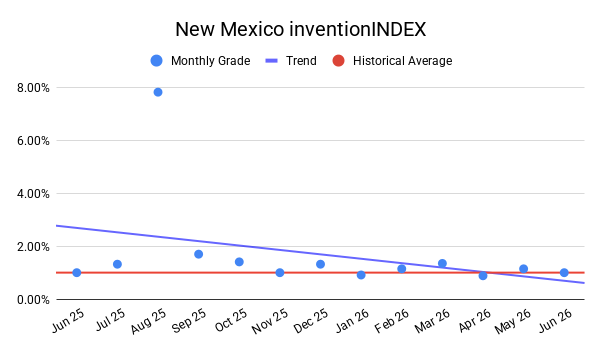
A business component is any product, process, software, formula, or invention developed or improved for a functional purpose through a process of experimentation. In the New Mexico tax code, it serves as the fundamental unit of research that must pass a four-part test to qualify for the Technology Jobs and Research and Development Tax Credit.
A business component is any product, process, software, formula, or invention developed or improved for a functional purpose through a process of experimentation. In the New Mexico tax code, it is the fundamental unit of research that must pass a four-part test to qualify for tax credits.
The New Mexico Technology Jobs and Research and Development Tax Credit Act (the Act) represents a sophisticated legislative effort to foster a high-wage, technology-driven economy within the state. Central to this mission is the legal concept of the “business component.” This term does not merely refer to a finished product or a company’s general operations but serves as a precise regulatory anchor. It dictates which specific activities qualify for substantial tax relief and which are dismissed as routine or non-functional. By understanding the business component, organizations can navigate the complexities of the state’s tax landscape, moving from simple research activities to the realization of significant financial incentives. The New Mexico Taxation and Revenue Department (TRD) utilizes this definition to distinguish between aesthetic design and technical innovation, ensuring that state support is directed toward activities that eliminate technical uncertainty and advance the state’s industrial base.
Legislative Evolution and the Role of the Business Component
The framework for the current credit was established through a series of legislative maneuvers beginning with the Technology Jobs Tax Credit Act in 2000. This original act aimed to incentivize technology-based businesses to invest in New Mexico, focusing on the promotion of higher wages and increased employment. Over time, the state recognized that small businesses and research-heavy startups required more tailored support, leading to the 2015 and 2019 amendments that transformed the program into the Technology Jobs and Research and Development Tax Credit Act.
A critical component of this transformation was the tighter alignment with federal standards. Under NMSA 1978, Section 7-9F-3, the state adopted a definition of “qualified research” that hinges on the discovery of information intended to be useful in the development of a “new or improved business component”. This evolution reflects a shift from general economic incentives to a targeted scientific and engineering-based credit system. The legislative history demonstrates that the “business component” is the primary mechanism for ensuring that research is “technological in nature” and directed toward functional improvement rather than mere stylistic changes.
| Legislative Milestone | Year | Primary Change | Impact on Business Component Analysis |
|---|---|---|---|
| Technology Jobs Tax Credit Act | 2000 | Creation of initial credit. | Established the “qualified research” standard. |
| Act Amendment | 2015 | Title changed to include “Research and Development.” | Increased basic and additional credit rates to 5%. |
| Small Business Integration | 2015 | Added incentives for R&D small businesses. | Provided refundability for certain business components. |
| Definition Refinement | 2019 | Revised “local option gross receipts tax.” | Clarified the tax base for the basic credit. |
The Taxonomy of Business Components
To apply for the credit effectively, a taxpayer must first identify the specific business component undergoing development. New Mexico state guidance, echoing federal Treasury Regulations under Internal Revenue Code (IRC) Section 41, divides business components into distinct categories. Each category carries its own set of evidentiary requirements and audit considerations.
Products as Business Components
In many manufacturing and technology sectors in New Mexico, the business component is a tangible product. This could range from a new type of aerospace sensor to a medical diagnostic tool or a specialized drilling bit for the oil and gas industry. For a product to qualify, the research must aim to improve its “function, performance, reliability, or quality”. The TRD excludes any research related to “style, taste, or cosmetic or seasonal design factors”. This distinction is vital; for example, changing the color of a product’s casing is non-qualifying, but redesigning the casing to withstand higher pressures or temperatures constitutes an improvement to a business component.
Processes and Manufacturing Techniques
The Act recognizes that how something is made is just as important as the product itself. A “process” business component refers to any method, technique, or sequence of steps used in a trade or business. In New Mexico’s energy sector, this might include the development of a novel hydraulic fracturing process or a more efficient carbon capture technique. Crucially, the law treats a plant process, machinery, or technique for commercial production as a “separate business component” from the product being produced. This allows manufacturers to claim credits for developing more efficient assembly lines or chemical refining processes even if the end product remains unchanged.
Computer Software and Digital Innovations
Software development is a significant driver of claims under the Act. Software can be a business component if it is developed for sale, lease, or license, or if it is intended for use in the taxpayer’s own trade or business. New Mexico guidance distinguishes between software offered to customers and “internal use software” (IUS). While software developed for external sale is treated as a standard business component, IUS often faces a “high-threshold-of-innovation” (HTI) test. This means the taxpayer must prove that the software is not only new but also significantly more innovative than what is commercially available, involving substantial technical risk.
Formulas, Techniques, and Inventions
Less common but equally valid categories include chemical formulas, specialized techniques, and novel inventions. A biotech firm in New Mexico developing a new pharmaceutical compound would identify that “formula” as its business component. A surveying firm developing a proprietary “technique” for precision mapping would similarly focus its claim on that specific methodological unit.
The Four-Part Test: The Qualitative Requirement
Identification of a business component is only the first step. For the research to be considered “qualified” under New Mexico law, the taxpayer must demonstrate that the activities related to that component satisfy the four-part test. This test ensures that the state is subsidizing genuine technical innovation rather than routine business costs.
Technological in Nature
The research activity must fundamentally rely on the principles of the hard sciences: physical or biological sciences, engineering, or computer science. If a project relies primarily on economics, social sciences, or marketing research, it fails this test. For example, a New Mexico company developing a new data encryption method relies on computer science and mathematics, meeting the “technological in nature” requirement. In contrast, a company conducting market research to determine the price point of a new software package is conducting non-qualifying activity because the “information discovered” is not technological.
Permitted Purpose
The intent of the research must be to discover information that is useful in the development of a new or improved business component. The specific purpose must relate to improving the functional aspects of the component, such as:
- Functionality: Making the component perform a new task.
- Performance: Increasing the speed or efficiency of the component.
- Reliability: Reducing the failure rate or increasing the lifespan.
- Quality: Improving the consistency or durability of the output.
This test explicitly excludes research conducted after the start of commercial production or research related to the adaptation or duplication of an existing component.
Elimination of Uncertainty
A taxpayer must show that they faced technical uncertainty at the outset of the project. Uncertainty exists if the information available to the taxpayer does not establish:
- Capability: Whether the taxpayer can actually develop the component.
- Method: The specific steps or techniques required to achieve the result.
- Appropriateness of Design: Which design would be best suited for the intended purpose.
The research must be aimed at eliminating this uncertainty. Routine troubleshooting or simple bug fixing in software does not meet this requirement because the “capability” and “method” are already well-understood.
Process of Experimentation
The most critical—and often most audited—part of the test is the “process of experimentation.” The taxpayer must demonstrate a systematic evaluation of one or more alternatives to achieve the desired result. This process typically involves the following steps:
- Formulating a hypothesis.
- Designing and conducting tests or trials.
- Analyzing the results (e.g., through modeling, simulation, or systematic trial and error).
- Refining or discarding the hypothesis based on the data.
Substantially all (interpreted as 80% or more) of the activities must constitute elements of this process. Documentation is the only way to prove this to TRD auditors; companies must maintain project notes, lab results, and meeting minutes that show the evaluation of different designs or methods.
Local State Revenue Office Guidance: The TRD’s Administrative Stance
The New Mexico Taxation and Revenue Department (TRD) provides essential guidance for interpreting the Act through publications like FYI-106 and specific form instructions. This guidance translates the broad language of the NMSA 1978 statutes into actionable rules for businesses.
The Two-Tier Credit Structure
The New Mexico credit is bifurcated into a “Basic Credit” and an “Additional Credit.” Both require the presence of a qualified business component but differ in their application and eligibility requirements.
| Credit Type | Rate (Urban) | Rate (Rural) | Applied Against | Key Requirement |
|---|---|---|---|---|
| Basic Credit | 5% | 10% | GRT, Compensating, Withholding | Qualified research at a qualified facility. |
| Additional Credit | 5% | 10% | Personal or Corporate Income Tax | Increase in payroll of $75k per $1M in QREs. |
The Basic Technology Jobs and R&D Tax Credit
The basic credit is designed to provide immediate relief for businesses conducting research. It equals 5% (or 10% in rural areas) of “qualified expenditures”.
- Qualified Facility: The research must occur at a facility in New Mexico, which can include factories, mills, warehouses, or buildings. Facilities operated for the United States government are excluded.
- Qualified Expenditures: These include wages for R&D staff, supplies, test materials, and payments to NM-based contractors. Crucially, expenditures for “depletable land” and “rent” are included, but buildings and land improvements are not.
- Tax Applicability: The basic credit is applied against the state’s portion of the gross receipts tax (GRT), compensating tax, and withholding tax. It excludes “local option” gross receipts taxes.
The Additional Credit and Payroll Growth
To stimulate job creation, the “Additional Credit” offers another 5% (or 10% rural) against income taxes. To claim this, the taxpayer must demonstrate an increase in annual payroll of at least $75,000 for every $1 million in qualified expenditures claimed in the same tax year.
For non-small businesses, the additional credit is non-refundable but can be carried forward for three years. However, for “Qualified Research and Development Small Businesses,” the additional credit is significantly more flexible.
Guidance for Small Businesses
A “Qualified Research and Development Small Business” is a taxpayer with 50 or fewer employees and total qualified expenditures of $5 million or less in the tax year. These entities enjoy a “refundable” additional credit. If the credit exceeds their income tax liability, the TRD will refund the excess based on the following expenditure tiers:
| Total Annual QREs | Percentage of Excess Credit Refunded |
|---|---|
| Less than $3 million | 100% (The entire excess is refunded) |
| $3 million to less than $4 million | 66.7% (Two-thirds of the excess) |
| $4 million to $5 million | 33.3% (One-third of the excess) |
This tiered refundability serves as a vital liquidity source for New Mexico startups that are developing groundbreaking business components but have not yet achieved profitability.
Procedural Requirements: Form RPD-41385 and Beyond
The TRD is rigorous regarding the application process. Taxpayers cannot simply claim the credit on a return; they must first undergo a certification process.
The Application for Approval
- Form RPD-41385: Within one year following the end of the calendar year in which the expenditures were made, the taxpayer must file an “Application for Technology Jobs and Research and Development Tax Credit”.
- Detailed Description: The TRD mandates a “detailed description of the qualified research and development performed”. If this is the taxpayer’s first time claiming the credit, the failure to provide a separate, comprehensive page describing the business component and the research activities will result in an immediate denial.
- Auditor Review: Once submitted, the application undergoes a review by TRD auditors to verify the expenditures and the nature of the research.
The Claiming Process
After receiving an approval letter or certificate, the taxpayer then claims the credit using Form RPD-41386 (or RPD-41298 for small businesses). This must also be done within one year of the end of the reporting period to which the credit applies.
The “June 30” Reporting Mandate
All taxpayers who have been granted a basic or additional credit must file an annual report with the TRD by June 30 of the following year, and for each of the two succeeding years. This report describes the business operations in New Mexico and helps the state assess the economic impact of the program.
Economic Impact and Statistics
The value of the Technology Jobs and R&D credit to the New Mexico economy is well-documented in the Legislative Finance Committee’s 2025 assessment. These statistics highlight the incentive’s role in the state’s economic strategy.
Fiscal Trends and Usage
In Fiscal Year 2024, New Mexico businesses received approximately $11.2 million in state support through the credit. This represented a significant increase (125%) over the previous three-year average, suggesting that more companies are successfully identifying business components and navigating the application process.
Macroeconomic ROI
The state evaluates the “Economic ROI” and the “Return in Revenue.”
- Economic ROI (92%): For every $1 the state “spends” on the credit, the state GDP grows by $0.92. This leads to an estimated net annual impact on state GDP of $20.9 million.
- Return in Revenue (-81%): This indicates that for every $1 spent, the state recaptures $0.19 in direct tax revenue while foregoing $0.81. While this represents a net loss to the state’s general fund, the LFC notes that the credit likely meets its purpose of providing a “favorable tax climate” and promoting high-wage jobs.
Employment and Income Impacts
The credit is estimated to increase statewide employment by an average of 165 jobs per year. With an average cost per job of $35,000, it is considered an efficient employment incentive compared to other state programs. Furthermore, the credit is credited with increasing state personal income by an average of $33 million through higher wages and business profits.
Administrative and Judicial Precedents: Lessons from the AHO
The New Mexico Administrative Hearings Office (AHO) has provided critical clarity on how the law applies to real-world business scenarios. These rulings serve as “quasi-law” for taxpayers.
The PESCO Case: Cost Accounting Methodology
In Process Equipment & Service Company, Inc. (PESCO) v. TRD, a primary point of contention was the allocation of wages to the development of a business component. The taxpayer used drafting logs and interviews to quantify time spent on R&D for products used in the oil and gas industry.
The TRD denied the claim, arguing the taxpayer failed to use a “cost accounting methodology” as required by Section 7-9F-3(G). This section states that if a qualified expenditure is an “allocation,” the taxpayer must use the same methodology they use in their other business activities. The court ultimately affirmed the taxpayer’s eligibility, but the case highlights a crucial requirement: companies must be consistent. If a company tracks employee time for billing or internal project management, they must use that same tracking data for their R&D credit claim.
The Wall Co. Case: The Non-Negotiable Deadline
The case of Wall Co., Inc. v. TRD underscores the importance of the one-year application deadline. The taxpayer submitted their application just days before the December 31 deadline for the 2015 tax year. However, the application contained an incorrect CRS identification number and an incorrect name.
The TRD denied the application as untimely because the errors were not cured until after the deadline had passed. The hearing officer granted summary judgment for the TRD, noting that the Act does not allow for late applications and that the “one year following the end of the reporting period” is a strict statutory bar. For a business blog audience, the takeaway is clear: file early to allow time for the TRD to identify and permit the correction of clerical errors.
Practical Example: Biotech Innovation in Rural New Mexico
To see how these principles coalesce, consider a hypothetical case study based on the research material.
Scenario: Desert Bloom Pharmaceuticals
Desert Bloom Pharmaceuticals is a startup located in Las Cruces (Doña Ana County, but treated as rural for certain bonus programs if it were in a smaller municipality—though for the TJRD, only Bernalillo, Doña Ana, and Santa Fe counties are excluded from rural doubling). Let’s assume they are located in Grant County to ensure they receive the rural bonus.
- The Business Component: A new drug delivery formula designed to stabilize sensitive proteins at high temperatures.
- The Research: The team conducts a series of trials using different synthetic polymers to encapsulate the proteins. They use computer modeling to predict molecular interactions and conduct thermal stress tests (the process of experimentation) to resolve uncertainty about the design’s “appropriateness” for high-heat environments.
- The Facility: A small laboratory they own and operate in Grant County (a qualified facility).
- The Expenditures:
- Wages for 4 chemists: $400,000
- Supplies (polymers, lab equipment): $100,000
- Consulting fee for an NM-based specialist: $50,000
- Total QREs: $550,000
Tax Credit Calculation
Since they are in a rural area, their credit rates are doubled to 10%.
- Basic Credit: $550,000 x 10% = $55,000. They can use this to offset their Gross Receipts Tax and withholding tax for their employees.
- Additional Credit: If they increased their total company payroll by at least $41,250 (the proportional part of the $75k/$1M requirement: $(550,000/1,000,000) \times 75,000 = 41,250$), they qualify for the additional credit.
- Additional Credit Value: $550,000 x 10% = $55,000.
- Refundability: As a small business with fewer than 50 employees and less than $3 million in QREs, if they have zero income tax liability, the state will refund the full $55,000 to them.
Total Benefit: $110,000 on a $550,000 investment—a 20% effective subsidy for their innovation.
Strategic Considerations for Business Leaders
For professional peers in the business community, maximizing the value of a business component requires proactive management.
Identification of All Sub-Components
Research activities should be tracked at the lowest identifiable level. If an entire project (the “Product”) does not meet the four-part test, a company might still claim credits for a specific “Process” or “Technique” developed to make that product. This “shrinking-back” principle is a fundamental strategy for salvaging credits in complex projects.
Contemporaneous Documentation
The TRD’s audit division looks for documentation created at the time the research occurred. Project managers should be trained to record technical challenges and the alternatives being evaluated. This creates a “technical narrative” that supports the Form RPD-41385 application and protects the company during an audit.
Leveraging State vs. Federal Credits
New Mexico’s credit is additive to the federal R&D tax credit. While the same expenses cannot be “double-dipped” in a way that violates federal tax deduction rules (Section 280C), companies can—and should—claim both state and federal credits on the same qualifying expenditures to amplify their savings.
Final Thoughts: Driving Innovation through the Business Component
The New Mexico Technology Jobs and Research and Development Tax Credit Act is a robust tool for economic advancement, but its success depends on the precise identification and documentation of the business component. By moving beyond a general understanding of research and into the specific statutory requirements of the four-part test and the TRD’s administrative guidance, New Mexico businesses can secure a powerful competitive advantage.
The state’s commitment to a 92% economic ROI and the support of over 390 claims per year indicates that this program is a vital part of the regional ecosystem. Whether a company is a global aerospace manufacturer in Albuquerque or a small biotech startup in a rural county, the “business component” serves as the gateway to state support. As the global economy continues to shift toward knowledge-based industries, the ability to leverage these credits effectively will define which New Mexico companies lead the way in technological discovery and high-wage job creation. Organizations that prioritize compliance, consistency in accounting, and the systematic elimination of technical uncertainty will find New Mexico to be one of the most favorable climates for innovation in the United States.
Who We Are:
Swanson Reed is one of the largest Specialist R&D Tax Credit advisory firm in the United States. With offices nationwide, we are one of the only firms globally to exclusively provide R&D Tax Credit consulting services to our clients. We have been exclusively providing R&D Tax Credit claim preparation and audit compliance solutions for over 30 years. Swanson Reed hosts daily free webinars and provides free IRS CE and CPE credits for CPAs.
Are you eligible?

Why choose us?

Pass an Audit?

What is the R&D Tax Credit?
The Research & Experimentation Tax Credit (or R&D Tax Credit), is a general business tax credit under Internal Revenue Code section 41 for companies that incur research and development (R&D) costs in the United States. The credits are a tax incentive for performing qualified research in the United States, resulting in a credit to a tax return. For the first three years of R&D claims, 6% of the total qualified research expenses (QRE) form the gross credit. In the 4th year of claims and beyond, a base amount is calculated, and an adjusted expense line is multiplied times 14%. Click here to learn more.
Never miss a deadline again

Stay up to date on IRS processes

Discover R&D in your industry

R&D Tax Credit Preparation Services
Swanson Reed is one of the only companies in the United States to exclusively focus on R&D tax credit preparation. Swanson Reed provides state and federal R&D tax credit preparation and audit services to all 50 states.
If you have any questions or need further assistance, please call or email our CEO, Damian Smyth on (800) 986-4725.
Feel free to book a quick teleconference with one of our national R&D tax credit specialists at a time that is convenient for you.
R&D Tax Credit Audit Advisory Services
creditARMOR is a sophisticated R&D tax credit insurance and AI-driven risk management platform. It mitigates audit exposure by covering defense expenses, including CPA, tax attorney, and specialist consultant fees—delivering robust, compliant support for R&D credit claims. Click here for more information about R&D tax credit management and implementation.
Our Fees
Swanson Reed offers R&D tax credit preparation and audit services at our hourly rates of between $195 – $395 per hour. We are also able offer fixed fees and success fees in special circumstances. Learn more at https://www.swansonreed.com/about-us/research-tax-credit-consulting/our-fees/