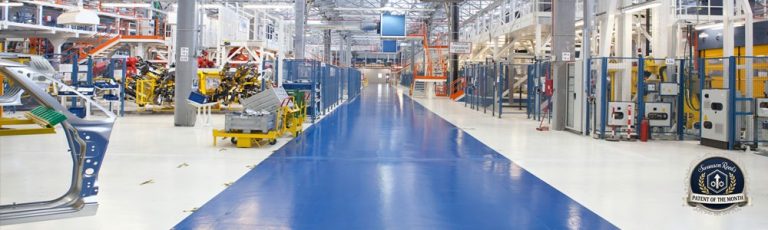
This comprehensive study explores the intricate application of the United States federal and Pennsylvania state Research & Development (R&D) tax credit frameworks, localized specifically to the Scranton region. By analyzing historical economic shifts and evaluating real-world case studies in defense, food science, biomaterials, precision machining, and injection molding, it details how regional businesses can legally substantiate technical uncertainty and experimentation to leverage these essential tax incentives for technological advancement.
Industry Case Studies and the Historical Development of Scranton
To fully comprehend the application of complex federal and state tax incentives within a specific geographical nexus, one must first analyze the economic history that cultivated the region’s current industrial base. The economic ecosystem of Scranton, Pennsylvania, situated in Lackawanna County, is the direct result of distinct geographical advantages, aggressive natural resource exploitation, and generational shifts in workforce capabilities. The descendants of coal miners and silk weavers now comprise one of the most workforce-ready populations for industrial employers in the nation, providing a deep talent pool for the advanced manufacturing, defense, and life sciences sectors that currently drive the region’s research and development initiatives.
The genesis of Scranton’s industrial might began in the late 1830s when geologist William Henry recognized the potent, localized combination of water power, limestone, and vast reserves of anthracite coal within the Lackawanna Valley. Alongside George and Selden Scranton, Henry established the Lackawanna Iron and Coal Company. By the 1840s, this enterprise overcame the technical hurdles of utilizing local resources to become the first American company to mass-produce iron T-rails, fueling the rapid expansion of the United States railroad network. As the iron industry eventually migrated closer to the high-grade ores of the Mesabi Range in the early 20th century, Scranton transitioned seamlessly into an era of absolute dominance in anthracite coal mining. Earning the title of the “Anthracite Capital of the World,” the city’s massive coal breakers dominated the skyline, and its output powered the nation through the rapid industrialization of the late 19th century and through two World Wars.
Concurrently, a robust textile industry emerged in the region. Seeking to utilize the vast, untapped female labor force—the wives and daughters of the coal miners—investors established massive silk and lace mills. By 1890, the region produced a third of all silk manufactured in the United States, and the Scranton Lace Company grew to become the largest global producer of Nottingham lace, sustaining continuous operations until its closure in 2002. This parallel industrial track ingrained a culture of precision manufacturing and mechanical operation into the local populace.
However, the post-World War II era brought severe economic distress. The national transition from coal to oil and natural gas decimated the local economy, a decline catastrophically punctuated by the 1959 Knox Mine disaster, which effectively ended deep vein coal mining in the region. Scranton’s population plummeted from a peak of over 143,000 in 1930 to approximately 76,000 in 2010. Yet, the legacy of this heavy industrial past left Scranton with a dense, highly developed network of railways and a geographically strategic location at the convergence of Interstates 81, 80, 84, 380, and 476. Today, this infrastructure places 100 million consumers within a 500-mile radius, reachable in a single transit shift.
Guided by economic development entities such as the Greater Scranton Chamber of Commerce, the region aggressively pivoted away from resource extraction and toward logistics, advanced manufacturing, healthcare, and back-office operations. By 2025, the Scranton–Wilkes-Barre Metropolitan Statistical Area ranked 18th among the Top 20 U.S. metros for industrial employer workforce readiness, boasting an exceptionally high concentration of 238 registered industrial apprentices per 10,000 residents.
It is within this deeply historical yet highly modernized matrix of logistics, defense contracting, specialty materials, and precision machining that highly complex, tax-credit-eligible research and development activities are currently taking place. The following five case studies examine unique industries that have established a foothold in the Scranton area, detailing their historical development and analyzing how their hypothetical, yet highly representative, R&D activities satisfy the rigorous requirements of the United States and Pennsylvania R&D tax credit laws.
Case Study 1: Defense and Aerospace Manufacturing
Representative Entities: Lockheed Martin, General Dynamics
Location Context: Archbald and Greater Scranton Area
The defense manufacturing footprint in the Scranton area represents a direct evolutionary link from the region’s heavy industrial past. During the early years of the Cold War, the United States Department of Defense strategically sought manufacturing locations that were situated inland to protect against coastal bombardment, possessed robust rail infrastructure for the rapid movement of heavy munitions, and offered a highly skilled blue-collar workforce accustomed to heavy metallurgical and industrial labor. The post-coal Lackawanna Valley fulfilled all these criteria perfectly. The manufacturing facility in Archbald, Pennsylvania, established in 1951, exemplifies this transition. Operating initially under various defense contracts and eventually becoming part of the Lockheed Martin family in 1996 following the merger of Lockheed Corporation and Martin Marietta, the facility has grown into a 350,000-square-foot powerhouse. Today, it serves as a full-service Missiles and Fire Control (MFC) mission area, manufacturing assemblies for the Guided Multiple Launch Rocket System (GMLRS), Patriot Advanced Capability-3 (PAC-3) systems, Paveway II Plus Laser Guided Bomb kits, and critical nuclear instrumentation and control (I&C) systems for United States Navy submarines and aircraft carriers.
Representative R&D Activity:
Consider an engineering initiative at the Archbald facility tasked with developing a newly hardened, digital instrumentation and control system for a next-generation nuclear submarine reactor. The mandate requires the system to withstand unprecedented levels of concussive force and electromagnetic pulse (EMP) interference while maintaining microsecond-level telemetry accuracy for the reactor core.
Federal and State R&D Tax Credit Eligibility Analysis: The foundational requirement for any federal research and development claim is the rigorous satisfaction of the four-part test, codified within Internal Revenue Code (IRC) Section 41. First, the taxpayer must demonstrate a permitted purpose. The development of a new digital control system explicitly qualifies as the creation of a new business component—specifically, a new product and process intended to dramatically improve performance, reliability, and survivability under extreme conditions. Second, the activities must be technological in nature. The engineering work required for this project fundamentally relies on the hard sciences, including advanced mechanical engineering, nuclear physics, materials science, and computer science.
Third, the engineering team must face the elimination of uncertainty. At the outset of the project, significant technical uncertainty exists regarding the appropriate design of the sensor housing, the optimal metallurgical composition to resist EMP degradation, and the methodology for routing data securely without interference. Finally, the team must engage in a process of experimentation. To resolve these uncertainties, the engineers utilize advanced computer-aided design (CAD) modeling, create physical prototypes using novel alloy blends, and subject these prototypes to simulated concussive blasts and electromagnetic radiation. They systematically evaluate the telemetry failure rates of each iteration, logging the data, and refining the circuitry paths and housing designs until the strict Department of Defense performance metrics are achieved.
This project robustly satisfies the federal four-part test. However, defense contractors operating in Scranton must carefully navigate the “funded research” exclusion under IRC Section 41(d)(4)(H). If the Department of Defense contract governing the submarine I&C system is structured as a cost-plus contract where the government guarantees payment for the engineering hours regardless of the R&D outcome, the activities cannot be claimed, as the contractor bears no economic risk. Conversely, if it is a firm-fixed-price contract where Lockheed Martin must absorb the financial losses of failed prototypes and retains substantial rights to the underlying manufacturing processes developed, the expenses are fully eligible. For Pennsylvania state eligibility, the contractor must maintain precise payroll and geographic tracking to prove that the specific systems engineers, drafters, and testing personnel whose wages are claimed physically performed their experimental work at the Archbald facility, rather than at corporate headquarters in Maryland or other out-of-state testing grounds.
Case Study 2: Confectionery and Food Science
Representative Entity: Gertrude Hawk Chocolates
Location Context: Scranton and Dunmore, Pennsylvania
The development of Gertrude Hawk Chocolates is intrinsically tied to the economic hardship and resilience of Scranton during the Great Depression. In 1936, with the local coal mining industry suffering massive contractions and household incomes plummeting, Gertrude Hawk utilized her previous experience in a local candy shop to begin making chocolates in the kitchen of her home in the Bunker Hill neighborhood of Scranton. The business successfully scaled through a highly innovative localized business model: partnering with Scranton-area churches, schools, and civic organizations for fundraising campaigns, providing a vital revenue stream for both the family and the community. Following the return of her son Elmer from World War II, the business expanded rapidly, eventually outgrowing the Mark Avenue kitchen. In 1963, capitalizing on the newly constructed Interstate 81 corridor, the family built a large manufacturing facility in nearby Dunmore. Today, the company is a multi-million-dollar enterprise that not only produces its own renowned retail brand across dozens of regional shops but also serves as a massive contract manufacturer, supplying complex chocolate inclusions and confections to global food giants such as Ben & Jerry’s, Turkey Hill Dairy, Nestle, and The Hershey Company.
Representative R&D Activity:
While industrial food manufacturing is often mistakenly viewed as purely culinary, large-scale confectionery contract manufacturing involves intense, highly technical food science. Suppose Gertrude Hawk Chocolates is contracted by a major national ice cream brand to develop a novel caramel-filled chocolate truffle inclusion. The client’s strict specifications require that the truffle must not freeze completely solid at -20°F (to ensure a pleasant consumer mouthfeel), the chocolate shell must not crack during the churning process, and the caramel must not bleed through the shell into the surrounding ice cream over an extended 12-month freezer shelf life.
Federal and State R&D Tax Credit Eligibility Analysis: The creation of this new, temperature-stable chocolate inclusion clearly constitutes a new business component, fulfilling the permitted purpose requirement. The work is highly technological in nature, relying fundamentally on the biological and physical sciences, specifically food chemistry, thermodynamics, lipid crystallization, and fluid rheology.
Technical uncertainty is pervasive throughout the project. The food scientists are uncertain regarding the specific chemical formulation of the caramel—specifically the precise ratios of sugars, corn syrups, and fats required to depress the freezing point without destroying the flavor profile. Furthermore, there is profound uncertainty regarding the exact tempering method and lipid structure required for the chocolate shell to remain flexible enough to resist cracking while acting as an impenetrable moisture barrier at sub-zero temperatures. To eliminate this uncertainty, the R&D team engages in a rigorous process of experimentation. They create multiple test batches with varying lipid profiles and sugar concentrations. They subject these batches to accelerated shelf-life testing, rapid thermal cycling (freeze-thaw stress tests), and structural integrity analysis under mechanical shear forces, meticulously logging the failure rates and moisture migration levels of each alternative until the optimal formulation is isolated.
This activity is a prime candidate for both the federal and Pennsylvania R&D credits. The documentation standard established in federal case law, notably Suder v. Commissioner, explicitly allows for the systematic testing of known, existing ingredients to discover a novel design or formulation; the taxpayer is not required to invent entirely new chemical compounds to qualify. Because the formulation, testing, and pilot-scale manufacturing takes place entirely within their Dunmore and Scranton facilities, the wages of the food scientists, the supply costs for the raw test ingredients consumed during the trial-and-error phase, and the proportionate depreciation of the specialized testing equipment qualify heavily as Pennsylvania-sourced QREs.
Case Study 3: Advanced Biomaterials and Technical Textiles
Representative Entity: Noble Biomaterials
Location Context: Scranton, Pennsylvania
Noble Biomaterials represents the high-technology resurrection of Scranton’s historical textile legacy. A century ago, Scranton was a global center for silk weaving and lace production, housing massive infrastructure dedicated to soft goods manufacturing. Founded in 1997 by Joel Furey, Noble Biomaterials capitalized on the region’s residual textile manufacturing infrastructure and the generational workforce knowledge of industrial looming and weaving. However, instead of producing lace or traditional apparel, Noble engineers developed highly advanced, metalized soft materials. Operating out of Scranton, they pioneered silver fiber technology, initially focusing on antimicrobial sock liners for outdoor enthusiasts. This core technology rapidly evolved, and today, Noble’s metallized threads are utilized globally in critical medical bandages, diagnostic tools, signal-blocking technology for the aerospace and defense sectors, conductive fabrics for wearable electronics, and high-performance consumer apparel for brands like Lululemon and Athleta.
Representative R&D Activity: In 2023, Noble Biomaterials sought and achieved official Environmental Protection Agency (EPA) registration for “Ionic+ Botanical,” a proprietary, bio-based citric acid formula designed to inhibit microbial growth and reduce odor on fabrics and soft surfaces. Concurrently, to meet surging global demand, Noble collaborated with the Ben Franklin Technology Partners of Northeastern Pennsylvania to engineer and develop a custom automated machine capable of high-speed fabric panel production involving their metalized textiles.
Federal and State R&D Tax Credit Eligibility Analysis: Noble Biomaterials’ initiatives present two distinct avenues for R&D credit eligibility: the development of a chemical formulation and the development of industrial machinery. Both the Ionic+ Botanical formula and the custom automated fabric panel machine are distinct, qualifying business components (a formula and an invention/process, respectively), satisfying the permitted purpose test. The development of the botanical formula relies on organic chemistry and microbiology, while the automated machine relies on mechanical engineering, electrical engineering, and robotics, satisfying the technological in nature requirement.
For the botanical formula, technical uncertainty existed regarding the optimal concentration of citric acid that would successfully bind to various synthetic textile substrates without degrading the fabric’s tensile strength, altering its dye profile, or washing out after repeated laundering cycles. For the custom machinery, immense uncertainty existed regarding the mechanical method of continuously feeding, tensioning, and cutting highly conductive, metalized fabrics at high speeds without dulling the cutting blades prematurely, causing static discharge, or creating electrical shorts within the machine’s own sensor arrays.
The process of experimentation for the machinery involved engineers designing multiple prototype cutting heads, testing various pneumatic feed speeds, and evaluating the physical degradation of the metalized fabric under differing tension loads. They iteratively adjusted the mechanical design and the programmable logic controller (PLC) code based on the failure data generated during these high-speed trial runs.
This dual-pronged development represents the pinnacle of R&D tax credit utilization. The engineering of manufacturing machinery intended for internal use is highly eligible under IRC Section 41. Furthermore, Pennsylvania law provides an exceptionally lucrative incentive for companies of Noble’s size. Because Noble Biomaterials reports having approximately 180 employees, if their net book value of assets falls below the $5 million threshold in the taxable years these specific expenses were incurred, they legally qualify as a “Qualified Small Business” under Pennsylvania statute. This classification entitles them to a 20% R&D tax credit rate on their excess state QREs—double the standard 10% rate—providing a massive offset against their Pennsylvania Corporate Net Income Tax (CNIT) liability or generating highly valuable, assignable tax credits.
Case Study 4: Specialty Injection Molding and Electrical Fittings
Representative Entity: Arlington Industries
Location Context: Stauffer Industrial Park, Scranton, Pennsylvania
Founded in 1949, Arlington Industries grew in tandem with the massive post-World War II housing boom and the aggressive expansion of the United States electrical grid. The company strategically leveraged Scranton’s central location, which provided direct, low-cost highway access via the burgeoning interstate system to the major Northeast residential and commercial construction markets of New York, Philadelphia, and Boston. While many electrical component competitors offshored their manufacturing in the late 20th century, Arlington Industries distinguished itself by aggressively maintaining and expanding its domestic manufacturing footprint in Scranton. They evolved from traditional zinc die-casting to become the only independent electrical fittings manufacturer in the nation with comprehensive in-house injection molding capabilities, allowing them to rapidly prototype and produce a vast array of proprietary non-metallic fittings, weatherproof boxes, and low-voltage cable management systems.
Representative R&D Activity: To maintain market dominance, suppose Arlington Industries initiates a project to develop a next-generation “AnyBody” non-metallic conduit body. The engineering specifications dictate that the new component must be 30% lighter than standard PVC equivalents to reduce shipping costs and contractor fatigue, yet it must possess a novel polymer matrix capable of withstanding the blunt force impact of a 5-pound steel weight dropped from 10 feet in -20°F temperatures, mimicking the harsh realities of winter construction sites in the Northeast.
Federal and State R&D Tax Credit Eligibility Analysis: Developing a novel, high-impact non-metallic conduit body is the creation of a new product, fulfilling the permitted purpose of improving performance and reliability. The development activities are fundamentally grounded in materials science, polymer chemistry, and mechanical engineering.
The engineering team faces significant technical uncertainty. They are uncertain about the appropriate polymer blend (the formulation design) required to achieve the strength-to-weight ratio. More critically, they face extreme uncertainty regarding the specific injection molding parameters—melt temperature, injection pressure, holding time, and cooling rates (the manufacturing method)—required to prevent the formation of microscopic stress fractures or internal voids within the complex geometry of the conduit body during rapid, high-volume production cycles.
To eliminate this uncertainty, the process of experimentation is rigorous and systematic. The team designs custom, multi-cavity injection molds. They execute dozens of trial production batches utilizing varying proprietary blends of polycarbonate and fiberglass reinforcements. They subject the resulting prototypes to environmental stress chambers, thermal cycling, and kinetic impact testing. Crucially, they meticulously document the fracture points, flow lines, and dimensional warping of each iteration, adjusting the mold gating and the injection pressures until the optimal resin matrix and cooling cycle are discovered.
This scenario exemplifies classic industrial “shop floor” R&D. Historically, IRS examiners heavily scrutinize tooling costs and minor mold adjustments, often attempting to reclassify them as routine engineering or standard production setup. However, under the robust legal precedents established in cases like Trinity Industries, Inc. v. United States and Suder v. Commissioner, as long as Arlington Industries maintains structured, contemporaneous documentation—such as test logs of their polymer trials, impact test data sheets, and iterative mold design files—proving a methodical plan to resolve technical uncertainty, these activities constitute qualified research. The wages of the CAD mold designers, the floor manufacturing engineers running the trial batches, and the cost of the scrapped polymer resin utilized purely during the testing phase are all eligible federal QREs. Because all of these activities physically occurred within the Stauffer Industrial Park in Scranton, they are fully eligible for the Pennsylvania state credit.
Case Study 5: Precision Machining and Industrial IT
Representative Entity: EDM Intelligent Solutions (EDMIS)
Location Context: Wyoming Avenue, Scranton, Pennsylvania
As the global manufacturing supply chain grew increasingly complex, a highly specialized niche developed for ultra-precision contract manufacturing and metrology. The heavy industrial machinery originally required for coal extraction and locomotive maintenance in Scranton required robust, large-scale metalworking. However, as the region’s economy modernized alongside the growth of the nearby defense and life sciences corridors, local metallurgical expertise evolved toward the microscopic. EDM Intelligent Solutions (EDMIS), operating in Scranton for over 25 years, embodies this evolution. The company serves elite original equipment manufacturers (OEMs) and R&D laboratories across the aerospace, automotive, communications, and medical device industries. Their operational presence in Scranton is highly synergistic with the regional defense hub (e.g., Lockheed Martin in Archbald) and the broader Pennsylvania life sciences and medical device manufacturing sector, which is supported by over $50 billion in statewide life sciences valuation. EDMIS specializes in electrical discharge machining (EDM) and advanced 3D metrology, achieving astonishing manufacturing tolerances ranging from 1 to 100 microns—dimensions significantly smaller than the width of a human hair.
Representative R&D Activity:
Suppose EDMIS secures a contract from a major aerospace defense contractor to manufacture a prototype jet engine turbine component. The component must be machined from a newly developed, highly proprietary super-alloy that is exceptionally heat-resistant but notoriously difficult to machine. Traditional milling techniques cause the metal to work-harden and shatter, and standard electrical discharge machining causes unacceptable thermal distortion and micro-cracking along the cut surface.
Federal and State R&D Tax Credit Eligibility Analysis: The core focus here is not the design of the jet engine turbine itself—that belongs to the aerospace client. Instead, the permitted purpose is the development of a novel manufacturing process capable of producing the prototype component to the client’s exacting specifications. This activity relies deeply on metallurgical science, the physics of electrical discharge, and computer science required for advanced CNC programming.
The technical uncertainty is immense. EDMIS engineers do not know the specific method required to machine this novel super-alloy. Standardized parameters for feed rates, dielectric fluid flushing pressures, electrical pulse frequencies, and wire tensions will result in catastrophic part failure or wire breakage. The process of experimentation requires EDMIS engineers to write custom, proprietary CNC code. They must conduct numerous test cuts on sacrificial blocks of the super-alloy, testing various dielectric fluid flow rates and iteratively adjusting the microsecond spark energy parameters. They utilize advanced 3D metrology scanners to measure sub-micron thermal deviations and surface finish degradation on the test cuts, feeding that data back into the machining algorithm to refine the tool path and spark intensity.
This case study highlights a critical, often misunderstood aspect of the R&D tax credit: the development of a manufacturing process is equally as eligible as the development of an end product. Even though EDMIS does not own the intellectual property of the turbine design, the process of discovering how to cut the proprietary metal to 1-micron tolerances involves extreme technical uncertainty. The primary legal hurdle EDMIS must clear is the “funded research” exclusion. As long as the contract stipulates that EDMIS is paid for the successful delivery of the machined prototype—meaning EDMIS bears the economic risk of the scrapped super-alloy and the unbillable engineering hours consumed during the trial-and-error phase—and provided EDMIS retains the intellectual property rights to the machining technique they develop, the activities are fully eligible for both the federal and Pennsylvania state R&D tax credits.
| Feature Comparison | Case Study Examples | Primary Technical Uncertainty | Eligible QRE Focus |
|---|---|---|---|
| Defense Mfg. | Lockheed Martin, General Dynamics | EMP hardening, concussive resistance | Engineering wages, testing materials |
| Food Science | Gertrude Hawk Chocolates | Freezing points, lipid crystallization | Formulation testing, ingredient scrap |
| Biomaterials | Noble Biomaterials | Chemical binding, high-speed automated cutting | Prototype machinery, lab wages |
| Plastics/Molding | Arlington Industries | Polymer stress, cooling rates, mold design | Mold tooling, resin scrap, testing |
| Precision Machining | EDM Intelligent Solutions | Thermal distortion, sub-micron tolerances | CNC programming, metrology time |
Detailed Analysis of the United States Federal R&D Tax Credit Framework
The United States federal R&D tax credit was legislatively established to stimulate domestic innovation, incentivize private-sector investment in emerging technologies, and ensure the long-term global competitiveness of American enterprises. Governed primarily by IRC Section 41, which dictates the calculation and claiming of the credit, and intricately linked with IRC Section 174, which governs the treatment of the underlying research and experimental expenditures, the credit allows businesses to offset a significant portion of their federal tax liability based on their qualified research expenses (QREs).
The Stringent Application of the Four-Part Test
To qualify for the federal R&D tax credit, a taxpayer’s activity must stringently and demonstrably satisfy the “Four-Part Test” as defined under IRC Section 41(d). The burden of proof rests entirely on the taxpayer to establish that the research activity meets all four criteria simultaneously. Furthermore, these tests cannot be applied broadly to a company’s general operations; they must be applied separately to each specific “business component”.
- Permitted Purpose (The Business Component Test): The statute demands that the research must be undertaken for the specific purpose of developing a new business component or improving the functionality, performance, reliability, or quality of an existing business component. The IRS defines a business component exhaustively as a product, process, computer software, technique, formula, or invention that is to be held for sale, lease, or license, or used by the taxpayer in their own trade or business. Research undertaken merely for aesthetic modifications, cosmetic enhancements, or seasonal style changes explicitly fails this test.
- Elimination of Uncertainty: The core of R&D is the pursuit of the unknown. The taxpayer must undertake the activity to discover information that would eliminate technical uncertainty concerning the development or improvement of the business component. Treasury Regulations clarify that uncertainty exists if the information available to the taxpayer at the onset of the project does not establish the capability or method for developing or improving the product, or the appropriate design of the product. If a competent professional in the field could achieve the desired result using standard, publicly available practices without doubt of success, no uncertainty exists.
- Process of Experimentation: This is often the most heavily litigated element of the four-part test. Substantially all of the activities (historically interpreted by the courts and the IRS as 80% or more of the project’s efforts) must constitute elements of a process of experimentation. This is not simply trial-and-error; it involves a systematic, methodical process designed to evaluate one or more alternatives to achieve a result where the capability, method, or appropriate design is uncertain. This process typically involves forming a hypothesis, designing a test (which can include computer modeling, simulation, or physical prototyping), executing the test, analyzing the data, and refining the approach based on the empirical results.
- Technological in Nature: The process of experimentation must fundamentally rely on the principles of the hard sciences. Specifically, the activities must be grounded in the physical sciences (e.g., physics, chemistry, materials science), biological sciences (e.g., microbiology, genetics), engineering (e.g., mechanical, electrical, civil), or computer science. Research based on the social sciences, humanities, psychology, economics, or market research is explicitly excluded from the definition of qualified research.
Statutory Exclusions from Qualified Research
Even if an activity meets the four-part test, it may still be disqualified if it falls under one of the specific exclusions outlined in IRC Section 41(d)(4). These exclusions are designed to prevent the credit from subsidizing routine business activities or research that does not benefit the United States economy.
- Research After Commercial Production: Once a product meets its basic design specifications and is ready for commercial sale or use, subsequent debugging, troubleshooting, or routine quality control testing is excluded.
- Adaptation and Duplication: Research related to adapting an existing business component to a particular customer’s specific needs, or research intended to reproduce an existing business component (reverse engineering) from a physical examination, plan, or specification, is excluded.
- Foreign Research: Any research conducted outside the physical borders of the United States, the Commonwealth of Puerto Rico, or any possession of the United States is strictly excluded.
- Funded Research: This exclusion frequently impacts defense contractors and contract manufacturers in regions like Scranton. Any research to the extent it is funded by any grant, contract, or another person (including governmental entities) is excluded. For research to be considered “unfunded,” the taxpayer must retain substantial rights to the results of the research and must bear the economic risk of failure.
IRS Administrative Guidance and the Escalation of Documentation Requirements
The administrative burden placed on taxpayers claiming the R&D credit has intensified dramatically, representing a paradigm shift in tax compliance. Driven by a desire to reduce the massive backlog of disputes over refund claims—which annually amount to hundreds of millions of dollars—the IRS fundamentally altered the landscape in October 2021 with the release of Chief Counsel Advice Memorandum (CCAM) 20214101F.
This memorandum addressed the specificity requirement of Treasury Regulation § 301.6402-2, ruling that for an amended refund claim involving the research credit to be valid, a taxpayer must contemporaneously provide five specific, granular items of information at the time of filing:
- Identify all business components to which the Section 41 claim relates for that year.
- For each business component, identify all specific research activities performed.
- Identify all individuals (by name and title) who performed each research activity.
- Identify the specific information each individual sought to discover.
- Provide the total qualified employee wage expenses, total qualified supply expenses, and total qualified contract research expenses.
The industry backlash regarding the sheer administrative impossibility of linking every single employee to specific discoveries on massive, multi-year projects was intense. Consequently, the IRS issued updated guidance on June 18, 2024. For amended refund claims postmarked on or after this date, the IRS relaxed the initial filing requirements. Taxpayers are no longer required to include the names of the individuals who performed the research or the specific information each individual sought to discover at the moment of filing the amended return.
However, this easing is purely procedural for the initial filing. Taxpayers are explicitly warned that they must still meticulously maintain all five pieces of documentation, as the IRS retains the full right to demand the information identifying specific individuals and their specific experimental objectives if the claim is selected for examination.
Furthermore, the IRS has aggressively updated Form 6765 (Credit for Increasing Research Activities), with sweeping changes taking effect for the 2024 tax year. These changes introduce entirely new sections requiring detailed qualitative descriptions of business components directly on the original return, effectively aligning the rigorous standards previously reserved for amended claims with the standard yearly filing process. Taxpayers are granted a 45-day transition period to perfect deficient claims, but the overarching message from the IRS is clear: contemporaneous, hyper-detailed documentation is the new baseline for federal compliance.
Detailed Analysis of the Pennsylvania State R&D Tax Credit Framework
The Commonwealth of Pennsylvania offers a highly robust, strategically designed state-level R&D tax credit. Codified within the Pennsylvania Tax Reform Code, the program is administered by the Department of Revenue and is explicitly designed to incentivize businesses to maintain and expand high-paying, technologically advanced research operations within the state’s borders. While the Pennsylvania credit closely mirrors the federal IRC Section 41 definition of qualified research—incorporating the four-part test and standard exclusions—it introduces highly unique caps, a tiered rate system, and aggressive monetization mechanisms that differ radically from the federal structure.
Statutory Eligibility and Calculation Mechanics
To qualify for the Pennsylvania R&D tax credit, an entity must cross several threshold requirements. The entity must be subject to either the Corporate Net Income Tax (CNIT) or the Personal Income Tax (PIT) in Pennsylvania. Crucially, the research expenses must be incurred for qualified research and development physically conducted within the state of Pennsylvania; out-of-state QREs are strictly excluded from the state calculation. Furthermore, a company cannot be a newly formed entity in its first year of operation; the statute requires the taxpayer to have had at least two years of prior R&D expenditures to establish a baseline.
The Pennsylvania credit is calculated based on the excess of current-year Pennsylvania-sourced QREs over an established base amount.
- The Base Amount: Pennsylvania utilizes a modified Alternative Simplified Credit (ASC) equivalent method. The base amount is calculated as the greater of (a) 50% of the current-year Pennsylvania QREs, or (b) the average of the Pennsylvania QREs from the prior four tax years.
- The Tiered Credit Rate: The state utilizes a highly effective tiered rate system designed to disproportionately benefit smaller, emerging enterprises. Standard, large businesses receive a 10% tax credit applied to the excess QREs. However, entities that meet the definition of a “Qualified Small Business”—defined under Pennsylvania law as any for-profit corporation, limited liability company, partnership, or proprietorship with a net book value of assets of less than $5 million in the year the qualified expenses are incurred—receive a 20% credit rate on the excess.
Caps, the Application Process, and Monetization
Unlike the federal R&D credit, which is an uncapped entitlement program, the Pennsylvania credit is constrained by a strict annual statutory cap. Currently, the total available R&D credit pool is capped at $60 million per fiscal year. To protect emerging companies from being entirely crowded out by massive multinational corporations, the state mandates a $12 million carve-out set aside exclusively for Qualified Small Businesses. Because the total value of applications routinely exceeds the $60 million cap, the Department of Revenue frequently prorates the awarded credits among all approved applicants.
The application process is notoriously rigid and time-sensitive. Taxpayers must proactively submit their applications via the Department of Revenue’s online portal, myPATH. The application window opens annually on August 1 and closes firmly on December 1 for research expenses incurred in the taxable year that ended in the prior calendar year. The application demands comprehensive documentation, including the submission of the as-filed federal Form 6765 (or a pro forma equivalent if no federal claim was made), alongside detailed breakdowns of Pennsylvania-specific expenditures. This includes itemizing direct wages paid to Pennsylvania employees, subcontracted labor performed in-state, supplies consumed in-state, and specifically identifying any PA expenditures located within a Keystone Opportunity Zone (KOZ).
Perhaps the most distinguished and highly sought-after feature of the Pennsylvania credit is its transferability. While unused credits can be carried forward for 15 years to offset future tax liabilities, they are not directly refundable by the state. However, the state established the R&D Tax Credit Assignment Program. This program allows businesses—particularly life science startups or pre-revenue tech firms that generate massive QREs but have zero Corporate Net Income Tax liability—to sell or assign their awarded credits to third-party taxpayers. These transactions, often facilitated by specialized tax credit brokers, provide an immediate, vital injection of non-dilutive cash flow to the innovating company.
| Feature | Federal R&D Tax Credit (IRC § 41) | Pennsylvania R&D Tax Credit (Article XVII-B) |
|---|---|---|
| Applicable Geography | Anywhere within the United States | Strictly within Pennsylvania borders |
| Credit Rate Structure | Approx. 10% (ASC method) or 20% (Regular method) | 10% (Large Business) / 20% (Small Business <$5M assets) |
| Annual Statutory Cap | Uncapped entitlement | $60 Million Total ($12M Small Business set-aside) |
| Carryforward Period | 20 Years | 15 Years (No carryback permitted) |
| Monetization Mechanism | Payroll tax offset available for specific startups | Can be legally sold/assigned to third parties for cash |
| Filing Deadline | Filed concurrently with timely federal tax return | December 1 of the following year via myPATH portal |
Pennsylvania Administrative Compliance and Audit Stance
The Pennsylvania Department of Revenue maintains uncompromising compliance standards prior to awarding credits. Applicants who are deemed non-compliant with any state tax reporting or payment requirement—even for taxes unrelated to the CNIT, such as sales tax or employer withholding—are automatically disqualified from receiving a tax credit. The Department requires corporate officers to sign verifications under penalty of perjury and retains broad statutory authority to request additional substantiation, conduct on-site audits, and aggressively recapture credits if an audit subsequently reveals non-compliance or inflated QREs.
Comprehensive Review of Federal and State Case Law Governing R&D Eligibility
The statutory language of IRC Section 41 is often broad, leaving the precise boundaries of “uncertainty” and “experimentation” to be defined by the judiciary. The jurisprudential evolution of the R&D tax credit highlights the critical, overriding importance of systematic documentation and clearly illustrates how courts differentiate between routine engineering and qualified experimentation.
Federal Landmark Cases on the Process of Experimentation
Suder v. Commissioner (T.C. Memo. 2014-201): This is arguably the most consequential Tax Court decision of the last decade regarding software and product development. The IRS aggressively challenged the R&D claims of a telecommunications company, arguing their activities were routine. The court ruled decisively in favor of the taxpayer, establishing a vital precedent: there is no expectation that a business must “reinvent the wheel” for its activities to be eligible. The court clarified that consulting publicly available manuals or standard engineering references does not inherently negate technical uncertainty. Furthermore, Suder affirmed that the Section 174 uncertainty requirement is fully satisfied even if a business knows from the outset that achieving a goal is technically possible, provided there is genuine uncertainty regarding the appropriate design or the specific method required to reach that goal. The court also provided relief on documentation, ruling that reasonable, estimated allocations of employee wages for qualified activities are acceptable, provided they are supported by credible documentary and testimonial evidence.
Siemer Milling Co. v. Commissioner (T.C. Memo. 2019-37): In stark contrast to Suder, the Siemer Milling case serves as a punitive warning regarding documentation. The taxpayer, a milling company, claimed credits for various process improvements on their factory floor. The Tax Court ruled entirely in favor of the IRS, finding that Siemer Milling lacked sufficient documentation to support the credits claimed. While the company undeniably made manufacturing improvements, the court ruled the activities were “routine and did not rise to the level of experimentation” because there was absolutely no evidence of a structured methodology to resolve uncertainty. The company failed to systematically evaluate alternatives, utilize documented trial-and-error, or maintain the records required to prove a process of experimentation occurred, rendering the claim fatally flawed.
Betz v. Commissioner (2023): This recent Tax Court ruling disallowed over $500,000 in claimed R&D credits for Catalytic Products International (CPI), an S corporation designing custom air pollution control systems, and notably imposed accuracy-related penalties. The court found that CPI failed on multiple fronts. First, they failed to prove their projects constituted a “pilot model” designed to resolve technical uncertainty. Second, the court explicitly rejected the notion that standard, post-installation functionality testing satisfied the “process of experimentation” requirement. Third, and most critically for contract manufacturers, the court found that for several projects, CPI did not retain substantial rights to the research results under their client contracts, rendering the activities wholly ineligible under the “funded research” exclusion. Finally, the court rejected CPI’s reliance on after-the-fact estimates for employee time, emphasizing the need for contemporaneous documentation.
The Intersection of Funded Research and Professional Services
Smith v. Commissioner: Involving an architectural firm, this case reinforced the IRS’s aggressive application of the “funded research” exception to professional services firms. The taxpayer asserted they conducted eligible research to formulate innovative architectural designs. The IRS moved for summary judgment, arguing that because the firm was contractually required by its clients to perform services in accordance with standard professional architectural standards, the firm was not genuinely at financial risk if the designs failed, and therefore the clients “funded” the research. While the court allowed the case to proceed to trial based on disputed facts regarding the specific contract language, the case underscores the absolute necessity of meticulously drafting client contracts to ensure the taxpayer explicitly retains rights to the IP and demonstrably bears the economic risk of research failure.
Meyer, Borgman & Johnson, Inc.: Similar to Smith, this case centered on a structural engineering firm seeking R&D credits for creating structural designs for building projects. The case hinged on the “contingent on success” requirement of the funded research exclusion. Under IRC Section 41, research funded by a contract is excluded unless payment is strictly contingent on the success of the research, and the taxpayer retains rights. This case further clarified the high bar professional service and engineering firms must clear to prove they, rather than their clients, are bearing the economic burden of the experimentation.
Pennsylvania State Jurisprudence and Apportionment
State-level case law is equally critical, as it dictates how corporate taxpayers interact with the Pennsylvania Department of Revenue regarding their overall tax posture, which is a prerequisite for R&D credit approval.
Synthes USA HQ, Inc. v. Commonwealth (236 A.3d 1190 / Supreme Court of PA, 2023): This pivotal, highly complex case addressed how a multi-state corporation must apportion its income to calculate its Pennsylvania Corporate Net Income Tax. The Pennsylvania Supreme Court was forced to rule on the application of the “Benefit-Received Method” versus the traditional “Costs of Performance Method” for sourcing sales of services. The court ultimately agreed with Synthes that the Benefit-Received Method should be applied. This case is critical for R&D purposes because a corporation must accurately determine its Pennsylvania tax footprint and apportionment factors to ensure it is in perfect compliance standing before it can legally apply for localized credits through the myPATH system.
Mission Funding Beta Co. v. Commonwealth (Pa. Commw. Ct. 2025): The Commonwealth Court recently ruled on a highly procedural but vital issue regarding the statute of limitations for refund requests triggered by IRS adjustments. The court overruled the Pennsylvania Board of Appeals, finding that a taxpayer’s state refund request was indeed timely following a federal adjustment. This case highlights the deep interconnectedness of federal R&D audits and state-level tax liability, emphasizing that an IRS adjustment to QREs at the federal level can trigger a reopening of the statute of limitations and corresponding adjustments at the state level.
| Landmark Case | Jurisdiction | Primary R&D Legal Issue Addressed | Key Takeaway for Taxpayers |
|---|---|---|---|
| Suder v. Commissioner | U.S. Tax Court | Process of Experimentation / Uncertainty | Taxpayers do not need to “reinvent the wheel”; uncertainty of design/method is sufficient. |
| Siemer Milling Co. | U.S. Tax Court | Documentation / Routine Engineering | Lack of contemporaneous documentation proving a systematic evaluation of alternatives is fatal. |
| Betz v. Commissioner | U.S. Tax Court | Funded Research / Pilot Models | Post-installation testing is not experimentation; must retain substantial rights in contracts. |
| Smith v. Commissioner | U.S. Tax Court | Funded Research in Professional Svcs. | Contracts must explicitly put the firm at economic risk to avoid the funded research exclusion. |
| Synthes USA HQ, Inc. | PA Supreme Court | State Tax Apportionment | Clarified the “Benefit-Received Method” for CNIT, impacting multi-state compliance posture. |
Strategic Implications and Future Outlook for Scranton Innovation
The convergence of federal legal standards and Pennsylvania state incentives requires a highly strategic, proactive approach to tax compliance for industries operating within the Scranton corridor. The case studies demonstrate that while innovation is undeniably thriving across diverse sectors—from the formulation of bio-based textiles to the engineering of nuclear submarine components—the legal substantiation of that innovation is where the financial benefits of tax credits are ultimately secured or forfeited.
The most significant operational threat to claiming the R&D tax credit in 2025 and beyond is inadequate documentation. The IRS has made it unequivocally clear through the issuance of CCAM 20214101F, the massive structural revisions to Form 6765, and its aggressive litigation strategy in cases like Siemer Milling and Betz, that high-level project summaries and post-hoc, year-end estimates are no longer acceptable.
For companies operating in Scranton’s advanced manufacturing, defense, and logistics sectors, this necessitates a fundamental shift in operational record-keeping:
- Contemporaneous Tracking is Mandatory: Time-tracking systems must be explicitly engineered to tie employee hours to specific business components (individual projects). An engineer at a defense contractor or an EDM specialist cannot simply log 40 hours to a generic “R&D” or “Engineering” bucket. They must log hours to highly specific initiatives, such as “Testing Guidance System Housing Version 3” or “Turbine Alloy Metrology Trial 2”.
- Documenting the “Failures”: The essence of the legal “Process of Experimentation” is trial and error. Frequently, companies only document the final, successful product configuration. To satisfy IRS examiners, companies must meticulously retain the testing logs of the injection molds that cracked under stress, and the data files on the fabric chemical blends that failed the antimicrobial efficacy tests. This “failure data” is the empirical proof that technical uncertainty existed and was systematically resolved.
Furthermore, given Scranton’s strategic geographical location along the I-81 corridor, many businesses inherently operate across state lines, maintaining facilities or utilizing personnel in neighboring New York or New Jersey. This creates intense complexities regarding the state-level credit. Because the Pennsylvania credit strictly requires the expenses to be incurred for research physically conducted within the Commonwealth, companies must maintain airtight payroll records mapping employee physical locations to specific QREs to withstand a Pennsylvania Department of Revenue audit. If a Scranton-based food manufacturer utilizes consulting food scientists based at a facility in New York to assist the Pennsylvania team, only the wages and supply costs physically consumed within Pennsylvania qualify for the state credit computation.
Ultimately, the City of Scranton presents a compelling microcosm of American industrial resilience and evolution. Having successfully transitioned from the fiery iron blast furnaces of the 19th century and the deep anthracite coal mines of the 20th century, the region has repositioned itself as a highly capable, modern hub for advanced manufacturing, defense, and precision engineering. The United States federal R&D tax credit and the Pennsylvania State R&D tax credit serve as vital, non-dilutive financial catalysts supporting this ongoing economic transformation. Scranton-based entities must embed R&D tax credit tracking deep into their daily operational workflows. By meticulously documenting technical uncertainty, maintaining rigorous logs of alternative evaluations, and strictly tracking geographic wage apportionment, these companies can legally and safely maximize their tax incentives, securing the capital necessary to fund the next generation of industrial innovation in the Lackawanna Valley.
The information in this study is current as of the date of publication, and is provided for information purposes only. Although we do our absolute best in our attempts to avoid errors, we cannot guarantee that errors are not present in this study. Please contact a Swanson Reed member of staff, or seek independent legal advice to further understand how this information applies to your circumstances.